Plaque is a sticky film of bacteria that forms on teeth daily. If not removed, it hardens into tartar, leading to gum disease, cavities, and bad breath. Brushing twice a day is essential, but how you brush matters just as much as when. With advancements in oral care technology, electric toothbrushes have become increasingly popular. But are they truly more effective at removing plaque than traditional manual brushes? The answer isn’t just about preference—it’s backed by clinical research, biomechanics, and long-term dental outcomes.
The Science Behind Plaque Removal
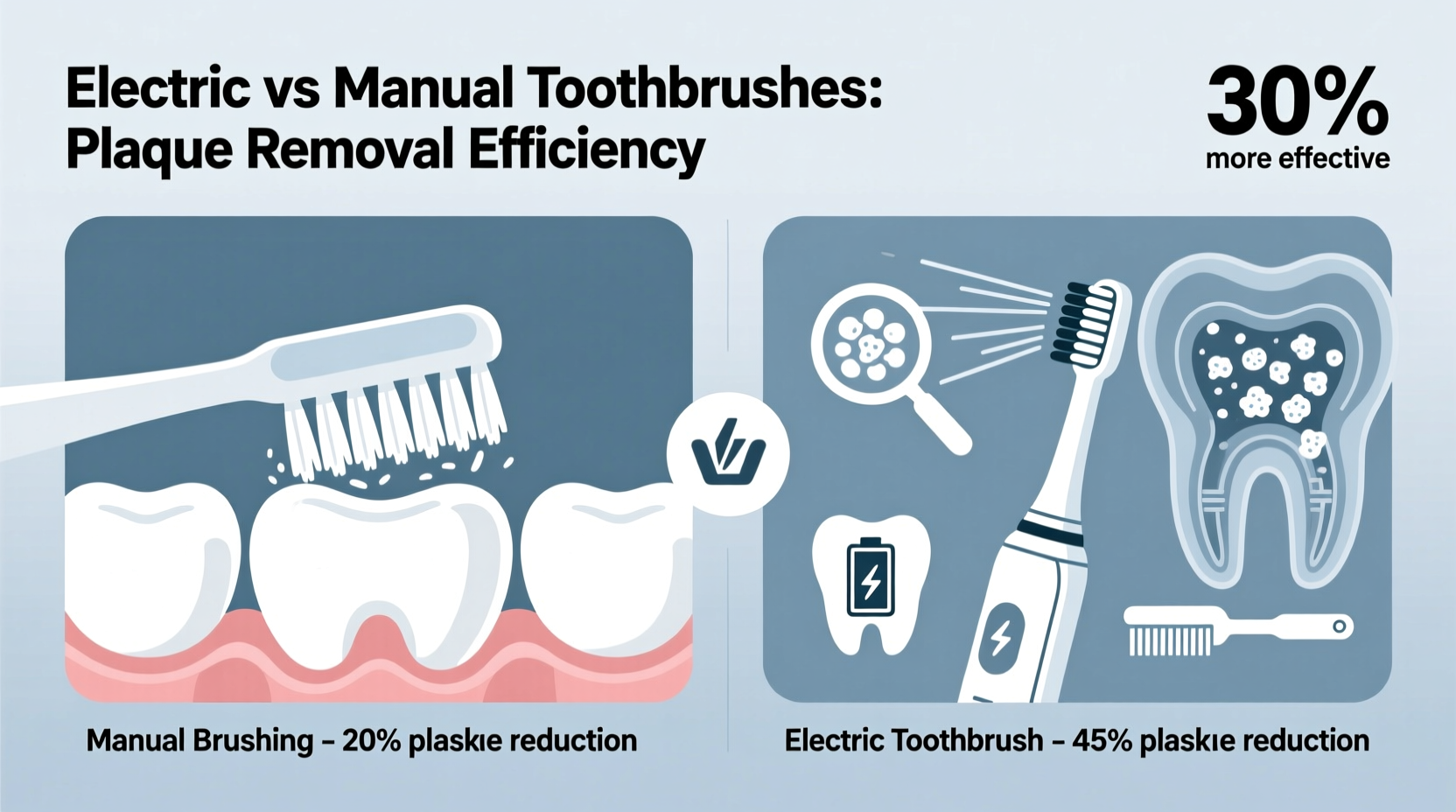
Plaque adheres to tooth surfaces, especially along the gumline and between teeth. Effective removal requires consistent motion, proper angle, and sufficient duration. Manual brushing relies entirely on user technique, while electric toothbrushes automate motion and often include features like timers and pressure sensors.
According to the American Dental Association (ADA), both manual and electric toothbrushes can be effective if used correctly. However, studies consistently show that electric models tend to outperform manual ones in plaque reduction—especially among people who struggle with consistency or dexterity.
A 2014 Cochrane review analyzed data from 56 clinical trials involving over 5,000 participants. It found that electric toothbrushes reduced plaque by 21% and gingivitis by 11% more than manual brushes after three months of use. Oscillating-rotating brushes (those with round heads that spin in one direction and then reverse) showed the most significant results.
“Electric toothbrushes, particularly those with oscillating heads, provide superior plaque removal due to their high-frequency movements, which disrupt bacterial colonies more effectively than hand-driven strokes.” — Dr. Linda Chen, Periodontist and Oral Health Researcher
How Electric Toothbrushes Work Against Plaque
Electric toothbrushes use various mechanisms—oscillating, sonic, ultrasonic, or rotating-pulsating—to dislodge plaque. Their key advantage lies in consistency: they deliver thousands of brush strokes per minute, far exceeding what most people achieve manually.
- Oscillating-Rotating: Round brush head rotates back and forth, physically scrubbing plaque away.
- Sonic: High-frequency vibrations (up to 30,000–40,000 strokes per minute) create fluid dynamics that help clean between teeth.
- Ultrasonic: Uses sound waves beyond human hearing to break down plaque at a molecular level (less common).
These motions enhance cleaning efficiency even in hard-to-reach areas like molars and behind lower front teeth. Additionally, many models include built-in two-minute timers and quadrant pacing (signals every 30 seconds), promoting thorough brushing across all areas of the mouth.
Tip: Hold the brush gently against each tooth surface for a few seconds—don’t scrub aggressively. Let the brush do the work.Manual vs. Electric: A Direct Comparison
| Feature | Manual Toothbrush | Electric Toothbrush |
|---|---|---|
| Brush Strokes Per Minute | ~300 (hand-driven) | 8,000–40,000 |
| Consistency of Motion | Depends on user | Automated, uniform |
| Built-in Timer | Rare | Standard feature |
| Pressure Sensor | No | Available on mid-to-high-end models |
| Effectiveness in Reducing Plaque | Moderate (with ideal technique) | High (consistently proven) |
| Cost Over Time | $10–$20/year (replacement) | $50–$200 initial + $20–$40/year (heads) |
| Best For | Budget-conscious users, travel | Those seeking optimal plaque control, braces wearers, limited dexterity |
The table highlights a critical point: while manual brushes can be effective, their success depends heavily on user behavior. Most people brush for less than two minutes and miss key areas. Electric brushes compensate for these shortcomings through automation and feedback systems.
Real-World Impact: A Case Study
Consider Mark, a 42-year-old office worker with mild gingivitis and inconsistent brushing habits. He used a soft manual toothbrush but typically brushed for 70 seconds, focusing mostly on the front teeth. After a dental checkup revealed increasing plaque buildup near his molars, his hygienist recommended switching to an oscillating electric model.
Mark began using a mid-range electric toothbrush with a two-minute timer and pressure sensor. Within six weeks, he reported improved gum comfort and fresher breath. At his next appointment, his dentist noted a 35% reduction in plaque index scores and significantly less bleeding during probing.
What changed? Not just the tool—but the system. The timer ensured full coverage, the motion reached tight spaces, and the gentle vibration encouraged him to maintain proper contact without pressing too hard. This real-life example illustrates how technology supports behavioral improvement.
When Manual Brushes Are Still Viable
Despite the advantages of electric models, manual toothbrushes remain a practical and effective option—for some. They are inexpensive, portable, and require no charging. When used with proper technique (such as the Bass method—angling bristles at 45 degrees to the gumline and using short circular motions), they can remove plaque effectively.
However, effectiveness hinges on discipline. A 2019 study published in the *Journal of Clinical Periodontology* found that only 18% of adults brush for the full two minutes recommended by dentists. Another survey revealed that nearly half skip brushing before bed at least once a week.
For individuals with excellent oral hygiene habits, dexterity, and time, a manual brush may suffice. But for children, older adults, people with arthritis, or those wearing braces, electric models offer meaningful advantages.
Tip: Replace your toothbrush (or head) every three months, or sooner if bristles fray. Worn bristles lose effectiveness regardless of type.Step-by-Step Guide to Maximizing Plaque Removal
Whether you choose manual or electric, follow this sequence for optimal plaque control:
- Choose the Right Brush: Use a soft-bristled brush (manual or electric) with a compact head to access back teeth.
- Use Fluoride Toothpaste: Helps strengthen enamel and disrupt plaque biofilm.
- Angle Correctly: Position bristles at a 45-degree angle toward the gumline to clean beneath the edge where plaque accumulates.
- Divide Your Mouth: Split into four quadrants (upper right, upper left, lower right, lower left). Spend 30 seconds on each.
- Move Systematically: On an electric brush, hold each tooth for 2–3 seconds. With manual, use small circular motions—no horizontal scrubbing.
- Cover All Surfaces: Don’t neglect chewing surfaces, inside surfaces, and behind molars.
- Finish with Tongue and Roof: Bacteria thrive on the tongue; gently brush it to reduce overall oral load.
- Floss Daily: No brush reaches between teeth completely. Floss or use interdental cleaners to finish the job.
This routine, followed consistently, maximizes plaque disruption regardless of brush type—but electric models make adherence easier.
Expert Recommendations and Long-Term Outcomes
Dental professionals increasingly recommend electric toothbrushes, especially for patients with early signs of gum disease or difficulty maintaining home care. The British Society of Periodontology states that “powered toothbrushes should be considered the preferred method of plaque control for most patients.”
Long-term benefits extend beyond plaque reduction. Regular use of electric brushes correlates with slower progression of periodontal disease, fewer cavities, and reduced need for professional scaling. One longitudinal study found that electric brush users had 18% fewer dental visits for gum-related issues over five years compared to manual users.
Still, technology doesn’t replace technique. Even the most advanced brush fails if used incorrectly. Dentists emphasize education: knowing how to position the brush, how long to brush, and integrating flossing remains foundational.
FAQ: Common Questions About Electric vs. Manual Brushes
Do electric toothbrushes damage enamel or gums?
Not when used properly. Most modern electric brushes have pressure sensors that alert you if you’re brushing too hard. Soft bristles and correct technique prevent damage. In fact, because they reduce the need for aggressive scrubbing, they can be gentler than manual brushes.
Can kids use electric toothbrushes?
Yes—many brands offer child-specific models with smaller heads, softer bristles, and fun timers. Pediatric dentists often recommend them for improving brushing compliance in children. Supervision is advised until age 6–7.
Is it worth upgrading if I already have good oral hygiene with a manual brush?
If your current routine keeps your teeth and gums healthy (as confirmed by your dentist), there may be no urgent need to switch. However, electric brushes can provide incremental improvements in cleanliness and ease, especially as you age or face changes in mobility.
Checklist: Choosing the Best Tool for Plaque Control
- ☐ Assess your current brushing habits: Do you brush for two minutes? Twice daily?
- ☐ Evaluate dexterity: Any pain, stiffness, or difficulty holding a brush?
- ☐ Check dental status: Signs of gingivitis, recession, or frequent tartar buildup?
- ☐ Consider lifestyle: Will you remember to charge it? Travel frequently?
- ☐ Look for ADA Seal of Acceptance: Ensures safety and efficacy claims are verified.
- ☐ Try different models: Some prefer sonic, others oscillating—personal comfort matters.
- ☐ Budget for replacement heads: Factor in ongoing costs (~$25–$40/year).
Conclusion: Making the Right Choice for Your Smile
The evidence is clear: electric toothbrushes are generally more effective than manual ones at reducing plaque. Their automated motion, consistent timing, and advanced features help overcome common human errors in brushing. For many people—especially those with gingivitis, braces, or limited manual dexterity—an electric brush isn’t just a luxury; it’s a smart investment in long-term oral health.
That said, the best toothbrush is the one you’ll use correctly and consistently. If you commit to proper technique, a manual brush can still serve you well. But for most, the convenience, precision, and performance of an electric model offer a tangible upgrade in plaque control.
💬 Ready to improve your brushing routine? Talk to your dentist about trying an electric toothbrush. Share your experience in the comments—your insight could help someone else achieve a healthier smile.








