Anime has long been a medium for exploring complex human experiences, from identity and trauma to love and loss. In recent years, creators have increasingly turned their attention to mental health, portraying conditions like depression, anxiety, PTSD, and dissociative disorders with greater nuance and care. Unlike earlier depictions that often leaned on stereotypes or used mental illness as a plot device, modern anime are beginning to handle these narratives with empathy, accuracy, and responsibility. These stories don’t just entertain—they validate real struggles, foster understanding, and challenge the stigma surrounding mental health.
This article examines anime characters whose mental health journeys are portrayed with authenticity and respect. It explores how their arcs contribute to broader conversations about emotional well-being, what makes these portrayals effective, and why responsible storytelling matters—not only for viewers living with similar conditions but for society’s perception of mental illness.
Why Responsible Mental Health Representation Matters
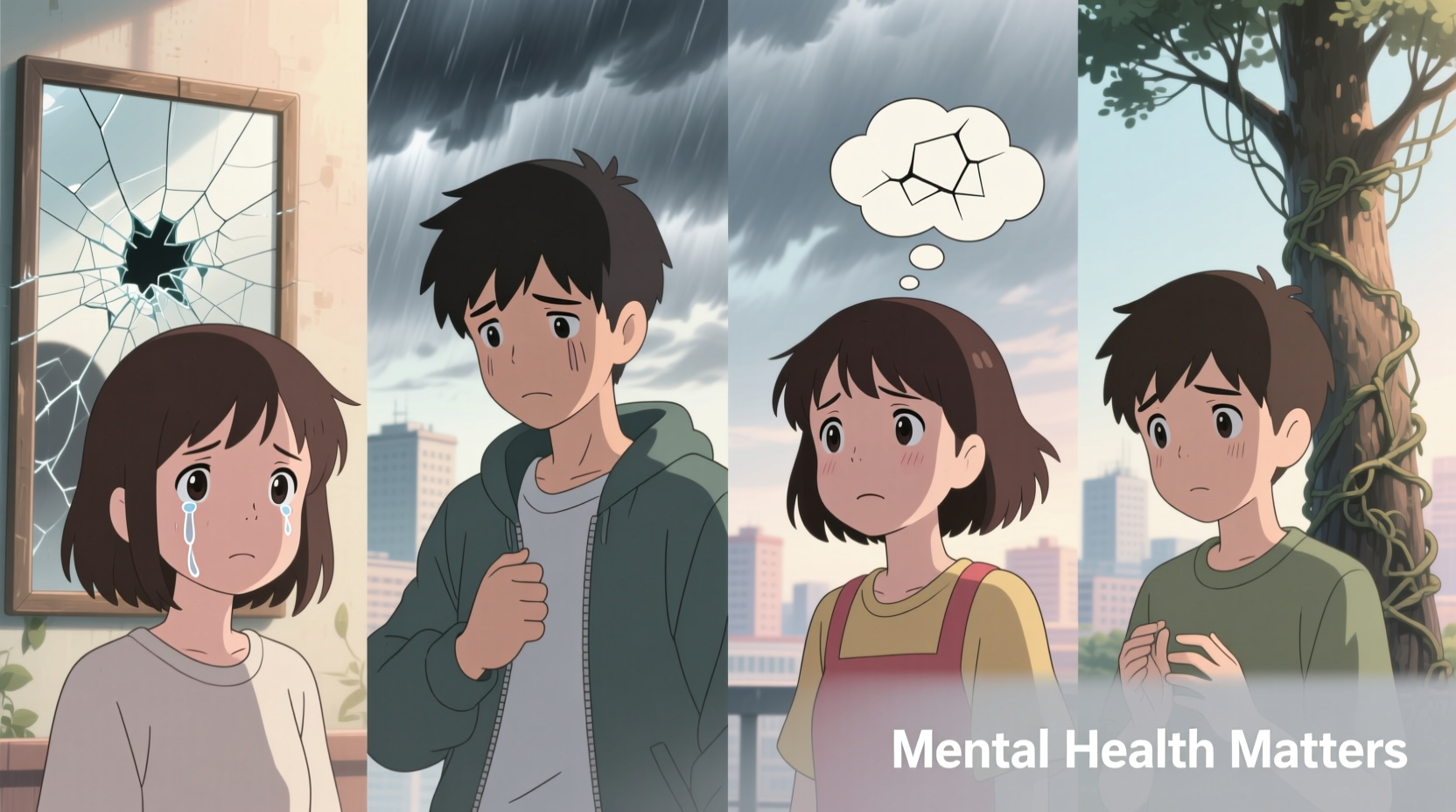
Media shapes public perception. When mental health is misrepresented—either romanticized, demonized, or oversimplified—it can reinforce harmful myths. Characters shown as violent due to schizophrenia, or \"cured\" by love alone, send dangerous messages. Conversely, thoughtful portrayals help normalize therapy, encourage help-seeking behavior, and build empathy.
Anime, with its global reach and emotionally driven storytelling, holds particular power in this space. A character's journey through depression or recovery from trauma can resonate deeply with young audiences who may not yet have the language to describe their own feelings. When done right, these narratives become lifelines.
“Seeing your pain reflected in a story can be the first step toward healing. Responsible representation tells people: you’re not broken, you’re not alone.” — Dr. Lena Park, Clinical Psychologist and Media Consultant
Responsible portrayal means more than just naming a diagnosis. It includes showing realistic symptoms, access (or lack) of support systems, setbacks in recovery, and the impact of environment and relationships. Most importantly, it avoids reducing a character to their condition. The best arcs integrate mental health into a fuller personhood—one where struggle coexists with strength, humor, and growth.
Characters with Thoughtful Mental Health Arcs
Komi Shouko – Komi Can't Communicate
Komi suffers from severe social anxiety disorder, which manifests as an inability to speak in social settings, physical paralysis around peers, and intense fear of judgment. Rather than treating her silence as a quirk, the series takes her experience seriously. Episodes explore panic attacks, sensory overload, and the exhausting effort required to appear \"normal.\"
What sets Komi’s arc apart is its emphasis on agency and gradual progress. With the quiet support of her classmate Tadano, she sets small, achievable goals—saying one word, then a sentence, then giving a classroom presentation. Therapy is implied through school counseling, and her growth isn’t linear; she stumbles, freezes, and needs time to recover. Yet each victory feels earned.
Tip: Normalize small wins. Recovery isn’t about dramatic breakthroughs—it’s built on consistent, incremental steps.Sakuta Azusagawa – Rascal Does Not Dream of Bunny Girl Senpai
Sakuta’s arc is interwoven with others suffering from “Adolescence Syndrome,” a fictional metaphor for real psychological phenomena like depersonalization, social invisibility, and identity fragmentation. While the supernatural framing might seem escapist, it’s used deliberately to externalize internal struggles.
Sakuta himself deals with PTSD stemming from a past hospitalization and family estrangement. His emotional guardedness, self-sacrificial tendencies, and difficulty accepting care are portrayed with psychological realism. Through helping others, he confronts his own unresolved trauma—particularly in his evolving relationship with his younger sister.
The series doesn’t offer easy fixes. Even after resolving others’ crises, Sakuta continues therapy and maintains boundaries. The show acknowledges that healing is ongoing and that support must be mutual.
Yoshikawa Akane – Hanako and the Flower Toilet
Akane battles severe OCD, particularly contamination fears and compulsive cleaning rituals. Her arc avoids caricature—her behaviors aren’t played for laughs, nor are they framed as mere perfectionism. The narrative shows how her rituals consume hours, isolate her from peers, and stem from deep-seated fear rather than choice.
Critical to her portrayal is the inclusion of evidence-based treatment. She begins cognitive behavioral therapy (CBT), specifically exposure and response prevention (ERP). Viewers see her resist compulsions, tolerate distress, and slowly reclaim control. Her therapist is depicted as collaborative and non-judgmental, reinforcing the legitimacy of professional help.
Nishimiya Shouko – A Silent Voice
Shouko, a deaf girl subjected to relentless bullying, develops depression, social withdrawal, and suicidal ideation. Her silence is not just auditory but emotional—a result of trauma and eroded self-worth. The film handles her arc with profound sensitivity, showing how isolation compounds when communication barriers exist.
Her eventual reconnection with former bully Ishida is not framed as redemption through romance, but as two wounded people learning to listen—literally and figuratively. Shouko’s healing isn’t complete by the end; she still flinches at loud noises, avoids crowds, and struggles with trust. But she speaks up, reaches out, and chooses to stay.
What Makes These Portrayals Responsible?
Not all anime that touch on mental health do so effectively. The difference lies in intention, accuracy, and follow-through. The following table outlines key traits of responsible versus problematic portrayals:
| Aspect | Responsible Approach | Problematic Approach |
|---|---|---|
| Diagnosis | Accurate symptoms, professional context | Vague labels, magical cures |
| Recovery | Non-linear, involves setbacks | Sudden, love-based resolution |
| Support Systems | Therapy, family, peer networks shown | Only one savior figure |
| Agency | Character drives their healing | Passive, rescued by others |
| Tone | Empathetic, avoids sensationalism | Dramatized, tragic victim narrative |
Responsible arcs also avoid conflating mental illness with violence or supernatural ability. They don’t use trauma as mere backstory for edginess. Instead, they center the character’s internal world, showing how thoughts, emotions, and behaviors interact over time.
How to Engage with These Stories Mindfully
Viewing anime with mental health themes can be powerful—but it should also be intentional. For fans, caregivers, or those with lived experience, here’s a checklist to engage critically and compassionately:
- Evaluate whether the portrayal aligns with clinical understanding
- Note if therapy or medical help is shown positively (or at all)
- Reflect on emotional impact: Did it validate or trigger?
- Seek supplemental resources if a topic resonates personally
- Discuss respectfully—avoid diagnosing characters or equating fiction with universal truth
“Media can be a gateway to mental health literacy. But it shouldn’t replace professional insight.” — Dr. Rajiv Mehta, Media Psychology Researcher
Mini Case Study: How ‘Komi Can’t Communicate’ Changed One Viewer’s Perspective
Maria, a 19-year-old university student, had always struggled socially but dismissed her anxiety as shyness. After watching Komi Can’t Communicate, she recognized parallels: the stomach knots before class, the rehearsed conversations in her head, the exhaustion after small talk.
“I saw Komi freeze during roll call and felt tears come to my eyes,” Maria shared. “It wasn’t just that she was like me—it was that the show treated her gently. No one mocked her. Her friends learned sign language. They gave her space.”
That empathy gave Maria courage. She booked an appointment with campus counseling and started CBT. “I didn’t need a miracle. I needed to know it was okay to ask for help. Komi taught me that.”
This is the real-world impact of responsible storytelling: not just awareness, but permission—to feel, to seek care, to hope.
Step-by-Step Guide to Identifying Responsible Mental Health Narratives
- Watch for symptom accuracy: Are behaviors consistent with known conditions? Or are they exaggerated for drama?
- Track the role of professionals: Is therapy shown? Is medication discussed without stigma?
- Assess recovery pacing: Is progress gradual? Are relapses treated as normal, not failure?
- Examine relationships: Do others enable or shame? Or do they set boundaries while offering support?
- Consider ending implications: Is healing framed as ongoing? Or is there a false “cure”?
- Research behind the scenes: Did consultants advise? Did creators cite real psychology sources?
Using this framework, viewers can distinguish between meaningful representation and performative trauma. It also empowers fans to advocate for better stories—through reviews, discussions, and support for creators who get it right.
Frequently Asked Questions
Can anime really influence mental health attitudes?
Yes. Studies in media psychology show that narrative fiction increases empathy and reduces stigma. Anime, with its emotional depth and dedicated fanbases, is especially influential among teens and young adults. When characters model help-seeking behavior or depict therapy positively, viewers are more likely to view these actions as acceptable and accessible.
Are there any red flags in anime mental health portrayals?
Yes. Warning signs include: using mental illness as a punchline, linking psychosis to supernatural powers, depicting suicide without context or aftermath, or suggesting love alone can “fix” someone. These tropes perpetuate myths and can be harmful to vulnerable viewers.
Should I watch these shows if I have a mental health condition?
It depends on your triggers and coping strategies. Some find comfort in seeing their struggles reflected; others may find certain scenes overwhelming. Use content warnings, watch with support if needed, and prioritize your well-being. If a show brings up difficult emotions, consider discussing them with a therapist.
Conclusion: Stories That Heal
The most powerful anime aren’t those that escape reality, but those that reflect it with honesty and heart. Characters like Komi, Sakuta, and Shouko don’t just carry compelling arcs—they represent a shift in how mental health is seen in media. Their stories are not defined by illness, but shaped by resilience, connection, and the quiet courage of showing up, again and again.
As audiences, we have a role too. We can celebrate thoughtful writing, hold creators accountable for harmful tropes, and use these stories as starting points for deeper conversations. Most importantly, we can remember that behind every character is a real person who might be searching for validation, hope, or simply the words to say: I’m not alone.
💬 Have an anime character helped you understand your mental health? Share their name and story in the comments—your insight might help someone else feel seen.








