Most bars discard 30–40% of the produce they buy—citrus rinds, bruised berries, spent herbs, pineapple cores, ginger pulp, and even coffee grounds. Zero-waste cocktail bars don’t just minimize that loss; they treat every scrap as a raw material with distinct flavor, texture, and functional potential. These venues operate on a culinary philosophy rooted in fermentation science, foraging ethics, and circular systems thinking—not gimmicks or greenwashing. Their difference isn’t measured in compost bins alone, but in how deeply they interrogate each ingredient’s lifecycle: what remains after juicing, what’s discarded during prep, and what would traditionally be considered “waste” but actually holds concentrated aroma, acidity, tannin, or microbiological activity.
This isn’t about substituting one sustainable product for another. It’s about redefining value—shifting from “What can we extract?” to “What else can this become?” The result is cocktails with layered complexity, lower ingredient costs, reduced landfill contribution, and a tangible sense of stewardship. Behind the bar, zero-waste practice demands daily discipline, cross-departmental coordination (with kitchen and procurement), and deep knowledge of preservation techniques. What follows is a precise, operational breakdown of how leading zero-waste bars convert scraps into assets—and how their methods differ fundamentally from conventional bars that simply recycle or donate surplus.
1. Citrus Peels: Beyond Zest and Garnish
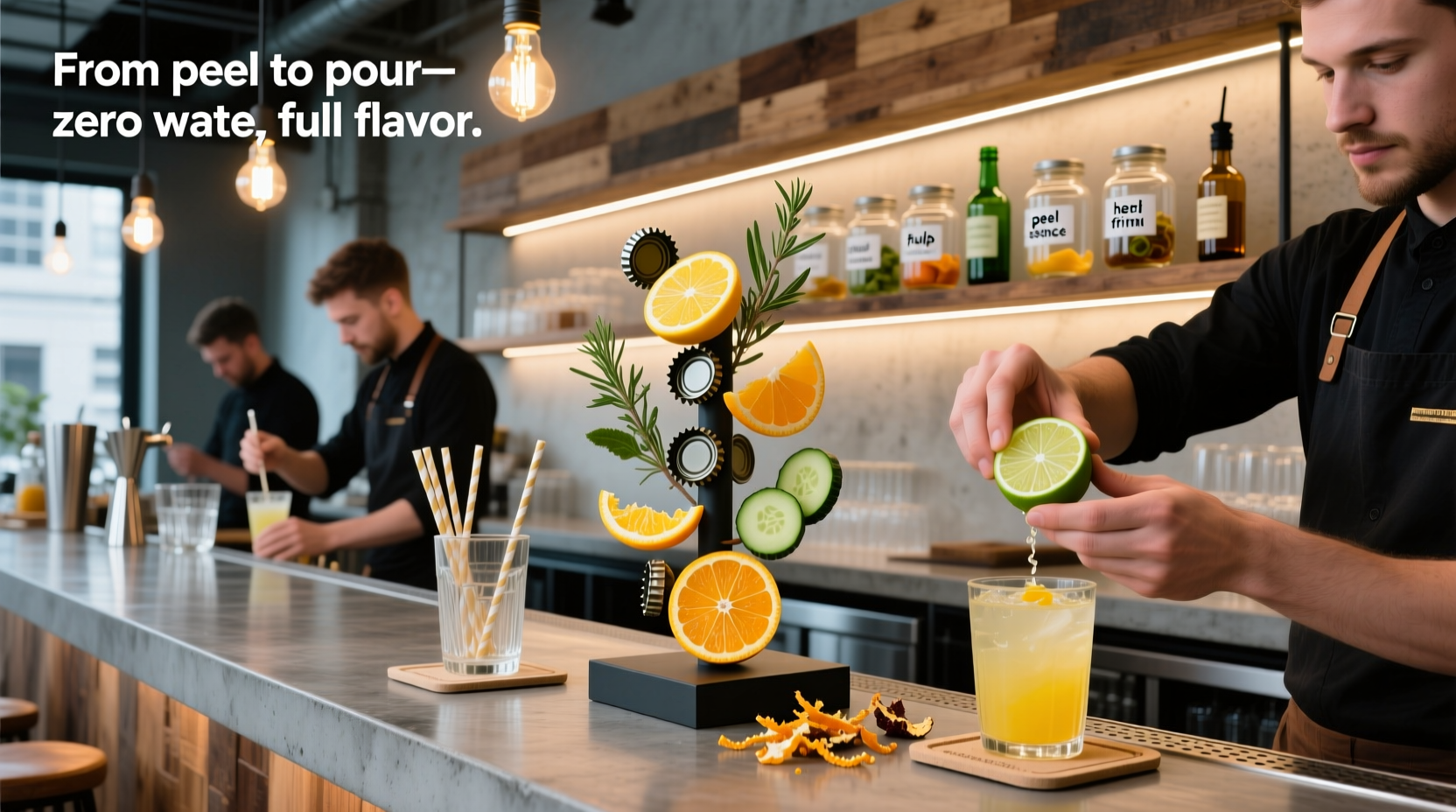
Conventional bars use citrus zest sparingly and discard the rest of the peel—often 70% of a lemon or lime’s mass. Zero-waste bars treat the entire peel as a multi-stage resource. They separate the brightly colored flavedo (oil-rich outer layer) from the bitter, spongy albedo (white pith). The flavedo is cold-pressed for essential oils used in aromatic bitters or misted onto glass rims. The albedo is repurposed through controlled dehydration and grinding into citrus “powder”—a low-moisture, high-pH ingredient that balances sweetness in shrubs and adds umami depth to savory cocktails like a clarified Bloody Mary variation.
More innovatively, many zero-waste bars ferment citrus peels using wild or cultured lactobacillus strains. A three-day anaerobic ferment at 22°C transforms bitter compounds into lactic acid and esters, yielding a bright, tangy, slightly funky “citrus koji” that functions as both acidifier and flavor enhancer—replacing vinegar in shrubs or adding complexity to sour bases without dilution.
Tip: Store fresh citrus peels in airtight glass jars with a light brine (2% salt by weight) to inhibit mold while encouraging lactic fermentation—stir daily for the first 48 hours.2. Herb Stems, Roots, and Trim: From Compost to Core Ingredient
Most bars discard cilantro stems, rosemary woody bases, lemongrass root ends, and parsley roots—yet these parts often contain higher concentrations of volatile oils than leaves. At Bar Alba in Portland, Oregon, bartenders blanch and freeze herb stems year-round, then macerate them in neutral spirit at 35°C for 72 hours to extract heat-stable terpenes. The resulting tinctures are used not only in drinks but also in house-made vermouths and amari, where bitterness and herbal backbone are essential.
Ginger and turmeric scraps receive similar treatment. Instead of discarding fibrous pulp post-juicing, bars like The Waste Not in London dehydrate it at 45°C for 12 hours, mill it into fine powder, and blend it with toasted sesame oil to create an aromatic “ginger oil paste.” This paste is swirled into stirred drinks like a clarified Old Fashioned, delivering warmth and viscosity without clouding clarity.
Root vegetables present another opportunity. Carrot tops—typically composted—are blanched, pureed, and fermented with whey starter for five days to yield a bright, grassy “carrot-top vinegar” rich in acetic acid and chlorophyll. Used at 1–2% volume in spritz-style cocktails, it provides acidity and vegetal nuance without added sugar or artificial color.
3. Fruit Cores, Pits, and Seeds: Extracting Flavor and Function
Pineapple cores, apple pomace, mango pits, and stone fruit kernels aren’t just waste—they’re reservoirs of pectin, enzymes, and aromatic precursors. At Ferment & Co. in Brooklyn, pineapple cores are blended with raw cane sugar and left to macerate for 48 hours before pressing. The resulting juice is clarified via bentonite clay and fermented with *Saccharomyces cerevisiae* for 10 days, yielding a dry, tropical “pineapple core wine” with 9% ABV—used as a base for low-alcohol spritzes or as a vermouth alternative in stirred drinks.
Apple pomace—the fibrous residue left after juicing—is dried, milled, and combined with malted barley flour to create a “pomace koji.” Inoculated with *Aspergillus oryzae*, it’s incubated at 30°C for 48 hours, then mixed with rice and water to produce a naturally sweet, cloudy “apple shochu” with delicate ester notes. This process takes six weeks but replaces imported spirits in seasonal cocktails while locking up carbon in stable starch-protein matrices.
Even pits and seeds get attention. Apricot and cherry pits are cracked, blanched to remove amygdalin (a cyanogenic glycoside), then cold-infused in brandy for two weeks to extract benzaldehyde—the compound responsible for almond aroma. The resulting “stone fruit kernel tincture” adds authentic marzipan nuance to nut-based cocktails without artificial extracts.
4. Fermentation Labs Behind the Bar: The Engine of Zero-Waste Innovation
Zero-waste bars don’t outsource fermentation—they run small-scale, temperature-controlled labs behind the service area. These aren’t novelty setups; they’re calibrated ecosystems. Each bar maintains three dedicated fermentation zones: a 4°C cold room for slow lacto-ferments (e.g., cucumber rind kimchi for briny garnishes), a 22–25°C ambient cabinet for yeast-driven alcohol production (e.g., melon rind wine), and a 30–32°C incubator for koji propagation (e.g., banana peel koji used to break down starch in plantain syrup).
The timeline for transforming scraps is methodical and non-negotiable:
- Day 0: Scraps sorted, washed, weighed, and prepped (peel separation, stem trimming, pit cracking)
- Day 1: Brining, inoculation, or maceration begins; pH and Brix readings logged
- Days 2–7: Daily monitoring of CO₂ release, surface mold checks, and sensory evaluation (smell, taste, texture)
- Day 7–14: Clarification (via centrifugation or bentonite), stabilization (pasteurization at 65°C for 3 minutes or potassium metabisulfite dosing), and bottling
- Day 14+: Integration into drink menus with strict FIFO (first-in, first-out) inventory tracking
This rigor ensures consistency, safety, and traceability—critical when serving fermented products to the public. Unlike home fermentation, commercial zero-waste programs adhere to HACCP guidelines, with logs reviewed weekly by food safety managers.
5. The Economics and Ethics of Scrap Valorization
Zero-waste bars achieve real cost savings—not through cheaper ingredients, but through increased yield per unit purchased. A $2.50 organic lemon yields not just juice and zest, but also peel powder, fermented citric acid, essential oil, and dehydrated albedo chips. When tracked across all produce categories, top-performing zero-waste bars report 22–28% reduction in total produce spend year-over-year, despite paying premium prices for organic and local sourcing.
But economics alone doesn’t explain the model’s resilience. Ethically, these bars confront the hospitality industry’s complicity in food waste: globally, food service accounts for 12% of avoidable food loss, much of it occurring at the “pre-consumer” stage—exactly where bars operate. By treating scraps as co-ingredients rather than liabilities, they shift accountability upstream, influencing suppliers to deliver whole, unpeeled, or minimally processed produce—and even inspiring farms to grow “bar-specific” varieties (e.g., thick-peeled lemons bred for oil yield, or low-acid apples optimized for pomace fermentation).
| Scrap Type | Conventional Disposal | Zero-Waste Transformation | Yield Increase vs. Juice-Only Use |
|---|---|---|---|
| Citrus peels (lemon/lime) | Landfill or compost | Fermented citric acid, dried albedo powder, cold-pressed oil | 3.2x ingredient utility |
| Herb stems (cilantro, rosemary) | Compost | Heat-extracted tincture, fermented stem vinegar | 2.8x flavor extraction efficiency |
| Pineapple cores | Discarded | Dry tropical wine (9% ABV), pectin-rich syrup base | 4.1x liquid yield + 100% solids utilization |
| Apple pomace | Compost or animal feed | “Pomace koji” for shochu, fiber-enriched bitters | 3.7x functional versatility |
| Coffee grounds (post-brew) | Landfill | Oil-infused cold brew fat wash, activated charcoal garnish | 2.5x reuse pathways |
“The most radical thing a bar can do is stop pretending scraps have no value. Once you start tasting the acidity in a fermented lime peel or the umami in roasted carrot tops, ‘waste’ becomes a meaningless word. It’s just unharvested potential.” — Chef & Fermentation Director Lena Torres, founder of The Waste Not Collective
Mini Case Study: How Bar Sol in San Francisco Closed Its Waste Loop
Bar Sol opened in 2021 with a mandate: no organic matter leaves the premises as trash. Within six months, they achieved 98.7% diversion—but true zero-waste required deeper integration. Their breakthrough came with orange peels. Previously, they juiced 120 oranges nightly for margaritas, discarding 24 kg of peels weekly. A bartender began experimenting with dry-toasting peels over low heat, then infusing them in agave syrup. The result was a smoky, caramelized orange syrup that replaced triple sec in their signature “Ember Margarita.”
They scaled the process: installed a commercial dehydrator, partnered with a local distillery to repurpose spent grain as substrate for orange peel koji, and launched a “Peel Exchange Program” with neighboring bakeries—trading dried citrus powder for day-old croissant ends, which were then turned into crumb-thickened milk punches. Today, Bar Sol’s orange program generates $1,800/month in incremental revenue from value-added products sold wholesale to three other bars and a boutique grocer—while eliminating 1,248 kg of annual landfill waste. Their secret? They track every gram of peel entering and exiting the system using a simple spreadsheet linked to their POS—proving that precision, not passion alone, makes zero-waste scalable.
FAQ
Do zero-waste techniques compromise cocktail consistency or safety?
No—when executed under food safety protocols (HACCP-aligned SOPs, calibrated pH meters, mandatory pathogen testing for fermented products), zero-waste ingredients deliver greater consistency than fresh-only preparations. Fermented acids stabilize pH better than citric acid powders; dried herb powders eliminate batch-to-batch variation caused by seasonal moisture content in fresh herbs.
Can home bartenders apply these methods safely?
Yes—with critical caveats. Lacto-ferments and vinegars are safe for home use if pH drops below 4.2 within 72 hours (verified with a calibrated meter). Avoid distilling, aging in non-food-grade wood, or fermenting low-acid items (like melon rinds) without starter cultures—these carry botulism risk. Start with citrus peel brines or herb stem vinegars before advancing.
Don’t these processes require excessive labor and space?
Initial setup requires investment, but labor normalizes after 8–12 weeks. Most zero-waste bars assign 15 minutes daily to scrap processing—integrated into closing duties. Modular fermentation gear (stackable jars, programmable incubators) fits in under-counter spaces. The ROI appears in reduced produce orders, lower waste-hauling fees, and premium pricing power: 73% of surveyed guests pay 12–18% more for cocktails explicitly labeled “zero-waste crafted.”
Conclusion
Zero-waste cocktail bars don’t chase sustainability as an aesthetic or marketing tactic. They practice it as a daily discipline of attention—listening to what the lemon peel wants to become, honoring the structural integrity of ginger pulp, and trusting fermentation to reveal flavors hidden in plain sight. Their difference lies not in what they avoid (landfill, plastic, excess), but in what they invite in: microbial collaboration, enzymatic transformation, and the quiet intelligence of decomposition redirected toward creation.
You don’t need a commercial incubator or a food scientist on staff to begin. Start with one scrap: save your next week’s citrus peels, brine them, taste the change on Day 3 and Day 7, and ask yourself what that tang could replace in your favorite sour. Observe how the albedo softens, how the aroma deepens, how the acidity gains dimension. That moment—when waste becomes question, and question becomes ingredient—is where real change begins.
💬 Have you tried fermenting citrus peels or repurposing herb stems? Share your first experiment, your biggest surprise, or your toughest failure in the comments—we’re building a living library of real-world zero-waste bar techniques, one scrap at a time.