Spicy food—whether Sichuan mapo tofu, Thai green curry, or Mexican mole negro—delivers exhilarating complexity, but it also presents one of wine’s most persistent challenges. Capsaicin, the compound responsible for chili heat, doesn’t just burn the tongue: it interacts chemically with alcohol, tannins, and acidity in ways that can either soothe or scorch the palate. Yet many diners still default to beer or soft drinks—not because wine fails with spice, but because *most* wines fail when chosen without understanding how structural elements respond to capsaicin. The truth is nuanced: certain grape varieties, grown and vinified with intention, don’t merely survive heat—they elevate it. This isn’t about “masking” spice, but about resonance: matching molecular behavior with sensory harmony.
The Science Behind the Sting—and Why Alcohol Isn’t the Villain You Think
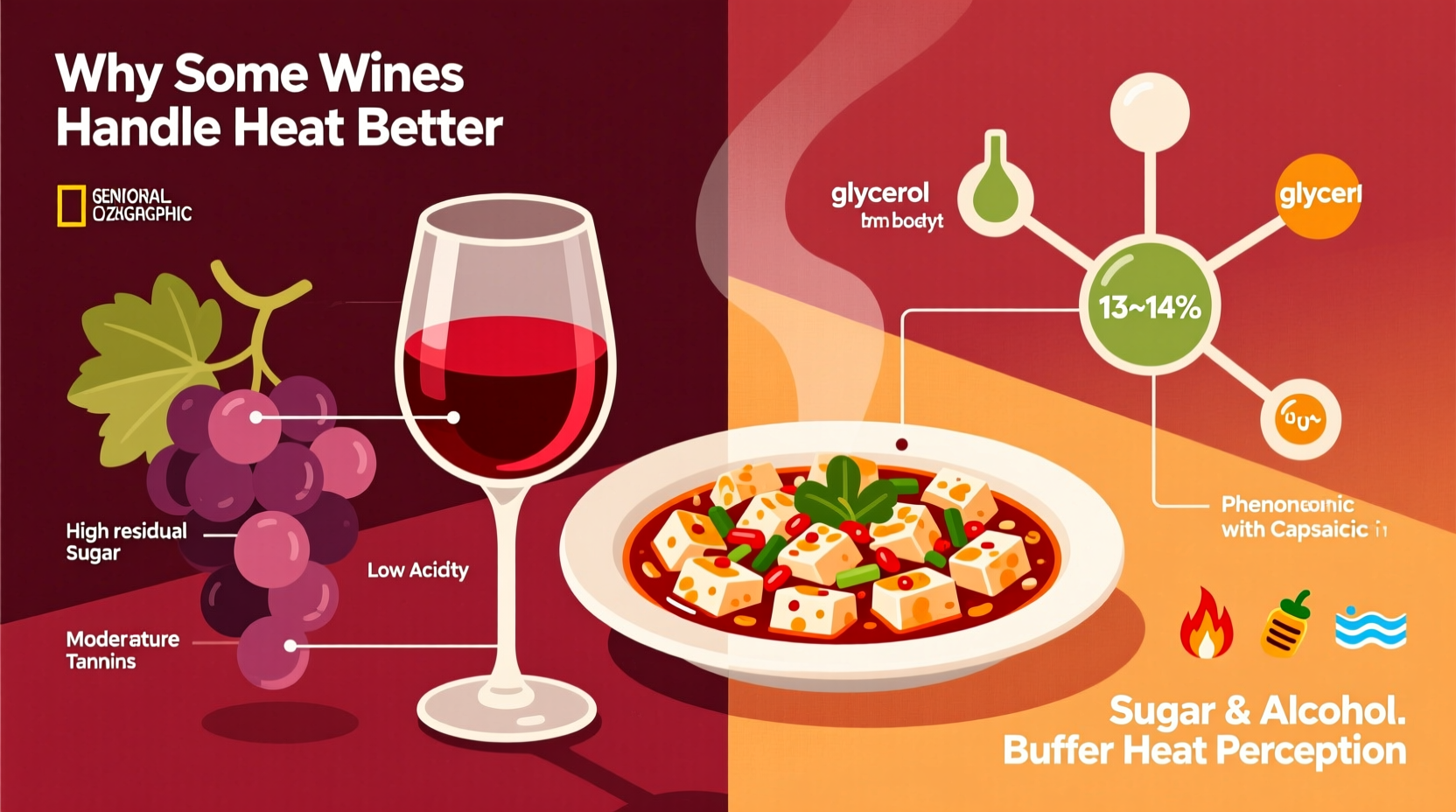
Capsaicin binds to TRPV1 receptors—heat-sensitive ion channels in nerve endings—triggering a signal interpreted by the brain as burning. Crucially, this sensation is *not* taste or smell; it’s neurological pain. That explains why water offers little relief (capsaicin is hydrophobic), while dairy fat dissolves it. But what does this mean for wine?
Alcohol—often blamed for intensifying heat—is only problematic above 14% ABV in high-tannin, low-acid reds. At moderate levels (12–13.5%), ethanol actually enhances perception of fruit and sweetness, which counterbalances capsaicin’s sharpness. More decisive than alcohol content are three structural pillars: residual sugar, acidity, and phenolic texture.
Residual sugar (even subtle amounts) directly inhibits capsaicin binding. A wine with 6–12 g/L RS—like many German Kabinett Rieslings—doesn’t taste “sweet” but delivers enough glucose to physically interrupt the heat signal. Acidity, meanwhile, stimulates saliva production, washing capsaicin away from receptors and refreshing the palate between bites. And low tannins? Essential. Tannins bind to salivary proteins, creating a drying, grippy sensation that amplifies perceived heat—especially when capsaicin already dehydrates mucous membranes.
Tip: When ordering wine with fiery dishes, prioritize low tannin + moderate acidity + touch of residual sugar over “dryness” or “boldness.” Dryness is a myth here—perceived dryness often means insufficient sugar to temper heat.Top 5 Varietals That Excel with Spice—and Why Their Chemistry Works
Not all grapes are created equal when facing chilies. These five stand out—not by accident, but due to inherent biochemical traits amplified by traditional winemaking approaches.
- Riesling (Germany, Alsace, Finger Lakes): High natural acidity, aromatic intensity (peach, lime, jasmine), and flexible sugar levels make it the gold standard. Kabinett and Spätlese styles balance 8–15 g/L RS with bracing acidity—creating a cooling, almost effervescent lift against heat.
- Gewürztraminer (Alsace, New Zealand, Oregon): Low acidity but high lychee/rose petal oils and 10–25 g/L RS. Its phenolic richness coats the mouth, buffering capsaicin’s bite without competing with aromatic spices like star anise or cumin.
- Grüner Veltliner (Austria): Distinctive white-pepper note (from rotundone) harmonizes with chili heat, while vibrant acidity and subtle green-apple tartness cleanse the palate. Most are bone-dry—but their extract and saline minerality provide textural relief.
- Off-dry Chenin Blanc (Loire Valley, South Africa): Honeyed apple and quince notes meet racy acidity and 10–18 g/L RS. Its waxy texture clings gently, preventing capsaicin from overwhelming the tongue.
- Sparkling Rosé (Provence, Loire, California): Not for its bubbles alone—but for the combination of low alcohol (11–12.5%), high acidity, and zero tannin. The gentle mousse physically disrupts capsaicin adhesion, while red-fruit brightness complements smoky or fermented chilies.
Notice what’s missing: Cabernet Sauvignon, Syrah, Malbec, and even Pinot Noir (unless very light and chilled). Their tannins react synergistically with capsaicin, creating a feedback loop of bitterness and burn. As Master Sommelier Madeline Triffon observes:
“Tannin and capsaicin are molecular cousins—they both provoke astringency and heat through shared receptor pathways. Pairing them is like adding gasoline to embers. The solution isn’t less wine—it’s wine with different physics.” — Madeline Triffon, MS, Detroit Wine Institute
What to Avoid: A Practical Do’s and Don’ts Table
| Category | Do | Avoid | Why |
|---|---|---|---|
| Red Wines | Light, chilled Beaujolais (Gamay) or Lambrusco | Cabernet, Syrah, Zinfandel, aged Tempranillo | Tannins + capsaicin = amplified bitterness and throat burn; alcohol >14% dehydrates mucosa |
| White Wines | Riesling Kabinett, off-dry Chenin, Grüner Veltliner Smaragd | Oaked Chardonnay, lean Italian whites (e.g., Soave Classico) | Oak adds phenolic bitterness; low-acid whites lack cleansing power and feel flat against heat |
| Serving Temp | Chill whites & rosés to 8–10°C (46–50°F); serve light reds at 12–14°C (54–57°F) | Serving whites too cold (<6°C) or reds too warm (>16°C) | Over-chilling masks aromatics needed to balance spice; warmth exaggerates alcohol burn |
| Food Context | Match wine intensity to dish complexity—not just heat level | Assuming “spicy” means “all chilies behave the same” | Fresh green chilies (jalapeño) need brighter acid; smoked dried chilies (chipotle) benefit from richer, oilier wines |
Real-World Case Study: A Sichuan Dinner That Changed a Sommelier’s Approach
In Chengdu, sommelier Lena Chen hosted a tasting for local chefs featuring classic Sichuan dishes: dan dan noodles (spicy, numbing, savory), kung pao chicken (peanutty, vinegary, chile-flecked), and twice-cooked pork (fermented bean paste, dried chilies). Her initial lineup—Barolo, Rioja Reserva, and oaked Viognier—was met with polite grimaces. Chefs described the wines as “making the ma la (numbing-heat) unbearable.”
She pivoted. Next round: a 2022 Mosel Riesling Kabinett (10.5% ABV, 12 g/L RS, searing acidity) and a lightly sparkling Lambrusco Grasparossa (11.8% ABV, zero tannin, juicy blackberry). The shift was immediate. The Riesling’s lime zest cut through the sichuan peppercorn’s numbing oil, while its sugar softened the chili’s edge without masking flavor. The Lambrusco’s gentle fizz and bright red fruit lifted the fermented bean paste’s umami depth—turning heat into rhythm. One chef remarked, “It’s not fighting the spice. It’s dancing with it.”
Lena now teaches this principle: Wine doesn’t calm spice—it recontextualizes it. The Riesling didn’t reduce capsaicin’s effect; it redirected attention to its aromatic dimension. The Lambrusco didn’t cool the mouth; it reset the palate’s sensory baseline before the next bite.
A Step-by-Step Guide to Building Your Own Spice-Friendly Wine List
Building confidence in spicy pairings requires moving beyond rules to intuition. Follow this actionable sequence:
- Identify the primary heat source: Is it fresh chilies (bright, vegetal heat), dried chilies (smoky, raisiny), fermented chilies (umami-laden), or numbing agents (Sichuan peppercorn)? Each demands a different structural response.
- Assess the dish’s dominant texture: Creamy (coconut milk, yogurt)? Crisp (pickled vegetables)? Fatty (pork belly)? Acidic (tamarind, lime)? Match wine body accordingly—e.g., creamy curries need richer, slightly sweeter wines; crisp salads need razor-sharp acidity.
- Choose your structural anchor: Pick one non-negotiable element: residual sugar (for intense, direct heat), acidity (for vinegar-heavy or citrus-forward dishes), or effervescence (for fatty, rich preparations).
- Select a region known for that anchor: For RS → Mosel Riesling, Loire Chenin, Alsace Gewürztraminer. For acidity → Austrian Grüner, Greek Assyrtiko, Txakoli. For effervescence → Pét-Nat Gamay, Lambrusco, Cava Brut Nature.
- Verify the specs: Check ABV (aim for ≤13.5%), tannin level (zero for reds, minimal for whites), and residual sugar (6–25 g/L for spice-friendly styles). Don’t rely on “off-dry” labels—consult technical sheets or importer notes.
- Test with a single bite-wine-sip cycle: Take a small bite, then sip wine *before* swallowing the food. Does the wine refresh? Does heat recede? Does aroma enhance the dish? If yes—you’ve nailed it.
FAQ: Addressing Common Misconceptions
Does “dry” wine always clash with spice?
No—“dry” refers only to residual sugar, not overall perception. A dry Grüner Veltliner works beautifully with Thai food because its high acidity and saline finish act like a palate reset. Conversely, a technically dry Zinfandel (15% ABV, high tannin) will feel harsh. Focus on structure, not sugar labels.
Can I pair red wine with spicy food at all?
Yes—if you choose carefully. Prioritize low-alcohol (<13%), low-tannin reds served slightly chilled: Gamay (Beaujolais Cru), Schiava (Alto Adige), or Frappato (Sicily). Avoid oak aging and extended maceration. The goal is fruit-forward juiciness—not extraction or power.
Why do some people swear by beer or lassi instead of wine?
Beer’s carbonation physically disrupts capsaicin adhesion, while its iso-alpha acids have mild anti-inflammatory effects. Lassi’s fat and casein dissolve capsaicin. Wine lacks those mechanisms—but compensates with aromatic complexity and acid-driven cleansing. It’s not inferior; it’s a different tool. The best choice depends on whether you seek relief (beer) or revelation (wine).
Conclusion: Move Beyond Survival to Synergy
Wine pairing with spicy food isn’t about finding a shield—it’s about discovering a collaborator. When Riesling’s lime acidity meets the volatile oils of a Thai basil stir-fry, or when Lambrusco’s effervescence lifts the smoky depth of chipotle braised short ribs, something transformative occurs: heat becomes dimension, not distraction. This harmony emerges not from arbitrary tradition, but from biochemistry—how molecules interact on the tongue, in the saliva, and within neural pathways. You don’t need a cellar full of obscure bottles to begin. Start with one bottle: a Mosel Riesling Kabinett or an off-dry Chenin Blanc. Serve it well-chilled. Taste it alongside a dish that challenges you. Notice where the heat recedes, where fruit blooms, where the finish lengthens. Then adjust—not to “fix” the pairing, but to deepen the conversation between vine and chili, glass and plate.
💬 Your turn. Try one spice-friendly pairing this week—and share what surprised you in the comments. Did the wine soften the heat? Reveal hidden herbs? Change how you experience the dish? Real-world experiments fuel better wine choices for everyone.