A thoughtfully composed wine and cheese board is more than a snack—it’s an invitation to slow down, celebrate place and time, and connect through shared sensory pleasure. Yet many hosts default to the same cheddar-and-cabernet combo year after year, missing opportunities to align their boards with nature’s rhythm: the bright acidity of spring greens echoing in a crisp albariño, the sun-warmed richness of late-summer tomatoes balancing a creamy goat cheese, or the deep, spiced warmth of winter roasts calling for bold, oxidative wines and aged, crystalline cheeses. Seasonality isn’t just aesthetic—it’s functional. It guides ingredient availability, flavor intensity, ambient temperature, and even guest expectations. This article moves beyond generic pairing charts to deliver actionable, grounded seasonal frameworks—each rooted in real culinary logic, regional traditions, and practical hosting wisdom.
Spring: Bright, Fresh & Floral Themes
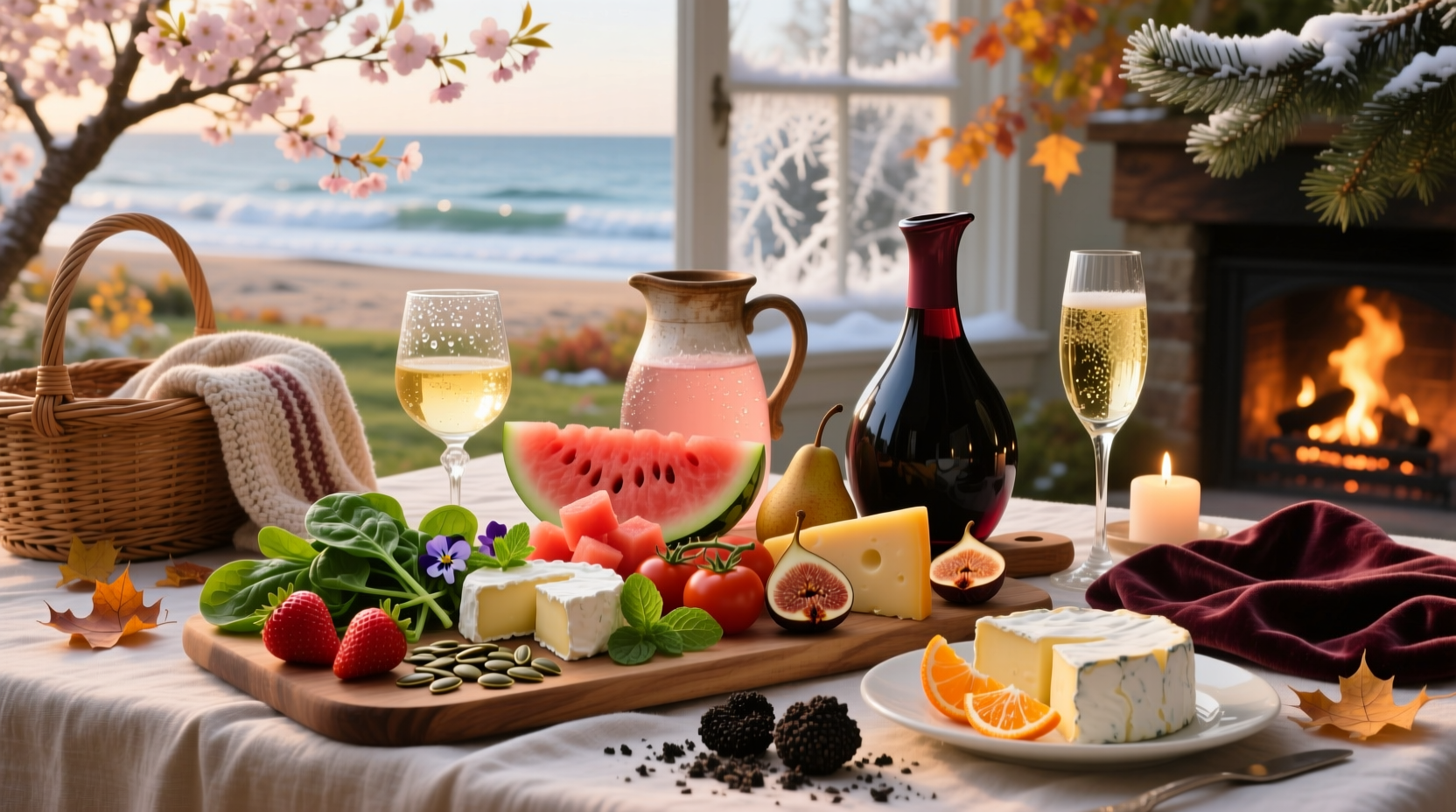
Spring boards thrive on contrast: tender young cheeses against zesty, high-acid wines; delicate textures punctuated by vibrant, living elements like edible flowers, sprouts, and preserved citrus. Think of spring not as “light,” but as *lively*—a season of emergence and aromatic precision.
Tip: Serve spring cheeses at cool room temperature (55–60°F), not chilled. Cold dulls the subtle floral and grassy notes that define this season’s best offerings.Start with a base of fresh, lactic cheeses: a bloomy-rind goat cheese from the Loire Valley (like Sainte-Maure de Touraine), a mild feta-style sheep’s milk cheese from Greece, and a delicate ricotta salata. Pair them with a dry rosé from Provence (not sweet, not pale-pink-only—look for Bandol or Tavel for structure), a zippy Grüner Veltliner from Austria, or a skin-contact orange wine with gentle tannin and citrus peel lift. Complement with pickled ramps, candied lemon zest, blanched asparagus tips, radish ribbons, and microgreens. Avoid heavy nuts or dense breads—opt instead for seeded rye crisps or thin lavash.
“Spring is when cheese speaks loudest in its youth. A 3-week-old chèvre has a different language than one aged three months—and both are correct, depending on the season.” — Sophie Dubois, affineuse and co-owner of Fromagerie L’Écho in Lyon
Summer: Sun-Ripened, Bold & Effortless Themes
Summer demands simplicity without sacrifice. Heat softens textures and amplifies aromas, so boards should feel generous, unstructured, and built for outdoor flow. Prioritize cheeses that hold up well above 75°F: firm washed-rinds, semi-hard aged varieties, and brined options. Wines must cut through humidity—not overwhelm it.
A classic Mediterranean theme works flawlessly: Manchego (aged 12–18 months), a salty, tangy feta soaked in oregano-infused olive oil, and a nutty, caramel-scented Gouda. Pair with a chilled, low-alcohol red like a Frappato from Sicily or a chilled Gamay from Beaujolais—both served at 58–62°F, not ice-cold. Add grilled stone fruit (peaches, nectarines), marinated olives, cherry tomatoes bursting with juice, and flaky sea salt. Skip the cracker basket overload—offer one excellent option: house-baked focaccia squares brushed with basil oil.
Summer Board Assembly Checklist
- ✔️ Chill cheeses for 20 minutes *before* serving—not to keep cold, but to firm slightly for clean slicing
- ✔️ Pre-slice hard cheeses into thick wedges; leave soft cheeses whole with a knife beside them
- ✔️ Place acidic elements (lemons, olives) away from soft cheeses to prevent premature breakdown
- ✔️ Use slate, marble, or wide wooden boards—avoid porous surfaces that trap heat
- ✔️ Set out small bowls for dips and salts *before* adding cheeses to avoid last-minute scrambling
Fall: Earthy, Nutty & Layered Themes
Fall is the golden hour of the cheese board: cooler air sharpens perception, harvest abundance delivers depth, and the transition from light to rich feels natural, not forced. This is the season for umami, fermentation, and complexity—where a single bite can unfold in three distinct stages.
| Theme | Cheese Examples | Wine Pairings | Accompaniments |
|---|---|---|---|
| Forest Floor | Montgomery’s Cheddar (UK), Époisses (France), Taleggio (Italy) | Pinot Noir (Oregon or Burgundy), Dry Cider (French or Vermont) | Roasted chestnuts, wild mushroom conserva, blackberry compote, toasted walnuts |
| Harvest Hearth | Comté (vintage 24+ months), Gruyère (Swiss), Aged Gouda (30+ months) | Châteauneuf-du-Pape, Zinfandel (Lodi), Tawny Port (10-year) | Pumpkin seed brittle, spiced pear mostarda, dark rye crostini, dried figs |
| Spice Route | Humboldt Fog (USA), Mimolette (France), Pecorino Toscano Stagionato | Riesling Spätlese (Germany), Gewürztraminer (Alsace), Amontillado Sherry | Candied ginger, roasted cumin carrots, quince paste, smoked almonds |
The key to fall success is layering textures and temperatures: serve one cheese at cool room temp, one slightly chilled (the Époisses), and one near cellar temp (the Comté). This creates dynamic contrast as guests sample across the board. Avoid overly sweet accompaniments—they muddy earthy flavors. Instead, lean into tartness (quince), bitterness (roasted roots), and smoke (lightly smoked nuts).
Winter: Rich, Robust & Comforting Themes
Winter boards are acts of generosity. Cold air dries palates, hearty meals dominate, and gatherings center around warmth and endurance. This is the season for long-aged, complex cheeses—those with tyrosine crystals, deep caramel notes, and structural heft—and wines with alcohol, extract, and oxidative nuance to match.
A standout winter theme is the “Northern Larder”: cheeses aged through sub-zero months, reflecting the resilience of northern terroirs. Think Vacherin Mont d’Or (served warm in its spruce box with boiled potatoes), aged Gjetost (Norwegian brown cheese, rich in caramelized lactose), and a dense, mineral-driven Ossau-Iraty from the Pyrenees. Pair with robust reds—Côtes du Rhône Villages, Rioja Reserva, or a mature Barolo—but don’t overlook fortified and oxidative options: a 20-year Tawny Port, a Fino or Amontillado Sherry, or a lightly chilled Madeira. Accompaniments should echo hearth and home: dark honeycomb, spiced apple butter, toasted buckwheat groats, and dense pumpernickel rounds.
Step-by-Step: Building a Winter Board in 25 Minutes
- Minute 0–3: Remove cheeses from fridge. Place hard cheeses on counter; wrap soft/ripened ones (like Vacherin) loosely in parchment.
- Minute 4–8: Prep accompaniments: warm honey in a small saucepan with star anise; slice apples thinly and toss with lemon juice; toast nuts in a dry pan until fragrant.
- Minute 9–15: Arrange cheeses on board starting from largest to smallest, leaving breathing room. Place Vacherin center-stage in its box.
- Minute 16–20: Fill negative space: drizzle honey over cheese edges, scatter toasted nuts, nestle apple slices beside Gjetost, dot quince paste near Ossau-Iraty.
- Minute 21–25: Add finishing touches: flake sea salt over Vacherin, grind black pepper over Gjetost, place spoons beside spreads, and set out warmed rye crostini in a linen napkin-lined basket.
Real-World Example: The Coastal Maine Autumn Gathering
In October, chef and forager Lena Rossi hosts 12 friends in her Portland home overlooking Casco Bay. With fog rolling in off the water and woodsmoke curling from the chimney, she builds a board rooted entirely in regional winter prep: cheeses from nearby farms (a cave-aged Dunlop from Cape Elizabeth, a washed-rind Grayson from Virginia—shipped north for its affinity with coastal damp), and wines from New England’s emerging cool-climate regions. She pairs a sparkling cider from Farnum Hill (NH) with a creamy, ash-ripened goat cheese, then switches to a barrel-aged Cabernet Franc from Truro Vineyards (MA) alongside a dense, maple-glazed cheddar. Foraged elements anchor the board: beach rose hips steeped in vinegar for a tart condiment, roasted beach plum jam, and hand-harvested sea beans sprinkled over everything. Guests remark less on the food than on how perfectly the board *felt* like the moment—briny, resilient, quietly abundant. “It wasn’t about perfection,” Lena says. “It was about honoring what the land gave us *this* week, and trusting that would be enough.”
FAQ: Seasonal Board Essentials
How do I store seasonal cheeses between uses?
Wrap each cheese separately in parchment paper first, then loosely in beeswax wrap or a breathable cheese storage bag. Store in the warmest part of your refrigerator (usually the vegetable drawer) at 38–42°F. Never use plastic cling film—it traps moisture and encourages ammonia development. Change parchment every 3–4 days for soft cheeses; hard cheeses can go 7–10 days unchanged.
Can I mix cheeses from different seasons on one board?
Yes—if you’re intentional. A spring-to-fall progression (fresh chèvre → aged goat → Comté → Vacherin) tells a story of maturation and time. But avoid juxtaposing extremes—don’t pair a delicate burrata with a pungent Époisses unless you’re deliberately creating contrast. Group by texture and intensity first, season second.
What if my local market doesn’t carry seasonal imports?
Focus on domestic parallels: a Vermont goat cheese aged 4 weeks mimics spring chèvre; a Wisconsin Gouda aged 3 years stands in for Dutch counterparts; a California Cabernet Franc offers the same herbal-earthy profile as Loire reds. Visit your cheesemonger with the season in mind—not the label—and ask, “What’s tasting most alive right now?”
Conclusion: Your Board Is a Seasonal Compass
A wine and cheese board shaped by season is never static. It breathes with the weather, responds to what’s ripe and ready, and reflects the quiet intelligence of agricultural cycles. It asks you to notice—the first strawberries in May, the weight of a late-October pear, the way a December cheese tastes richer after months of cold aging. These themes aren’t rigid templates; they’re invitations to observe, adapt, and trust your palate. Start small: choose one season this month and build a board guided solely by what’s peaking at your farmers’ market or what your local cheesemonger highlights as “just arrived.” Note what surprised you—the unexpected harmony of blue cheese and roasted beets in November, or how a simple lemon-thyme vinaigrette lifted a summer ricotta. Share those discoveries. Tag a friend who always serves the same board in July. Post a photo of your fall harvest board with the hashtag #SeasonalBoardNotes. Because the most memorable gatherings aren’t defined by perfection—they’re remembered for the care taken to meet the moment, exactly as it is.
💬 Your turn: Which seasonal theme resonates most with your next gathering? Share your favorite regional pairing or a surprising discovery in the comments—we’ll feature reader favorites in our seasonal newsletter!