In an era when cola reigned supreme, a bold, citrus-flavored underdog emerged not to dethrone the giants, but for a purpose no one expected: helping moonshiners blend their illicit whiskey. The story of Mountain Dew is far from typical. It’s a tale of regional ingenuity, accidental branding, and a transformation so complete that few remember its original intent. What began as a mixer in backwoods Appalachia evolved into a billion-dollar brand synonymous with extreme sports and high-octane energy. Uncovering why Mountain Dew was created reveals not just a quirky footnote in beverage history—but a reflection of American cultural shifts over nearly a century.
The Appalachian Origins: A Mixer, Not a Soda
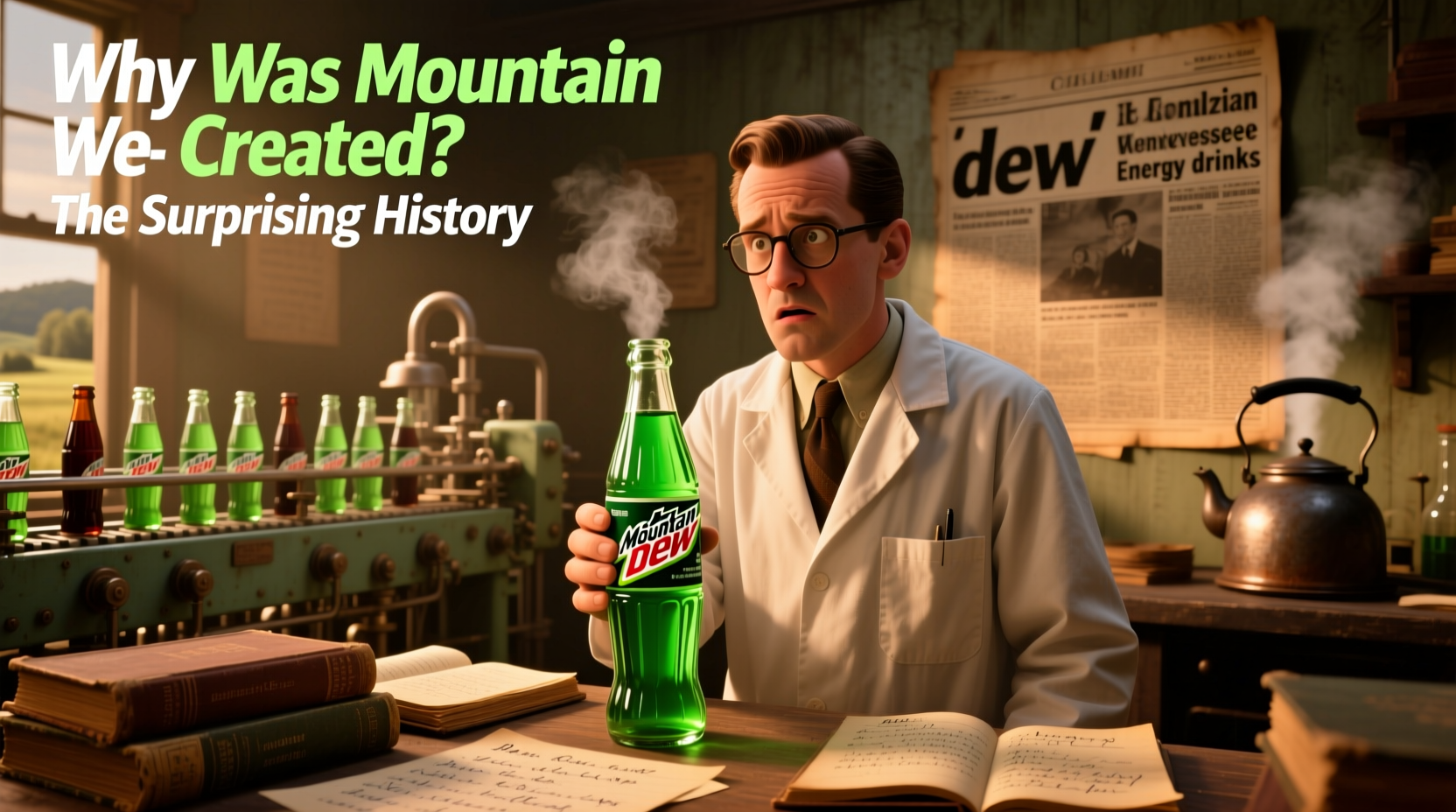
Mountain Dew wasn’t conceived in a corporate boardroom or by a team of flavor scientists. Its roots trace back to the 1940s in Tennessee, where brothers Barney and Ally Hartman operated a small bottling company in Knoxville. At the time, Prohibition had ended, but homemade spirits—commonly known as “moonshine”—remained popular, especially in rural areas. One challenge moonshiners faced was the harsh, raw taste of unaged corn whiskey.
The Hartmans developed a citrus-flavored syrup to mix with whiskey, softening its bite and making it more palatable. They called it \"Mountain Dew\"—a term already used in parts of Scotland and Appalachia to describe high-proof distilled spirits. In Gaelic, “mountain dew” literally translates to “the water of life.” For the Hartmans, the name was both ironic and fitting: their product wasn’t the liquor itself, but what helped make it go down easier.
Tip: The original purpose of Mountain Dew highlights how consumer needs—even underground ones—can inspire innovation.From Bootlegger’s Helper to Commercial Soft Drink
By the late 1940s, the Hartmans realized their citrus mixer had appeal beyond whiskey blending. Consumers were drinking it on its own, over ice, or with soda water. Recognizing this shift, they reformulated the drink into a carbonated soft drink and officially launched Mountain Dew as a bottled soda in 1948.
Its bright yellow-green color and sharp lemon-lime taste set it apart from other sodas, though early distribution remained limited to the southeastern United States. Regional loyalty grew quickly, particularly among outdoor workers and young adults who appreciated its bold flavor and energizing kick—long before caffeine content became a marketing point.
In 1964, the brand was acquired by PepsiCo, marking a turning point. With national distribution muscle and aggressive marketing, Mountain Dew transitioned from a regional curiosity to a mainstream competitor to Sprite and 7UP. But Pepsi didn’t just scale the brand—they redefined it.
A Timeline of Key Milestones
- 1940s: Hartman brothers create citrus mixer for moonshine in Tennessee.
- 1948: First commercial bottling of Mountain Dew as a soft drink.
- 1961: Introduction of canned Mountain Dew, expanding portability.
- 1964: PepsiCo acquires the brand and begins national rollout.
- 1999: Launch of Code Red, the first flavored extension, signaling diversification.
- 2000s: Shift toward youth culture, extreme sports, and energy-focused branding.
- 2010s: Introduction of Mountain Dew Energy and zero-sugar variants.
Rebranding Identity: From Backroads to Big Air
Under PepsiCo, Mountain Dew underwent a dramatic identity overhaul. Gone was the subtle nod to its Appalachian roots; in its place came a hyper-masculine, adrenaline-fueled image. Ads featured motocross stunts, skateboarding fails turned triumphs, and slogans like “Do the Dew” that encouraged risk-taking and individuality.
This repositioning wasn’t arbitrary. Market research showed that teenage boys and young men—who consumed disproportionate amounts of sugary sodas—responded strongly to edgy, irreverent branding. Mountain Dew filled a niche that Coke and even Pepsi couldn’t: a soda that didn’t apologize for being loud, sweet, and caffeinated.
By sponsoring events like the Dew Tour and partnering with video game franchises, Mountain Dew embedded itself in youth culture. It wasn’t just a drink—it was a lifestyle accessory for gamers, skaters, and all-nighters.
“Mountain Dew succeeded by becoming more than a beverage. It sold rebellion, energy, and belonging—all in a neon-green can.” — Dr. Lena Peterson, Cultural Historian at Vanderbilt University
Formulation Secrets: Why It Tastes Like Lightning
What sets Mountain Dew apart from other citrus sodas isn't just branding—it's chemistry. The original formula included a higher citric acid content than most competitors, giving it that unmistakable tang. Later versions increased caffeine levels significantly, especially after the launch of specialized energy lines.
Modern regular Mountain Dew contains about 54 mg of caffeine per 12 oz can—nearly double that of Coca-Cola. This deliberate choice caters to consumers seeking both flavor and stimulation, blurring the line between soda and energy drink.
PepsiCo has also experimented aggressively with flavors: Code Red (cherry), Live Wire (electric cherry), Pitch Black (mystery berry), and even limited-edition tie-ins like Star Wars or Call of Duty themes. These releases often generate buzz on social media, turning product drops into cultural moments.
| Feature | Mountain Dew | Sprite | 7UP |
|---|---|---|---|
| Caffeine (per 12 oz) | 54 mg | 0 mg | 0 mg |
| Sugar Content | 46 g | 38 g | 37 g |
| Color | Bright green-yellow | Clear | Clear |
| Primary Flavor Profile | Lemon-lime + citrus punch | Lemon-lime | Lemon-lime |
| Youth Marketing Focus | Extreme sports, gaming | Music, refreshment | Fitness, fun |
Mini Case Study: The Rise of Baja Blast
No flavor experiment better illustrates Mountain Dew’s cultural integration than Baja Blast. Originally created in 2004 as an exclusive for Taco Bell, the tropical lime flavor was meant to complement Mexican-inspired menu items. What PepsiCo didn’t anticipate was the cult following it would develop.
Consumers began requesting Baja Blast in grocery stores. Fans brewed it into cocktails, used it in cakes, and even petitioned for permanent retail availability. Responding to demand, PepsiCo released Baja Blast in bottles and cans during summer seasons—and later launched a permanent version in 2020.
This case underscores a key insight: Mountain Dew’s audience doesn’t just consume the product—they participate in its evolution. Limited editions aren’t just sales tactics; they’re community-building tools.
FAQ
Was Mountain Dew originally an alcoholic drink?
No, Mountain Dew was never an alcoholic beverage. However, it was initially created as a mixer for moonshine, which contributed to its name and early reputation in Appalachian regions.
Why does Mountain Dew have more caffeine than other sodas?
Starting in the 2000s, PepsiCo positioned Mountain Dew as a drink for active, energetic lifestyles. Higher caffeine content supports this image and appeals to consumers looking for a mental and physical boost.
Is the name 'Mountain Dew' still connected to alcohol?
Historically, yes—the phrase referred to moonshine. Today, the connection is largely forgotten by mainstream audiences, though the brand occasionally nods to its roots through retro packaging or regional campaigns.
Checklist: How to Appreciate Mountain Dew’s Legacy
- Understand its origin as a whiskey mixer, not a standalone soda.
- Recognize the role of regional culture in shaping iconic brands.
- Observe how rebranding transformed its market position.
- Analyze its use of limited editions to drive engagement.
- Consider its influence on the blurring line between soda and energy drinks.
Conclusion
The story of why Mountain Dew was created defies expectations. Born from necessity in a backwoods kitchen, refined for mass appeal, and reimagined for a generation raised on screens and speed, it stands as one of the most fascinating evolutions in American consumer history. More than just a soda, Mountain Dew reflects how brands can pivot, endure, and thrive by listening to their audience—even when that audience starts with bootleggers.
🚀 Next time you crack open a can of Mountain Dew, remember: you're not just drinking citrus and caffeine—you're tasting a piece of rebellious American innovation. Share this story and spark a conversation about the unexpected origins of everyday products!