Walk into a cantina in central Mexico—say, Guanajuato, Jalisco’s highlands, or the historic mining towns of San Miguel de Allende—and you’ll likely see a small plate beside your shot glass: coarse sea salt, a wedge of fresh orange, and sometimes a sliver of dried chili. No lime in sight. This isn’t an oversight or a bartender’s whim. It’s a centuries-old ritual grounded in terroir, sensory balance, and regional identity. While lime-and-salt pairings dominate global perceptions of tequila service—especially with mixto or joven expressions—the orange-and-salt tradition persists with quiet authority among connoisseurs and in specific Mexican communities. Understanding why requires stepping beyond cocktail trends and into the geography of agave, the chemistry of citrus acidity, and the cultural weight of authenticity.
The Regional Roots: Where Orange Replaced Lime
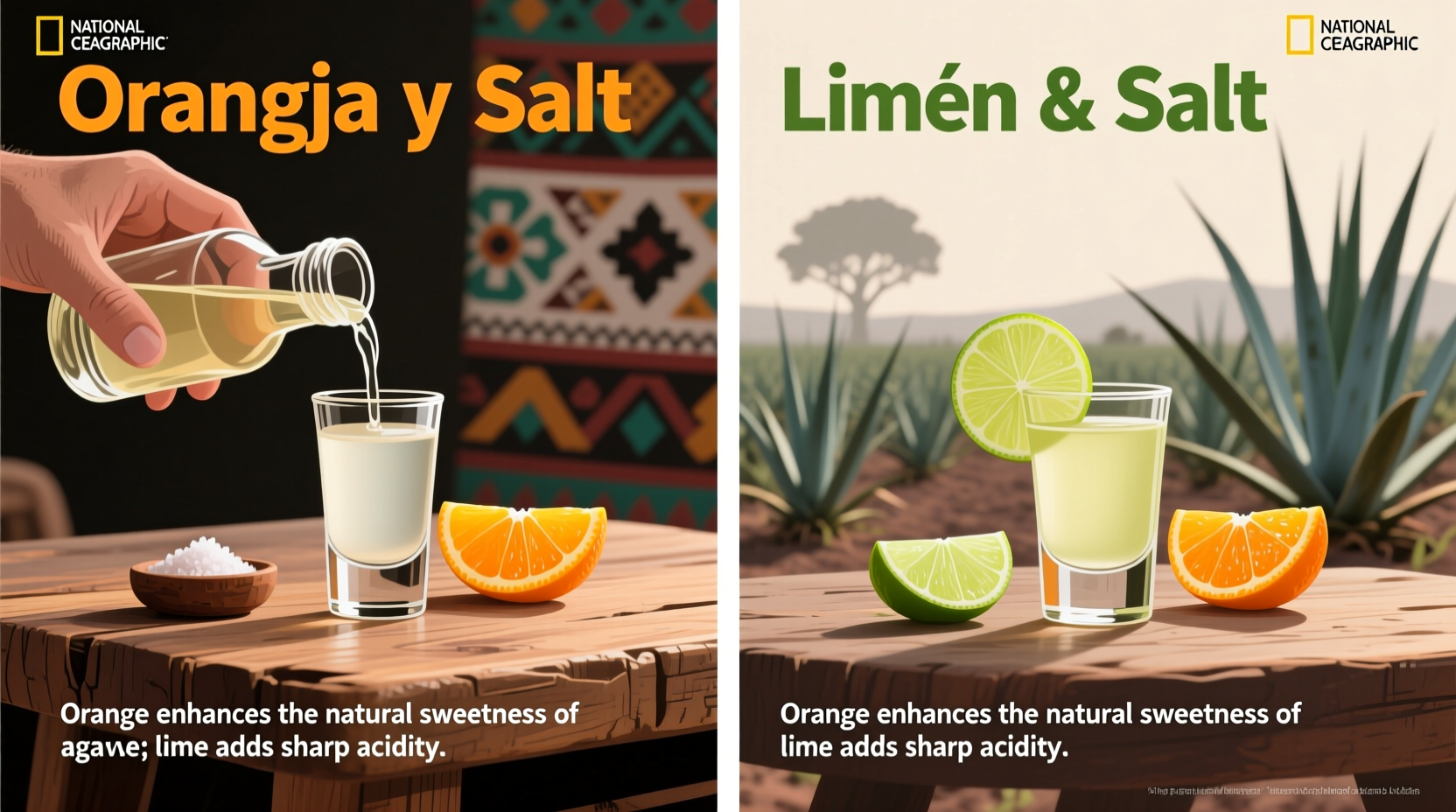
The orange-and-salt custom originates primarily in the Altiplano (Highlands) of Jalisco and neighboring states like Guanajuato and Michoacán—regions where Agave angustifolia and certain heirloom Agave tequilana varieties thrive in mineral-rich volcanic soils and cooler, drier climates. Here, distillers historically produced robust, earthy, and often smoky or peppery tequilas—particularly artisanal añejos and extra añejos aged in used bourbon or native oak barrels. These expressions carry pronounced notes of dried fruit, leather, tobacco, and roasted agave—flavors that clash with the sharp, piercing acidity of lime but harmonize beautifully with the sweeter, lower-acid brightness of navel or Valencia oranges.
Historically, lime was scarce in these inland highland regions. Coastal citrus—especially key limes—was expensive to transport over mountain passes before refrigerated logistics. Oranges, however, were cultivated locally in microclimates and orchards near towns like Dolores Hidalgo and León. Salt came from nearby evaporative salt flats (salinas) in places like San Luis Potosí. The pairing emerged not as a stylistic choice but as a practical, hyperlocal solution: using what grew nearby to temper the intensity of high-proof, unfiltered spirits distilled in small copper pot stills.
“Orange doesn’t mask the tequila—it invites it forward. Its natural sugars soften the alcohol burn, its oils lift herbal top notes, and its subtle bitterness echoes the agave’s vegetal backbone. Lime would shout over all of that.” — Raúl Mendoza, Maestro Tequilero, Destilería Los Arrieros, Atotonilco El Alto, Jalisco
Flavor Chemistry: Why Orange Complements, Not Competes
The difference between lime and orange goes far beyond preference—it’s biochemistry. Limes contain 4–6% citric acid by weight; oranges contain only 0.8–1.2%. That means lime juice delivers nearly five times the tartness per milliliter. When paired with a complex, barrel-aged tequila (often 45–50% ABV), lime’s acidity can overwhelm delicate oxidative notes—vanilla, clove, cedar, dried fig—and amplify harsh ethanol heat rather than taming it.
Oranges, by contrast, offer a balanced triad: mild acidity, perceptible natural fructose (2.5–4.5% sugar), and aromatic limonene-rich oils in the zest. When you lick salt, bite orange, then sip tequila, three things happen sequentially:
- Salt triggers salivary amylase, priming your mouth to perceive sweetness and suppress bitterness;
- Orange coats the palate with volatile citrus oils and gentle sugars, creating a soft, aromatic buffer;
- Tequila lands with reduced perceived alcohol burn and enhanced mid-palate depth—its roasted agave, oak tannins, and spice notes become more articulate.
This sequence works especially well with tequilas that have undergone extended aging or those made with wild-fermented, open-air yeast strains—expressions where nuance matters more than shock value.
Tip: For authentic orange-and-salt service, use thick-cut navel orange wedges (with peel intact) and flaky sea salt—not table salt. The oils in the peel are essential to the aromatic bridge.Tequila Classification Matters: Which Styles Demand Orange?
Not all tequilas benefit equally from orange. The pairing is most intentional—and most traditional—with specific categories defined by production method and aging. Below is a comparative guide to help identify when orange-and-salt is not just appropriate, but expected.
| Tequila Type | Typical Profile | Why Orange Works | Lime Risk |
|---|---|---|---|
| Extra Añejo (3+ years) | Deep oak, dried cherry, leather, cedar, toasted almond | Orange’s low acidity preserves delicate oxidation notes; its sugars echo dried fruit tones | Overpowers subtlety; introduces sour dissonance |
| Traditional Añejo (1–3 years) | Caramel, cinnamon, roasted agave, tobacco leaf | Peel oils enhance spice; sweetness balances oak tannins | Clashes with warm spice; amplifies astringency |
| Highland Blanco (unaged, highland-sourced) | Herbal, floral, mineral, peppery, with earthy depth | Orange zest lifts floral top notes; mild acidity cleanses without stripping | Lime’s sharpness flattens complexity; highlights vegetal bitterness |
| Mixto or Young Joven | Light, neutral, often sweetened or filtered | Unnecessary—orange adds little value; may taste cloying | Lime enhances freshness; standard for casual service |
Note: “Highland” on a label refers to agave grown above 1,500 meters—not just location, but altitude-driven starch composition and slower maturation. These agaves yield richer, more phenolic juice, which translates into bolder, oilier distillates ideal for orange pairing.
A Real Example: The San Miguel Ritual
In San Miguel de Allende, the bar at La Cueva del Agave has served tequila the same way since 1978. Owner Marta Vargas inherited the practice from her grandfather, a former palenquero who distilled on a wood-fired alembique in the hills outside town. Every evening at 7 p.m., patrons gather around the marble bar for the “Tradicional Sanmiguelense”: a 48% ABV extra añejo rested 42 months in ex-Pedro Ximénez sherry casks, served with hand-crushed Himalayan pink salt (a modern nod to local mineral salts), and thick orange wheels cut from trees in her family’s orchard in nearby Coroneo.
Vargas explains: “When my grandfather first brought this tequila to market, people said, ‘Where’s the lime?’ He’d smile and say, ‘Lime is for tourists who don’t taste. Orange is for those who listen.’ We still hear that question—but now, half our guests order it blind, asking only for ‘the listening version.’” Her observation reflects a quiet shift: orange-and-salt is no longer a regional curiosity but a marker of intentionality—chosen by drinkers who prioritize resonance over reflex.
How to Serve Orange-and-Salt Tequila Authentically: A Step-by-Step Guide
Adopting the tradition respectfully means understanding sequence, proportion, and presence—not just swapping citrus. Follow these steps precisely for optimal sensory alignment:
- Chill the glass—not the tequila. Serve at 18–20°C (64–68°F). Cold temperatures mute aroma; room temperature allows volatile esters to express fully.
- Prepare the orange wedge: Cut a 2-cm-thick wheel, leaving the peel intact. Gently rub the cut edge across the rim of the glass to deposit citrus oils—do not dip in salt yet.
- Apply salt strategically: Use a small dish of coarse, uniodized salt (like Flor de Sal or Maldon). Lightly dampen only the outer 3 mm of the orange wedge’s cut surface, then press *just that edge* into salt—never the entire wedge. Excess salt dulls citrus brightness.
- The order is non-negotiable: First, lick the salted edge of the orange. Second, bite gently into the unsalted portion—releasing oils and juice. Third, sip the tequila slowly, holding it on the mid-tongue for 5 seconds before swallowing.
- Pause for 15 seconds before repeating. This allows retronasal olfaction to recalibrate and prevents palate fatigue.
FAQ: Clarifying Common Misconceptions
Is orange-and-salt only for “old-fashioned” or “rustic” tequilas?
No. While deeply tied to traditional methods, modern craft producers—including certified organic and biodynamic distilleries—are reviving the pairing intentionally. It’s less about age and more about aromatic integrity: if a tequila expresses oxidative, spicy, or earthy notes, orange serves it better than lime—even in a contemporary blanco fermented with native yeasts.
Can I use lemon instead of orange?
Not authentically—and not advised. Lemons sit between lime and orange in acidity (2.5–3.5% citric acid) but lack orange’s aromatic oil profile and natural sugars. They introduce a sharper, greener note that disrupts the warm, rounded harmony essential to the ritual. Stick to navel, Valencia, or even blood orange for deeper berry undertones.
Does the salt type really matter?
Yes. Iodized table salt contains anti-caking agents that impart a faint metallic aftertaste, clashing with agave’s delicate minerality. Unrefined sea salts—especially those with trace magnesium or potassium—enhance mouthfeel and subtly echo the volcanic terroir of highland agave. Avoid smoked salts unless explicitly recommended by the producer; their intensity overwhelms rather than complements.
Conclusion: Beyond Garnish—A Gesture of Respect
Orange and salt is not a gimmick. It is a time-tested sensory framework—one that honors the land where the agave grew, the hands that harvested it, and the patience required to age spirit until it speaks in layers. Choosing orange over lime signals more than personal taste; it reflects attention to origin, respect for craftsmanship, and willingness to engage with tequila as a regional expression rather than a generic base spirit. In an era where provenance matters more than ever—in wine, coffee, chocolate, and now spirits—the orange wedge is both invitation and instruction: slow down, taste deliberately, and let the agave lead.
If you’ve only known tequila through lime and triple sec, try this ritual with a single-barrel extra añejo from the Highlands. Notice how the orange doesn’t compete—it converses. How the salt doesn’t assault—it clarifies. How the tequila, suddenly unhurried and unmasked, reveals itself not as fire, but as story.
💬 Have you experienced orange-and-salt tequila service in Mexico—or tried it at home? Share your tasting notes, favorite producers, or regional variations in the comments. Let’s deepen the conversation, one thoughtful sip at a time.