It’s a familiar ritual: a glass of red wine after a long day—then, within hours, a dull pressure behind the eyes, temple throbbing, nausea creeping in. You’ve heard the explanation before: “It’s the sulfites.” Grocery store labels shout “Contains Sulfites” in bold type, and wine shops reassure customers with “low-sulfite” options. But here’s what most people don’t know—there is no credible scientific evidence linking sulfites in wine to headaches in the general population. In fact, sulfite sensitivity typically manifests as asthma-like symptoms—not headaches—and affects fewer than 1% of people, mostly those with severe, pre-existing asthma. So if your head pounds after Pinot Noir but not after beer or spirits, the real culprits lie elsewhere—in wine’s unique biochemical fingerprint, your own physiology, and habits that amplify vulnerability.
The Sulfite Myth: Why Blaming Them Is Misleading
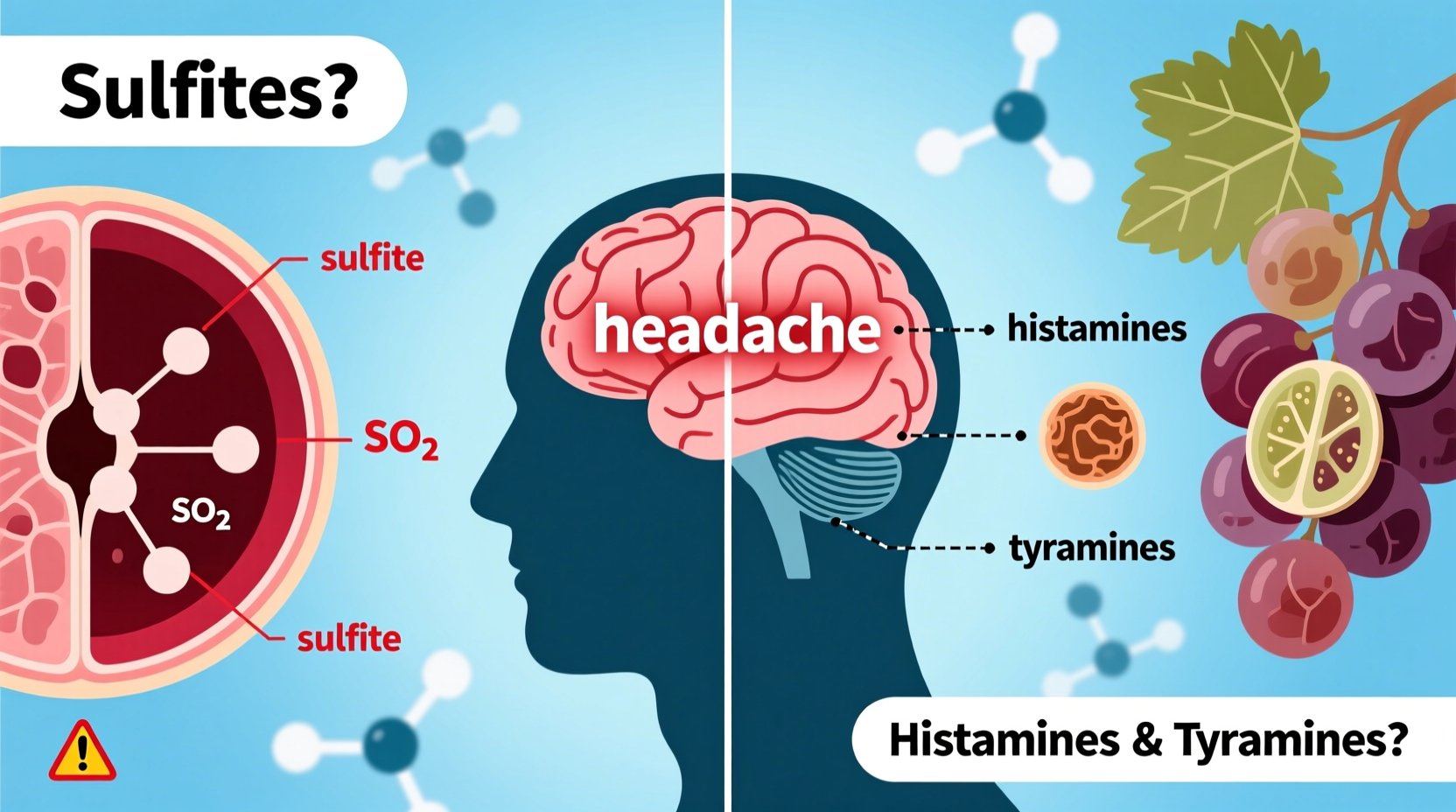
Sulfur dioxide (SO₂) is added to wine as an antioxidant and antimicrobial agent. It prevents oxidation and spoilage, preserving freshness and stability. All wines—even organic and “no-added-sulfite” bottles—contain some naturally occurring sulfites (5–10 mg/L), because yeast produce them during fermentation. Wines with added SO₂ typically range from 20–200 mg/L, well below the FDA’s safety threshold of 350 mg/L for foods.
Clinical studies consistently fail to reproduce wine headache symptoms when sulfites are administered in isolation. A landmark double-blind study published in The Journal of Allergy and Clinical Immunology (2004) gave asthmatic and non-asthmatic participants capsules containing 50 mg of sodium metabisulfite—the equivalent of drinking two full bottles of high-sulfite wine—yet found zero correlation with headache onset. Meanwhile, placebo-controlled trials using actual wine consistently trigger headaches in susceptible individuals, confirming the trigger lies beyond sulfites.
“Sulfite-induced headaches are a persistent myth unsupported by decades of allergology research. If you’re getting headaches from wine, look at alcohol metabolism, biogenic amines, or hydration—not the sulfite warning on the label.” — Dr. Robert M. O’Keefe, Board-Certified Allergist and Fellow of the American Academy of Allergy, Asthma & Immunology
Real Culprits: Histamines, Tannins, and Alcohol Metabolism
Wine contains several bioactive compounds that interact uniquely with human physiology—especially in sensitive individuals. Three stand out as primary headache triggers:
- Histamines: Naturally present in fermented foods, histamines accumulate during maceration (skin contact) and aging. Red wines contain 2–10× more histamine than whites—up to 15 mg/L in aged Syrah versus ~1 mg/L in Sauvignon Blanc. Histamine triggers vasodilation and neuroinflammation; those with low diamine oxidase (DAO) enzyme activity—common in 15–20% of adults—cannot break it down efficiently, leading to accumulation and headache onset.
- Tannins: These polyphenolic compounds bind salivary proteins, creating that drying, astringent mouthfeel. But they also stimulate serotonin release in the gut and brainstem. Excess serotonin can cause vasoconstriction followed by rebound vasodilation—a known migraine pathway. High-tannin wines like Cabernet Sauvignon, Nebbiolo, and Malbec pose greater risk, especially on an empty stomach.
- Acetaldehyde buildup: When alcohol (ethanol) metabolizes, it converts first to acetaldehyde—a highly reactive, toxic compound. Normally, aldehyde dehydrogenase (ALDH2) rapidly breaks it down. But up to 40% of East Asians carry an ALDH2*2 gene variant causing slow acetaldehyde clearance. Even among Caucasians, ALDH2 efficiency declines with age, stress, or concurrent medication use. Acetaldehyde dilates cranial blood vessels and triggers inflammatory cytokines—directly provoking headache, flushing, and nausea.
Dehydration and Vasodilation: The Silent Amplifiers
Alcohol is a potent diuretic—it suppresses antidiuretic hormone (ADH), increasing urine output by up to 300% in the first hour after consumption. Even mild dehydration (a 1.5% loss of body water) impairs cerebral blood flow regulation and lowers pain thresholds. Combine that with wine’s natural vasodilatory compounds—resveratrol, quercetin, and nitric oxide donors—and you create a perfect storm: expanded blood vessels in the meninges, heightened neural sensitivity, and reduced cerebrospinal fluid cushioning.
This effect is magnified by context. Drinking wine late at night? Sleep deprivation lowers your headache threshold by 40%. Pairing it with salty appetizers? Sodium retention worsens intracranial pressure shifts. Skipping water between glasses? One 5-oz glass of wine causes net fluid loss of ~200 mL—equivalent to skipping half a standard water bottle.
| Factor | Headache Risk Increase | Why It Matters |
|---|---|---|
| No food before/with wine | 3.2× higher | Accelerates ethanol absorption; doubles peak blood alcohol and acetaldehyde concentration |
| Drinking >2 glasses in 90 min | 4.7× higher | Overwhelms ALDH2 capacity; extends acetaldehyde exposure window |
| Consuming wine after 8 PM | 2.8× higher | Circadian dip in DAO/ALDH2 activity; melatonin-alcohol interaction increases oxidative stress |
| No water intake (1:1 ratio) | 3.9× higher | Reduces plasma volume by 5–7%; elevates endothelin-1 (a potent vasoconstrictor) |
A Real-World Case Study: Sarah’s Pattern Recognition
Sarah, 38, a graphic designer in Portland, experienced weekly headaches after her “unwind with red wine” routine. She switched to “sulfite-free” natural wines, then to white wine, then cut back to one glass—yet headaches persisted. Frustrated, she tracked variables for four weeks: timing, food intake, sleep, hydration, and wine type. Her log revealed a clear pattern: headaches occurred only after full-bodied reds consumed before dinner, never after sparkling wine or beer, and never when she ate grilled salmon and roasted vegetables first.
Working with a functional nutritionist, Sarah tested her DAO enzyme activity (via blood serum assay) and discovered she was in the lowest quartile. She also learned her favorite Zinfandel had 12.8 mg/L histamine—nearly 10× her personal tolerance threshold. With targeted interventions—taking DAO enzyme supplements 15 minutes before wine, pairing with histamine-lowering foods (fresh herbs, lemon juice, olive oil), and committing to 16 oz of electrolyte water before her first glass—her headache frequency dropped from 4x/month to 0x over 12 weeks. Her story underscores a critical truth: individual biochemistry matters more than blanket wine categories.
Actionable Prevention Checklist
Before your next glass, apply this evidence-based checklist to reduce risk:
- ✅ Eat first: Consume 15–20 g of protein + healthy fat (e.g., 1 oz almonds + 1 tbsp olive oil) 20 minutes before opening the bottle.
- ✅ Hydrate proactively: Drink 8 oz of water with electrolytes (sodium, potassium, magnesium) before your first glass—and another 4 oz between each glass.
- ✅ Choose lower-histamine wines: Opt for dry, unoaked whites (Pinot Grigio, Albariño), rosés, or lighter reds aged less than 12 months (Beaujolais Nouveau, young Grenache).
- ✅ Avoid high-risk pairings: Skip aged cheeses (high tyramine), cured meats (high histamine), and chocolate (serotonin modulator) with wine.
- ✅ Time it right: Drink wine between 5–7 PM—when DAO and ALDH2 activity peaks—and stop by 8:30 PM to align with circadian detox rhythms.
Frequently Asked Questions
Can I test for histamine intolerance or ALDH2 deficiency?
Yes. DAO enzyme activity is measured via serum test (available through labs like Vibrant America or Doctor’s Data); ALDH2 status can be determined via genetic testing (23andMe reports rs671 variant) or a simple ethanol patch test (apply 10% alcohol to inner forearm—if redness appears within 10 minutes, ALDH2 deficiency is likely). Work with a functional medicine provider to interpret results and personalize strategies.
Do “wine headache pills” work?
Most over-the-counter products contain quercetin, vitamin B6, and bromelain—compounds with weak anti-histamine or anti-inflammatory effects. While safe, peer-reviewed trials show no statistically significant reduction in wine headache incidence versus placebo. Evidence-based interventions—food timing, hydration, and enzyme support—outperform supplements by wide margins.
Why don’t I get headaches from beer or spirits?
Beer contains far less histamine (<0.1 mg/L) and negligible tannins; distilled spirits contain virtually no histamines, tannins, or congeners (byproducts of fermentation). Their alcohol is absorbed more slowly due to higher proof and typical consumption patterns (mixed drinks, sipping). Wine’s unique combination—alcohol + histamine + tannins + acidity + low pH—creates synergistic neurovascular effects unmatched by other beverages.
Conclusion: Reclaim Your Enjoyment—Without the Aftermath
Wine headaches aren’t inevitable. They’re not a sign you must give up wine—or resign yourself to discomfort. They’re a signal: your body is responding to specific, identifiable compounds in a specific context. By shifting focus from the convenient scapegoat (sulfites) to the real players—histamine load, tannin-driven serotonin shifts, acetaldehyde metabolism, and dehydration—you gain agency. You learn to choose wines aligned with your biology, time consumption with your circadian rhythm, and pair intentionally—not just for flavor, but for physiological resilience. This isn’t about restriction; it’s about precision. It’s about savoring that first sip of a balanced Pinot Noir knowing your temples won’t protest by midnight. Start tonight: pour your glass, eat mindfully, hydrate deliberately, and observe—not with anxiety, but with curiosity. Your next headache-free evening is closer than you think.
💬 Have you cracked your personal wine headache code? Share your breakthrough strategy—what worked, what surprised you, or what you’re still testing—in the comments. Your experience could help someone else raise their glass with confidence.