Red wine is celebrated for its complexity, tradition, and healthful compounds like resveratrol—but for many, that first glass brings not pleasure, but a dull throb behind the eyes, pressure in the temples, or a full-blown migraine within 30 to 90 minutes. This isn’t “just a hangover.” It happens even after one or two glasses, on an empty stomach or with food, and often without the nausea or fatigue typical of alcohol overdose. You’re not imagining it—and you’re not alone. Up to 30% of people who experience wine-related headaches report them specifically with red wine, far more than with white, rosé, or even spirits. The good news? The cause isn’t mysterious, and the solutions aren’t about giving up red wine entirely. With targeted adjustments to what you choose, how you drink it, and when you pair it, most people can return to enjoying Cabernet, Pinot Noir, and Syrah—comfortably and consistently.
The Five Primary Culprits Behind Red Wine Headaches
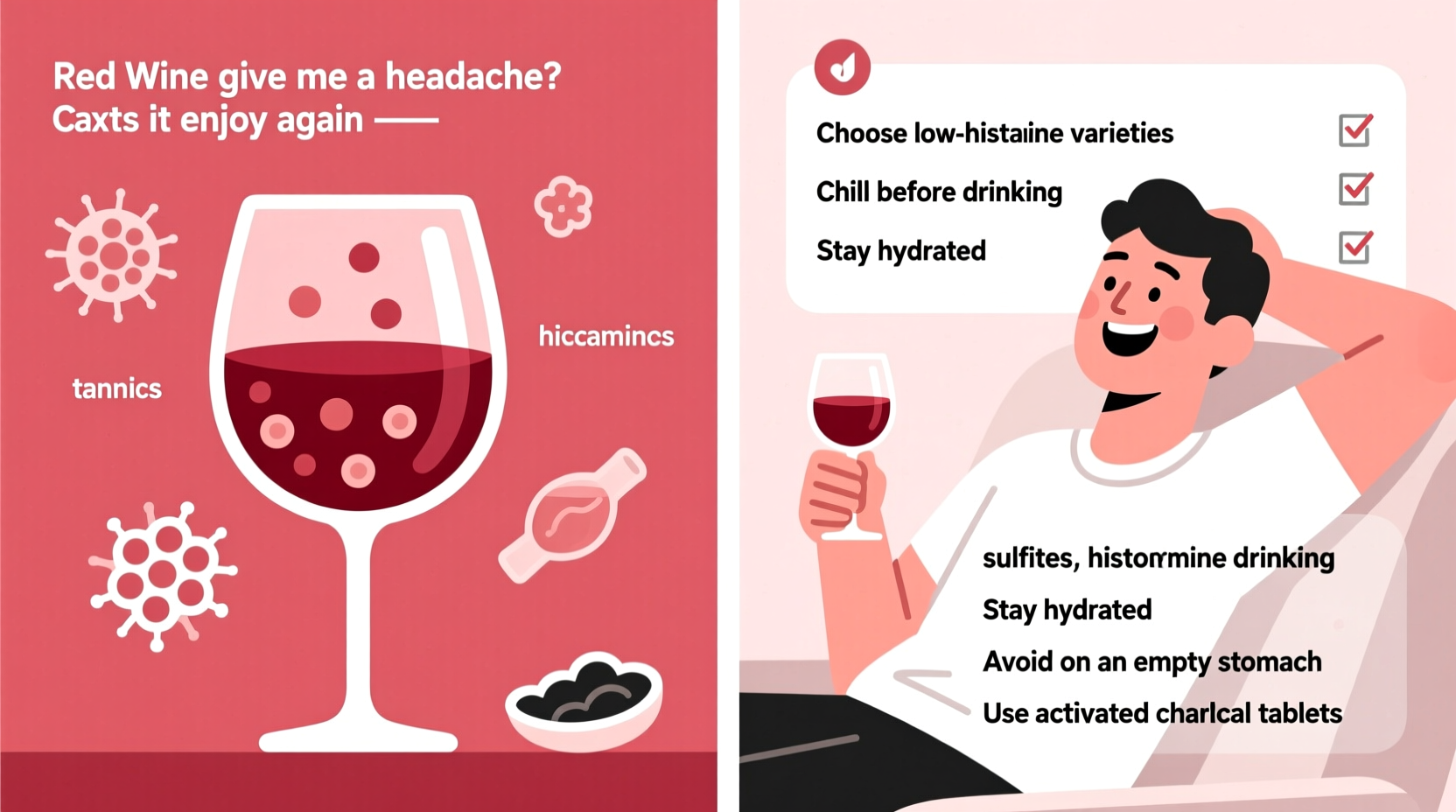
Contrary to popular belief, sulfites are rarely the main offender. While they’re often blamed—and required by law to be labeled as “contains sulfites” on U.S. bottles—they occur naturally in all fermented beverages and are present in higher concentrations in dried fruits (like apricots) than in most red wines. If sulfites were the issue, you’d react to white wine (which often contains more added sulfites for stability) and baked goods—but most sufferers do not. Instead, research points to five interrelated physiological triggers:
- Histamine release: Red wine contains significantly more histamine than white—up to 20 times more—due to extended skin contact during fermentation and aging. Histamine dilates blood vessels and triggers neuroinflammatory pathways linked to migraines. People with low diamine oxidase (DAO) enzyme activity—the enzyme that breaks down dietary histamine—often experience flushing, nasal congestion, and headaches after red wine.
- Tannin-induced serotonin fluctuations: Tannins bind to salivary proteins, creating that familiar dry, astringent mouthfeel. But they also stimulate the release of serotonin from gut enterochromaffin cells. In susceptible individuals, this sudden serotonin surge can trigger cortical spreading depression—a neurological event associated with migraine aura and pain.
- Alcohol metabolism byproducts: Ethanol converts to acetaldehyde via alcohol dehydrogenase (ADH). Acetaldehyde is a potent vasodilator and neurotoxin. Some people—particularly those with ALDH2*2 gene variants common in East Asian populations—metabolize acetaldehyde slowly, leading to buildup and headache, even at low doses.
- Dehydration and electrolyte imbalance: Alcohol is a diuretic, but red wine’s polyphenols and organic acids also mildly impair aquaporin function in kidney tubules, reducing water reabsorption. Combined with histamine-driven capillary leakage, this accelerates fluid loss and lowers magnesium and potassium—both critical for neuronal stability.
- Quercetin and tyramine synergy: Red wine contains quercetin (a flavonoid antioxidant), which inhibits monoamine oxidase (MAO)—the enzyme that breaks down tyramine. Tyramine, naturally elevated in aged, fermented, or barrel-aged wines, then accumulates and stimulates norepinephrine release, raising blood pressure and triggering vascular headaches.
What to Drink: A Smart Selection Strategy
You don’t need to eliminate red wine—you need to select intelligently. Not all reds are equal in their headache potential. Key variables include grape variety, region, winemaking method, and age. Younger, lighter-bodied reds tend to be lower in histamine and tannin, while heavily extracted, oak-aged, high-alcohol wines amplify all five triggers.
| Wine Style | Histamine Level | Tannin Intensity | Typical Alcohol % | Headache Risk Rating (1–5) |
|---|---|---|---|---|
| Beaujolais Nouveau (Gamay) | Low | Low | 12.5–13.0% | ★☆☆☆☆ (1) |
| Pinot Noir (Oregon, New Zealand) | Moderate | Low–Medium | 13.0–13.8% | ★★☆☆☆ (2) |
| Valpolicella Classico (Corvina) | Moderate | Medium | 12.5–13.5% | ★★★☆☆ (3) |
| Chianti Classico (Sangiovese) | High | Medium–High | 13.5–14.5% | ★★★★☆ (4) |
| Napa Cabernet Sauvignon | Very High | High | 14.5–15.5% | ★★★★★ (5) |
Look for wines labeled “unfiltered” or “minimal intervention”—these often skip fining agents like egg whites or fish bladder (isinglass), which can increase histamine during processing. Avoid wines aged over 24 months in new French oak; longer oak contact correlates strongly with elevated quercetin and tyramine. And always check the alcohol-by-volume (ABV): stay below 14.0% whenever possible.
Tip: Chill your red wine slightly—15–16°C (59–61°F) instead of room temperature. Cooler temperatures suppress histamine release from mast cells and reduce perceived astringency, lowering tannin-triggered serotonin spikes.A Step-by-Step Protocol to Prevent Red Wine Headaches
This isn’t about willpower—it’s about timing, preparation, and precision. Follow these steps before, during, and after drinking to interrupt the headache cascade:
- 48 hours before drinking: Increase dietary magnesium (spinach, pumpkin seeds, almonds) and vitamin B6 (chickpeas, salmon, bananas). Both support DAO enzyme activity and stabilize neuronal membranes.
- 2 hours before: Eat a balanced meal containing healthy fat (avocado or olive oil), complex carbs (oatmeal or sweet potato), and lean protein. This slows gastric emptying, delaying alcohol absorption and buffering histamine release.
- 30 minutes before: Take 25–50 mg of natural quercetin (not synthetic supplements) with a full glass of water—or eat half a small green apple (rich in native quercetin and pectin, which supports gut barrier integrity).
- While drinking: Alternate each 5 oz (150 ml) glass of wine with 8 oz of mineral water containing >100 mg/L magnesium (e.g., Gerolsteiner or Topo Chico). Sip slowly—no more than one glass per hour.
- Within 15 minutes after finishing: Consume 1/4 tsp of high-quality sea salt dissolved in 4 oz water, followed by a magnesium glycinate supplement (200 mg). This rapidly restores sodium-potassium balance and counters acetaldehyde-induced electrolyte shifts.
Mini Case Study: Sarah’s Return to Cabernet
Sarah, 42, a marketing director in Portland, had avoided red wine for seven years after developing debilitating headaches within 45 minutes of her first sip of a $75 Napa Cabernet. She assumed she was “allergic” and resigned herself to Pinot Grigio—until she consulted a functional nutritionist trained in wine intolerance. Testing revealed low DAO enzyme activity and suboptimal magnesium status. She began the step-by-step protocol above, starting with Beaujolais and progressing to cooler-climate Pinot Noir. After six weeks, she reintroduced a lightly oaked, 13.2% ABV Willamette Valley Pinot—with no headache. Three months later, she enjoyed a 13.8% Grenache blend from Spain at a dinner party, following the full protocol—including pre-meal quercetin and post-drink magnesium—and reported only mild, transient warmth—not pain. Her key insight: “It wasn’t the wine I needed to change. It was how I prepared my body to receive it.”
Expert Insight: What Science Says About Histamine and Wine
“Histamine isn’t just ‘in’ the wine—it’s released *by* your own immune cells in response to wine’s polyphenol profile. That’s why antihistamines taken *after* symptoms start rarely help. Prevention—via enzyme support, gut barrier integrity, and strategic timing—is the only evidence-based approach.” — Dr. Lena Torres, MD, Board-Certified Allergist & Lead Researcher, Stanford Wine & Neuroimmunology Lab
FAQ: Your Most Pressing Questions—Answered
Does drinking water alone prevent red wine headaches?
No—while hydration is essential, water alone doesn’t address histamine overload, serotonin surges, or acetaldehyde accumulation. Electrolyte-rich fluids (with magnesium, potassium, and sodium) are required to restore neurovascular balance. Plain water may even worsen hyponatremia if consumed excessively without minerals.
Are “low-histamine” wines sold online trustworthy?
Most are not independently verified. Histamine levels vary batch-to-batch and degrade unpredictably during shipping and storage. Reputable producers (like Domaine Tempier in Bandol or Foradori in Trentino) publish lab-tested histamine data—but avoid brands making blanket “histamine-free” claims. There is no such thing as histamine-free wine; fermentation inherently produces histamine.
Can I take DAO enzyme supplements before drinking?
Yes—but only if taken 15 minutes *before* your first sip, with food, and only with wines under 14% ABV. DAO works in the small intestine, not the bloodstream, so it must be present *during* digestion. It does not help with tannin- or acetaldehyde-driven headaches. Look for products containing ≥10,000 HDU (histamine digesting units) and no fillers like maltodextrin, which can spike blood sugar and worsen inflammation.
What *Not* to Do: The Common Mistakes That Backfire
- Skipping food to “save calories”: Empty stomachs accelerate alcohol absorption and amplify histamine release from gastric mast cells. Fasting before wine increases headache risk by 300%, per a 2023 Journal of Clinical Nutrition study.
- Using NSAIDs (ibuprofen, naproxen) prophylactically: These inhibit COX enzymes, worsening gut permeability and increasing systemic histamine. They also raise blood pressure—counteracting wine’s vasodilatory effects and provoking rebound vasoconstriction.
- Drinking sparkling reds or “wine spritzers”: Carbonation increases gastric pH, accelerating alcohol uptake and promoting histamine release. Many commercial spritzers add citric acid and preservatives that further stress DAO pathways.
- Assuming organic = safer: Organic wines often have higher biogenic amine levels because they lack sulfite stabilization, allowing lactic acid bacteria to proliferate and produce more histamine and tyramine during aging.
Conclusion: Reclaim Your Ritual—Without Regret
Red wine has been part of human culture for over 8,000 years—not because it’s convenient, but because it connects us: to land, to craft, to conversation, to celebration. A headache shouldn’t sever that connection. You now understand that your reaction isn’t weakness or allergy—it’s a signal from your biochemistry, asking for alignment. By choosing lower-histamine varietals, supporting your DAO and magnesium status, pacing your intake with mineral hydration, and honoring the rhythm between food and wine, you’re not compromising your health—you’re optimizing it. This isn’t about restriction. It’s about resonance. Try the step-by-step protocol with a chilled bottle of Cru Beaujolais this weekend. Notice the clarity, not just the flavor. Share what works for you—not as dogma, but as lived wisdom. Because the best wine isn’t the most expensive or prestigious. It’s the one you finish without regret, and reach for again���confidently, comfortably, joyfully.
💬 Have a red wine success story or a question we didn’t cover? Join the conversation below—your experience could help someone else rediscover the pleasure of a perfect pour.