Strawberry wine is a labor of love—fragrant, vibrant, and deeply personal. Yet many home winemakers face the same quiet disappointment: a wine that shines during fermentation, glows ruby-red in the carboy, and then—within weeks of bottling—fades to amber-brown and smells muted, flat, or even faintly sherry-like. This isn’t just aesthetic loss; it’s a chemical unraveling of flavor, aroma, and stability. Unlike commercial producers who control oxygen exposure, sulfur dioxide (SO₂) levels, pH, and temperature down to the decimal, home batches often fall victim to subtle but cumulative missteps—most occurring *after* fermentation ends, not before. The browning and aroma loss aren’t random failures. They’re diagnostic signals pointing to specific, correctable causes rooted in oxidation, enzymatic activity, microbial instability, and improper stabilization. Understanding these mechanisms transforms troubleshooting from guesswork into precise intervention.
Oxidation: The Silent Culprit Behind Browning and Aroma Fade
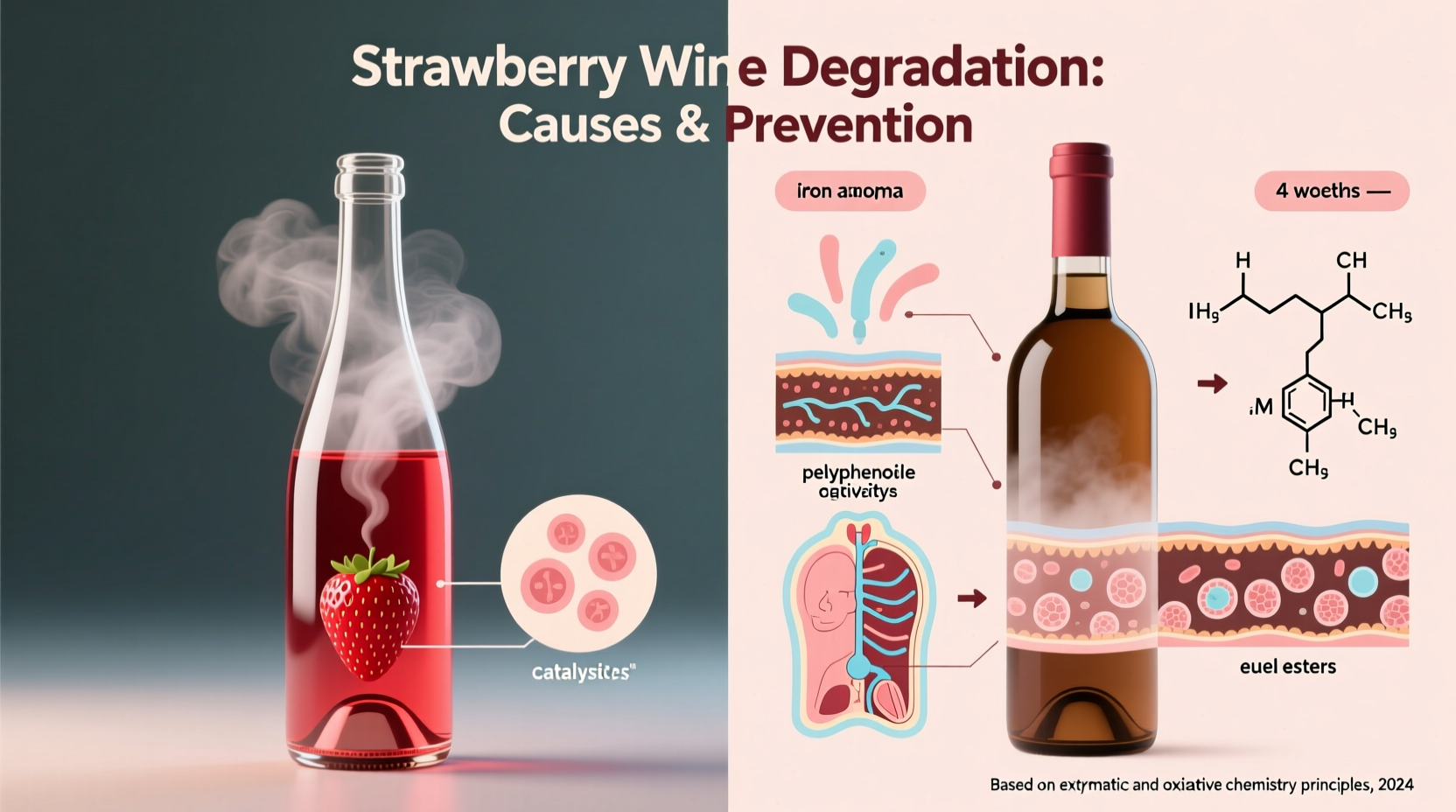
Browning in strawberry wine is primarily driven by enzymatic and non-enzymatic oxidation. Strawberries contain high levels of polyphenol oxidase (PPO), an enzyme that catalyzes the oxidation of phenolic compounds—especially ortho-diphenols like catechin and epicatechin—into quinones. These quinones polymerize rapidly, forming yellow-to-brown melanin-like pigments. Unlike grapes, strawberries lack natural tannins that can bind and stabilize these compounds; instead, their delicate anthocyanins (the pigments responsible for red color) are highly susceptible to oxidative degradation. Once oxygen dissolves into the wine—during racking, fining, filtering, or especially at bottling—it triggers cascading reactions: anthocyanins degrade, fruity esters (ethyl hexanoate, isoamyl acetate) volatilize or hydrolyze, and volatile thiols (key to fresh strawberry top notes) oxidize irreversibly.
This process accelerates dramatically post-bottling because residual oxygen trapped in the headspace reacts continuously with wine components over time. Even 1–2 mL of air in a 750 mL bottle introduces enough O₂ to initiate measurable browning within 10–14 days. Without sufficient free SO₂ to scavenge oxygen and bind quinones, the reaction proceeds unchecked.
Tip: Always purge bottles with inert gas (food-grade nitrogen or argon) immediately before filling—even if using screw caps. A 3-second burst reduces headspace O₂ by >90% and delays browning by 3–5 months.pH and Sulfur Dioxide: The Critical Stability Duo
Sulfur dioxide exists in wine as free (active) and bound forms. Only free SO₂ acts as an antioxidant and antimicrobial agent—and its effectiveness is profoundly pH-dependent. At pH 3.0, ~80% of free SO₂ remains in the active molecular form (H₂SO₃); at pH 3.6, only ~35% does. Strawberry musts typically start between pH 3.2–3.8 due to low natural acidity. If unadjusted, even 50 ppm total SO₂ may deliver less than 15 ppm effective free SO₂—far below the 25–35 ppm minimum required to protect against oxidation and spoilage organisms.
Without adequate free SO₂, acetaldehyde accumulates (giving bruised apple or sherry-like notes), lactic acid bacteria proliferate (producing mousiness or diacetyl butteriness), and oxidation accelerates. Worse, bound SO₂ increases over time as it reacts with carbonyl compounds—further depleting the protective free pool. Testing free SO₂ *immediately before bottling* is non-negotiable. Relying on total SO₂ measurements or “adding a Campden tablet per gallon” ignores your wine’s actual chemistry.
| pH Level | % Molecular SO₂ (Active Form) | Min. Free SO₂ Needed (ppm) for Stability | Risk if Below Target |
|---|---|---|---|
| 3.0 | 80% | 20–25 | Low risk of oxidation; good microbial control |
| 3.3 | 55% | 25–30 | Moderate oxidation risk; possible Brettanomyces growth |
| 3.6 | 35% | 35–45 | High browning rate; rapid aroma loss; vinegar taint likely |
| 3.8+ | <25% | 50–65+ | Unstable within days; avoid bottling until adjusted |
Enzyme Activity and Heat Sensitivity: Why Cold Fermentation Isn’t Enough
Many home winemakers assume that fermenting cool (12–15°C) halts enzyme activity. It doesn’t. Polyphenol oxidase remains fully functional below 20°C—and survives standard fermentation temperatures entirely. PPO is only denatured above 65°C for several minutes, which is impractical (and destructive) for fruit wine. Instead, winemakers rely on SO₂ to inhibit PPO—but only if added *early*, ideally within hours of crushing. Delayed SO₂ addition allows PPO to oxidize phenolics before inhibition occurs, creating irreversible brown precursors that persist through fermentation and aging.
Strawberries also contain peroxidase, another heat-stable enzyme that degrades hydrogen peroxide—a natural antimicrobial compound produced by yeast. When peroxidase remains active, it weakens the wine’s innate defense system, making it more vulnerable to oxidation and microbial spoilage later. This explains why some batches brown *even with proper SO₂ at bottling*: the damage was done during crushing and pressing, before any preservative was added.
“Enzymatic browning in berry wines isn’t about ‘old fruit’—it’s about timing. SO₂ added within 90 minutes of crushing prevents 95% of early oxidation. After 3 hours? You’re stabilizing damage, not preventing it.” — Dr. Lena Torres, Enology Researcher, UC Davis Department of Viticulture & Enology
A Real Bottling Failure: The Case of Mara’s 2023 Batch
Mara, a home winemaker in Vermont, made 12 gallons of strawberry wine from locally picked June berries. She crushed, added one Campden tablet per gallon, waited 24 hours, pitched yeast, and fermented at 16°C for 14 days. After racking and clearing with bentonite, she tested acidity (TA = 5.8 g/L, pH = 3.72) but skipped SO₂ testing. She bottled using a hand-crank filler without purging, capped with corks sealed with wax. Within three weeks, six bottles showed distinct amber edges and a flat, stewed-strawberry aroma. By week eight, all were noticeably brown and smelled of bruised apples and wet cardboard.
Lab analysis revealed: pH 3.72 → only 22% molecular SO₂; measured free SO₂ pre-bottling: 12 ppm (target: ≥40 ppm); dissolved O₂ at bottling: 4.8 mg/L (safe threshold: ≤0.5 mg/L); acetaldehyde: 185 mg/L (normal: <30 mg/L). The root cause wasn’t poor fruit or bad yeast—it was uncorrected pH and inadequate oxygen management compounded by delayed SO₂ addition. Mara reprocessed her remaining 3 gallons: adjusted pH to 3.45 with tartaric acid, added potassium metabisulfite to reach 42 ppm free SO₂, sparged with nitrogen during racking, and purged bottles before filling. That batch remained brilliantly pink and aromatic for 11 months.
Step-by-Step: The Oxidation-Proof Bottling Protocol
Preventing browning and aroma loss requires disciplined execution—not just theory. Follow this sequence precisely, starting 72 hours before bottling:
- Test and Adjust pH: Measure with calibrated meter (not strips). If pH > 3.5, add tartaric acid in 0.1 g/L increments, stir thoroughly, wait 1 hour, retest. Target pH: 3.35–3.45.
- Measure Free SO₂: Use a reputable titration kit (e.g., Titrets® or Accuvin). If below target (see table above), calculate needed potassium metabisulfite: (Target ppm − Current ppm) × (Wine Volume in L) × 0.57. Dissolve in warm water, stir gently into wine.
- Sparging (Optional but Recommended): Gently bubble food-grade nitrogen through wine for 5 minutes using a diffusion stone. Reduces dissolved O₂ from ~8 mg/L to <0.3 mg/L.
- Rack Under Inert Gas: Transfer wine from carboy to bottling bucket using closed transfer (silicone tubing, no splashing), with nitrogen flowing into the source vessel headspace.
- Purge Bottles Immediately Before Filling: Insert nitrogen wand 1 inch into each empty bottle; release gas for 3 seconds. Fill within 10 seconds.
- Minimize Headroom: Fill to within ½ inch of cork or cap. For corks, use size #9 straight or tapered; for screw caps, choose oxygen-transfer-rate (OTR) < 0.05 cc/bottle/day.
Microbial Instability: When “Clean” Isn’t Clean Enough
Aroma loss isn’t always oxidative. Acetobacter (vinegar bacteria) and lactic acid bacteria (LAB) thrive in residual sugar, low SO₂, and elevated pH. Even trace sugars (<0.5%) left unfermented provide fuel. LAB metabolize malic and citric acids into lactic acid and diacetyl—contributing buttery, butterscotch, or sauerkraut notes that mask delicate strawberry esters. Acetobacter converts ethanol into acetic acid and ethyl acetate, producing sharp vinegar and nail-polish-solvent aromas that dominate and fatigue the nose.
Critical point: strawberry wine rarely contains malic acid, but it *does* contain citric acid—and some strains of Oenococcus oeni can metabolize citrate, generating CO₂ (causing fizz in still wine) and diacetyl. This is why “stabilized” wine can still develop off-aromas: chemical stabilization (SO₂, sorbate) doesn’t equal microbiological stability if pH and nutrients remain favorable.
- Always verify dryness: Use a hydrometer (SG ≤ 0.994) *and* test with Clinitest tablets or enzymatic assay for residual glucose/fructose.
- Sorbate alone is insufficient: It inhibits yeast reproduction but does not kill bacteria or stop enzymatic oxidation. Use only *with* adequate SO₂.
- Filter if uncertain: A 0.45-micron membrane filter removes all yeast and bacteria. Not required for every batch—but essential if residual sugar or pH is borderline.
FAQ
Can I fix wine that’s already turning brown?
Partially—only if caught early (within 7–10 days of bottling and before significant acetaldehyde forms). Rack the wine off lees under nitrogen, test and adjust free SO₂ to 45–50 ppm, chill to 4°C for 48 hours to encourage polymer precipitation, then refilter and rebottle with strict oxygen exclusion. Do not attempt if acetic acid > 0.4 g/L or VA is perceptible—this wine is compromised.
Does using stainless steel vs. glass carboys affect browning?
No—material doesn’t matter. What matters is headspace volume and light exposure. A half-full glass carboy has far more surface-area-to-volume ratio than a full stainless tank, increasing oxidation risk during aging. Always top up vessels to minimize headspace, regardless of material.
Why do some recipes say “add SO₂ at bottling only”?
Outdated advice. Modern enology confirms SO₂ must be present throughout aging to protect against slow oxidation and microbial growth. Adding only at bottling leaves wine unprotected for weeks or months—exactly when most browning precursors form. Add at crushing, after fermentation, before aging, and again before bottling—each time based on measured free SO₂ and pH.
Conclusion
Browning and aroma loss in homemade strawberry wine are not inevitable flaws of the fruit or the craft—they are precise, addressable consequences of chemistry and technique. Every amber hue tells a story of dissolved oxygen meeting unshielded phenolics. Every muted bouquet reflects insufficient molecular SO₂ at a critical pH. These aren’t failures; they’re data points guiding you toward mastery. When you adjust pH before fermentation, measure free SO₂ before every major step, purge headspace without exception, and treat your wine as a living, breathing system—not a static liquid—you reclaim control over its evolution. The vibrant, fragrant strawberry wine you envisioned *is* achievable. It lives not in ideal conditions, but in deliberate, informed choices—measured, timed, and repeated. Your next batch won’t just taste better. It will teach you something new about balance, patience, and the quiet power of precision.
💬 Share your breakthrough moment. Did adjusting pH or purging bottles transform your strawberry wine? Post your results, questions, or hard-won tips below—we learn best together.