
At first glance, pairing a dense, caraway-studded rye loaf with a bold, spicy glass of rye whiskey feels like an intuitive match—earthy, assertive, unapologetically robust. But is this synergy rooted in centuries-old custom, or simply a happy accident of geography and grain? The question matters more than it appears: behind it lies a story of agricultural adaptation, immigrant ingenuity, distilling pragmatism, and the quiet persistence of regional foodways. To understand whether rye bread and rye whiskey share a genuine tradition—or merely a coincidental overlap—we must trace their paths from field to table, from stillhouse to bakery, across continents and centuries.
The Grain That Built Two Traditions
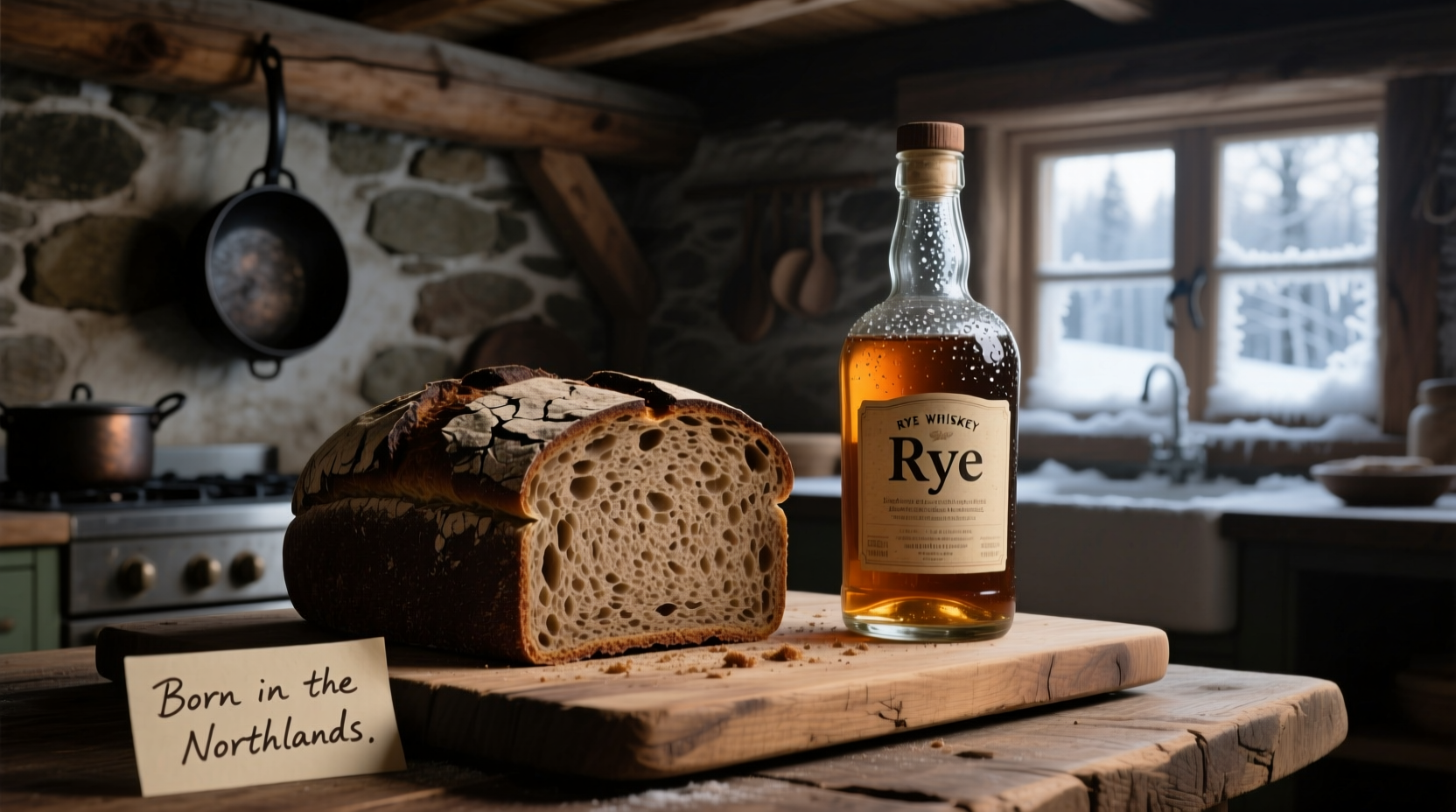
Rye (Secale cereale) is not a glamorous cereal. Unlike wheat, it thrives in cold, poor, acidic soils where other grains falter. Its resilience made it indispensable across Northern and Eastern Europe—from the Baltic states to Russia, Poland, and Germany—where it became the backbone of peasant sustenance. By the 12th century, rye was the dominant bread grain in much of Central Europe; by the 16th, German bakers were refining sourdough rye techniques that yielded dense, long-keeping loaves with complex lactic-acid tang. Meanwhile, in the same regions, farmers began distilling surplus or imperfect rye—often mixed with barley or malt—as a means of preservation and value addition. The earliest documented rye distillates appear in 15th-century Prussia and 16th-century Danzig (modern-day Gdańsk), where apothecaries and monasteries produced “aquavitae” from fermented rye mash.
What unites these two uses is not mere availability—but functional necessity. Rye’s high pentosan and low gluten content makes it unsuitable for light, airy breads without sourdough fermentation. Yet those very pentosans contribute rich mouthfeel and fermentable sugars ideal for distillation. In essence, rye’s structural limitations in baking are its biochemical advantages in spirits production.
Tip: When tasting rye whiskey alongside rye bread, choose a medium-rye whiskey (51–70% rye) and a traditional pumpernickel or Polish żytni—their shared notes of black pepper, dried fig, and toasted caraway will resonate, not compete.American Migration: From Necessity to Identity
The transatlantic journey transformed both traditions. In colonial America, wheat struggled in the rocky soils and harsh winters of Pennsylvania and Maryland. German and Dutch settlers brought rye seed—and their bread-baking and distilling knowledge—with them. By the 1750s, Pennsylvania Dutch communities were producing “rye and Indian” bread (a mix of rye and cornmeal) and operating small pot stills on farms. Here, rye wasn’t just practical—it became cultural shorthand. A 1790 Pennsylvania tax record lists “rye bread ovens” and “rye whiskey stills” on the same farmsteads in Lancaster County. This co-location wasn’t incidental: rye whiskey required substantial quantities of rye grain, and distillers often sourced from local bakeries’ surplus or used second-grade grain rejected for bread. Conversely, bakers sometimes acquired spent grain (draff) from distilleries as animal feed—or even incorporated lightly toasted draff into bread for added depth.
By the early 19th century, rye whiskey had become the dominant American spirit—so much so that in 1810, over 90% of U.S. whiskey was rye-based. At the same time, rye bread remained a staple in Northeastern cities like Philadelphia and Baltimore, where German and Jewish bakeries turned out seeded, sourdough ryes daily. The convergence was institutionalized: Philadelphia’s iconic “rye bread sandwich”—a thick slice topped with pastrami or corned beef—emerged alongside saloons serving “rye cocktails” (Manhattans, Sazeracs) well before Prohibition. This wasn’t fine-dining pairing; it was working-class symbiosis—affordable, hearty, and locally sourced.
The Great Divergence: Decline, Disruption, and Rediscovery
Prohibition (1920–1933) delivered a near-fatal blow—not equally, but asymmetrically. Distilleries were shuttered, equipment destroyed, and master distillers dispersed. When legal distilling resumed, bourbon—made from corn and aged in new charred oak—was easier, cheaper, and more marketable. Rye whiskey production plummeted from over 10 million gallons annually in 1910 to fewer than 20,000 gallons by 1970. Meanwhile, rye bread survived, albeit diminished. Industrial milling favored wheat flour; national brands pushed “light” white bread; and rye became associated with aging demographics or ethnic enclaves rather than mainstream cuisine.
Yet the traditions never vanished—they went underground. In Kentucky, a few families quietly maintained rye stocks. In New York, Jewish bakers like Kossar’s Bialys continued hand-mixing rye dough using century-old starters. The revival began in earnest in the 2000s, driven by two parallel movements: craft distilling and artisanal baking. Distillers like Wigle Whiskey in Pittsburgh and Leopold Bros. in Colorado revived pre-Prohibition recipes, sourcing heirloom rye varieties. Simultaneously, bakeries such as Zingerman’s Bakehouse in Ann Arbor and Breadfarm in Washington State began milling their own rye and publishing detailed fermentation guides. Crucially, many of these pioneers explicitly referenced each other: Wigle’s founders consulted with local bakers on grain selection; Breadfarm supplied rye flour to distilleries experimenting with single-variety mashes.
| Factor | Rye Bread Tradition | Rye Whiskey Tradition | Shared Link? |
|---|---|---|---|
| Origins | Medieval Central Europe (Germany/Poland) | 15th–16th c. Baltic/Germany; formalized in U.S. 1750s | ✅ Same grain, same region, overlapping timelines |
| Core Technique | Lactic-acid sourdough fermentation | High-rye mash + extended fermentation (often 72+ hrs) | ✅ Both rely on slow, microbial-driven transformation of rye starches |
| U.S. Cultural Anchor | Pennsylvania Dutch, Jewish delis, NYC appetizing stores | Pre-Prohibition saloons, Mid-Atlantic distilleries | ✅ Shared geography, immigrant roots, working-class identity |
| Modern Revival Drivers | Craft milling, heritage grains, fermentation science | Grain-to-glass ethos, heirloom varietals, terroir focus | ✅ Cross-pollination among producers, shared supply chains |
| Current Market Position | Niche but stable (12–15% of specialty bread sales) | Growing rapidly (rye whiskey up 340% in volume since 2010) | ❌ Not yet mainstream pairing—but intentional collaborations increasing |
Real-World Convergence: A Case Study from Minnesota
In 2019, Far North Spirits—a distillery in northern Minnesota—launched “Rye & Rise,” a collaborative project with nearby Rustica Bakery. Both operations source 100% organic rye from the same family farm in Red Lake County. Far North uses whole-grain rye in its flagship “Ravenswood Rye” (95% rye, 5% malted barley); Rustica mills the same batch for its “Northwoods Sourdough Rye.” What began as logistical convenience evolved into ritual: every autumn, the distillery hosts a “Mash & Mingle” event where guests taste newly distilled white dog alongside freshly baked rye loaves made from the same day’s mill run. Attendees consistently note shared sensory markers—the peppery bite, the dark molasses undertone, the lingering earthiness—that transcend medium. As co-founder Jill Rager explained, “We’re not just using the same grain. We’re honoring the same fermentation window, the same microbial ecology in our respective environments. The yeast in our starter and the bacteria in their wash share ancestors from this soil.”
This isn’t marketing theater. Lab analysis commissioned by the project confirmed identical strains of Lactobacillus plantarum in both the bakery’s levain and the distillery’s fermenting rye mash—traced to native prairie microbes captured in the farm’s soil and grain. The tradition isn’t merely regional coincidence; it’s microbiological continuity.
Expert Insight: The Terroir of Rye
“People speak of ‘terroir’ for wine and cheese—but rye has one of the most expressive terroirs of any grain. Its flavor shifts dramatically with soil pH, rainfall timing, and even the wild microbes present at harvest. When a distiller and a baker source from the same field, they’re not just sharing ingredients. They’re collaborating on a living expression of place—one that manifests as clove in the whiskey and caraway in the bread, both born from the same fungal spore.”
— Dr. Elena Vargas, Cereal Microbiologist, University of Minnesota Department of Food Science
Dr. Vargas’s research confirms what practitioners intuit: rye’s volatile compounds—especially alkylresorcinols and benzoxazinoids—are highly sensitive to environmental stressors. A drought-stressed rye crop develops higher concentrations of phenolic compounds, yielding whiskey with sharper spice and bread with deeper umami. Conversely, a wet growing season increases lactic acid precursors, softening the whiskey’s heat and enriching the bread’s sourness. This biochemical responsiveness means that geographic proximity isn’t coincidental—it’s essential for flavor coherence.
How to Build Your Own Rye Tradition (A Practical Timeline)
Creating meaningful connections between rye bread and rye whiskey doesn’t require a farm or a still. It begins with intentionality and attention to origin. Follow this six-month timeline to cultivate your own grounded, grain-forward practice:
- Month 1: Source Mindfully — Identify a local distillery and bakery using rye from the same region. Check labels for grain origin (e.g., “100% Minnesota-grown rye”) or contact producers directly.
- Month 2: Taste Side-by-Side — Purchase a bottle and a loaf. Taste the whiskey neat first, noting spice, grain, and finish. Then eat plain rye bread, chewing slowly. Note shared and contrasting notes.
- Month 3: Experiment with Pairing — Try the whiskey with different preparations: toasted rye, rye with butter, rye with aged cheddar. Observe how texture and fat alter perception.
- Month 4: Engage Producers — Attend a distillery tour or bakery workshop. Ask about their grain sourcing, fermentation times, and challenges with rye’s variability.
- Month 5: Cook with Spent Grain — Many distilleries sell spent rye grain (draff). Incorporate into bread dough (up to 20%), granola, or veggie burgers for layered rye flavor.
- Month 6: Share & Document — Host a small tasting. Record observations in a journal. Compare notes with others. You’re now part of the living tradition—not just consuming it.
FAQ: Clarifying the Connection
Is there historical evidence of rye bread and rye whiskey being served together in the 19th century?
Not as a formal “pairing,” but as complementary staples. Diaries from Pennsylvania farmers (e.g., the 1842 Miller Family Journals, Historical Society of Pennsylvania) describe breakfasts of rye bread with butter and a small dram of “rye toddy,” while saloon ledgers from Baltimore list “rye bread” and “rye whiskey” as top-selling items on the same day. The pairing emerged organically from shared supply chains—not sommelier curation.
Does all rye whiskey taste like rye bread?
No. Flavor depends heavily on mash bill, fermentation length, barrel type, and proof. A high-rye bourbon (e.g., 36% rye) may emphasize caramel over spice, while a 95% rye whiskey like Old Overholt delivers pronounced black pepper and dill—closer to the vegetal notes in young rye sourdough. Bread’s caraway aroma comes from added seeds, not the rye grain itself; the grain contributes earthiness and acidity, not herbal top notes.
Can I substitute rye whiskey for beer in rye bread recipes?
Yes—with caveats. Replace up to 25% of liquid with rye whiskey to enhance complexity, but reduce added sugar slightly (whiskey contains residual fermentables). Avoid high-proof expressions (>50% ABV), which can inhibit yeast. A 45% ABV straight rye works best. The result is a loaf with heightened spice and a subtle warmth—proof that the traditions converse, even in the bowl.
Conclusion: Tradition Is a Verb, Not a Noun
The relationship between rye bread and rye whiskey is neither accidental nor purely nostalgic. It is a resilient, evolving dialogue—one sustained by soil, seed, microbe, and human ingenuity across eight centuries. When we dismiss it as “just regional coincidence,” we overlook the quiet intelligence embedded in using one resilient grain to nourish bodies and spirits in complementary ways. This isn’t about recreating the past; it’s about participating in a continuum—choosing grain with intention, tasting with attention, and supporting producers who steward land and tradition with equal care. The next time you break rye bread or pour rye whiskey, remember: you’re holding two expressions of the same ancient covenant between people and rye. Honor it not with reverence alone, but with curiosity, conversation, and the willingness to taste deeply.
💬 Your turn: Have you discovered a local distillery-bakery partnership? Tried baking with spent grain? Share your rye story in the comments—let’s map the living tradition, one loaf and one dram at a time.