If you’ve ever poured a freshly carbonated IPA or a crisp Pilsner only to be met with the unmistakable medicinal, antiseptic, or plaster-like aroma of a Band-Aid—or worse, burnt plastic, cloves, or horse blanket—you’re not imagining things. That sharp, intrusive scent is one of the most recognizable and troubling off-flavors in craft brewing: 4-vinyl guaiacol (4-VG), a volatile phenol produced when certain yeasts metabolize ferulic acid from malt. Unlike subtle esters or gentle hop notes, this compound hits hard and fast—and once detected, it’s nearly impossible to ignore. More importantly, it’s almost always avoidable.
This isn’t just about sensory annoyance. In competitive brewing, a Band-Aid note can disqualify a beer from medal consideration. In commercial settings, it’s led to batch recalls, customer complaints, and reputational damage. Yet many brewers—especially those new to all-grain or Belgian-style fermentation—mistake it for “yeast character” or chalk it up to “water chemistry.” The truth is more precise, more technical, and far more controllable than folklore suggests. This article breaks down the science, the sources, the diagnostics, and the proven interventions—so you can confidently identify, troubleshoot, and eliminate this off-flavor before it reaches your glass.
What’s Really Causing That Band-Aid Smell?
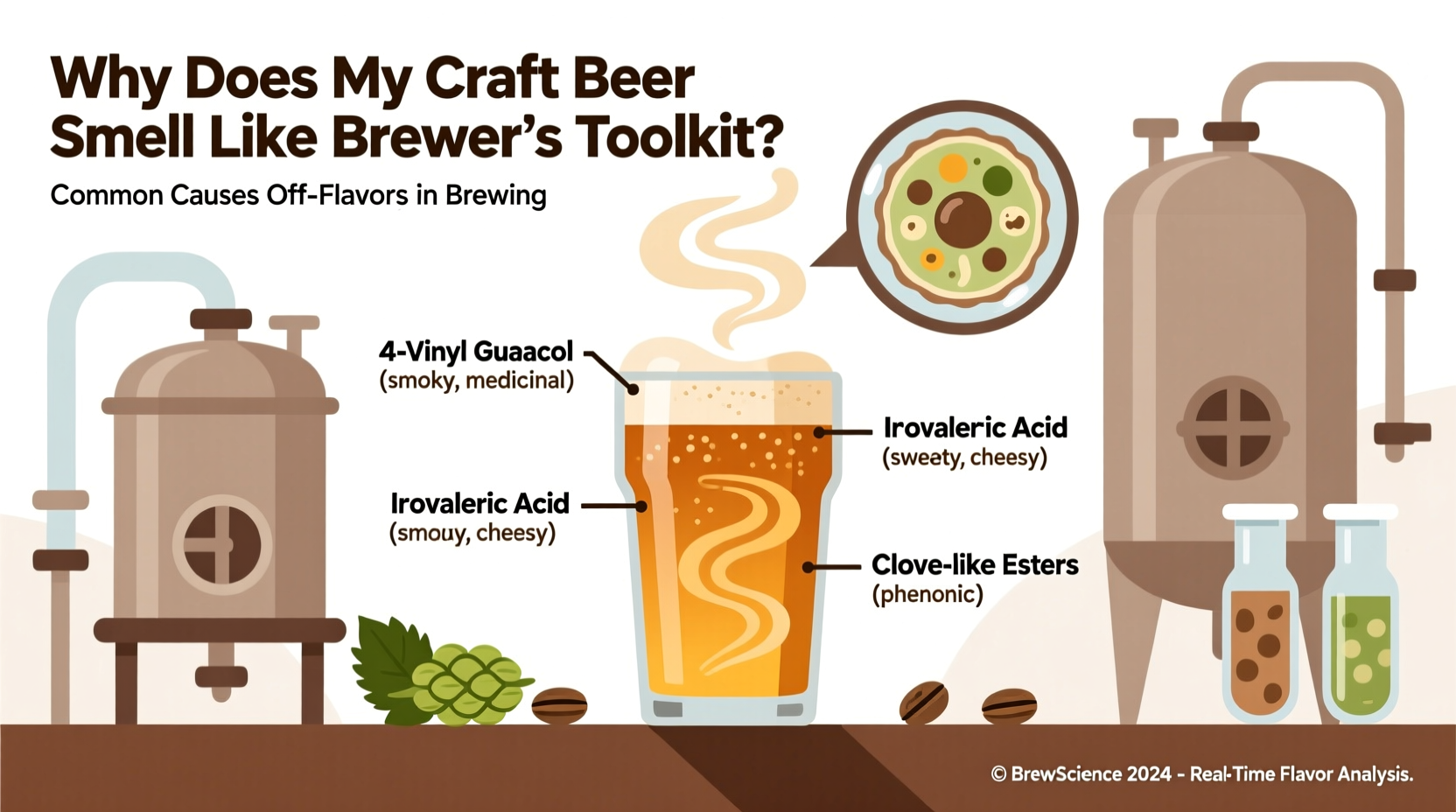
The signature “Band-Aid” aroma comes almost exclusively from 4-vinyl guaiacol (4-VG), a phenolic compound formed when specific strains of yeast—particularly Saccharomyces cerevisiae variants carrying the POX1 gene—convert ferulic acid (naturally present in barley husks and wheat) into 4-VG during fermentation. Ferulic acid itself is harmless and even contributes to desirable clove notes in German wheat beers—but only when its conversion is tightly regulated.
Crucially, 4-VG isn’t the only phenol that matters. Its close relative, 4-vinyl phenol, carries a more barnyard-like, smoky, or plastic-like odor and often co-occurs. Both compounds are part of the broader “phenolic off-flavor” (POF+) category. While some styles *expect* low levels of phenolics (e.g., hefeweizens, saisons, or certain Belgian ales), the Band-Aid descriptor signals an imbalance—usually excessive concentration or inappropriate context.
It’s worth noting that non-biological sources exist but are rare: chlorine or chloramine in brewing water reacting with phenols to form chlorophenols (which smell medicinal at extremely low thresholds—parts per trillion). These are distinct from 4-VG but share overlapping sensory descriptors, making accurate diagnosis essential.
How to Diagnose It Accurately (Not Just Sniff and Guess)
Diagnosis begins long before the first sip. Relying solely on aroma can mislead—even experienced tasters confuse Band-Aid with oxidation, diacetyl, or fusel alcohols without context. A rigorous diagnostic process includes timing, temperature, and controlled comparison.
- Timing matters: 4-VG is typically most pronounced 3–7 days into active fermentation and may fade slightly during conditioning—but rarely disappears entirely if levels are high.
- Temperature sensitivity: Warm fermentation (above 72°F/22°C) dramatically accelerates 4-VG production in susceptible strains. If the aroma intensifies as temperature creeps up, suspect yeast metabolism—not water.
- Style alignment: A clove note in a properly brewed Hefeweizen is appropriate; the same intensity in a West Coast IPA is a red flag.
- Water test: Boil 1 quart of your treated brewing water with 1 tsp of dried malt extract for 10 minutes. Cool and smell. A persistent medicinal note points strongly to chlorophenols—not yeast-derived 4-VG.
Primary Sources & How They Interact
Four interlocking factors govern whether 4-VG appears—and how intensely:
- Malt selection: Wheat malt and undermodified barley contain significantly higher ferulic acid than fully modified Pilsner or Munich malts. Torrified wheat, flaked wheat, and raw wheat contribute disproportionately.
- Mash protocol: A 45-minute rest at 113–115°F (45–46°C)—the “ferulic acid rest”—liberates bound ferulic acid from grain cell walls. Skipping it reduces substrate; holding too long or at too high a temperature increases extraction unnecessarily.
- Yeast strain: Not all yeasts produce 4-VG. POF+ strains (e.g., Wyeast 3068, White Labs WLP300, SafAle WB-06) carry the genetic machinery. POF− strains (e.g., US-05, WLP001, S-04) do not—and are preferred for clean lagers and ales unless clove is desired.
- Fermentation conditions: High gravity, low oxygen, elevated temperature (>72°F), and extended lag phases increase stress-induced phenol production. Underpitching by >30% is a common trigger.
These factors don’t act in isolation. For example: using 40% wheat malt + a POF+ strain + a 50-minute ferulic rest + fermentation at 74°F creates a perfect storm. But swap in a POF− strain—or reduce the wheat to 15%—and the same mash and temp yield zero detectable 4-VG.
Step-by-Step Prevention Protocol for Homebrewers & Small Breweries
Prevention is vastly more effective than correction. Once 4-VG forms, it cannot be removed by filtration, fining, or aging—it’s chemically stable and sensorially potent. Follow this sequence for reliable control:
- Assess your recipe: Calculate total wheat/rye/oat content. If >20%, flag for review. Prefer Pilsner or Vienna base malts where possible.
- Select yeast deliberately: Verify POF status via lab data sheets (not vendor marketing). When in doubt, choose US-05, WLP001, or Fermentis SafLager W-34/70 for clean profiles.
- Modify your mash: Skip the ferulic acid rest entirely unless brewing a traditional hefeweizen. If used, hold strictly at 113°F for 20–30 minutes—not longer.
- Pitch correctly: Use a yeast calculator (e.g., Mr. Malty or Yeastman) and pitch at or above recommended rates. For high-gravity or high-wheat batches, increase by 15–20%.
- Control fermentation temperature: Start cold (64–66°F for ales) and allow natural rise—never exceed 70°F unless stylistically required. Use a temperature controller, not ambient room setting.
- Verify water treatment: Test for chlorine/chloramine with a DPD test kit. If present, use campden tablets (1/4 tablet per 5 gallons) or activated carbon filtration—*before* mashing.
Real-World Case Study: The “Clover Street IPA” Recall
In early 2023, a 15-barrel contract brewery in Portland received three separate complaints about their flagship IPA smelling “like a hospital hallway.” Initial investigation blamed water—until lab analysis revealed no chlorophenols, but 4-VG at 180 ppb (threshold: 40 ppb). Reviewing logs uncovered the cause: they’d switched malt suppliers, unknowingly increasing wheat malt inclusion from 8% to 22% to improve head retention; simultaneously, they’d begun using a new yeast lot labeled “Belgian Saison Blend” (a POF+ cocktail) instead of their usual US-05. Fermentation temps had also drifted upward due to a faulty glycol controller.
Within 72 hours, they corrected all three variables: reverted to original malt specs, re-verified yeast strain genetics with the supplier, and installed redundant temperature monitoring. The next batch tested at 22 ppb 4-VG—below threshold—and passed sensory review. Total cost: $1,200 in lost beer and labor. Total learning value: immeasurable. As head brewer Lena Ruiz told Brewing Techniques: “We treated the symptom—chlorine—before we looked at the real engine: yeast, malt, and temperature in concert.”
Off-Flavor Identification Table: Band-Aid vs. Common Confusers
| Off-Flavor | Primary Compound | Key Descriptors | Most Likely Cause | Distinguishing Clue |
|---|---|---|---|---|
| Band-Aid / Medicinal | 4-Vinyl guaiacol or chlorophenols | Antiseptic, burnt plaster, clove (excessive), iodine | POF+ yeast + high ferulic acid OR chlorine/chloramine + phenols | Appears mid-fermentation; persists through conditioning |
| Oxidation | Trans-2-nonenal | Papery, wet cardboard, sherry, stale | Oxygen ingress post-fermentation | Worsens over time; strongest in aged samples |
| Diacetyl | Diacetyl | Buttery, butterscotch, movie-theater popcorn | Insufficient yeast health or lack of diacetyl rest | Often diminishes with warm conditioning; buttery mouthfeel |
| Acetaldehyde | Acetaldehyde | Green apple, fresh-cut pumpkin, latex paint | Young beer, stressed yeast, poor flocculation | Sharp, green, “unfinished” impression; fades with time |
| Horse Blanket / Barnyard | 4-Ethyl phenol | Manure, leather, sweaty saddle | Wild yeast (Brettanomyces) or bacterial infection | Often accompanied by tartness, funk, or haze |
Expert Insight: What Lab Analysis Reveals
“The single most overlooked lever in phenol control is yeast strain verification. We routinely see brewers blame water or sanitation when GC-MS reports show zero chlorophenols—but sky-high 4-VG from a ‘neutral’ yeast they assumed was POF−. Genetic drift happens. Always cross-check strain IDs with independent lab data—not just the packet label.”
— Dr. Arjun Mehta, Director of Sensory Science, Siebel Institute of Technology
FAQ
Can I fix a beer that already smells like Band-Aids?
No—4-VG is chemically stable and sensorially irreversible. Blending with a clean beer may dilute perception but won’t eliminate the compound. The safest path is prevention in future batches. If commercial, consider repurposing (e.g., as a base for barrel-aged souring) only after full microbial stability testing.
Is the Band-Aid smell ever acceptable—or even desirable?
Yes—but only in narrow contexts. Traditional German hefeweizens aim for *low* clove (4-VG) alongside banana (isoamyl acetate), with 4-VG typically between 20–60 ppb. At these levels, it reads as “spicy clove,” not “antiseptic.” Above 80 ppb, it becomes distracting across all styles—even saisons.
Does dry hopping increase Band-Aid risk?
Not directly. Hops contain negligible ferulic acid. However, late-hop additions can raise wort pH slightly, potentially increasing phenol solubility and perceived intensity. More critically, aggressive dry hopping in hazy IPAs often coincides with high-wheat recipes and warm fermentation—indirectly enabling the conditions for 4-VG formation.
Conclusion
That Band-Aid aroma isn’t a mysterious brewing curse—it’s a precise biochemical signal. It tells you something specific about your malt, your yeast, your temperature, or your water. And because it’s so reliably traceable, it’s also one of the most preventable off-flavors in the entire craft beer canon. You don’t need expensive lab equipment to master it. You need observation, intentionality, and the willingness to question assumptions—about yeast labels, malt specs, and even your thermostat.
Every batch is diagnostic data. Every sniff is data collection. Every correction is a step toward deeper mastery—not just of flavor, but of the living system that makes beer possible. Don’t tolerate Band-Aids as “part of the process.” Treat them as feedback: clear, actionable, and profoundly useful.
💬 Have you cracked the Band-Aid code in your own brewery? Share your breakthrough strategy—what changed, what didn’t, and what you learned—in the comments. Your insight could save someone else 37 gallons of heartbreak.