Cast iron cookware is prized for its durability, heat retention, and natural non-stick surface—when properly cared for. Yet many home cooks face a frustrating problem: their pan develops rust after just one wash. This isn’t a flaw in the pan itself, but rather a sign of improper care or incomplete seasoning. Rust forms when moisture meets bare iron, and without a robust layer of polymerized oil (seasoning), your pan has no defense. Understanding why rust occurs and mastering the right seasoning process can transform your cast iron from high-maintenance liability into a lifelong kitchen companion.
Why Cast Iron Pans Rust After One Wash
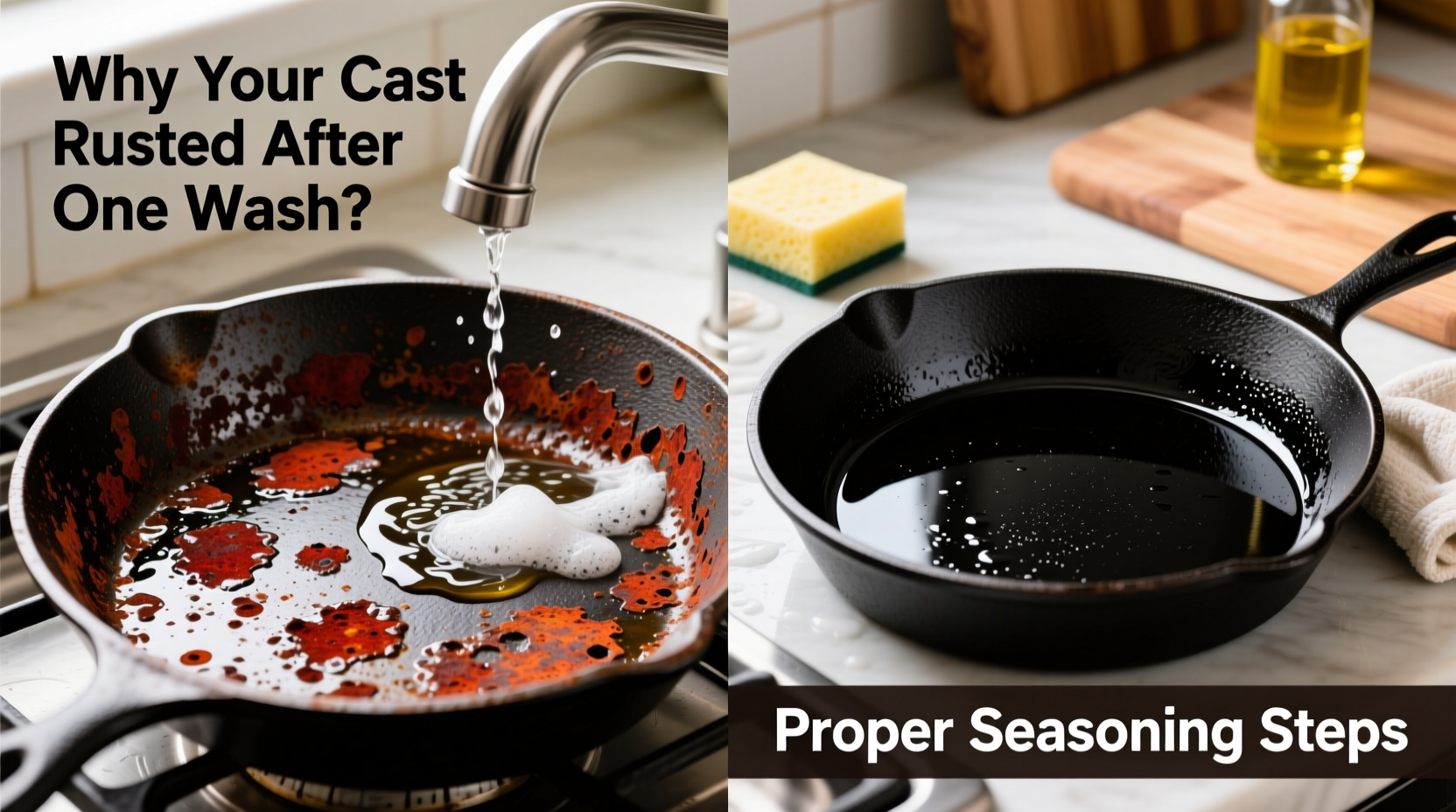
Iron is naturally reactive with water and oxygen, forming iron oxide—commonly known as rust. While this may sound alarming, it’s entirely preventable with consistent maintenance. The most common reasons cast iron pans rust after a single wash include:
- Incomplete drying: Leaving even a small amount of moisture on the surface invites oxidation.
- Using soap aggressively: While mild soap is acceptable, harsh detergents or prolonged soaking strip away protective seasoning.
- Storing while damp: Moisture trapped under cloths or in cabinets accelerates rust formation.
- Lack of post-wash oiling: After cleaning, a thin coat of oil replenishes the seasoning barrier.
- Poor initial seasoning: Factory seasoning is often thin and temporary; building your own layers is essential.
Rust doesn't mean your pan is ruined. In fact, minor surface rust can be scrubbed off and re-seasoned. But repeated rusting indicates a gap in your care routine—especially in the seasoning process.
Tip: Always dry your cast iron over low heat on the stove after washing. This ensures all moisture evaporates, including in crevices and handles.The Science Behind Seasoning: How It Prevents Rust
Seasoning isn’t just about non-stick performance—it’s a chemical shield against corrosion. When oil is heated beyond its smoke point on cast iron, it undergoes polymerization: the molecules bond together and to the metal surface, forming a hard, slick, hydrophobic layer.
This layer seals the pores of the iron, blocking moisture and oxygen from reaching the metal underneath. A well-seasoned pan shouldn’t require excessive oil during cooking because the surface itself repels food and resists water absorption.
Different oils have varying smoke points and fatty acid profiles, which affect how well they polymerize. Oils high in polyunsaturated fats (like flaxseed) were once popular for seasoning due to rapid polymerization, but they can become brittle over time. Modern testing suggests more stable options like grapeseed, sunflower, or refined vegetable oil offer durable, long-lasting results.
“Proper seasoning creates a natural barrier that functions like a self-healing coating. Every time you cook with fat, you’re reinforcing it.” — Dr. Rebecca Chan, Materials Scientist and Cookware Researcher at Culinary Institute of America
Step-by-Step Guide to Proper Cast Iron Seasoning
Whether you're starting with a new unseasoned skillet or rehabilitating a rusted one, follow this detailed method to build a resilient seasoning layer that prevents rust and enhances cooking performance.
- Clean the pan thoroughly: If new, wash with warm water and mild soap to remove factory wax or residue. For a rusty pan, use steel wool or a stiff brush to remove all rust until the surface is smooth and metallic gray.
- Dry completely: Place the pan on the stove over medium-low heat for 5–10 minutes. Rotate occasionally to ensure even drying, especially around the handle and rim.
- Apply a thin layer of oil: Using a paper towel or lint-free cloth, apply a high-smoke-point oil (e.g., grapeseed, canola, or vegetable oil) to the entire surface—including the bottom and sides. Use another clean cloth to wipe off excess. The pan should look matte, not shiny. Too much oil leads to sticky residue.
- Heat upside down in oven: Preheat oven to 450°F (230°C). Place the pan upside down on the middle rack with a foil-lined baking sheet or another pan below to catch drips. This prevents pooling and ensures even curing.
- Bake for one hour: Let the pan bake for 60 minutes. The heat causes the oil to break down and bond to the iron through polymerization.
- Cool and repeat: Turn off the oven and let the pan cool inside. Repeat the oil-and-bake process 3–4 times for a strong base layer.
After each use, maintain the seasoning by wiping the pan with a light coat of oil while still warm. Over time, regular cooking will deepen and strengthen the patina.
Common Seasoning Mistakes and How to Avoid Them
Even experienced cooks make errors that compromise seasoning integrity. Here are the most frequent missteps—and how to fix them.
| Mistake | Why It’s Harmful | Solution |
|---|---|---|
| Using too much oil during seasoning | Leaves a sticky, gummy residue instead of a hard layer | Wipe aggressively with a clean cloth after applying oil |
| Soaking the pan in water | Allows moisture to seep into pores, leading to rust | Clean quickly with minimal water; dry immediately |
| Using olive oil or butter for seasoning | Low smoke point causes carbonization, not polymerization | Stick to high-smoke-point neutral oils |
| Stacking seasoned pans without protection | Scratches off seasoning and exposes bare metal | Place a paper towel between pans when storing |
| Skipping post-cooking oiling | Leaves the surface vulnerable to humidity and air | Apply a micro-thin oil layer after every wash |
Real Example: From Rusty Skillet to Reliable Workhorse
When Sarah, a home cook in Portland, inherited her grandmother’s 1940s Wagner cast iron skillet, it was covered in flaky black residue and patches of orange rust. She tried washing it with dish soap and letting it air dry—only to find more rust the next day. Frustrated, she nearly threw it out.
Instead, she followed a restoration guide: she scrubbed the pan with vinegar and steel wool, rinsed, dried on the stove, then applied three rounds of baked-on grapeseed oil. After seasoning, she used it weekly for searing steaks and frying eggs. Two years later, the pan has a deep, glassy black finish and hasn’t rusted since. Her secret? “I never skip the post-wash oil wipe—even if I’m tired.”
Sarah’s experience shows that rust isn’t a death sentence. With patience and proper technique, any cast iron pan can be revived and protected long-term.
Essential Care Checklist for Rust-Free Cast Iron
To keep your pan in peak condition, follow this simple checklist after every use:
- Scrub with hot water and a brush or chainmail scrubber—avoid soap unless necessary.
- Rinse quickly and place on stovetop over low heat for 5–10 minutes.
- While still warm, apply a few drops of oil and buff with a paper towel.
- Store in a dry place with airflow—never in a plastic bag or damp cabinet.
- Re-season every few months or if food starts sticking frequently.
For long-term storage, add a slightly heavier oil coat and place a folded paper towel inside the pan to absorb ambient moisture.
Frequently Asked Questions
Can I use soap on cast iron?
Yes, mild dish soap is safe, especially if your pan has a mature seasoning layer. Avoid heavy degreasers or soaking. Rinse promptly and dry immediately.
Is rust on cast iron dangerous?
Small amounts of surface rust aren’t toxic, but they compromise the pan’s integrity and can affect flavor. Remove rust before use by scrubbing with vinegar or salt, then re-season.
How do I know if my seasoning is working?
A well-seasoned pan will have a dark, semi-glossy surface. It should release eggs easily without sticking and resist water beading. If water droplets sizzle and dance (the Leidenfrost effect), your seasoning is intact.
Conclusion: Build Confidence Through Consistent Care
Your cast iron pan doesn’t rust because it’s defective—it rusts because it’s made of reactive metal that demands mindful care. The solution lies not in avoiding water altogether, but in mastering the rhythm of clean-dry-oil. Proper seasoning isn’t a one-time event; it’s an ongoing relationship between you, your pan, and heat.
By understanding the chemistry behind seasoning, avoiding common pitfalls, and following a reliable routine, you’ll turn what once seemed like a finicky tool into the most dependable piece in your kitchen. Whether you’re reviving a vintage heirloom or maintaining a modern Lodge skillet, the principles remain the same: respect the metal, protect the surface, and nurture the seasoning.
💬 Have a cast iron success story or tip? Share your experience in the comments and help others build confidence with their skillets!