
It’s a familiar pattern: a $12 bottle of Cabernet leaves you with a throbbing temple and foggy focus by morning, yet a $65 reserve from the same region feels clean, balanced—and headache-free. You’re not imagining it. And no, it’s not just “your tolerance” or “drinking too much.” The difference lies in what happens long before the bottle hits your table: in vineyard management, fermentation control, aging decisions, and the quiet, cumulative impact of compounds that vary dramatically across price tiers. This isn’t about snobbery—it’s about chemistry, regulation, and craft.
The Myth of the “Sulfite Headache”
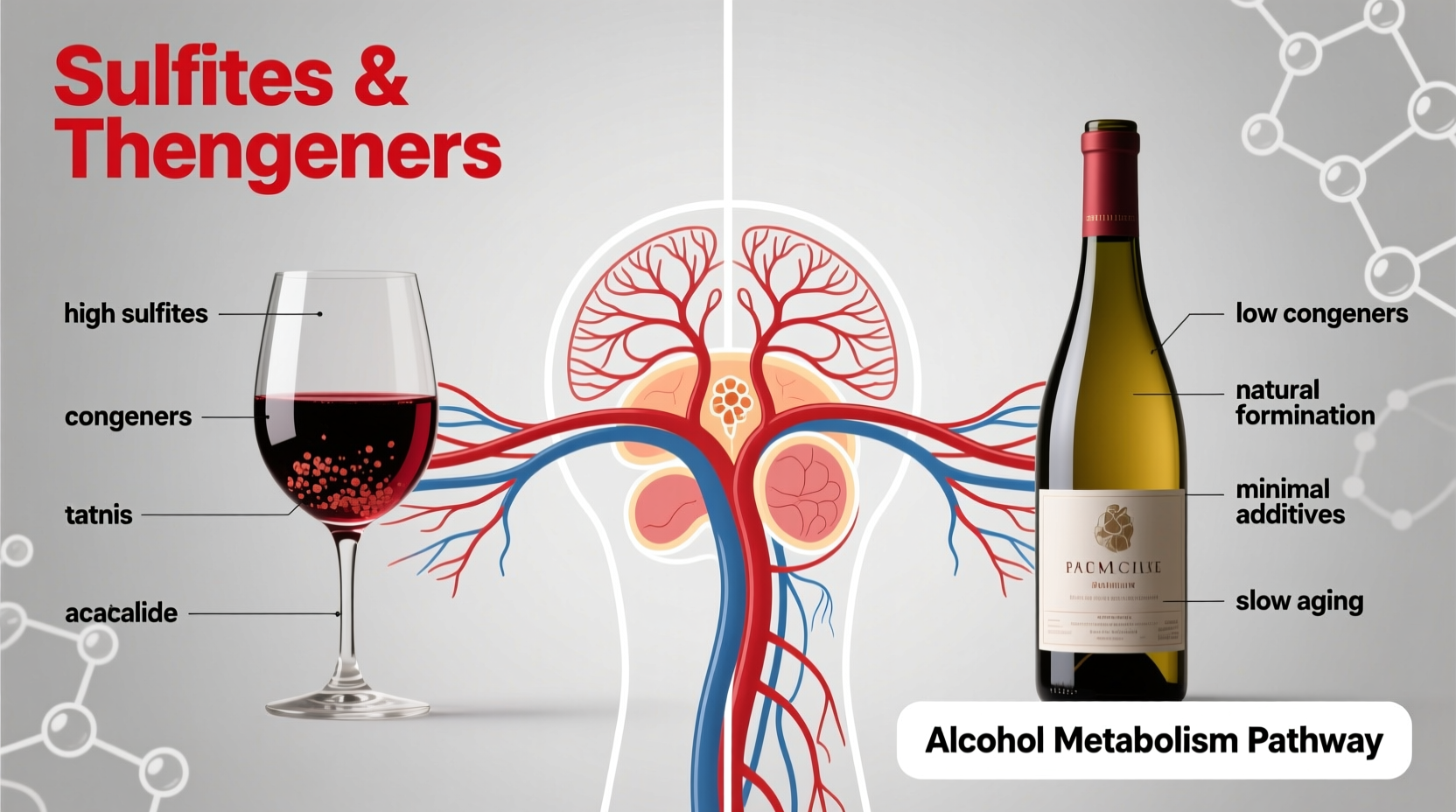
Most people blame sulfites—the preservative added to nearly all wines—for their headaches. But that assumption collapses under scrutiny. Sulfur dioxide (SO₂) occurs naturally during fermentation and is often supplemented to prevent oxidation and microbial spoilage. While some asthmatics experience bronchoconstriction from high-dose sulfite exposure, headaches are not a recognized clinical symptom of sulfite sensitivity. In fact, white wines typically contain more added sulfites than reds (to protect delicate aromas), yet red wine is far more commonly linked to headaches.
What’s more telling is regulatory reality: U.S. and EU labeling laws require “Contains Sulfites” only when levels exceed 10 ppm. Nearly every commercially available wine—cheap or expensive—meets or exceeds that threshold. A $9 supermarket Merlot and a $90 Napa Cabernet both likely sit between 35–75 ppm total SO₂. So if sulfites were the culprit, the price correlation wouldn’t hold. They aren’t the primary trigger—just an easy scapegoat.
Tip: If you suspect sulfites, test your reaction to dried apricots or deli meats—they contain far higher concentrations (up to 1000 ppm) than any wine. No reaction there? Sulfites are unlikely to be your issue.Histamines: The Hidden Culprit in Bulk Fermentation
Here’s where price starts to matter—not because expensive wine is “healthier,” but because its production process minimizes biogenic amines like histamine. Histamine forms when certain lactic acid bacteria (e.g., Lactobacillus hilgardii) break down the amino acid histidine during malolactic fermentation (MLF)—a common step for reds and many whites.
Cheap wines are frequently fermented and aged in large, temperature-uncontrolled tanks where bacterial populations thrive unchecked. Without rigorous microbiological monitoring, MLF can become prolonged or incomplete, creating ideal conditions for histamine-producing strains. Studies show histamine levels in mass-produced reds often range from 3–8 mg/L—well above the 0.3–1.0 mg/L typical of carefully managed boutique fermentations.
Why does this cause headaches? Histamine triggers vasodilation and neuroinflammatory pathways. For individuals with reduced activity of diamine oxidase (DAO)—the enzyme that breaks down dietary histamine—ingesting even moderate amounts can provoke flushing, nasal congestion, nausea, and pulsating headaches within 30–90 minutes.
“Histamine load correlates more strongly with wine-related headaches than any other single compound we’ve measured. It’s not about alcohol content—it’s about microbial hygiene in the cellar.” — Dr. Elena Rossi, Enologist & Food Allergy Researcher, University of Bordeaux
Congeners: The Toxic Byproducts of Rushed Winemaking
Congeners are natural, complex organic compounds produced during fermentation—methanol, acetone, tannins, esters, and fusel oils (higher alcohols like propanol and isobutanol). While trace congeners contribute positively to aroma and structure, excessive levels—especially fusel oils—are directly neurotoxic and strongly associated with hangover severity and headache onset.
Low-cost wines face intense pressure to maximize yield and minimize time-to-market. That often means:
- Fermenting at higher temperatures (28–32°C), accelerating yeast stress and fusel oil production;
- Using aggressive, high-alcohol-tolerant yeast strains that generate more byproducts;
- Skipping extended maceration or lees aging, which would otherwise bind and soften harsh congeners;
- Applying heavy fining agents (e.g., bentonite + PVPP) that strip phenolics but leave volatile fusels intact.
In contrast, premium producers invest in temperature-controlled stainless steel or concrete fermenters, native or selected low-fusel yeast cultures, and extended post-fermentation contact with fine lees—processes that reduce fusel concentration by up to 40% compared to industrial counterparts.
Residual Sugar, Additives, and the “Hidden Load”
Many inexpensive wines—especially entry-level whites and rosés—contain surprising amounts of residual sugar (RS): 4–8 g/L, sometimes more. That’s not “sweet” on the palate, but it’s enough to amplify osmotic stress and accelerate alcohol absorption. Faster absorption spikes blood alcohol concentration (BAC), triggering compensatory cerebral vasoconstriction followed by rebound vasodilation—the classic vascular headache mechanism.
Beyond sugar, budget wines may include additives rarely disclosed on labels:
- Commercial yeast nutrients (e.g., diammonium phosphate/DAP) — excess use promotes hydrogen sulfide formation, later converted to mercaptans that strain detoxification pathways;
- Acid blends (tartaric, malic, citric) — used to “correct” unripe fruit, increasing overall metabolic load on the liver;
- Color stabilizers (e.g., MegaPurple®) — grape concentrate rich in anthocyanins and tannins, which can provoke immune-mediated inflammation in sensitive individuals.
Premium producers rarely rely on these interventions. Their fruit is typically harvested at optimal ripeness, reducing the need for acidification or sweetening. When color adjustment occurs, it’s via micro-oxygenation or barrel integration—not concentrated additives.
Winemaking Transparency vs. Opaque Supply Chains
Price reflects traceability. A $15 bottle may blend juice from three countries, two hemispheres, and five harvest years—processed in a shared custom crush facility handling dozens of labels weekly. That scale makes consistent sanitation, fermentation monitoring, and sensory evaluation nearly impossible. Residual cleaning agents, cross-contamination between lots, and inconsistent barrel toast levels all introduce variables that elevate headache risk.
A $40+ bottle almost always comes from a defined estate or single-vineyard source, with full control over canopy management, harvest timing, fermentation kinetics, and barrel selection. That control allows for precision: measuring pH hourly during fermentation, conducting HPLC analysis for amine profiles, using membrane filtration to remove >95% of histamine-producing bacteria, and cold-stabilizing to precipitate unstable proteins before bottling.
| Factor | Budget Wine (<$15) | Premium Wine ($35+) | Headache Relevance |
|---|---|---|---|
| Yeast Strain Selection | High-yield, high-fusel commercial strains | Native or low-fusel cultured isolates | ↑ Fusel oils = ↑ neurotoxicity |
| MLF Management | Unmonitored, tank-wide, variable duration | Controlled inoculation, temperature-stabilized, monitored via chromatography | ↑ Histamine = ↑ vascular inflammation |
| Residual Sugar | Often 4–10 g/L (unlabeled) | Rarely >2 g/L; dryness verified analytically | ↑ Sugar = ↑ alcohol absorption rate |
| Barrel Aging | None, or oak chips/staves in stainless tanks | 12–24 months in French oak, regular topping & racking | Oak tannins polymerize, softening astringency & oxidative stress |
| Finishing Filtration | Coarse pad filtration only | Depth + sterile membrane filtration (0.45 µm) | Removes histamine-producing microbes & unstable colloids |
A Real-World Example: The Napa Valley Cabernet Comparison
Sarah, a 38-year-old physical therapist, experienced debilitating headaches after drinking $10–$14 California Cabs for years—yet felt perfectly fine with $50+ Napa bottles. Frustrated, she tracked her intake for six weeks: same serving size (150 mL), same time of day, same hydration level. Headaches occurred 8 out of 10 times with budget brands—but zero times with premium ones.
She consulted a functional medicine physician who ordered a DAO enzyme assay and histamine blood panel. Results showed borderline-low DAO activity. The doctor then had her lab analyze two bottles: a $12 supermarket Cabernet and a $62 estate Cabernet from Oakville. The results were revealing:
- Supermarket Cabernet: 6.2 mg/L histamine, 128 mg/L fusel oils, 7.4 g/L residual sugar, pH 3.62
- Estate Cabernet: 0.7 mg/L histamine, 74 mg/L fusel oils, 0.9 g/L residual sugar, pH 3.78
When Sarah switched exclusively to wines certified “low-histamine” (≤1.0 mg/L) and “low-congener” (verified fusel analysis), her headaches vanished—even with $25 bottles. The lesson wasn’t “spend more”—it was “spend smarter, with data.”
Practical Steps to Identify Safer Wines—Without Breaking the Bank
You don’t need to mortgage your home to drink comfortably. Follow this evidence-based sequence:
- Choose varietals naturally lower in histamine: Pinot Noir, Sangiovese, and Tempranillo tend to have lower histamine than Syrah or Zinfandel due to thinner skins and cooler fermentation profiles.
- Seek certifications: Look for “Organic” (USDA or EU) or “Biodynamic” (Demeter)—not for mysticism, but because these standards prohibit synthetic nutrients that feed histamine-producing bacteria.
- Check the importer: Reputable importers (e.g., Louis Dressner, Kermit Lynch, Terry Theise) often work with small estates that prioritize microbial stability and publish technical sheets.
- Read the back label for clues: Phrases like “unfiltered,” “unfined,” or “native yeast fermentation” signal minimal intervention—but also higher risk for histamine. Pair those with “cold stabilized” or “membrane filtered” for safety.
- Test one bottle first: Drink half a glass, wait 90 minutes. No flush, no pressure behind eyes? Proceed. Keep a log: variety, region, producer, price, and symptoms.
Frequently Asked Questions
Does organic wine guarantee no headaches?
No. Organic certification restricts synthetic pesticides and added sulfites—but doesn’t control fermentation hygiene, histamine formation, or fusel oil production. Some organic wines undergo spontaneous MLF with wild bacteria, raising histamine risk. Always verify lab analysis if headache-prone.
Can I take antihistamines before drinking?
Not recommended. Over-the-counter antihistamines (e.g., loratadine, cetirizine) block H1 receptors—but wine-induced histamine reactions often involve H2 and H3 pathways too. Worse, combining antihistamines with alcohol increases sedation and impairs liver metabolism. DAO enzyme supplements taken 15 minutes before drinking show more promise in clinical observation—but consult your physician first.
Why do some cheap wines *not* give me headaches?
Because price is a proxy—not a cause. Your tolerance depends on your unique biochemistry (DAO levels, ALDH2 enzyme variants, gut microbiome composition) interacting with specific wine chemistry. A $11 German Riesling fermented cool and filtered early may contain less histamine than a $22 overextracted Shiraz. Always prioritize production details over price alone.
Conclusion: Knowledge, Not Luxury, Is the Real Antidote
The belief that expensive wine is “better for you” is misleading. What’s truly different is intentionality: the time, skill, and resources invested to guide fermentation toward balance rather than speed, to monitor microbial life instead of suppressing it with brute-force additives, and to respect the wine’s biological complexity instead of overriding it. Headaches aren’t a tax on frugality—they’re feedback from your body about what’s in the glass.
You now understand that histamine, fusel oils, residual sugar, and microbial consistency—not price tags—are the real levers. With this knowledge, you can shop with precision: scanning for producers who publish technical data, asking retailers about filtration methods, and trusting your own logbook over marketing claims. You don’t need to drink $100 bottles to feel well. You need to drink wisely.
💬 Your experience matters. Have you found a budget-friendly wine that never gives you headaches—or a pricey one that always does? Share your producer, region, and what you think made the difference. Real-world insights help others navigate this quietly complex landscape.