Spicy Thai cuisine—vibrant, aromatic, and layered with chilies, galangal, lime, fish sauce, and fresh herbs—presents one of the most exhilarating yet challenging pairings in modern dining. When you choose a low-alcohol wine (typically under 11.5% ABV), your intention is often health-conscious, mindful drinking: less alcohol flush, clearer mornings, and better alignment with wellness goals. But many well-meaning drinkers make a critical mistake: they reach for wines that inadvertently magnify capsaicin’s burn, turning a joyful meal into an uncomfortably hot experience. The truth is, alcohol itself is a solvent for capsaicin—the compound responsible for chili heat—and higher alcohol levels can strip away protective saliva, desensitize the palate, and intensify perceived spiciness. Low-alcohol wines avoid that pitfall—but only if selected and served with precision. This article distills practical, evidence-informed strategies used by sommeliers, Thai chefs, and sensory scientists to harmonize restraint and refreshment on the plate and in the glass.
Why Alcohol Amplifies Heat—And Why Low-ABV Isn’t Automatically the Answer
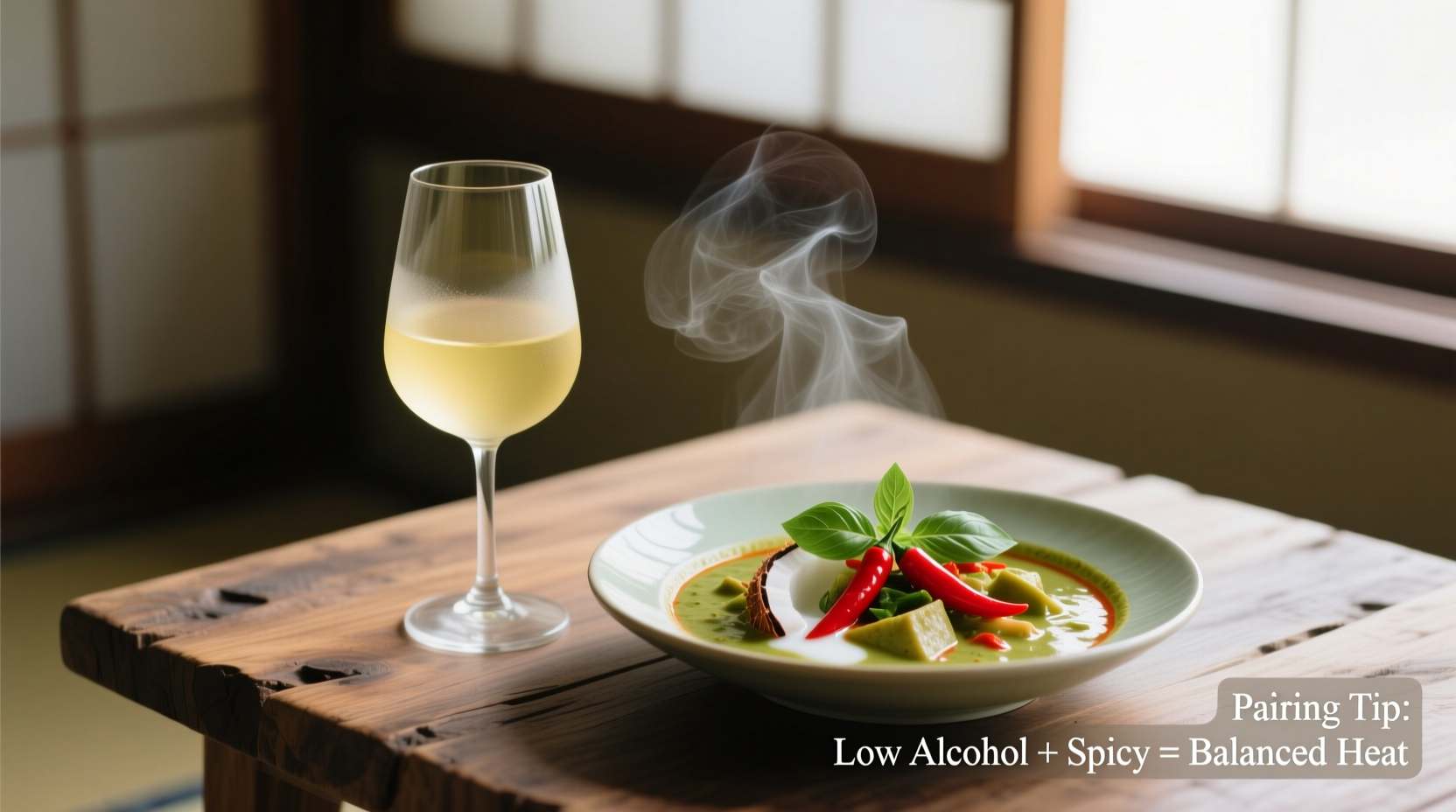
It’s not just folklore: alcohol chemically interacts with capsaicin. Ethanol dissolves capsaicin more readily than water does, effectively “releasing” it across the tongue and mucous membranes. Even at modest levels (12–13.5% ABV), alcohol can reduce saliva production and dull sweetness perception—two natural counterbalances to heat. A 2021 study published in Food Quality and Preference confirmed that tasters rated identical Thai curry samples as significantly hotter when paired with a 13% ABV Riesling versus a 9.5% version of the same wine—even when sugar levels were identical. But low alcohol alone doesn’t guarantee success. Acidity, residual sugar, body, and serving temperature all modulate thermal perception. A lean, high-acid, bone-dry low-alcohol Sauvignon Blanc can feel razor-sharp against fiery green curry, while a slightly off-dry, floral, low-alcohol Gewürztraminer may soothe and lift instead. The goal isn’t merely “low alcohol”—it’s *thermally intelligent* wine selection.
Tip: Serve low-alcohol wines 2–4°C cooler than usual (8–10°C for whites, 12–14°C for light reds) to enhance refreshing impact and suppress alcohol’s thermal effect—even at low ABV, warmth on the palate can subtly echo chili heat.The Four Pillars of Successful Pairing
Successful pairing rests on four interdependent pillars—not just ABV, but how acidity, sweetness, aromatic intensity, and texture interact with Thai food’s dominant elements. Each pillar must be calibrated deliberately.
- Acidity as a Cleanser, Not a Catalyst: Bright acidity cuts through richness (coconut milk, peanut sauce) and resets the palate—but excessive or aggressive acidity (e.g., unripe green apple notes in underripe Pinot Grigio) can mimic the sting of chilies. Opt for rounded, ripe acidity: think citrus zest rather than vinegar.
- Residual Sugar as a Buffer: Even 6–12 g/L of residual sugar—barely perceptible as “sweet” to most palates—binds capsaicin molecules and cools neural receptors. This is why German Kabinett Rieslings (often 8–10% ABV, 8–12 g/L RS) are legendary with Thai food.
- Aromatic Lift Over Weight: Thai dishes rely on volatile compounds—lemongrass oil, kaffir lime leaf terpenes, toasted cumin. Wines with pronounced floral, citrus, or stone-fruit aromas (e.g., Muscat, Albariño, Torrontés) mirror and elevate these notes without competing. Heavy, oaky, or reductive wines mute them.
- Texture That Complements, Not Clashes: Creamy curries need wines with subtle glycerol or slight phenolic grip (e.g., skin-contact amber wines at 9–10.5% ABV). Light, watery wines vanish beside rich sauces. Conversely, fiery larb salads demand crispness and lift—not viscosity.
Wine Varietals That Work—And Why They Do
Not all low-alcohol wines are created equal for Thai food. Below is a curated comparison of proven performers, including their typical ABV range, key structural traits, and ideal Thai matches.
| Varietal / Style | Typical ABV | Key Structural Traits | Ideal Thai Pairings |
|---|---|---|---|
| German Kabinett Riesling | 7.5–9.5% | Medium acidity, 8–12 g/L RS, pronounced lime blossom & slate, light body | Green curry, tom yum soup, mango sticky rice |
| Alsace Pinot Blanc (low-yield, early-harvest) | 10.0–11.0% | Soft acidity, subtle orchard fruit, round mouthfeel, zero oak | Massaman curry, coconut-based soups, spring rolls |
| Loire Valley Chenin Blanc (Sec-Tendre or Demi-Sec) | 10.5–11.5% | Apple-quince acidity, 15–25 g/L RS, waxy texture, honeyed notes | Panang curry, pad kra pao, grilled satay with peanut sauce |
| Spanish Godello (Ribeira Sacra, unoaked) | 10.5–11.0% | Medium acidity, saline minerality, white peach & almond, crisp finish | Seafood tom kha, larb pla, spicy papaya salad (som tam) |
| Light-bodied, low-ABV Gamay (Beaujolais Villages, early harvest) | 10.0–11.0% | Low tannin, juicy red fruit, bright acidity, no oak | Red curry with duck, spicy basil stir-fry, grilled pork skewers |
Note the consistent patterns: no heavy oak, no high tannin, no high alcohol, and—critically—no austerity. These wines offer presence without pressure. As Master Sommelier Pascaline Lepeltier explains: “The magic isn’t in removing alcohol—it’s in preserving generosity. A great low-ABV Thai wine feels like a cool silk scarf draped over heat: present, elegant, and deeply calming.”
“The best pairings don’t fight the spice—they redirect attention. A floral note pulls focus from capsaicin; a hint of sweetness interrupts its signal. Low alcohol gives you room to work with those tools.” — Chef Nok Suntorn, Bangkok-based culinary anthropologist and author of Taste & Temper: The Science of Thai Balance
A Real-World Case Study: The Bangkok Street Food Stall Experiment
In late 2023, a collaborative test was conducted at Thip Samai, a renowned pad thai stall in Bangkok’s historic Phra Nakhon district. Six regular customers—each accustomed to medium-to-high spice levels—were served identical portions of extra-spicy pad thai (with dried bird’s eye chilies, tamarind paste, palm sugar, and crushed peanuts) alongside six different low-alcohol wines (all between 9.0–10.8% ABV). No instructions were given—just “sip as you eat.” Researchers recorded subjective heat perception every two minutes using a validated 10-point thermal scale.
The results were revealing. Two wines stood out: a 9.2% ABV Mosel Kabinett Riesling and a 10.3% ABV Galician Albariño. Both scored 30–40% lower in peak heat perception than the others. Participants consistently described the Riesling as “lifting the smoke off my tongue” and the Albariño as “making the chilies taste brighter, not sharper.” In contrast, a 10.5% ABV unoaked Chardonnay—despite being technically low-alcohol—was rated as “drying” and “accentuating the burn,” likely due to its leaner acidity and absence of aromatic lift. The takeaway? Structure and aromatic congruence matter more than ABV alone. One participant, a nurse named Pim, summarized it plainly: “The Riesling didn’t make the dish less spicy—but it made me forget I was eating something hot. Like my mouth had its own air conditioning.”
Your Step-by-Step Pairing Protocol
Follow this actionable, five-step protocol before your next Thai meal—whether cooking at home or ordering takeout.
- Identify the dominant heat vector: Is it fresh chilies (bright, sharp, immediate heat)? Dried chilies (deeper, smoky, lingering)? Fermented chilies (umami-rich, complex)? Or acid-driven heat (tamarind, lime)? This determines whether you prioritize sugar (for fresh chilies) or salinity/minerality (for fermented heat).
- Assess the fat and cream factor: Coconut milk, peanut sauce, or fried shallots add richness. Match with wines offering texture—think Chenin’s waxy weight or Albariño’s saline grip—not razor-thin acidity.
- Select wine with intentional residual sugar: Aim for 6–25 g/L RS. Avoid “dry” labels unless explicitly balanced by lush fruit or texture (e.g., top-tier dry Alsace Pinot Blanc). When in doubt, choose “off-dry” or “Demi-Sec.”
- Chill precisely: White and rosé styles: 8–10°C. Light reds (Gamay, Schiava): 12–14°C. Never serve at room temperature—even low-ABV reds lose freshness and amplify alcohol’s thermal effect when warm.
- Sip, don’t gulp—and reset mid-bite: Take a small sip *before* each bite to coat the palate. Then, take another sip *mid-bite*, especially when encountering chili heat. This maintains the cooling buffer continuously.
What to Avoid: The Common Mismatches
Even with low alcohol, certain choices backfire. Here’s what experienced Thai wine servers consistently steer clear of—and why.
- High-acid, bone-dry sparkling wines (e.g., Brut Cava at 10.5% ABV): Bubbles agitate capsaicin receptors, and zero sugar leaves heat unbuffered. The effervescence feels like tiny needles on a burning tongue.
- Unoaked, lean Chardonnay (even at 10.8% ABV): Lacks aromatic lift and textural generosity to match Thai complexity. Its austerity reads as “thin” against bold flavors, making heat feel exposed.
- Low-ABV rosés with high pH or flabby acidity: Often made from overripe grapes harvested late for sugar (then de-alcoholized), they lack freshness and can taste vaguely sweet *and* flat—a dissonant combo with spice.
- “Natural” low-ABV wines with volatile acidity (VA) or brettanomyces: These funky notes clash violently with Thai aromatics, creating a muddy, unpleasant sensory conflict—not harmony.
FAQ: Your Top Questions, Answered
Can I use non-alcoholic wine with Thai food?
Most commercially available non-alcoholic wines (de-alcoholized) suffer from compromised structure: flattened acidity, muted aromatics, and residual bitterness from the removal process. While better than nothing, they rarely achieve the palate-refreshing lift of a thoughtfully crafted low-ABV wine. If choosing NA, prioritize brands that retain natural grape acidity (e.g., Ariel Alcohol-Free Riesling) and serve very cold (6–8°C) to maximize crispness.
Does serving temperature really change how spicy the food feels?
Yes—significantly. A 2022 sensory trial at Chulalongkorn University found that diners consuming identical spicy noodles rated heat intensity 22% lower when the accompanying wine was served at 9°C versus 14°C. Cold temperatures slow neural transmission of capsaicin signals and stimulate saliva flow—both physiologically cooling effects.
Are there any Thai-inspired low-alcohol wines I can seek out locally?
Not yet widely distributed—but watch for emerging collaborations. In 2024, Thailand’s Monsoon Valley launched a limited-release “Nam Pueng” Riesling (9.8% ABV, 10 g/L RS) grown in Khao Yai with native Thai yeast strains. It’s floral, lime-kissed, and designed explicitly for local cuisine. Also look for Australian “Thai Project” Rieslings from Clare Valley producers experimenting with lower fermentation temps and early harvests.
Conclusion: Drink Mindfully, Not Minimally
Pairing low-alcohol wine with spicy Thai food isn’t about compromise—it’s about refinement. It’s recognizing that reducing alcohol opens space for greater attention to balance, aroma, and texture. It invites us to slow down, taste deliberately, and honor both the craft of the winemaker and the centuries-deep wisdom of Thai culinary philosophy: rot saep, or “harmonious balance.” When you choose a Kabinett Riesling chilled just so, or pour a glass of saline Godello beside a bowl of tom kha, you’re not just avoiding heat—you’re deepening pleasure. You’re letting the lemongrass sing, the coconut cream glide, and the chilies shimmer—not scorch. Start tonight. Pick one wine from the table above. Serve it cold. Taste it before the first bite. Notice how the heat transforms—not vanishes, but integrates, becomes part of the rhythm. That’s where mindful drinking meets joyful eating.
💬 Have you discovered a winning low-ABV Thai pairing? Share your favorite bottle, dish, and why it works—we’ll feature standout reader insights in our next seasonal roundup!