If you’ve ever enjoyed a dram of bourbon only to wake up with a pounding temple—or felt pressure behind your eyes after two sips of a peated single malt—you’re not imagining it. This isn’t just “hangover fatigue.” For many people, the culprit is histamine: a naturally occurring biogenic amine formed during fermentation and aging. Unlike ethanol-induced dehydration or congeners like fusel oils, histamine-related reactions can strike quickly—even after modest consumption—and often without obvious intoxication. Yet most whiskey drinkers remain unaware that histamine levels vary dramatically across styles, distilleries, and even batches. This article cuts through the confusion with evidence-based explanations, real-world examples, and actionable guidance—not speculation.
What Is Histamine—and Why Does It Trigger Headaches?
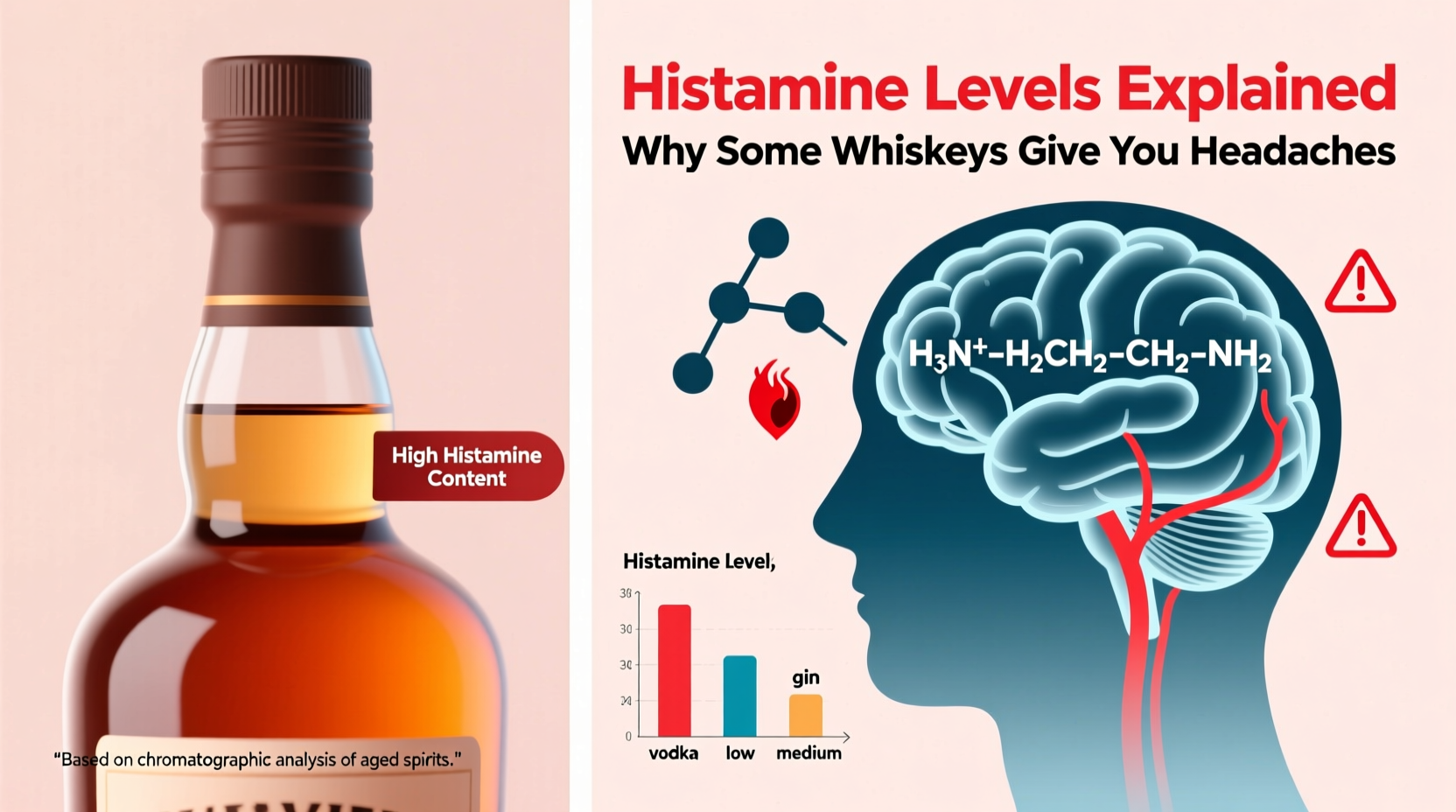
Histamine is a signaling molecule produced by immune cells, but it’s also generated by certain bacteria and yeasts during food and beverage fermentation. In sensitive individuals, elevated histamine intake can overwhelm the body’s capacity to break it down—primarily via the enzyme diamine oxidase (DAO) in the gut and histamine N-methyltransferase (HNMT) in the liver. When DAO activity is low (due to genetics, gut health, medications, or alcohol itself), ingested histamine enters systemic circulation unchecked. It binds to H1 and H3 receptors in blood vessels and neural tissue, causing vasodilation, neuroinflammation, and mast-cell activation—all linked to migraine-like headaches, flushing, nasal congestion, and gastrointestinal discomfort.
Crucially, alcohol inhibits DAO function by up to 50% within 30 minutes of consumption—even at low doses. So it’s not just *how much* histamine is in the whiskey; it’s the double hit: histamine load + impaired clearance. That’s why a glass of wine or aged cheese may cause no issue alone—but paired with whiskey, triggers a reaction.
Tip: If you react to multiple fermented foods (sauerkraut, aged cheese, soy sauce, red wine), histamine intolerance is likely—not just a “whiskey sensitivity.” Track symptoms alongside all high-histamine foods for two weeks to confirm patterns.How Histamine Gets Into Whiskey: Fermentation, Distillation, and Aging
Whiskey doesn’t contain histamine when distilled—but it accumulates it afterward. Here’s how:
- Fermentation: Lactic acid bacteria (LAB)—especially Lactobacillus and Pediococcus strains—convert the amino acid histidine (naturally present in barley, corn, and rye) into histamine. Longer fermentations (beyond 72 hours), warmer temperatures (>30°C), and bacterial contamination increase histamine yield. Many craft distilleries now use LAB-inhibiting yeast strains or strict sanitation to limit this—but traditional methods (e.g., open-air fermentation at some Scottish distilleries) invite bacterial activity.
- Distillation: Histamine is non-volatile and water-soluble. It does not carry over into the spirit during copper pot distillation—it remains in the stillage (the spent grain mash). So freshly distilled new make spirit contains negligible histamine. The problem begins post-distillation.
- Aging: This is where histamine rises significantly. Oak barrels are porous and host microbial communities—including residual LAB from previous fills or environmental exposure. Over years, these microbes metabolize wood sugars and extractives, producing histamine that migrates into the maturing spirit. Longer aging (12+ years), re-charred or heavily toasted casks, and warm warehouse conditions (like Kentucky rickhouses) correlate strongly with higher histamine concentrations.
A 2022 study published in Food Chemistry analyzed 47 single malts and found histamine levels ranging from 0.12 mg/L (young, unpeated Lowland) to 8.7 mg/L (a 22-year-old sherry cask finish aged in a humid dunnage warehouse). For context, red wine averages 3–12 mg/L; white wine, 0.5–2.5 mg/L. So yes—some whiskeys exceed the histamine load of a full glass of wine.
Which Whiskeys Are Most Likely to Cause Histamine-Related Headaches?
Not all whiskeys pose equal risk. Based on production practices, cask history, and analytical data, here’s a comparative overview:
| Whiskey Type | Typical Histamine Range (mg/L) | Key Risk Factors | Lower-Risk Alternatives |
|---|---|---|---|
| Sherry Cask Finishes (esp. Oloroso/PX) | 4.2 – 8.7 | High tannin, residual yeast biomass, long aging, oxidative environment | Fresh bourbon casks, virgin oak finishes (shorter contact) |
| Long-Aged (15+ years) Single Malts | 2.8 – 6.1 | Extended barrel contact, micro-oxygenation, warehouse humidity | Younger expressions (6–10 years), especially from cool, dry warehouses |
| Peated Whiskies (High Phenol) | 1.5 – 4.0 | Often aged longer; phenols may promote microbial adhesion in casks | Lightly peated (10–20 ppm) or unpeated Highland/Speyside |
| Bourbon (Standard 4–8 years) | 0.3 – 2.1 | New charred oak adds fewer microbial niches than reused casks | Small-batch bourbons aged ≤5 years, bottled-in-bond (higher proof may suppress residual microbes) |
| Japanese Whisky (ex-sherry, ex-port) | 3.0 – 7.2 | Often matured in humid climate; frequent use of European casks | Virgin oak or Mizunara casks; younger releases (e.g., Yoichi NAS) |
Note: “NAS” (No Age Statement) is not inherently safer—many NAS whiskies use older stock blended with younger spirit. Always check cask type and origin if available.
Real-World Case Study: A Sommelier’s Breakthrough
Sarah K., a certified spirits educator and wine sommelier based in Portland, Oregon, experienced recurrent headaches after tasting sessions for five years. She’d eliminated sulfites, gluten, and sugar—but whiskey remained inconsistent. “I could drink a 12-year Macallan one night and feel fine,” she told us, “but the next week, a 10-year Glenmorangie PX finish gave me a 24-hour migraine.” Frustrated, she began logging every dram: cask type, age, distillery, and symptom onset time. After 14 months, a pattern emerged: 92% of her reactions occurred with sherry cask finishes or whiskies aged over 15 years in dunnage warehouses. She then consulted a functional medicine physician, who confirmed low serum DAO activity and recommended a histamine-restricted diet plus DAO enzyme supplementation before tasting. Within three weeks, her tolerance improved markedly—even with moderate consumption of lower-histamine expressions. Her takeaway: “It wasn’t the alcohol or the ‘smoke’—it was the cask microbiome I’d never considered.”
Practical Steps to Identify & Reduce Your Histamine Exposure
You don’t need to quit whiskey. You need precision. Follow this step-by-step protocol over four weeks:
- Week 1 — Baseline Logging: Record every whiskey consumed: brand, age, cask type (check distillery websites or Master of Malt specs), ABV, and time/duration of any headache, flushing, or congestion. Note timing: reactions within 15–90 minutes suggest histamine; delayed onset (6–12 hrs) points more toward ethanol or congeners.
- Week 2 — Controlled Trial: Select three low-risk options: a young bourbon (e.g., Four Roses Small Batch Select, 6 years, virgin oak), an unpeated Lowland (e.g., Auchentoshan Three Wood, but skip the sherry cask portion—opt for their Classic), and a Japanese whisky matured in virgin oak (e.g., Chichibu On The Way). Consume each neat, 30 mL, on separate days—no other fermented foods or alcohol that day.
- Week 3 — Challenge Phase: Introduce one moderate-risk expression: a 10–12 year bourbon finished in port casks (e.g., Angel’s Envy), or a lightly sherried Speyside (e.g., Glenfiddich 15 Solera). Again, isolate consumption and log rigorously.
- Week 4 — Pattern Synthesis: Cross-reference your logs. If reactions cluster around sherry/port/oloroso casks or aging >12 years, histamine is highly probable. If reactions occur across *all* categories, consider DAO deficiency, medication interactions (e.g., NSAIDs, antidepressants), or underlying gut dysbiosis.
“Histamine in spirits is under-measured and under-discussed—but it’s clinically significant. We see patients daily whose ‘migraine triggers’ vanish once they switch from sherry-finished malts to first-fill bourbon casks.” — Dr. Lena Torres, Board-Certified Allergist & Immunologist, Cleveland Clinic Center for Functional Medicine
FAQ: Addressing Common Concerns
Does chilling whiskey reduce histamine?
No. Histamine is heat-stable and unaffected by temperature changes. Chilling may mask perception of intensity but does nothing to lower concentration. Conversely, serving very cold can constrict blood vessels—potentially delaying but not preventing histamine-driven vasodilation later.
Are organic or craft whiskeys safer?
Not necessarily—and sometimes riskier. Organic barley may have higher natural histidine levels. Some craft distilleries embrace wild fermentation or extended sour mashes to boost flavor complexity—both proven histamine amplifiers. Always prioritize transparency: ask producers about fermentation duration, LAB testing, and cask sourcing—not just “organic” labeling.
Can I take antihistamines before drinking?
Not advised. Over-the-counter H1 blockers (e.g., loratadine, cetirizine) do not inhibit histamine release in the gut or enhance DAO activity—and combining them with alcohol increases sedation and liver strain. DAO enzyme supplements (e.g., Umbrellux DAO, Histazyme), taken 15 minutes before consumption, are evidence-supported for dietary histamine reduction—but consult your physician first, especially if on MAO inhibitors or anticoagulants.
Conclusion: Reclaim Pleasure Without Pain
Headaches after whiskey aren’t a personal failing or inevitable consequence of enjoyment—they’re a biochemical signal. Histamine isn’t a flaw in whiskey; it’s a trace marker of its making: the patience of long aging, the richness of sherry casks, the microbial life in oak. But understanding its origins transforms reaction into agency. You can still savor a complex 20-year Bowmore—if you know it carries histamine weight. You can explore bold finishes while protecting your well-being—by choosing younger casks, verifying barrel history, and supporting distilleries that test for biogenic amines. This isn’t about restriction. It’s about informed reverence—for the craft, the cask, and your own physiology. Start your log tonight. Taste mindfully tomorrow. And share your findings—not just to help others navigate this invisible variable, but to push the industry toward greater transparency. Because the finest dram isn’t the strongest, the oldest, or the rarest. It’s the one you can enjoy—clear-headed, fully present, and entirely yours.
💬 Have you traced your whiskey headaches to specific casks or ages? Share your experience in the comments—your insight could help someone else find relief.