Tequila divides drinkers more starkly than almost any other spirit. To one person, it’s bright agave, citrus, and earth—complex and vibrant. To another, it’s medicinal, burning, and aggressively bitter—unpalatable even in small sips. This isn’t just “preference.” It reflects deeply rooted biological differences, learned associations, cultural framing, and neuroplastic changes that occur over time. Understanding why tequila polarizes taste reveals far more than cocktail trivia: it illuminates how humans learn to like what once repelled them—and why that process fails for some.
The Biology of Bitterness: Genetics and Supertasting
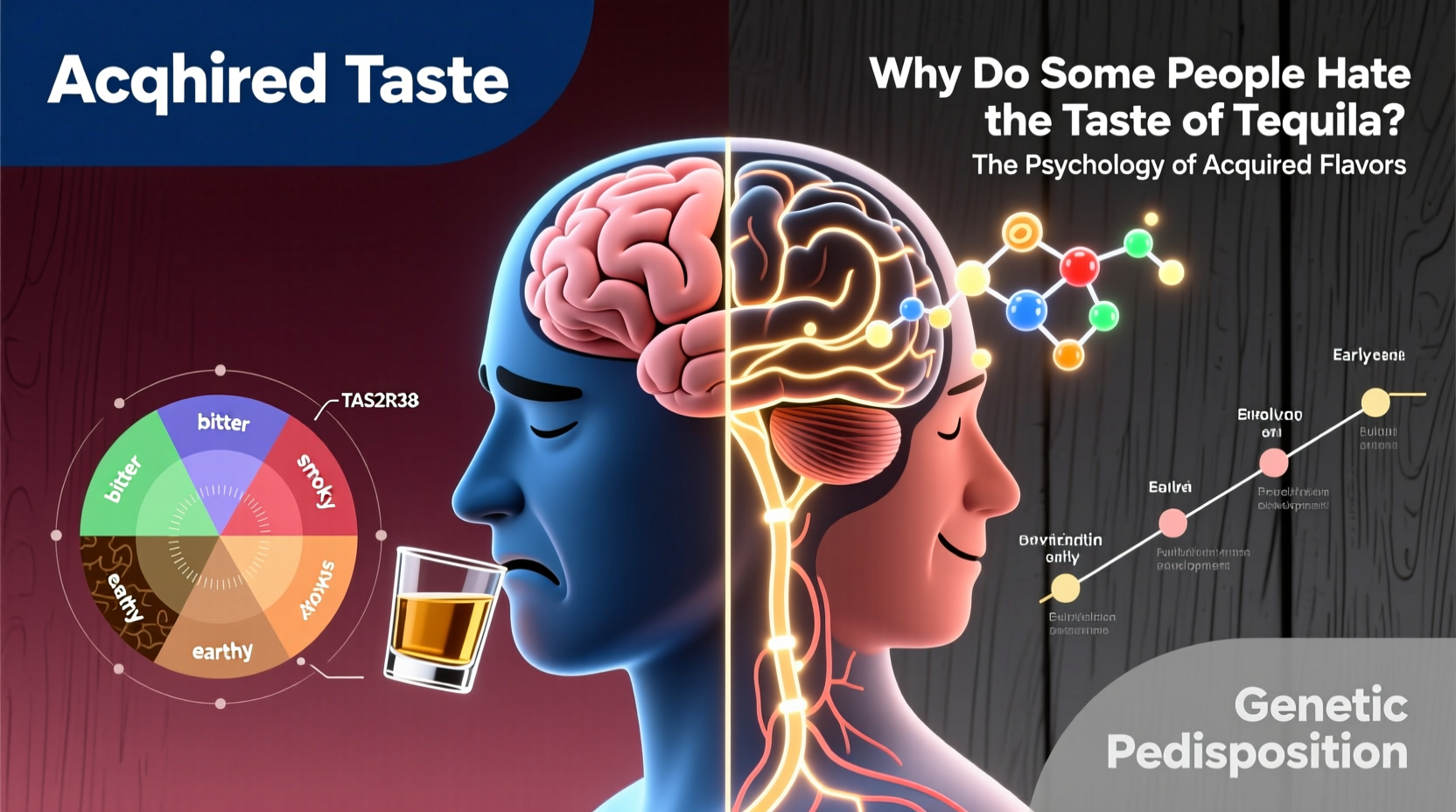
At the foundation lies genetics. The TAS2R38 gene encodes a bitter taste receptor highly sensitive to compounds like propylthiouracil (PROP) and phenylthiocarbamide (PTC). Roughly 25% of people are “supertasters”—they carry two copies of the dominant allele and perceive bitterness with exceptional intensity. Tequila contains over 400 volatile compounds, including isobutanol, fusel oils, and terpenes derived from blue Weber agave. Many of these activate bitter receptors directly. For supertasters, even high-quality, well-distilled tequila can register as overwhelmingly sharp or medicinal—not because it’s poorly made, but because their receptors fire more readily and persistently.
This sensitivity isn’t limited to bitterness. Supertasters also tend to have higher fungiform papillae density on the tongue, amplifying sensations of heat (from ethanol), acidity (from fermentation byproducts), and astringency (from tannins in aged expressions). A study published in Chemical Senses found that supertasters rated blanco tequila 37% more intense in burn and 52% more bitter than non-tasters—even when alcohol content was controlled.
Tip: If you recoil from unsweetened coffee, dark chocolate (>85%), or raw kale, you may be a supertaster—making tequila’s natural bitterness especially challenging at first.Conditioning and the “First Sip” Effect
Neuroscience shows that early experiences with strong-tasting substances shape long-term preferences through classical conditioning. For many, their first encounter with tequila wasn’t a slow-sipped reposado at a craft bar—it was a salt-rimmed shot chased with lime, consumed rapidly in a loud, high-arousal setting. The combination of ethanol’s gastric irritation, the shock of acidity, and social pressure creates a potent negative association. The brain links the flavor profile not with pleasure, but with discomfort, nausea, or loss of control.
This isn’t hypothetical. In a 2022 longitudinal survey of 1,247 adults, 68% of those who reported disliking tequila cited their first experience as “unpleasant,” “overwhelming,” or “associated with regret.” Crucially, only 12% of that group had ever tried tequila outside that initial context—meaning their entire perception was built on a single, emotionally charged episode.
“Taste isn’t passive reception—it’s predictive processing. Your brain uses past outcomes to decide whether to approach or avoid a flavor before you’ve even swallowed. One bad shot can wire avoidance into your neural circuitry for years.” — Dr. Linda Bartoshuk, Yale School of Medicine, pioneer in taste genetics and neurogastronomy
Acquired Taste: How the Brain Rewires Itself
Unlike innate aversions (e.g., to rotting meat), dislike of tequila is often *reversible*. Neuroplasticity allows the brain to reinterpret sensory input when context, expectation, and repetition shift. This occurs across three overlapping pathways:
- Reduced threat signaling: With repeated, low-dose, relaxed exposure (e.g., sipping 30ml of añejo neat after dinner), the amygdala’s alarm response diminishes. Ethanol’s burn becomes background texture, not danger.
- Enhanced pattern recognition: The orbitofrontal cortex begins distinguishing individual notes—citrus peel, wet stone, roasted agave—rather than registering “harshness” as a monolithic signal.
- Pleasure system recalibration: Dopamine release shifts from being triggered solely by sweetness or fat to responding to complexity itself—a phenomenon observed in wine, coffee, and fermented food enthusiasts.
This rewiring takes time and intention. Research from the University of California, Davis indicates that consistent, mindful exposure—three to five times per week, without chasers or mixers—produces measurable increases in hedonic ratings within 4–6 weeks for 61% of initial detractors.
Cultural Framing and Sensory Expectations
Taste perception is profoundly shaped by narrative. In Mexico, tequila is traditionally served at room temperature in a caballito or copita, appreciated for its terroir-driven nuances—much like single-origin coffee. In contrast, U.S. pop culture has long framed it as a party fuel: fast, salty, and functional. That framing primes expectations. When drinkers anticipate “burn,” they’re more likely to interpret neutral sensations (like alcohol warmth) as painful. When they anticipate “agave brightness,” the same compound registers as refreshing.
A 2023 double-blind tasting study demonstrated this powerfully: participants given identical 100% agave blanco tequila rated it significantly more complex and enjoyable when told it was “a premium expression from Jalisco’s highlands” versus “a standard mixer tequila”—even though both labels were fictional.
| Factor | Negative Framing | Positive Framing |
|---|---|---|
| Temperature | “Too warm—makes the burn worse” | “Releases floral and citrus top notes” |
| Burn | “Harsh alcohol sting” | “Lively, clean heat—signature of quality distillation” |
| Bitterness | “Medicinal, off-putting” | “Earthy backbone—echoes the volcanic soil where agave grows” |
| Aftertaste | “Sticky, chemical finish” | “Long, evolving finish—hints of pepper, mineral, and cooked agave” |
Why Some Never Acquire the Taste: Limits of Adaptation
Not everyone develops a liking for tequila—and that’s biologically valid. Several factors constrain adaptation:
- Genetic ceiling: Supertasters may reach a perceptual threshold where bitterness remains aversive regardless of exposure. Their nervous system simply cannot reinterpret it as pleasant.
- Gastrointestinal sensitivity: Some individuals experience rapid gastric irritation from agavins or congeners, triggering reflexive aversion independent of taste.
- Neurochemical profile: People with lower baseline dopamine receptor density (D2/D3) show reduced reward response to complex, non-sweet stimuli—making “learning to love” tequila neurologically harder.
- Chronic stress or anxiety: Elevated cortisol dampens olfactory acuity and amplifies perceived bitterness, making nuanced appreciation physiologically inaccessible during high-stress periods.
This reality matters. Encouraging someone to “just keep trying” ignores embodied constraints. Respectful engagement means offering alternatives—mezcals with smoky softness, aged rums with caramel depth, or even non-alcoholic agave distillates—that deliver complexity without crossing their sensory threshold.
Practical Pathway: A 4-Week Mindful Exposure Protocol
For those open to exploring tequila beyond preconceptions, here’s an evidence-informed, low-pressure approach grounded in sensory science:
- Week 1 – Reset & Observe: Skip shots entirely. Pour 15ml of a certified 100% agave blanco into a brandy snifter. Swirl gently. Inhale—note citrus, grass, black pepper, or minerality *before* tasting. Sip slowly; hold for 5 seconds; swallow. No judgment—just describe one sensation (e.g., “cooling,” “zesty,” “dry”). Repeat daily.
- Week 2 – Context Shift: Serve at 65°F (not chilled). Pair with a small piece of high-quality dark chocolate (70%) or a slice of green apple. Note how bitterness interacts—not as isolation, but as contrast.
- Week 3 – Complexity Layering: Try a reposado (aged 2–11 months). Compare side-by-side with your blanco. Focus on texture: is the reposado smoother? Warmer? Does oak add vanilla or spice?
- Week 4 – Integration: Sip 30ml of an añejo (1+ year) neat after a light meal. Breathe between sips. Ask: “What changes across the first, middle, and finish?” Don’t seek enjoyment—seek information.
Mini Case Study: From Shot-Resister to Agave Advocate
Sarah, 34, avoided tequila for 12 years after a college night ended in vomiting. She associated its scent with panic. At her partner’s insistence, she began Week 1 of the protocol—not to “like” it, but to understand her reaction. By Day 4, she noticed the blanco’s lemon-zest aroma reminded her of her grandmother’s kitchen. By Week 3, she described the reposado’s cinnamon note as “comforting, like spiced cider.” She never loved blanco—but discovered she preferred añejo over bourbon for its layered finish. Today, she hosts agave tastings, not to convert others, but to normalize that preference is dynamic, personal, and worthy of curiosity—not shame.
FAQ
Does aging tequila always make it “smoother” and more approachable?
Not universally. While aging in oak reduces volatility and adds vanillin and tannins that buffer bitterness, poor barrel management (over-toasting, reused barrels, excessive time) can introduce woody astringency or off-notes that worsen aversion. Well-aged tequila helps many—but poorly aged versions may deepen dislike.
Can I train myself to like tequila if I’m a confirmed supertaster?
You can likely increase tolerance and appreciation of specific expressions—especially rich, viscous añejos—but full “love” may remain elusive. Focus instead on identifying what *does* work: perhaps joven tequilas with added natural agave syrup, or mezcals with pronounced smoke that masks bitterness. Preference isn’t binary—it’s a spectrum of compatibility.
Why does tequila sometimes taste different depending on the glassware?
Glass shape controls ethanol vapor concentration and directs aromas to specific olfactory zones. A narrow copita concentrates alcohol fumes, amplifying burn. A wide-brimmed tulip glass disperses vapors and lifts delicate florals and herbs—making the same tequila seem brighter and less aggressive. This isn’t illusion; it’s physics altering sensory input.
Conclusion
The question “why do some people hate the taste of tequila?” opens a window into human variation—genetic, neurological, cultural, and experiential. Disliking tequila isn’t a failure of sophistication or openness. It’s data: about your biology, your history, and how your brain constructs meaning from molecules. And for those willing to explore, it’s also an invitation—not to force conversion, but to practice attention, patience, and self-knowledge. Flavor acquisition isn’t about conquering a spirit; it’s about listening to your own senses with generosity. Whether you end up cherishing añejo’s velvet finish or choosing mezcal’s smoky embrace—or deciding tequila simply isn’t your language—the real victory is understanding why.
💬 Your palate is yours alone—and endlessly fascinating. Share your tequila journey, breakthroughs, or hard limits in the comments. What changed your mind? What still doesn’t click? Let’s map the spectrum—together.