That familiar flush, the gentle heat spreading across your chest and face after the first sip of a glass of red wine—it’s often described as comforting, even luxurious. But for others, it’s unsettling: sudden warmth, flushed cheeks, prickling skin, or even mild dizziness. Unlike the steady rise in body temperature from fever or exercise, this sensation is rapid, localized, and paradoxically occurs despite no actual increase in core temperature. It’s not imagination—and it’s not just “feeling relaxed.” It’s physiology in motion. This warmth is one of the most immediate and universally experienced effects of ethanol, the active compound in wine, and its roots lie deep in human biochemistry, vascular biology, and evolutionary adaptation.
The Core Mechanism: Ethanol-Induced Vasodilation
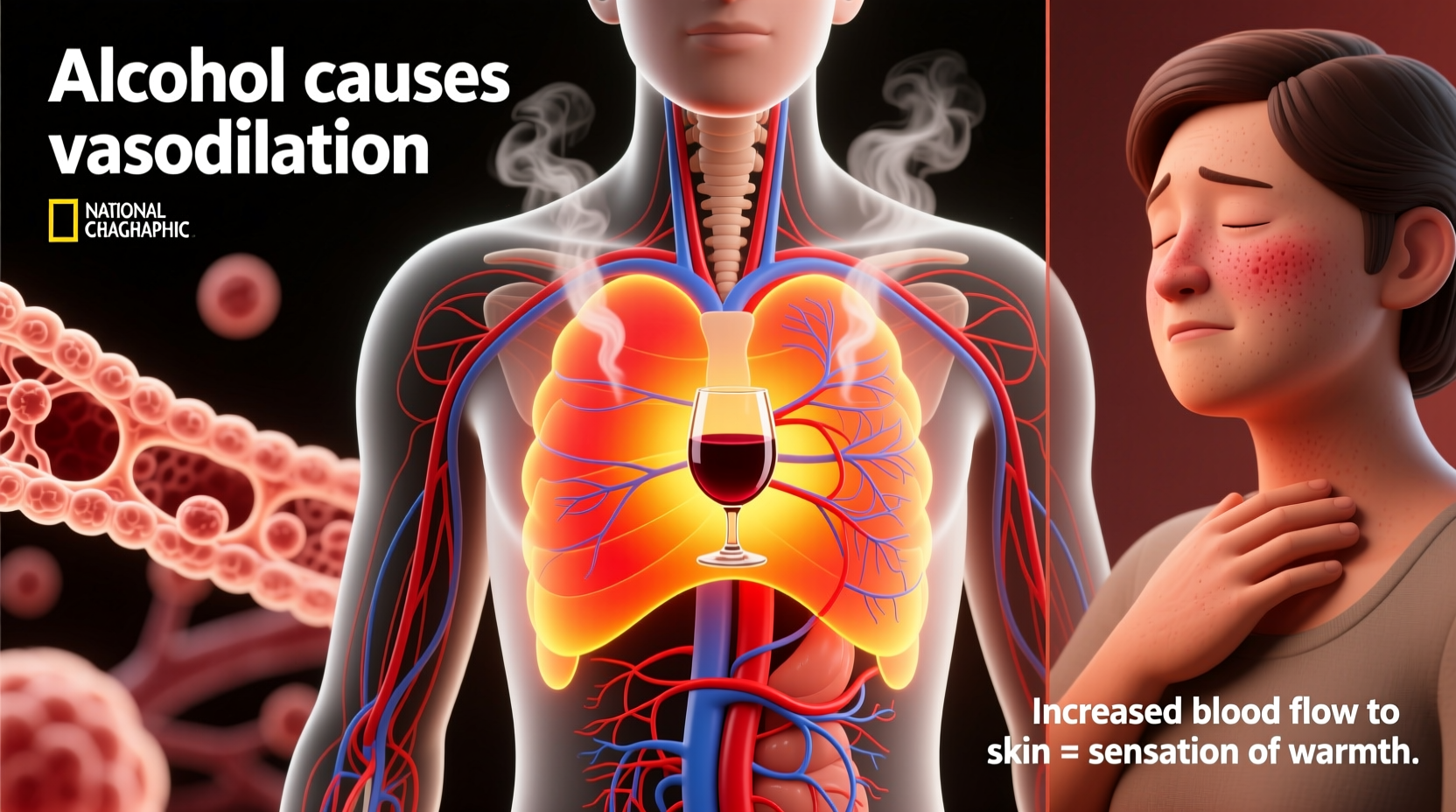
At the heart of the wine-induced warmth is a simple but powerful physiological response: peripheral vasodilation. When ethanol enters the bloodstream—absorbed rapidly through the stomach and small intestine—it triggers the relaxation of smooth muscle cells in the walls of small arteries and capillaries, especially those near the skin’s surface. This dilation increases blood flow to the dermis by up to 30–50% within minutes of consumption.
This surge in cutaneous blood flow delivers more warm, oxygen-rich blood to the skin—raising skin temperature by 0.5°C to 1.5°C—even while core body temperature remains stable or may even dip slightly. Your thermoreceptors (temperature-sensitive nerve endings in the skin) detect this localized heat and send signals to the brain, creating the unmistakable sensation of warmth. Importantly, this is *not* true feverish heating; it’s a redistribution of existing heat—not generation of new heat.
Research published in the Journal of Clinical Investigation confirms that ethanol directly inhibits calcium influx into vascular smooth muscle cells, reducing contractile tone. It also enhances nitric oxide (NO) synthesis—a potent endogenous vasodilator—and potentiates the effects of prostaglandins involved in inflammatory and thermal signaling pathways.
Metabolic Heat Production and the ALDH2 Factor
While vasodilation explains the *sensation*, ethanol metabolism contributes significantly to the *intensity* and *duration* of warmth—especially in genetically susceptible individuals. In the liver, ethanol is first converted to acetaldehyde by alcohol dehydrogenase (ADH). Acetaldehyde is highly reactive, toxic, and responsible for many adverse effects—including intense flushing and warmth.
Acetaldehyde is normally broken down quickly by aldehyde dehydrogenase 2 (ALDH2), an enzyme encoded by the ALDH2 gene. However, approximately 35–40% of East Asians carry a genetic variant (ALDH2*2) that renders the enzyme nearly inactive. This results in acetaldehyde accumulation at levels up to 6–10 times higher than in non-carriers after equivalent alcohol intake.
Acetaldehyde directly stimulates histamine release from mast cells and triggers the release of substance P and calcitonin gene-related peptide (CGRP)—neurotransmitters that further amplify vasodilation and sensory nerve activation. The result? A pronounced, often uncomfortable flush, warmth, tachycardia, and nausea—commonly known as the “Asian flush” or “alcohol flush reaction.” Crucially, this reaction occurs with *any* alcoholic beverage—but wine, particularly red wine, contains additional compounds that exacerbate it.
Tip: If you experience intense facial flushing, rapid heartbeat, or nausea within 15–30 minutes of drinking wine—even small amounts—consider genetic testing for ALDH2 deficiency. Avoiding alcohol entirely is the only reliable way to prevent acetaldehyde buildup and its associated symptoms.Wine-Specific Amplifiers: Histamine, Tyramine, and Polyphenols
Unlike distilled spirits or beer, wine—especially red—is rich in biologically active compounds that interact synergistically with ethanol to intensify warmth. These include:
- Histamine: Naturally present in fermented foods and beverages, histamine levels in red wine range from 3–19 mg/L—up to 20× higher than in white wine. Histamine binds to H1 receptors on vascular smooth muscle and endothelial cells, triggering direct vasodilation and increasing capillary permeability. People with low diamine oxidase (DAO) enzyme activity—responsible for breaking down dietary histamine—may experience amplified warmth, headache, or nasal congestion.
- Tyramine: A monoamine formed during fermentation and aging, tyramine can displace norepinephrine from storage vesicles, leading to transient sympathetic activation followed by rebound vasodilation. It also inhibits mitochondrial monoamine oxidase (MAO), indirectly prolonging the action of vasoactive amines.
- Polyphenols (e.g., quercetin, resveratrol): While beneficial antioxidants, certain polyphenols inhibit ALDH2 activity *in vitro*. Though their clinical impact is modest compared to the genetic ALDH2*2 variant, they may contribute to delayed acetaldehyde clearance—particularly in sensitive individuals consuming high-polyphenol wines like aged Cabernet Sauvignon or Syrah.
This biochemical synergy explains why two people drinking the same volume of ethanol may report vastly different warmth experiences—depending not just on genetics, but on wine type, age, production method, and even food consumed alongside it.
Individual Variability: Beyond Genetics
Genetics set the baseline—but multiple modulating factors determine whether and how intensely someone feels warm after wine:
| Factor | Effect on Warmth Sensation | Scientific Basis |
|---|---|---|
| Sex | Women typically report stronger warmth at lower doses | Lower average body water content (52% vs. 61% in men) → higher blood alcohol concentration (BAC); estrogen may enhance ethanol-induced NO release |
| Fasting State | Markedly increased warmth and peak BAC | Absence of food delays gastric emptying inhibition → faster ethanol absorption; reduced splanchnic blood flow shunting |
| Medications | Exaggerated or prolonged warmth (e.g., with nitrates, calcium channel blockers) | Pharmacodynamic synergy: additive vasodilation; MAO inhibitors (e.g., linezolid) cause dangerous tyramine-mediated hypertensive crisis |
| Chronic Alcohol Use | Diminished warmth over time (tolerance) | Upregulation of ALDH2 and ADH; vascular desensitization to ethanol’s NO-mediated effects; autonomic adaptation |
| Ambient Temperature | Warmer environments amplify perceived warmth; cooler ones may mask it | Thermoregulatory competition: ethanol impairs central thermoregulation in hypothalamus, reducing compensatory sweating and vasoconstriction |
Notably, chronic heavy drinking leads to *reduced* warmth perception—not because the mechanism disappears, but because the body adapts. This tolerance is deceptive: while vasodilation lessens, organ-level toxicity (liver, brain, heart) accumulates silently. The absence of warmth does not signal safety.
Mini Case Study: Maya, 32, Marketing Executive
Maya noticed persistent facial flushing and a wave of warmth after just half a glass of Pinot Noir at team dinners—often accompanied by mild headache and fatigue the next day. She assumed it was stress or poor sleep. After discussing symptoms with her physician, she underwent genetic testing and learned she carried one copy of the ALDH2*2 allele (heterozygous). Her ALDH2 enzyme activity was ~30–40% of normal. Further testing revealed low serum DAO levels, suggesting histamine intolerance.
Her clinician advised eliminating red wine entirely and limiting white wine to one small glass monthly—with food. Within three weeks, her post-wine symptoms vanished. More importantly, her resting heart rate stabilized, and her morning energy improved markedly. “I thought the warmth was just ‘how wine feels,’” she shared. “Learning it was my body sounding an alarm changed everything—I now choose sparkling water with lemon instead, and I’ve never felt more alert at 5 p.m.”
Expert Insight on Risk and Recognition
“The alcohol flush reaction isn’t merely cosmetic—it’s a validated biomarker of elevated acetaldehyde exposure, which is classified as a Group 1 carcinogen by the WHO. Individuals with ALDH2 deficiency have up to 10× higher risk of esophageal cancer with regular alcohol consumption—even at low doses. Feeling warm after wine isn’t benign; it’s your physiology urging caution.” — Dr. Hiroshi Yamamoto, MD, PhD, Director of the Center for Alcohol Metabolism Research, Kyoto University Graduate School of Medicine
Practical Checklist: Managing Wine-Related Warmth Responsibly
If you regularly experience warmth after wine, use this evidence-based checklist to assess and adjust your habits:
- Track timing and dose: Note how much wine triggers warmth—and how quickly (within 10 min? 30 min?). Rapid onset strongly suggests ALDH2 involvement.
- Eliminate confounders: Try the same wine with food vs. on an empty stomach; compare red vs. low-histamine white (e.g., dry Riesling) vs. sparkling wine.
- Monitor systemic symptoms: Record any accompanying palpitations, nausea, nasal congestion, or headache—these point toward histamine or acetaldehyde sensitivity.
- Assess medication interactions: Review prescriptions and OTC drugs (especially antibiotics, antidepressants, antihypertensives) with a pharmacist for alcohol interaction warnings.
- Consult a specialist: If warmth is severe, recurrent, or paired with dizziness or shortness of breath, seek evaluation by a gastroenterologist or allergist/immunologist for ALDH2 testing and histamine assessment.
FAQ
Does drinking water or eating before wine prevent the warmth?
Food—especially protein and fat—slows gastric emptying, delaying ethanol absorption and blunting the peak BAC and associated vasodilation. Hydration helps maintain circulatory volume but does *not* reduce ethanol’s direct vasodilatory effect or acetaldehyde accumulation. It may lessen subjective discomfort but won’t eliminate the core physiological response.
Is warm skin after wine a sign of alcohol dependence?
No. In fact, the opposite is true: early-stage drinkers and those with genetic sensitivity typically report *more* pronounced warmth. With chronic heavy use, tolerance develops, and warmth diminishes—even as cellular damage progresses. Loss of warmth is not reassurance; it’s a sign of neurovascular adaptation masking underlying harm.
Can I build tolerance to the warmth by drinking more often?
Repeated exposure may reduce perceived warmth due to vascular and autonomic adaptation—but it *increases* acetaldehyde exposure in genetically susceptible individuals, raising cancer risk without benefit. Tolerance to the sensation does not equate to safety. There is no safe threshold for acetaldehyde accumulation in ALDH2-deficient individuals.
Conclusion
The warmth you feel after a glass of wine is far more than a pleasant side effect—it’s a precise, measurable window into your unique biochemistry. It reflects real-time interactions between ethanol, acetaldehyde, histamine, and your vascular and nervous systems. For some, it’s a harmless signal of relaxation. For others—especially those with ALDH2 deficiency or histamine intolerance—it’s a physiologic warning with serious long-term implications. Understanding the science transforms passive experience into empowered choice. You don’t need to abandon wine culture to honor your biology. Opt for lower-histamine whites, pair intentionally with food, prioritize hydration *between* glasses—not just during, and above all, listen when your skin speaks. That flush isn’t vanity—it’s data. And in matters of health, data deserves attention.
💬 Your experience matters. Have you tracked how wine affects your body temperature, heart rate, or energy? Share your observations in the comments—your insights could help others decode their own responses and make smarter, science-informed choices.