Bitters occupy a curious niche in the modern pantry: intensely flavored, deeply aromatic, and almost always sold in 2- to 5-ounce glass bottles with dropper or dasher caps. To the uninitiated, their diminutive size seems disproportionate—especially when compared to standard 16-ounce bottles of vinegar or soy sauce. Yet this packaging is neither arbitrary nor purely aesthetic. It reflects centuries of botanical extraction science, precise culinary function, regulatory constraints, and a fundamental truth about how bitters work: they are not ingredients you measure by the spoonful—they’re catalysts, modifiers, and balance agents that operate at the molecular level. And yes, they absolutely belong in cooking—not just cocktails.
The Science Behind the Small Bottle
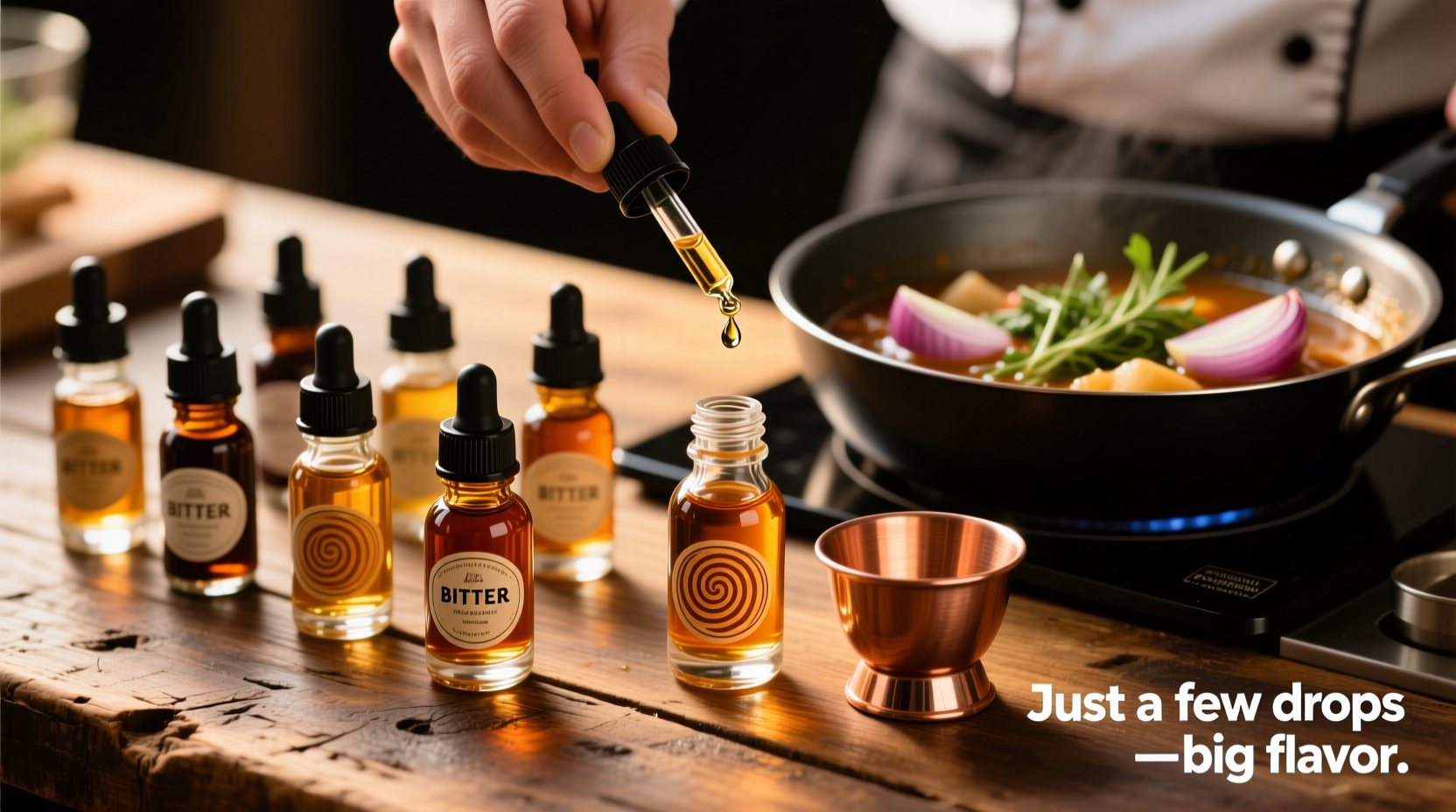
Bitters are concentrated infusions of bitter-tasting plant matter—roots (gentian, dandelion), bark (cascara, cinchona), citrus peels (grapefruit, orange), herbs (wormwood, mugwort), and spices (cardamom, clove)—steeped in high-proof alcohol (typically 35–45% ABV). Alcohol serves two critical roles: it efficiently extracts fat-soluble compounds like terpenes and alkaloids (responsible for bitterness and complexity), and it acts as a preservative, allowing bitters to remain stable for years without refrigeration.
Because these compounds are so potent, effective dosing occurs in drops—not teaspoons. A single drop of high-quality gentian bitters contains enough sesquiterpene lactones to trigger salivary flow, stimulate gastric enzyme secretion, and modulate perception of sweetness and fat. This physiological response underpins both their historical use as digestive aids and their modern culinary utility. Overdosing dilutes impact and introduces harsh, medicinal off-notes. The small bottle enforces discipline: it signals that less is not only sufficient—it’s essential.
Tip: Never shake bitters before use—the sediment contains insoluble resins that contribute depth; vigorous shaking creates cloudiness and inconsistent dosing.Historical Roots and Regulatory Reality
The tradition of small-bottle bitters dates to the early 19th century, when pharmacists like Dr. Johann Siegert formulated “Aromatic Bitters” in Venezuela (1824) to treat tropical fevers and seasickness. These were sold as patent medicines—regulated as drugs, not food. U.S. federal law still classifies most bitters containing >0.5% alcohol as “alcoholic preparations,” subject to labeling, taxation, and distribution rules that favor compact, tamper-evident packaging. Even non-alcoholic bitters (made with glycerin or vinegar bases) follow the small-bottle convention for consistency, shelf stability, and consumer expectation.
Crucially, the size also reflects yield economics. Producing authentic bitters is labor-intensive: gentian root must be aged for months; orange peel requires sun-drying to concentrate oils; wormwood needs cold maceration to avoid bitterness degradation. A 100-liter batch may yield only 200–300 standard 5-ounce bottles after filtration and aging. Scaling up would compromise quality control—heat exposure during large-scale bottling degrades volatile top notes, while extended storage before sale risks oxidation.
Cooking with Bitters: Beyond the Bar
Professional chefs have quietly used bitters in savory kitchens for over a decade. At Chicago’s Alinea, chef Grant Achatz once finished a roasted beet consommé with three drops of celery bitters to amplify earthy umami. In Portland, chef Naomi Pomeroy stirs orange bitters into caramel sauce for her tarte tatin—not for citrus flavor, but to cut richness and lift aroma. These applications rely on three core functions: bitterness modulation, aromatic layering, and flavor bridging.
Bitterness doesn’t just “add bitterness.” It suppresses perceived sweetness and fattiness while enhancing fruit, herb, and spice notes. Think of it as a flavor lens: a drop of grapefruit bitters in a vinaigrette makes the mustard pop and the olive oil taste cleaner; a pinch of chocolate bitters in mole balances chile heat without adding sugar; cardamom bitters stirred into crème anglaise deepens spice without graininess.
| Bitter Type | Culinary Use Case | Effective Dose | Why It Works |
|---|---|---|---|
| Orange | Roast chicken pan sauce | 2–3 drops | Enhances citrus notes in zest; cuts grease; brightens thyme |
| Gentian | Grain salad (farro + roasted squash) | 1 drop per serving | Stimulates saliva to refresh palate between bites |
| Chocolate | Beef bourguignon reduction | 1/4 tsp per quart | Adds roasted cocoa tannins; mimics slow-cooked marrow depth |
| Lavender | Honey-glazed carrots | 1 drop per 2 cups | Softens honey’s cloying edge; lifts floral aroma |
| Black Walnut | Pork loin brine | 1/2 tsp per quart brine | Introduces phenolic structure similar to oak-aged wine |
A Step-by-Step Guide to Using Bitters in Cooking
- Start with purpose, not recipe: Ask, “What’s missing?” If a dish tastes flat, add aromatic bitters (orange, lemon, rosemary). If it’s cloying, reach for bitter-forward types (gentian, dandelion, rhubarb).
- Build in layers: Add bitters at three stages—early (to infused oils or brines), mid (to reductions or braising liquids), and late (as a finishing accent, like fresh herbs).
- Dose incrementally: Begin with 1 drop per cup of liquid or 2 servings of solids. Stir, wait 10 seconds, taste. Repeat only if needed. Never exceed 5 drops per standard recipe unless explicitly designed for it.
- Balance acidity: Bitters enhance sourness perception. Reduce vinegar or lemon juice by 10–15% when adding bitters to avoid sharpness.
- Store properly: Keep bottles upright in a cool, dark cabinet. Avoid temperature swings—heat accelerates alcohol evaporation, altering concentration.
Mini Case Study: Reviving a Stale Sauce
At Brooklyn’s Sempre Pasta, sous chef Lena Torres faced a recurring problem: her signature tomato-basil marinara tasted increasingly one-dimensional after scaling production. The canned San Marzano base lacked brightness, and extra basil introduced grassy bitterness. She began experimenting with bitters—not as flavor, but as a structural tool. First, she added 4 drops of lemon bitters to the initial sauté of garlic and onions: the citral compounds volatilized with the heat, lifting the entire aromatic profile. Then, during reduction, she stirred in 2 drops of gentian bitters—its bitter principles interacted with tomato’s natural glutamates, amplifying savoriness without salt. Finally, she finished each batch with 1 drop of black pepper bitters, which activated TRPV1 receptors on the tongue, creating subtle warmth that mimicked freshly cracked pepper. Customer feedback noted “more depth” and “cleaner finish”—without changing a single core ingredient.
Expert Insight: The Physiology of Bitter
“Bitter receptors aren’t just on the tongue—they’re in the stomach, intestines, and even airways. When we dose bitters correctly, we’re not seasoning food; we’re engaging a whole-body sensory network that regulates digestion, satiety, and flavor perception. That’s why 3 drops can outperform a tablespoon of acid or salt.” — Dr. Sarah Lin, Food Neuroscientist, Monell Chemical Senses Center
Common Misconceptions and What to Avoid
- Myth: “All bitters are alcoholic and unsafe for children.” While most contain ethanol, non-alcoholic versions exist (glycerin-based or vinegar-macerated). Even alcoholic bitters contribute negligible alcohol to cooked dishes—ethanol fully evaporates at 173°F, and most cooking exceeds that temperature.
- Myth: “More bitters = more flavor.” Bitter receptors fatigue rapidly. Excess triggers aversion—not enhancement. Three drops of Angostura is optimal in a Manhattan; 10 drops makes it undrinkable.
- Avoid pairing bitters with delicate proteins raw: Never add bitters to ceviche or tartare—the alcohol can partially “cook” fish or denature beef enzymes, altering texture.
- Avoid metal droppers in citrus-heavy bitters: Citric acid corrodes stainless steel over time, imparting metallic off-notes. Glass or food-grade plastic droppers are safer.
FAQ
Can I substitute bitters for other bitter ingredients like coffee or cocoa nibs?
No—not directly. Coffee and cocoa deliver bitterness through roasting-derived melanoidins and theobromine, which behave differently than botanical alkaloids in bitters. They add body and texture; bitters add volatile aroma and receptor-level modulation. Use them complementarily: cocoa nibs for mouthfeel, chocolate bitters for aromatic lift.
Do bitters lose potency over time?
Yes—but slowly. High-proof alcohol preserves well, yet light and oxygen degrade terpenes. Most bitters retain full efficacy for 3–5 years unopened, and 12–18 months after opening if stored properly. If the aroma turns flat or musty, or the color darkens significantly, replace it.
Are there vegan or gluten-free bitters?
Virtually all traditional bitters are naturally vegan and gluten-free. Alcohol is distilled from grains, but distillation removes all gluten proteins. Always verify labels for added ingredients like caramel color (sometimes derived from barley) or honey (non-vegan). Reputable brands like Fee Brothers and Urban Moonshine publish full allergen statements.
Conclusion
Bitters in tiny bottles aren’t a marketing gimmick or a barroom quirk—they’re a precision instrument shaped by botany, physiology, and centuries of empirical use. Their size honors their function: to deliver transformative impact in microscopic doses. Whether you’re deglazing a duck pan, brightening a lentil stew, or balancing a chocolate ganache, bitters offer a dimension of control no other pantry staple provides. They don’t shout; they recalibrate. They don’t dominate; they reveal. The next time you reach for that slender amber bottle, remember—you’re not adding flavor. You’re adjusting the very architecture of taste.
💬 Try one application this week: Stir 2 drops of orange bitters into your next vinaigrette, then taste before and after. Notice how the greens taste brighter, the oil cleaner, the vinegar less aggressive. Share what changed—and what you’ll try next—in the comments below.