Walk into any high-end bar today and ask for a martini—dry, stirred, up, with a lemon twist—and you’ll likely be asked a single, decisive question: “Gin or vodka?” That split-second choice isn’t just preference. It’s a declaration of philosophy. For decades, the rise of vodka martinis flattened the martini’s complexity into a vehicle for chill and clarity. But as craft cocktail culture matures, bartenders and drinkers alike are revisiting the original spirit—not as nostalgia, but as necessity. The question isn’t whether gin or vodka *can* make a good martini. It’s whether choosing one over the other still carries meaning when every bar stocks both, when infusions blur categories, and when “martini” is often used as shorthand for any chilled, spirit-forward drink served up.
The answer is emphatically yes—and not because tradition demands it, but because chemistry, palate architecture, and intentionality demand it. A martini is a three-ingredient formula where each component must carry weight: spirit, vermouth, and dilution. When the spirit changes, everything else recalibrates. This article dissects why the base spirit remains the most consequential decision in martini construction—not as a relic, but as the active, living center of the drink’s identity.
The Historical Divide: How Gin Gave Birth to the Martini (and Vodka Nearly Killed It)
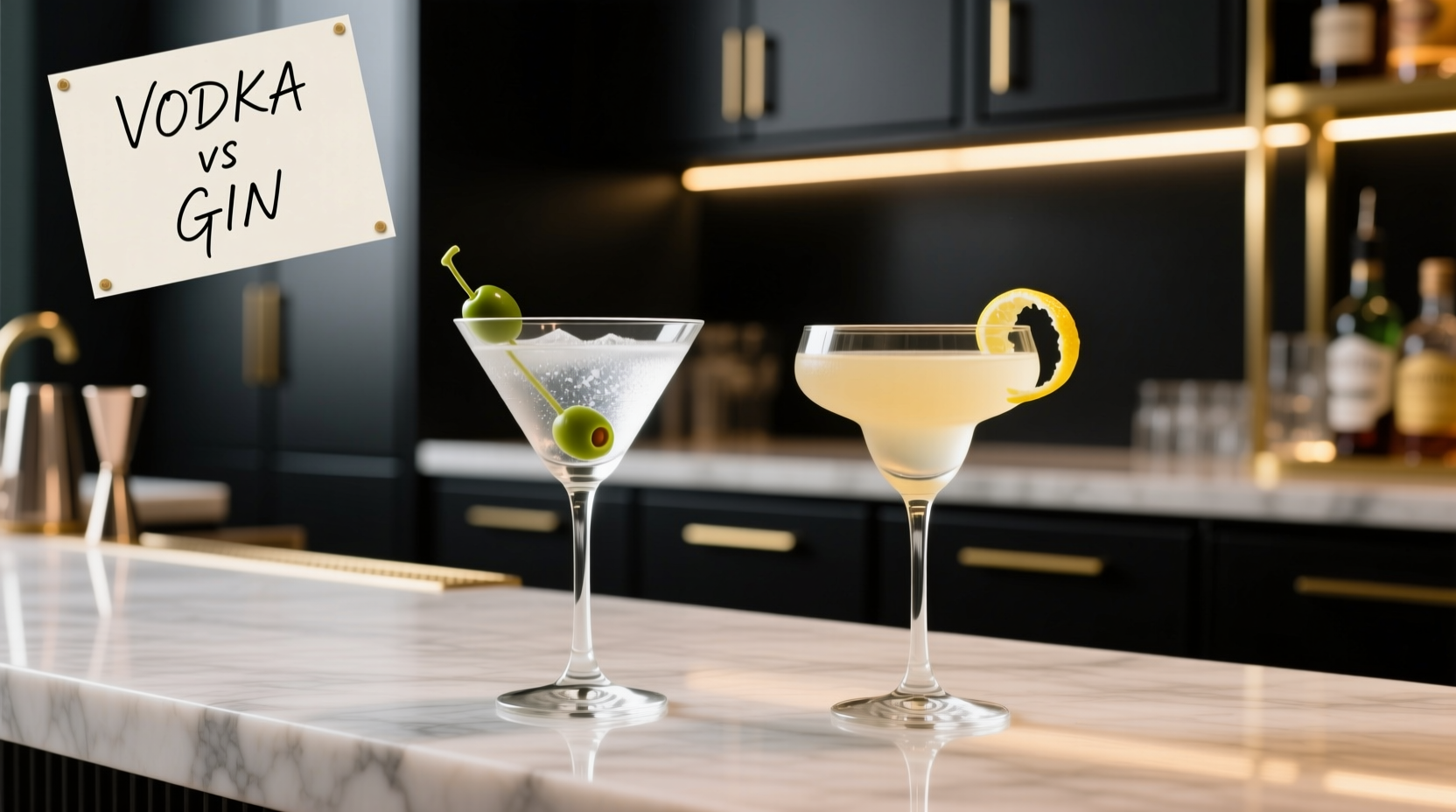
The martini began as a gin drink—no ambiguity. Its earliest documented ancestors, like the “Martinez” (c. 1880s), used Old Tom gin, sweet vermouth, maraschino, and bitters. As American palates shifted toward drier profiles and London dry gin gained dominance, the recipe stripped back: less vermouth, no modifiers, sharper botanicals. By the 1920s, the martini was defined by its austerity—gin’s juniper backbone cutting through vermouth’s herbal richness, sharpened further by ice-cold dilution and a citrus oil lift.
Vodka entered the picture post–World War II, gaining traction in the U.S. not for its flavor—but for its absence of it. Its neutrality made it adaptable, predictable, and politically safe in an era wary of strong associations (including gin’s ties to British imperialism and Prohibition-era bootleggers). James Bond’s “vodka martini, shaken, not stirred” cemented its cultural cachet—not as a superior preparation, but as a symbol of cool detachment. By the 1990s, vodka martinis outsold gin versions in most American bars. Yet that dominance obscured a critical truth: vodka didn’t replace gin in the martini; it redefined what the martini *was*. Where gin demanded attention to balance, vodka invited focus on temperature, texture, and garnish.
Botanical Chemistry: Why Gin and Vodka Interact Differently With Vermouth
Vermouth isn’t just diluted wine—it’s aromatized, fortified, and spiced. Its profile includes bitter gentian, floral chamomile, citrus peel oils, and dried herbs. These compounds don’t float passively in spirit; they bind, repel, or amplify depending on the solvent.
Gin’s dominant compound is α-pinene—a terpene also found in pine resin and rosemary. It’s hydrophobic and volatile, interacting strongly with vermouth’s esters and lactones to create layered aromatic lift. Juniper’s camphoraceous note bridges the gap between vermouth’s bitterness and the spirit’s alcohol heat, allowing even 2:1 or 3:1 ratios to retain structure without harshness.
Vodka, by contrast, is ethanol + water—stripped of congeners. Without botanical anchors, vermouth’s bittering agents (like cynarin) remain more exposed. That’s why most vodka martinis use less vermouth (often 4:1 or higher) or rely on richer, sweeter styles (e.g., Dolin Blanc) to compensate. Even then, the drink leans on mouthfeel—chilled viscosity, subtle glycerol from distillation—rather than aromatic interplay.
Tip: If using vodka, choose a high-proof, column-distilled expression (e.g., 45% ABV or higher) to better suspend vermouth’s oils and reduce perceived “thinness.”A Modern Bartender’s Toolkit: What the Base Spirit Says About Your Intent
In today’s bar world, the choice between gin and vodka signals far more than taste preference. It reveals the drinker’s—or bartender’s—priority: expression, precision, or experience.
- Gin prioritizes expression: It invites dialogue between botanicals and vermouth. A Plymouth gin martini (with its earthy, root-forward profile) behaves differently than a Japanese gin like Roku (with yuzu and sansho pepper), which adds citrus pith and tingling heat. Each variation tells a story about origin, season, and intention.
- Vodka prioritizes precision: Without botanical variables, the focus shifts to technique—stirring time, ice quality, chilling method, and vermouth selection. A perfect vodka martini is a masterclass in control: consistent temperature (−2°C is ideal), minimal dilution (22–25 seconds stirring), and absolute clarity.
- Neither prioritizes “neutrality”: That’s a myth. Even “neutral” vodka carries subtle grain or potato notes, while “light” gins retain structural juniper. Assuming either is blank is the first step toward a flat drink.
“Calling vodka ‘neutral’ is like calling silence ‘empty.’ It’s full of space—and that space must be filled with intention. A gin martini speaks. A vodka martini listens—and answers only when you’ve earned its clarity.” — Elena Rodriguez, Head Mixologist at The NoMad Bar, NYC (2022 James Beard Award nominee)
Practical Comparison: Building the Two Martinis Side-by-Side
To understand how base spirit shapes outcome, consider this controlled comparison using identical technique, tools, and vermouth (Dolin Dry, 15% ABV).
| Element | Gin Martini (Beefeater London Dry) | Vodka Martini (Ketel One, 40% ABV) |
|---|---|---|
| Ratio | 3:1 (75ml gin : 25ml vermouth) | 5:1 (75ml vodka : 15ml vermouth) |
| Stirring Time | 32 seconds (to fully integrate botanicals) | 24 seconds (to preserve chill without over-diluting) |
| Dilution | 28% ABV final, ~2.4g/L residual sugar | 31% ABV final, ~1.1g/L residual sugar |
| Mouthfeel | Waxy, slightly viscous; coats mid-palate | Slippery, clean, rapid finish |
| Aromatic Profile | Juniper → coriander → lemon peel → faint licorice | Alcohol lift → faint grain sweetness → lemon oil (from garnish) |
| Best Garnish | Lemon twist (expresses oils that bind with gin’s terpenes) | Olive (brine complements vodka’s saline minerality) |
Note the divergence in ratio and stirring time—not arbitrary, but chemically necessary. Gin’s volatility requires longer integration to harmonize; vodka’s lack of binding compounds means less vermouth is needed to avoid bitterness. These aren’t stylistic choices. They’re responses to molecular reality.
Real-World Evolution: How Bars Are Reclaiming the Spirit’s Role
At Atelier Crenn in San Francisco, the “Martini Sequence” presents three iterations: a classic gin version, a barrel-aged gin variant, and a clarified vodka martini served with a single olive suspended in clear olive brine gelée. Each reflects a different relationship to the base spirit—not as interchangeable units, but as distinct materials requiring unique treatment.
More tellingly, bars like Diamond Reef in Portland now list “Martini” as a category with subheadings: Gin-Based, Vodka-Based, and Alternative Base (e.g., aquavit, shochu, or aged rum). Their menu notes read: “Gin martinis emphasize aromatic conversation. Vodka martinis emphasize textural purity. Choose based on what you want the drink to *do* tonight—not just what you want it to *taste* like.”
This shift mirrors broader trends: the decline of “vodka soda” as default, the resurgence of London dry gins with bold juniper, and the rise of “vermouth-forward” martinis that treat the wine as equal partner—not just seasoning. When the base spirit matters less, the whole drink suffers. When it matters more, every element gains purpose.
Step-by-Step: Crafting Your Intentional Martini (Choose Your Path)
Follow this sequence—not as rigid rules, but as calibrated responses to your chosen base spirit.
- Define your goal: Do you want aromatic complexity (gin) or textural precision (vodka)?
- Select vermouth accordingly: For gin, choose dry, herbaceous styles (Noilly Prat Original, Dolin Dry). For vodka, consider slightly richer options (Cocchi Americano, or even a small measure of Lillet Blanc) to add body.
- Measure precisely: Use a jigger—not free-pour. Gin martinis tolerate wider ratios (2:1 to 4:1); vodka martinis narrow to 4:1–6:1.
- Chill everything: Stirring vessel, glass, and spirits should be pre-chilled. Vodka martinis lose impact if the spirit isn’t near freezing.
- Stir with intention: Gin: 30–35 seconds with large, dense ice. Vodka: 22–26 seconds—just enough to chill and dilute, not soften.
- Strain and garnish deliberately: Lemon twist for gin (express over surface, then discard or float). Olive or cocktail onion for vodka (brine enhances mouthfeel).
FAQ
Does shaking a martini “ruin” it—or is that outdated dogma?
Shaking introduces air and rapid dilution, creating a lighter, frothier texture. It’s not “wrong,” but it changes the drink’s intent. Shaken gin martinis can mute botanicals; shaken vodka martinis often become overly diluted and cloudy. Stirring preserves clarity, viscosity, and aromatic integrity—especially critical for gin. Reserve shaking for variations with citrus or egg white.
Can I use flavored or infused vodkas/gin in a martini?
You can—but recognize you’re making a different drink. A cucumber-infused gin martini highlights freshness but obscures juniper’s structural role. A pepper-infused vodka martini adds heat but sacrifices the clean canvas that defines the classic. Use infusions intentionally, not as shortcuts.
Why do some premium vodkas cost more than gins—but deliver less complexity in a martini?
Premium vodka pricing reflects distillation labor, filtration, and water sourcing—not flavor contribution. In a martini, complexity comes from interaction, not isolation. Gin’s botanicals provide that interaction inherently; vodka’s value lies in consistency and purity—qualities that serve technique, not aroma.
Conclusion: The Spirit Isn’t the Foundation—It’s the Compass
The base spirit in a martini has never been merely “what’s in the bottle.” It’s the compass that sets direction for every subsequent decision: how much vermouth to pour, how long to stir, which garnish will resonate, even how cold the glass must be. To dismiss the difference between gin and vodka is to ignore the very architecture of the drink—the tension between botanical assertiveness and textural restraint, between aromatic conversation and minimalist clarity.
Modern mixology hasn’t moved past the gin-versus-vodka question. It’s deepened it. Today’s best martinis don’t hide behind neutrality or overwhelm with intensity—they reveal their logic. A gin martini should make you smell the juniper before you taste it. A vodka martini should make you feel the temperature before you register the alcohol. Both are valid. Neither is neutral. Both demand respect—not as legacy, but as living, breathing components of a precise, intentional craft.
💬 Your martini says something—about your palate, your mood, your standards. Next time you order one, pause before answering “gin or vodka.” Ask yourself: What do I want this drink to *do*? Then choose—not out of habit, but with purpose.