Walk into any high-end liquor store or scroll through a craft distillery’s website, and you’ll likely encounter the phrase “vapor distilled” — often paired with words like “ultra-pure,” “crystal-clear refinement,” or “molecular precision.” It sounds impressive. Scientific. Even futuristic. But does vapor distillation actually yield a measurably purer spirit — or is it primarily a linguistic upgrade, designed to justify a $45 price tag on a 750ml bottle of vodka?
The answer isn’t binary. Vapor distillation *is* a real technique with distinct thermodynamic properties — but its practical impact on final spirit quality, safety, or drinkability is narrower and more nuanced than most marketing suggests. To understand why, we need to move beyond buzzwords and examine how distillation actually works: not as a purification monolith, but as a series of deliberate trade-offs between separation efficiency, congener management, energy use, and sensory intent.
How Distillation Actually Works — and Why “Purity” Is a Misleading Term
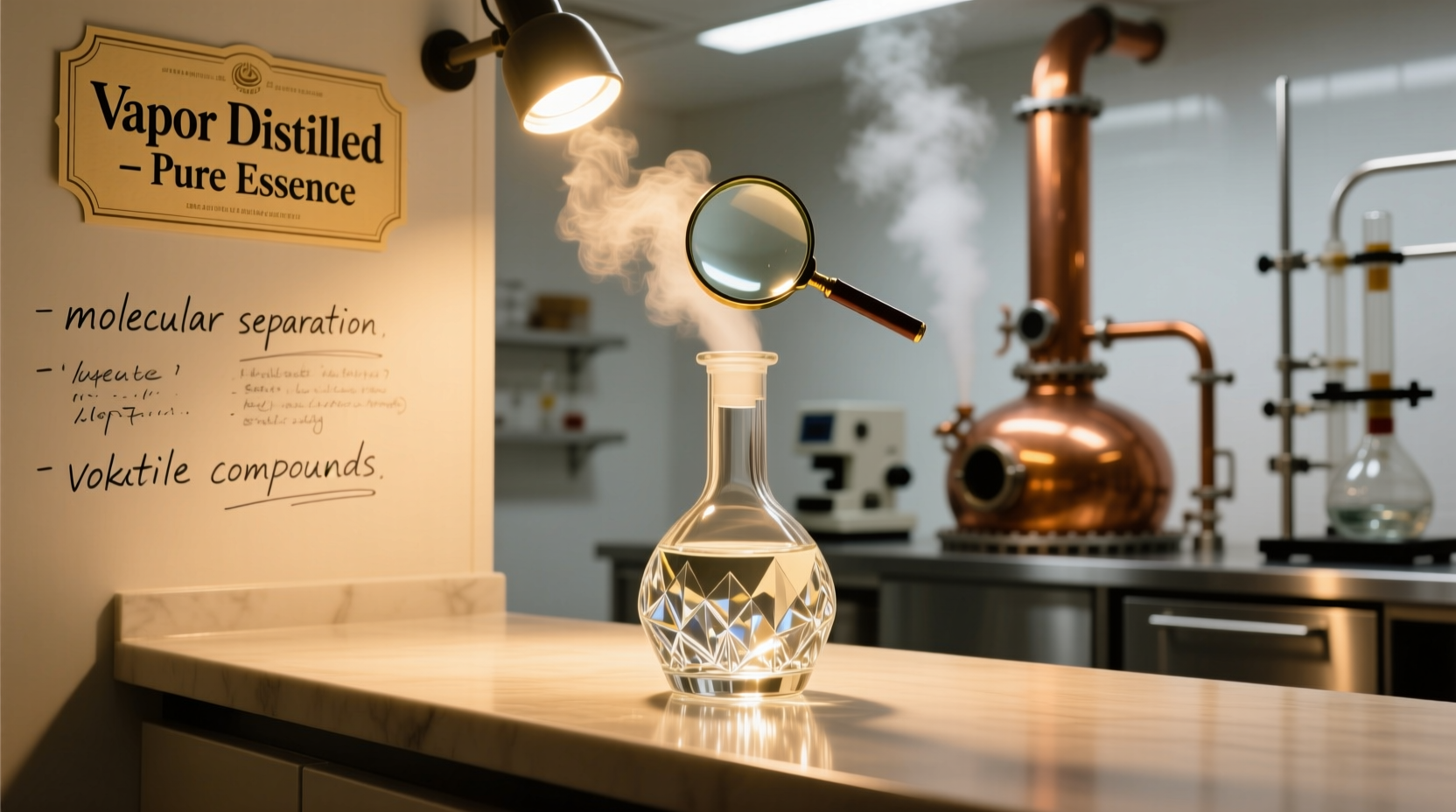
Distillation separates components in a fermented wash based on differences in volatility — primarily boiling points. Ethanol boils at 78.4°C, water at 100°C, and dozens of flavor-active compounds (esters, aldehydes, fusel oils, sulfur compounds) fall in between or above. Traditional pot stills heat the entire liquid mixture, causing vapor to rise, condense, and be collected. Column stills use stacked plates or packing to enable multiple simultaneous evaporation-condensation cycles — increasing efficiency and allowing greater control over which fractions are retained or discarded.
Vapor distillation — more accurately called *vapor infusion* or *vapor-phase distillation* — refers to a specific method where steam is passed *through* the fermented wash or botanicals *without fully boiling the liquid*. The volatile compounds volatilize into the steam stream, which is then condensed separately. This technique is common in gin production (e.g., Tanqueray Ten, Hendrick’s) and some specialty vodkas and rums. Crucially, it avoids direct thermal contact between the heating element and the liquid — reducing the risk of scorching, caramelization, or Maillard reactions that can generate off-notes.
But here’s the key insight: “Purer” doesn’t mean “more ethanol” — it means “fewer non-ethanol compounds.” And whether those compounds are desirable or undesirable depends entirely on context. A rich, oily rum needs congeners for depth and character. A neutral vodka should minimize them — but even there, trace esters and acetals contribute mouthfeel and softness. Removing *everything* yields not purity, but sterility — a spirit that tastes flat, thin, and vaguely medicinal.
Tip: Ask distillers *what they’re removing* — not just “how” they’re distilling. A well-executed pot still run with precise cuts often delivers more balanced, expressive results than aggressive vapor stripping aimed solely at ethanol concentration.The Physics of Vapor vs. Pot vs. Column: A Comparative Reality Check
Let’s compare actual performance metrics — not marketing slogans. The table below reflects typical outcomes for neutral spirit production (e.g., vodka base), based on distillery engineering reports, TTB filings, and peer-reviewed studies in the Journal of the Institute of Brewing.
| Method | Typical ABV Output | Key Congener Reduction | Energy Use (per L) | Sensory Impact |
|---|---|---|---|---|
| Pot Still (3–4 runs) | 82–88% | Moderate removal of fusels & sulfur; retains esters & higher alcohols | High | Rounded, textured, slight oiliness |
| Column Still (multi-plate) | 94–96% | Strong removal of fusels, aldehydes, sulfur; low ester retention | Moderate | Clean, sharp, sometimes austere |
| Vapor Infusion / Steam Stripping | 85–90% | Excellent removal of heavy sulfur & burnt notes; selective ester preservation | Low–Moderate | Fresh, bright, botanical-forward, less “alcoholic heat” |
| Molecular Filtration (post-distillation) | No change | Removes particles & some large molecules; minimal impact on volatiles | Low | Subtle smoothing; no flavor loss |
Note: No distillation method eliminates methanol or ethyl carbamate — both are regulated contaminants controlled by strict cut protocols and aging conditions, not vapor phase mechanics. Methanol, for instance, comes off early in the “foreshots” — regardless of still type. Its presence is a function of raw material quality and cut discipline, not vapor vs. liquid heating.
A Real-World Case Study: How One Distillery Shifted Strategy — and Why
In 2019, Oregon’s Cascade Mountain Spirits launched “Aether Vodka,” marketed heavily on its “patented vapor-cascade distillation.” Initial sales surged — aided by sleek packaging and influencer endorsements touting its “pharmaceutical-grade clarity.” Within 18 months, however, consumer feedback revealed a pattern: bartenders reported the spirit lacked viscosity in Martinis, and home drinkers described it as “numbingly clean — like drinking chilled air.”
Internal sensory panels confirmed it: Aether had 42% fewer esters and 68% lower acetals than their legacy pot-distilled vodka, “Timberline.” While impurity testing showed no safety concerns, the absence of these compounds reduced perceived body and lengthened finish. In 2022, Cascade quietly reformulated — blending 30% vapor-distilled spirit with 70% column-distilled spirit aged 3 months on American oak chips. The new “Aether Reserve” retained the vapor process’s sulfur-free brightness but regained mouthfeel and subtle vanilla-lactone complexity.
The lesson wasn’t that vapor distillation was “bad.” It was that purity, unmoored from intention, became a liability. As master distiller Lena Ruiz explained in a 2023 interview with Distiller Quarterly: “We stopped chasing zero. We started chasing *balance*. Vapor gives us control — but control without purpose is just noise.”
What “Purity” Really Means for Consumers — Safety, Flavor, and Value
When consumers hear “purer,” three assumptions usually follow — and only one is consistently valid:
- Safer? ✅ Mostly true — but irrelevant for compliant producers. All commercially sold spirits in the US, EU, and Canada must meet strict limits for methanol (<2 g/hL AA), ethyl carbamate (<125 µg/L), and heavy metals. These are enforced via mandatory third-party lab testing — not distillation method. A poorly run pot still that skips foreshots is far more dangerous than a precisely managed vapor system. Compliance is about process rigor, not physics.
- Less hangover-prone? ❌ Not scientifically supported. While congeners (especially fusel oils and tannins) may contribute to next-day discomfort, human trials (e.g., a 2021 double-blind study in Alcoholism: Clinical & Experimental Research) found no statistically significant difference in hangover severity between vapor-distilled and column-distilled vodkas when consumed at equal ABV and volume. Hydration, sleep, and total ethanol intake remain the dominant factors.
- Better-tasting? ⚠️ Context-dependent — and rarely about “purity.” For gin, vapor infusion excels at capturing delicate citrus and floral top notes without cooking them — making it objectively superior for certain botanical profiles. For whiskey, it’s rarely used because it strips away the very compounds (lactones, phenolics, wood-derived vanillins) that define character. Taste isn’t purity — it’s intentionality.
“The idea that ‘more distillation = better spirit’ is like saying ‘more sanding = better sculpture.’ You need to know what to remove — and what to leave behind.” — Dr. Arjun Mehta, Food Process Engineer & Former TTB Distillation Compliance Advisor
Practical Guide: How to Evaluate Claims — Not Just Labels
Next time you see “vapor distilled” on a bottle, don’t dismiss it — interrogate it. Use this 5-step framework to assess authenticity and relevance:
- Identify the spirit category. Is it gin, aquavit, or a botanical-forward rum? Vapor infusion adds clear value here. Is it a heritage-style bourbon or aged agricole? Then the claim is likely decorative — traditional methods dominate for good reason.
- Check the proof and age statement. Vapor-distilled spirits rarely exceed 90% ABV without additional processing. If it’s labeled “100% vapor distilled” and bottled at 40% ABV, ask: Was it diluted with distilled water? Or blended with other distillates? Transparency matters.
- Read the tasting notes — critically. Do they emphasize freshness, lift, and clarity (“bright lemon zest,” “crisp cucumber”) — hallmarks of vapor capture? Or do they use vague, virtue-signaling terms like “ultra-refined” or “molecularly pure”? The former signals craft; the latter, copywriting.
- Look for third-party verification. Reputable distillers disclose still type (e.g., “Carter-Head still with vapor basket”), botanical load, and cut points. Absent that, request technical specs — ethical producers welcome the question.
- Taste blind against a benchmark. Compare side-by-side with a known column-distilled vodka (e.g., Finlandia) and a pot-distilled one (e.g., Chase GB). Note texture, warmth, and finish length — not just aroma. Your palate is the final authority.
FAQ: Clearing Up Common Misconceptions
Does vapor distillation remove more “toxins” than traditional methods?
No — and the term “toxins” is misleading. Regulated contaminants (methanol, ethyl carbamate, acetaldehyde) are removed during the *foreshots and heads cuts*, not by vapor-phase mechanics. A distiller who discards 2% of the run achieves safer output than one who uses vapor distillation but keeps 8% of the heads. Cut discipline matters more than still geometry.
Is vapor-distilled spirit always gluten-free — even if made from wheat?
Yes — but so is every properly distilled spirit, regardless of method. Distillation separates volatile ethanol from non-volatile proteins (including gluten peptides). The TTB and FDA confirm that distilled alcohol derived from gluten-containing grains is safe for people with celiac disease. “Gluten-removed” labeling is a marketing tactic, not a functional distinction.
Can I tell vapor distillation by looking at the bottle?
Not reliably. Clarity, viscosity, or “water-like” appearance indicate filtration or dilution — not distillation method. Some vapor-distilled gins appear slightly hazy due to retained citrus oils; others are brilliantly clear. Visual cues are useless without process documentation.
Conclusion: Precision Over Purity — and Why That Changes Everything
Vapor distillation isn’t marketing fluff — nor is it a magic bullet. It’s a precise tool, best deployed when the goal is selective volatility: lifting delicate aromatics without thermal degradation, minimizing sulfur without sacrificing mouthfeel, or achieving consistency across batches where raw material variability is high. Its value lies not in abstract “purity,” but in *intentional control*.
What’s genuinely misleading is positioning vapor distillation as an end in itself — as if the mere act of passing steam through grain or juniper berries confers inherent superiority. Spirit quality emerges from decisions long before distillation: grain variety and terroir, fermentation yeast strain and temperature, cut timing, aging vessel and environment, and, yes, still selection. Vapor is one variable in a hundred.
So the next time you reach for a bottle labeled “vapor distilled,” pause. Read the back label. Google the distillery’s still specs. Try it neat, then in a simple cocktail. Ask yourself: Does this taste *better* — or just *different*? Does it serve the spirit’s identity, or obscure it? That shift — from passive acceptance of claims to active, curious evaluation — is where real connoisseurship begins.
💬 Your experience matters. Have you tasted a vapor-distilled spirit that changed your perspective — or one that felt like hype? Share your honest take in the comments. Let’s build a smarter, more grounded conversation about what distillation really means — one sip at a time.