Jade has captivated civilizations for thousands of years—prized by the Chinese emperors, revered by Mesoamerican cultures, and sought after in modern jewelry markets. But its high value makes it a prime target for counterfeiting. From dyed quartz to plastic imitations, the market is flooded with convincing fakes. Knowing how to distinguish genuine jade from imposters isn’t just for collectors—it’s essential for anyone investing in or inheriting a piece. This guide compiles time-tested techniques, scientific insights, and field-tested tips used by gemologists and seasoned traders to authenticate jade with precision.
Understanding Jade: Nephrite vs. Jadeite
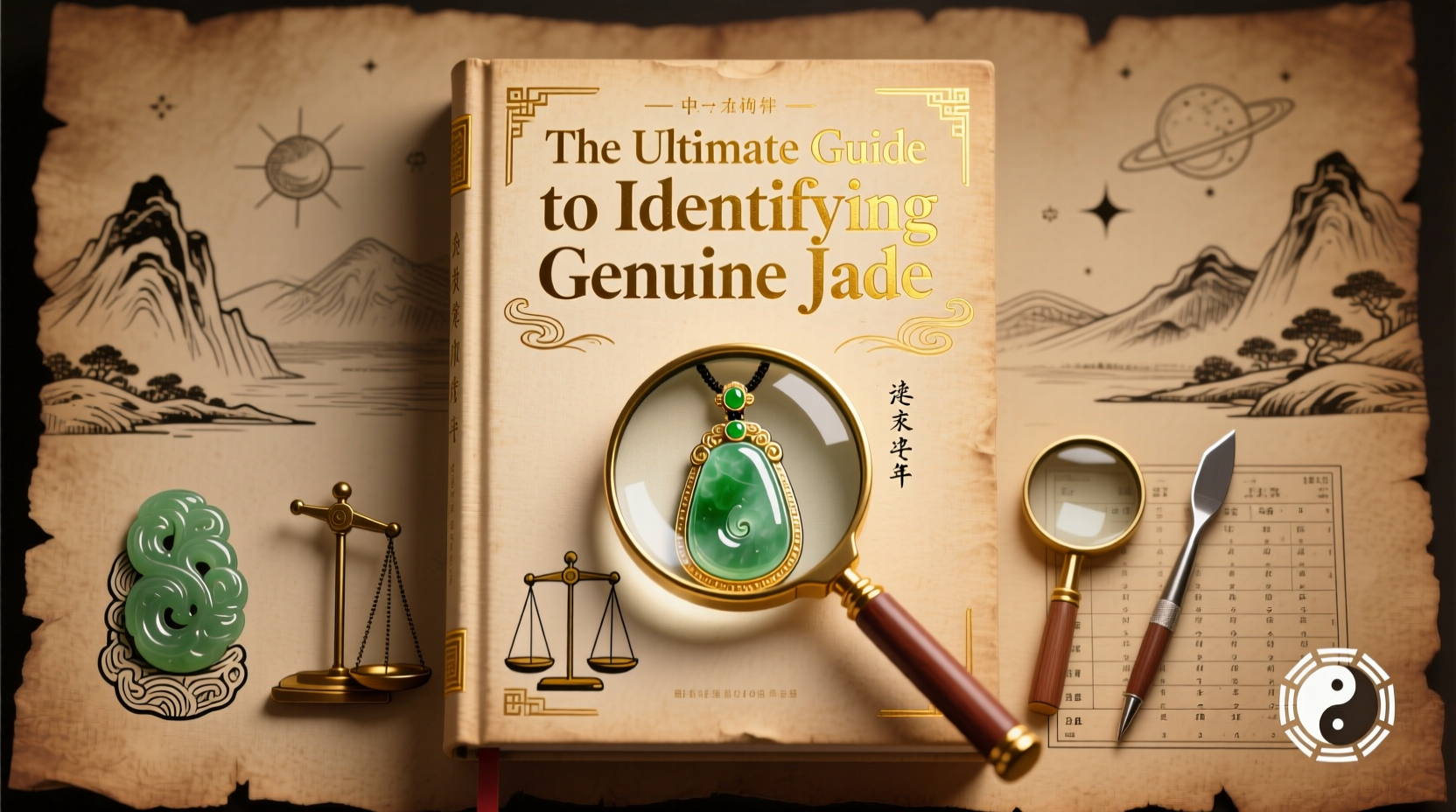
Before diving into identification, it's crucial to understand that \"jade\" refers to two distinct minerals: nephrite and jadeite. Though often grouped together, they differ in composition, color range, hardness, and value.
- Nephrite: A calcium magnesium iron silicate, nephrite is typically creamy white to dark green. It’s tougher (more resistant to breaking) but slightly softer on the Mohs scale (6–6.5).
- Jadeite: A sodium aluminum silicate, jadeite ranges widely in color—including vibrant emerald greens (known as \"Imperial Jade\"), lavender, red, and black. It ranks higher on the Mohs scale (6.5–7), making it more scratch-resistant.
Jadeite, especially Imperial Jade, commands the highest prices due to rarity and brilliance. Misidentifying one for the other—or worse, mistaking glass for jadeite—can lead to costly errors.
Tip: Always ask for a mineral classification—nephrite or jadeite—when purchasing. Sellers who can't specify may not know what they’re selling.Proven Physical Tests for Authenticity
While lab certification is ideal, several hands-on tests can help you assess jade at home or in a store. These are best used in combination, as no single test is foolproof.
1. The Scratch Test (Use with Caution)
Jade is hard, but not indestructible. Attempting to scratch an inconspicuous area with a steel pin (hardness ~5.5) should leave no mark on real jade. If the surface scratches easily, it may be soapstone or plastic. Avoid this test on finished pieces unless you're certain about ownership and repair options.
2. Thermal Conductivity: The Touch Test
Genuine jade feels cold to the touch and retains that coolness longer than glass or plastic. Hold the stone against your cheek or forehead. Real jade will feel distinctly cool for several seconds; imitations warm up quickly.
3. Sound Test
Gently tap the jade with another piece of jade or a metal object. Genuine jade produces a clear, resonant ring. Fakes like glass or resin produce a dull thud. This method is particularly trusted by Chinese artisans who’ve used it for generations.
“Listen closely—the tone of true jade carries history in its chime.” — Dr. Lin Mei, Gemological Researcher at Beijing Mineral Institute
Visual Inspection: Clues in Color and Texture
The human eye, when trained, can detect subtle signs of authenticity. Here’s what to look for under natural light and magnification.
Color Consistency and Distribution
Natural jade rarely has perfectly uniform color. Look for variations, veining, or feathering within the stone. Dyed imitations often show concentrated color along cracks or grain boundaries. Use a 10x loupe to inspect for dye pooling—a telltale sign of treatment.
Translucency and Luster
High-quality jade has a waxy to vitreous luster and even translucency. Rotate the stone under light. Genuine jade transmits light smoothly, creating a soft glow. Glass imitations may appear too clear or contain bubbles. Plastic lacks depth and looks “flat” under bright light.
| Feature | Genuine Jade | Common Imitations |
|---|---|---|
| Color Pattern | Natural variation, fibrous streaks | Uniform or unnaturally vivid |
| Surface Texture | Smooth, slightly waxy feel | Too glossy (glass) or greasy (plastic) |
| Bubbles | None | Visible in glass/plastic |
| Weight | Dense, substantial | Lightweight (resin), overly heavy (some glass) |
Step-by-Step Guide: How to Evaluate a Jade Piece
Follow this systematic approach to assess any jade item—whether inherited, purchased, or offered for sale.
- Observe in Natural Light: Check for consistent color, translucency, and surface flaws.
- Perform the Touch Test: Feel the temperature and texture. Does it stay cool?
- Conduct the Sound Test: Tap gently. Listen for a ringing tone.
- Inspect Under Magnification: Use a jeweler’s loupe to look for dye lines, bubbles, or tool marks.
- Check for Certification: Ask for a GIA, GUBLIN, or NGTC report if available.
- Consult a Professional: When in doubt, send the piece to a certified gemological lab.
Red Flags: Signs Your Jade Might Be Fake
Certain features strongly suggest a counterfeit. Be cautious if you notice any of the following:
- Perfectly uniform color with no variation
- Overly bright or neon-like green (common in dyed quartz)
- Absence of natural inclusions or fibrous structure
- Visible air bubbles or mold seams (indicates casting)
- Price that seems too good to be true
One buyer in Guangzhou learned this the hard way when he purchased a “rare lavender jade bangle” for $200, only to discover under UV light that it fluoresced bright orange—a classic trait of polymer-resin composites. He later confirmed it was synthetic through lab testing.
Mini Case Study: The Inherited Pendant
Sophie inherited a jade pendant from her grandmother, who claimed it was passed down from imperial China. Excited but skeptical, Sophie took it to a local gemologist. Visual inspection revealed slight color zoning and a waxy luster. The sound test produced a faint ring. However, under magnification, the gemologist spotted fine network fractures filled with green dye. An XRF scan confirmed chromium dye infiltration. While not pure natural jade, the piece was a historically treated artifact—still valuable, but not as rare as believed. Sophie updated her insurance accordingly and avoided overpaying for appraisal.
When in Doubt: Lab Testing and Certification
For high-value purchases or inheritance verification, professional analysis is non-negotiable. Reputable labs use advanced tools such as:
- Refractometers: Measure refractive index—jadeite reads 1.66–1.68, nephrite 1.60–1.62.
- Specific Gravity Tests: Jadeite (~3.30–3.38) is denser than most fakes.
- Spectroscopy: Detects trace elements like chromium (responsible for green hues).
- X-ray Fluorescence (XRF): Identifies artificial dyes or fillers.
Certificates from institutions like the Guangzhou Gemological Laboratory (GUBLIN) or NGTC (National Gemstone Testing Center) carry significant weight in auctions and resale markets.
Frequently Asked Questions
Can I clean jade with alcohol or chemicals?
No. Alcohol and harsh cleaners can damage wax coatings or seep into fractures, accelerating deterioration. Use a soft cloth dampened with lukewarm water, then dry immediately.
Does real jade glow under UV light?
Generally, natural untreated jade does not fluoresce. Some treated or dyed pieces may show weak orange or red fluorescence due to polymers or dyes—this is a warning sign, not proof of authenticity.
Is bubble-free glass ever mistaken for jade?
Yes. High-quality molded glass can mimic jade’s appearance and density. The sound test and thermal conductivity are key differentiators—glass clinks sharply and warms faster.
Essential Checklist for Buying or Verifying Jade
- ✅ Examine under natural light for color consistency
- ✅ Perform the touch and sound tests
- ✅ Inspect with a 10x loupe for dye lines or bubbles
- ✅ Verify weight and density (should feel substantial)
- ✅ Request a certificate from a recognized gem lab
- ✅ Avoid transactions without return policies or authentication
Final Thoughts: Trust, But Verify
Jade’s beauty lies not only in its elegance but in its legacy. Yet, that same allure attracts deception. By combining traditional wisdom with modern verification, you protect both your investment and the integrity of the craft. Whether you’re a collector, heir, or first-time buyer, arming yourself with knowledge is the most powerful tool. Don’t hesitate to walk away from a deal that feels off or lacks transparency. True jade doesn’t need exaggeration—it speaks for itself through clarity, resonance, and quiet strength.
💬 Have a jade piece you’re unsure about? Share your experience or questions in the comments—our community of collectors and experts is here to help.