When most people think of Italian food, they envision basil, oregano, rosemary, and garlic—aromatic herbs and bold flavors rooted in Mediterranean tradition. Cardamom, with its intense, citrusy warmth, seems more at home in Indian curries or Scandinavian pastries than in a bowl of pasta or a rustic focaccia. Yet a persistent myth lingers online: that cardamom is a secret ingredient in classic Italian dishes, perhaps hidden in tiramisu or baked into panettone. The reality is far more subtle. While cardamom is not a staple of mainstream Italian cooking, it does appear in specific regional traditions, historical contexts, and modern reinterpretations. Understanding its true place requires separating culinary folklore from fact—and appreciating how even the rarest spices can leave an imprint on a national cuisine.
This article explores the actual footprint of cardamom in Italian gastronomy, examining where it appears, why it’s used sparingly, and how contemporary chefs are reimagining its potential. For home cooks curious about authenticity, flavor layering, or the evolution of traditional recipes, this deep dive offers clarity, context, and practical guidance.
Definition & Overview
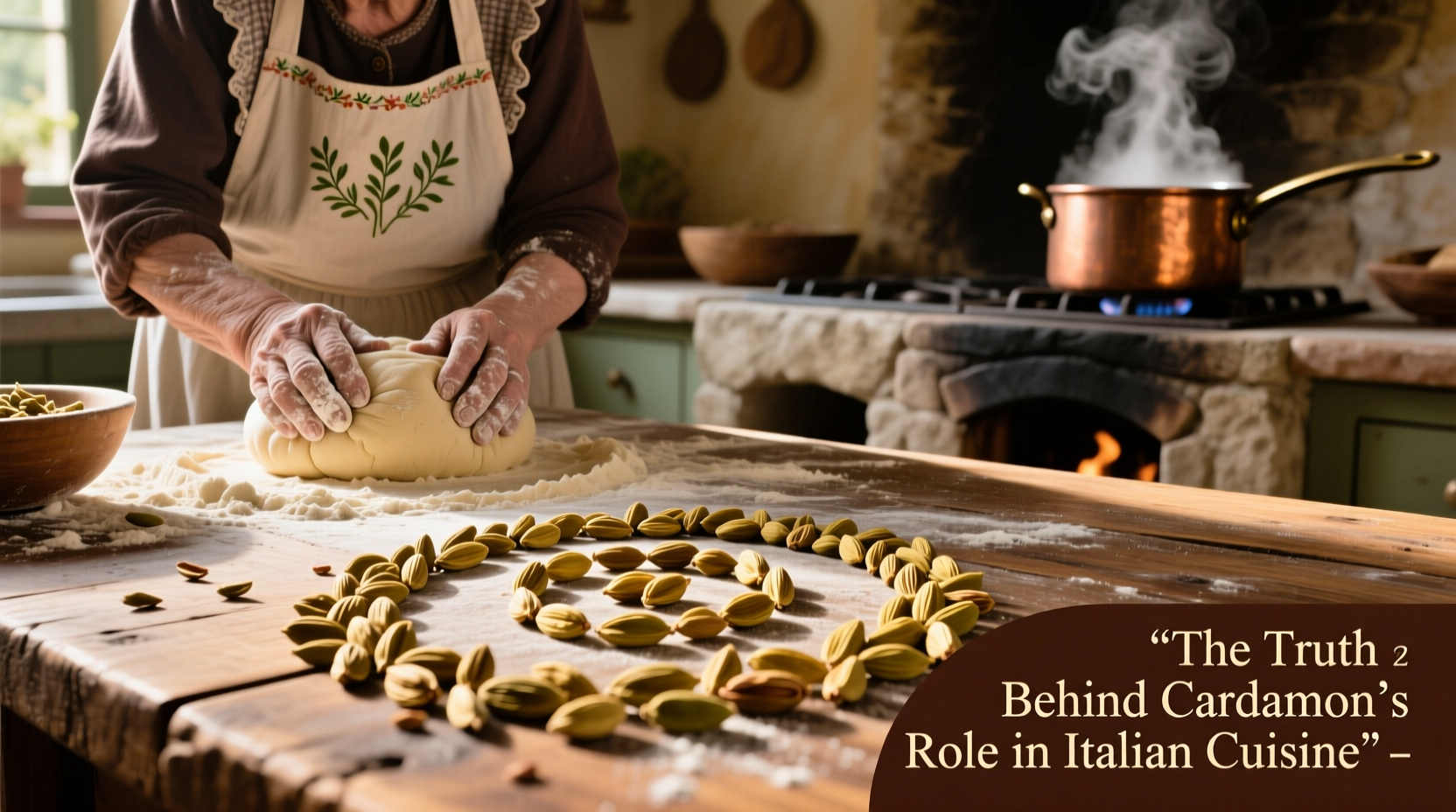
Cardamom (Elettaria cardamomum) is a flowering plant in the ginger family, native to the humid forests of southern India. Its seeds—encased in small, triangular green pods—are one of the world’s most expensive spices by weight, prized for their complex aroma: a blend of citrus, eucalyptus, mint, and floral notes with a warm, slightly peppery finish. There are two main types: green cardamom (true cardamom), which is most common, and black cardamom (Amomum subulatum), which has a smokier, more camphorous profile due to open-fire drying.
In global cuisine, cardamom plays a central role in Indian, Middle Eastern, Nordic, and Southeast Asian cooking. It seasons chai, rice pilafs, desserts like kheer, and meat marinades. In Sweden and Finland, it’s essential in holiday breads such as pulla and julekake. But in Italy? The story is different—not because Italians lack access to exotic spices, but because their culinary identity has historically favored local herbs and balanced simplicity over bold, foreign aromatics.
Still, Italy’s long history of trade, migration, and cultural exchange means no ingredient is entirely absent. Spices like saffron, cinnamon, and nutmeg have found niches in Italian kitchens, especially in sweets and regional specialties. Cardamom, though rarer, follows a similar pattern: present, but peripheral.
Key Characteristics
| Attribute | Description |
|---|---|
| Flavor Profile | Bright, citrusy, slightly sweet with hints of mint, eucalyptus, and pepper. Green cardamom is floral and fresh; black cardamom is smoky and medicinal. |
| Aroma | Intensely fragrant when crushed; releases volatile oils that enhance both sweet and savory dishes. |
| Form Used | Whole pods, cracked pods, or ground seeds. Whole is preferred for maximum freshness. |
| Heat Level | Not spicy in the chili sense, but has a warming quality similar to cloves or ginger. |
| Culinary Function | Used primarily as a background aromatic in slow-cooked dishes or as a top note in baked goods and beverages. |
| Shelf Life | Whole pods retain potency for up to 2 years if stored airtight and away from light; ground loses flavor within 6 months. |
Practical Usage in Italian Cooking
Cardamom does not feature in foundational Italian dishes such as carbonara, ragù bolognese, caprese salad, or pizza Margherita. It is absent from the canonical cookbooks of Pellegrino Artusi or Ada Boni. However, it occasionally appears in specific contexts:
- Northern Italian Christmas Breads: In parts of Lombardy and Veneto, particularly near Austrian-influenced regions, some home bakers include a pinch of cardamom in panettone or pandoro variations. This reflects Central European influence rather than indigenous Italian tradition.
- Sicilian Spice Blends: Historical Arab rule in Sicily introduced spices like saffron, cinnamon, and sometimes cardamom into confections and rice dishes. While not standard today, older recipes for scorza di limone ripiena (stuffed lemon rind) or certain marzipan-like sweets may list cardamom among exotic additions.
- Modern Interpretations: Contemporary chefs in Milan, Florence, or Bologna experimenting with fusion or \"neo-Italian\" cuisine may use cardamom to elevate dessert sauces, poach pears, or infuse mascarpone creams. These uses are creative, not traditional.
- Immigrant-Influenced Dishes: In cities with growing South Asian populations—such as Rome or Turin—some restaurants offer Italian-Indian hybrids, like cardamom-laced tiramisu or spiced espresso shots. Again, these are innovations, not heritage recipes.
For home cooks interested in incorporating cardamom into Italian-style dishes, moderation is key. A single crushed pod infused into milk for a custard or added to a simmering berry compote can add complexity without overpowering. Overuse risks making a dish taste foreign to Italian palates, which typically favor clarity of flavor over layered spice profiles.
Tip: To test cardamom’s compatibility with Italian flavors, try adding half a crushed green pod to a batch of homemade amaretto cookies or a vanilla zabaglione. Strain it out before serving. You’ll notice a subtle lift—an almost imperceptible brightness—that enhances rather than dominates.
Variants & Types Relevant to Italian Kitchens
While only green cardamom has any meaningful presence in Italian applications, understanding the differences helps avoid misuse:
Green Cardamom (Elettaria cardamomum)
The most versatile form. Bright, sweet, and aromatic. Best used whole or freshly ground. Found in specialty spice shops and high-end grocers across Italy, though rarely in average households.
Black Cardamom (Amomum subulatum)
Larger, darker pods with a strong smoky-camphor scent. Common in North Indian and Tibetan cooking. Not suitable for Italian desserts or delicate preparations. Would clash with typical Italian flavor profiles.
Ground vs. Whole
Ground cardamom is convenient but loses potency quickly. In Italy, where precision and ingredient integrity matter, whole pods are preferred. Many traditional bakers crack them open just before use, scraping out the tiny black seeds with a knife tip.
Decorticated (Bleached) Green Cardamom
Pods stripped of their outer husk for aesthetic reasons. Slightly milder in flavor. Sometimes used in commercial baking for visual appeal, but less flavorful than natural green pods.
For authentic experimentation, always opt for untreated green cardamom pods sourced from reputable suppliers. Avoid pre-ground versions unless used immediately.
Comparison with Similar Ingredients
Cardamom is often confused with other warm spices used more commonly in Italian cooking. Understanding the distinctions ensures proper usage.
| Spice | Flavor Profile | Common Use in Italy | How It Differs from Cardamom |
|---|---|---|---|
| Nutmeg | Warm, sweet, woody, slightly bitter | Essential in béchamel, meatballs, ricotta fillings | Less bright; lacks citrus notes; more earthy and pervasive |
| Cinnamon | Sweet, woody, mildly spicy | Used in Sicilian cannoli, some cakes, and mulled wine | One-dimensional compared to cardamom’s layered complexity |
| Cloves | Sharp, pungent, medicinal sweetness | Rare; occasional in holiday meats or spiced wines | Stronger and more aggressive; easily overwhelms |
| Allspice | Mix of clove, cinnamon, nutmeg | Almost never used in traditional Italian cooking | Synthetic-tasting to many Italians; seen as non-authentic |
| Star Anise | Strong licorice note | Very rare; sometimes in modern infusions | Dominant anethole flavor unlike cardamom’s floral-citrus balance |
\"In all my years teaching regional Italian pastry, I’ve only seen cardamom once—in a student’s reinterpretation of pandolce genovese. It wasn’t wrong, but it wasn’t Genoese either.\" — Paola Ricci, Instructor, Scuola di Cucina Santa Caterina, Genoa
Practical Tips & FAQs
Is cardamom used in traditional Italian cooking?
No, not in any widespread or canonical way. It does not appear in the core repertoires of regional cuisines. Any use is either historical (Arab-influenced Sicily), foreign-influenced (Austrian border areas), or modern innovation.
Can I substitute cardamom in an Italian recipe?
If a modern recipe calls for cardamom and you don’t have it, consider omitting it or using a tiny pinch of nutmeg combined with lemon zest. Do not replace it directly with cinnamon or cloves—they behave differently in the mouth and alter the dish’s character.
What are the best Italian dishes to experiment with cardamom?
Start with custards (zabaglione, crema pasticcera), poached fruits (pears, figs), or almond-based cookies. Infuse the pod gently into warm liquids, then remove before serving. Avoid using it in tomato sauces, seafood, or herb-forward dishes.
How much cardamom should I use?
Extremely sparingly. One whole pod per liter of liquid is sufficient for infusion. For baking, 1/8 to 1/4 teaspoon of freshly ground seeds per dozen cookies is ample. Remember: cardamom is a soloist, not part of the chorus.
Where can I buy quality cardamom in Italy?
Specialty spice shops in major cities (e.g., Erboristeria Magentina in Milan, Bottega del Tè in Florence), well-stocked supermarkets like Eataly, or online retailers such as Spezie Mon Amour. Look for plump, greenish pods that crackle when squeezed—avoid dull, brown, or powdery ones.
How should I store cardamom?
In an airtight glass jar, away from heat, light, and moisture. Whole pods last up to 24 months; ground should be used within 3–6 months. Never store near the stove or dishwasher.
Does cardamom pair well with Italian ingredients?
Selectively. It complements almonds, citrus, honey, ricotta, pears, and dark chocolate. It clashes with raw garlic, oregano, anchovies, and aged cheeses like pecorino. Use it where sweetness and delicacy prevail.
Checklist: Using Cardamom Authentically in Italian-Style Dishes
- Use only green cardamom, never black.
- Crack pods just before use; discard husks after extracting seeds.
- Infuse gently—don’t boil aggressively, which can make it bitter.
- Pair with dairy, fruit, or nut bases—not savory mains.
- Keep quantities minimal: less than 1/4 tsp per serving.
- Label experimental dishes clearly—don’t pass them off as traditional.
Historical Context: Trade, Empire, and Culinary Exchange
To understand why cardamom isn’t Italian, one must consider history. During the Roman Empire, spices were luxuries traded along arduous routes from India. Pliny the Elder lamented the drain of gold to the East for pepper and “aromatics.” But by the Renaissance, Venice had become Europe’s spice hub, importing cardamom alongside saffron and cinnamon. Yet even then, Italian cooks used these spices selectively—often to display wealth rather than for daily meals.
The Arab influence in medieval Sicily introduced sugar, citrus, and complex spice mixtures, some of which may have included cardamom. Manuscripts like the 12th-century Book of Roger describe gardens growing exotic plants, but no definitive recipes survive. Later, during the Habsburg era, northern Italy absorbed elements of Austrian baking, where cardamom was more common. Still, these influences remained marginal and localized.
Unlike in Nordic countries—where cardamom became embedded in national baking through 19th-century trade with the Dutch East India Company—Italy never developed a mass culinary relationship with the spice. Local alternatives prevailed: lemon zest instead of citrus notes, vanilla instead of floral depth, nutmeg instead of warmth.
Summary & Key Takeaways
Cardamom’s role in Italian cuisine is real but narrow. It is not a traditional ingredient in the sense of basil, olive oil, or Parmigiano-Reggiano. It does not define any region’s cooking. However, it appears in specific contexts: historical cross-cultural exchanges, modern reinterpretations, and niche artisanal practices.
The truth is this: cardamom is not “secretly” in your nonna’s tiramisu. But it might appear in a chef’s updated version served in a Michelin-starred Milanese restaurant. That distinction matters—for authenticity, education, and culinary honesty.
For home cooks, the lesson is balance. Respect tradition, but don’t fear innovation. If you wish to explore cardamom in Italian-style dishes, do so with restraint, knowledge, and transparency. Let it enhance, not erase, the essence of Italian flavor.
Final Thought: The beauty of cuisine lies not in rigid purity, but in thoughtful evolution. Cardamom may never belong to Italy’s culinary soul—but in the right hands, at the right moment, it can whisper something new to an ancient language.