Every autumn, as pumpkins are carved into jack-o’-lanterns, their nutrient-rich seeds often meet an untimely end in the compost bin. But these humble kernels—often dismissed as waste—are a culinary treasure waiting to be unlocked. When roasted with precision and seasoned thoughtfully, pumpkin seeds transform into a deeply satisfying snack: crisp, earthy, and full of savory depth. The addition of spicy heat and bright citrus elevates them beyond mere afterthought. This Spicy Lime Roasted Pumpkin Seeds Recipe delivers a perfect balance of zesty lime, smoky chili, and toasted nuttiness, creating a snack that’s both bold and addictive. More than just a seasonal treat, this recipe exemplifies how simple ingredients, treated with care, can become something extraordinary.
Definition & Overview
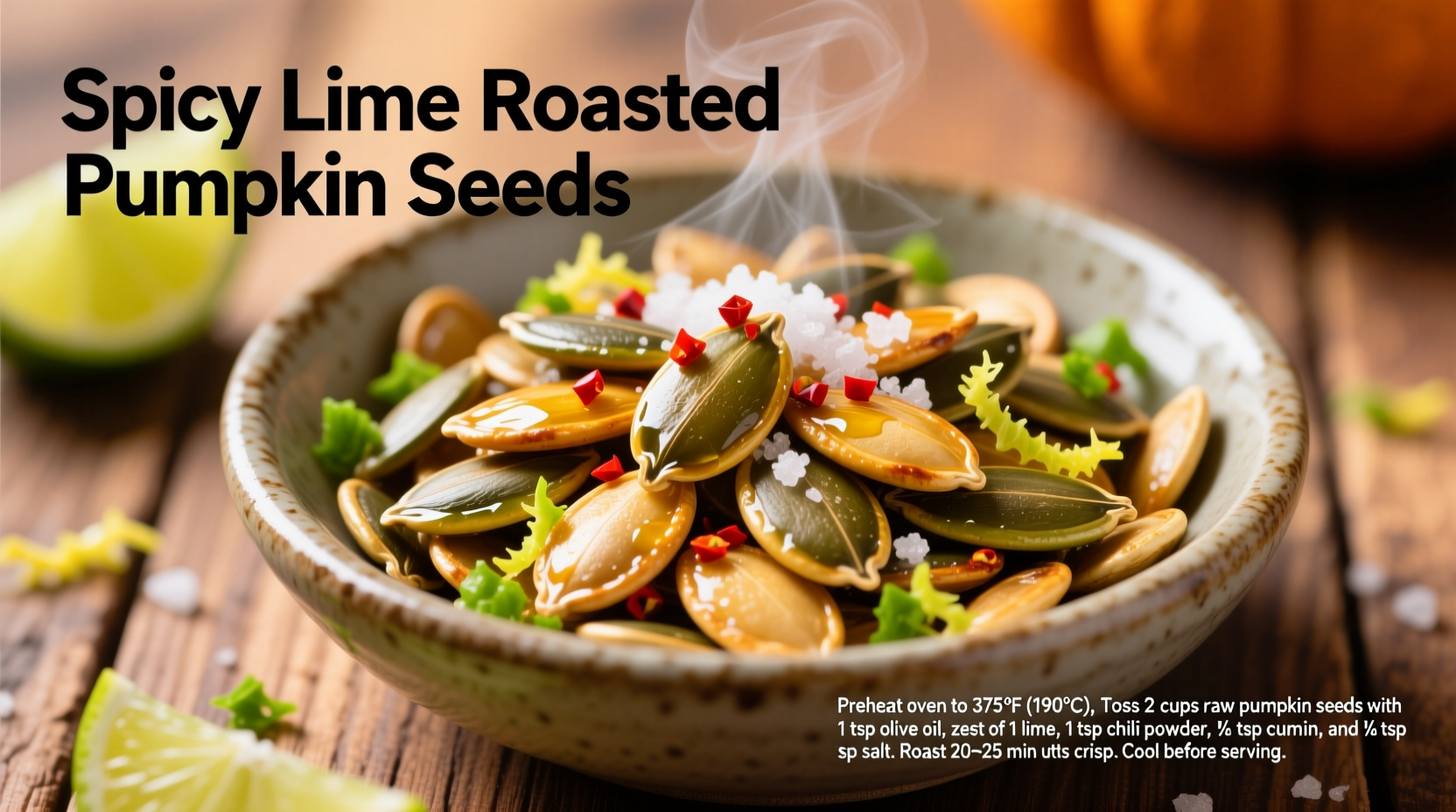
Pumpkin seeds, also known as pepitas (from the Spanish *pepita de calabaza*, meaning “little seed of squash”), are flat, oval-shaped kernels found inside pumpkins and other winter squash varieties. While commonly associated with Halloween, they have been cultivated for thousands of years, particularly in Mesoamerican cultures, where they were valued for their nutritional density and versatility. In modern cuisine, raw or roasted pumpkin seeds are used in salads, granolas, baked goods, and as standalone snacks.
This recipe focuses on transforming raw pumpkin seeds into a spiced, oven-roasted delicacy using a combination of fresh lime juice, zest, cayenne pepper, smoked paprika, and sea salt. The result is a snack that balances acidity, heat, and umami—a trifecta that stimulates multiple taste receptors and keeps you reaching back for more. Unlike commercially processed versions loaded with preservatives and excess sodium, homemade spicy lime roasted pumpkin seeds offer full control over flavor intensity, texture, and ingredient quality.
Key Characteristics
| Attribute | Description |
|---|---|
| Flavor Profile | Earthy base from toasted seeds, enhanced by tangy lime, smoky paprika, and sharp chili heat. |
| Aroma | Bright citrus top notes, warm spice undertones, and a deep toasted-nut fragrance during roasting. |
| Texture | Crisp and crunchy when properly dried and roasted; chewy if undercooked. |
| Heat Level | Moderate (adjustable); primarily from cayenne and black pepper, peaking 30–60 seconds after eating. |
| Color | Olive-green seeds turn golden-brown with speckles of red from paprika and charred lime bits. |
| Culinary Function | Snack, salad topper, taco garnish, yogurt sprinkle, or trail mix component. |
| Shelf Life | Up to 3 weeks in an airtight container at room temperature; up to 6 months frozen. |
Practical Usage: How to Make Spicy Lime Roasted Pumpkin Seeds
The success of this recipe hinges on three phases: cleaning, seasoning, and roasting. Each stage contributes directly to the final texture and flavor intensity. Follow these steps carefully for optimal results.
- Extract and Clean the Seeds: After carving your pumpkin, scoop out the seed mass and place it in a large bowl of cold water. Use your hands to separate the seeds from the fibrous pulp. Swirl gently—the seeds will sink, while most of the stringy matter floats. Drain, then repeat if necessary. Pat dry thoroughly with clean towels or paper towels. Excess moisture is the enemy of crispness.
- Dry the Seeds (Optional but Recommended): For maximum crunch, spread the cleaned seeds on a baking sheet and let them air-dry for 1–2 hours, or roast at 170°F (75°C) for 30 minutes. Skipping this step risks steaming instead of roasting.
- Prepare the Seasoning Mix: In a mixing bowl, combine:
- 2 tablespoons fresh lime juice (about 1 large lime)
- 1 teaspoon finely grated lime zest
- 1 tablespoon olive oil or avocado oil
- 1/2 teaspoon sea salt (fine grain for even coating)
- 1/2 teaspoon smoked paprika
- 1/4 teaspoon garlic powder
- 1/8 to 1/4 teaspoon cayenne pepper (adjust to heat preference)
- 1/4 teaspoon freshly ground black pepper
- 1/2 teaspoon honey or maple syrup (optional, for caramelization)
- Toss and Coat: Add 1 cup of cleaned, dried pumpkin seeds to the marinade. Stir vigorously to ensure every seed is evenly coated. Let sit for 10–15 minutes to absorb flavors.
- Roast: Preheat oven to 300°F (150°C). Line a baking sheet with parchment paper. Spread seeds in a single layer. Roast for 35–45 minutes, stirring every 15 minutes, until golden brown and crisp. They should audibly crackle when shaken. Overcrowding leads to uneven cooking—use two sheets if doubling.
- Cool Completely: Remove from oven and let cool for at least 15 minutes. The seeds will continue to crisp as they cool. Taste and adjust salt or spice if needed.
Pro Tip: For restaurant-level crunch, add 1/4 teaspoon of baking soda to the seasoning mix. This raises the pH slightly, accelerating Maillard browning and creating a lighter, crisper texture—similar to techniques used in crispy chickpea recipes.
Variants & Types
While the core technique remains consistent, variations in ingredients and preparation yield distinct sensory experiences. Choosing the right variant depends on context: casual snacking, gourmet garnishing, or dietary needs.
1. Raw vs. Hulled Seeds
- Raw, Unhulled: These come straight from the pumpkin with their white outer hull intact. They are chewier and require longer roasting. Best for traditional, rustic batches.
- Hulled (Pepitas): Shelled seeds, typically green and softer. They roast faster (20–25 minutes at 300°F) and deliver a more delicate crunch. Ideal for salads or blending into pesto.
2. Spice Variations
- Tajín-Style: Replace cayenne with Tajín seasoning and increase lime zest. Adds mild chili heat and subtle tamarind sourness.
- Chipotle-Lime: Swap smoked paprika for ground chipotle pepper. Deeper smoke, lower brightness, higher heat.
- Sweet-Spicy: Increase honey to 1 teaspoon and add a pinch of cinnamon. Balances heat with warmth and caramel notes.
- Umami Boost: Add 1/2 teaspoon nutritional yeast or tamari to the marinade. Enhances savoriness without overpowering citrus.
3. Oil Alternatives
- Coconut Oil: Imparts subtle sweetness; solid at room temperature, so melt before mixing.
- Ghee: Adds buttery richness; excellent for high-heat roasting due to high smoke point.
- Avocado Oil: Neutral flavor, ideal for letting spices shine.
| Variant | Best For | Adjustment Notes |
|---|---|---|
| Classic Spicy Lime | General snacking, fall entertaining | Standard recipe; no changes needed |
| Tajín-Style | Mexican-inspired dishes, margarita pairings | Use store-bought Tajín or blend chile de árbol, lime, and salt |
| Sweet-Spicy | Dessert pairings, holiday gifts | Add 1/4 tsp cinnamon; watch closely to prevent sugar burn |
| Low-Sodium | Heart-healthy diets | Reduce salt to 1/8 tsp; boost flavor with extra zest and vinegar |
Comparison with Similar Ingredients
Pumpkin seeds are frequently confused with other small, roasted nuts and seeds. Understanding differences ensures proper substitution and usage.
| Ingredient | Flavor Difference | Texture Difference | Substitution Advice |
|---|---|---|---|
| Sunflower Seeds | Milder, less earthy; slightly oily | Thicker hull; chewier interior | Can substitute 1:1 in trail mixes; not ideal for fine garnishes |
| Toasted Sesame Seeds | Sweeter, nuttier; lacks acidity tolerance | Smaller, crispier, burns easily | Not suitable for citrus marinades; use in Asian applications |
| Pine Nuts | Buttery, resinous; expensive | Soft crunch; high fat content | Poor substitute; different culinary role (e.g., pesto) |
| Roasted Chickpeas | Bean-like, starchy; holds spices well | Denser, less uniform crunch | Good for volume but not flavor match; requires longer roasting |
Unlike sunflower or sesame seeds, pumpkin seeds have a unique ability to absorb acidic components like lime juice without becoming soggy—thanks to their moderate fat content and porous surface. This makes them ideal for citrus-based spice blends, whereas sesame seeds may turn rancid or bitter when marinated.
Practical Tips & FAQs
How do I make the seeds spicier without burning them?
Increase cayenne gradually, but avoid exceeding 1/2 teaspoon per cup of seeds. For sustained heat, add a pinch of crushed red pepper flakes halfway through roasting. Alternatively, finish with a dusting of chili-lime salt post-bake.
Can I use bottled lime juice?
Freshly squeezed lime juice is strongly recommended. Bottled versions often contain preservatives and lack volatile aromatic compounds essential for bright flavor. If substituting, choose 100% pure juice without additives.
Why did my seeds turn out chewy?
Insufficient drying before roasting is the most common cause. Moisture prevents crisping. Always pat seeds dry and consider pre-drying. Also, ensure your oven is fully preheated—roasting at too low a temperature steams rather than toasts.
Are spicy roasted pumpkin seeds healthy?
Yes, when prepared mindfully. Pumpkin seeds are rich in magnesium, zinc, plant-based protein, and heart-healthy fats. One ounce (about 1/4 cup) contains approximately 150–170 calories, 7g protein, and 13g fat (mostly unsaturated). The addition of lime provides vitamin C, which aids iron absorption from the seeds.
Can I roast seeds from any type of pumpkin?
Yes, but smaller pie or sugar pumpkins yield better-tasting seeds than large carving varieties, which can be bland or fibrous. Any winter squash—acorn, kabocha, delicata—also produces edible seeds worth roasting.
How long do they stay fresh?
Stored in an airtight container away from light and moisture, spicy lime roasted pumpkin seeds last 2–3 weeks at room temperature. For longer storage, freeze in a sealed bag for up to 6 months. Re-crisp in a 300°F oven for 5–8 minutes if needed.
What dishes can I use them in besides snacking?
- Salads: Sprinkle over kale, quinoa, or beet salads for texture contrast.
- Tacos & Bowls: Garnish fish tacos or grain bowls for heat and crunch.
- Yogurt Parfaits: Layer with Greek yogurt and mango for a sweet-spicy breakfast.
- Homemade Granola: Fold in during the last 5 minutes of baking.
- Cocktail Garnish: Serve alongside tequila or mezcal for a bold pairing.
“The best snacks aren’t just about taste—they’re about transformation. Taking something overlooked and making it memorable. That’s the power of seasoning and fire.”
— Chef Elena Ruiz, Culinary Instructor, Institute of Sustainable Foods
Summary & Key Takeaways
Spicy Lime Roasted Pumpkin Seeds are far more than a seasonal novelty. They represent a convergence of flavor science, cultural tradition, and kitchen ingenuity. By mastering the fundamentals—cleaning, drying, seasoning, and precise roasting—you unlock a versatile, nutritious, and intensely flavorful ingredient.
The key elements to remember:
- Dry seeds thoroughly before roasting to achieve optimal crispness.
- Balance acidity (lime), heat (cayenne), and smoke (paprika) for layered flavor.
- Use fresh citrus for superior aroma and brightness.
- Store properly to maintain crunch and prevent rancidity.
- Repurpose leftovers creatively—as garnishes, mix-ins, or culinary accents.
This recipe is scalable, adaptable, and forgiving. Whether you're roasting seeds from a Halloween pumpkin or using store-bought pepitas, the principles remain the same. With minimal effort and maximal attention to detail, you create a snack that satisfies on multiple levels—crunchy, tangy, spicy, and deeply rewarding.
Try it tonight: Save your next pumpkin’s seeds. Follow this method, adjust the spice to your liking, and experience how a simple ingredient, treated with intention, becomes something unforgettable.