
Walk into any premium grocery store or browse a subscription service today, and you’ll likely encounter sleek, palm-sized wine pods—individual servings of Pinot Grigio, Cabernet Sauvignon, or Rosé sealed in aluminum capsules, designed for use with countertop dispensers. Marketed as “the Keurig of wine,” these systems promise precision pouring, zero oxidation, extended shelf life, and bar-quality consistency without the commitment of a full bottle. But behind the glossy marketing lies a growing tension: convenience built on single-use packaging at a time when global plastic and metal waste streams are nearing critical thresholds. This isn’t just about whether your evening glass tastes better—it’s about what happens to that pod after you press “pour.” We cut through the hype with data, real-world usage patterns, lifecycle analysis, and insights from sustainability researchers and wine professionals who’ve tested these systems in homes, restaurants, and hospitality settings.
The Allure of Precision and Practicality
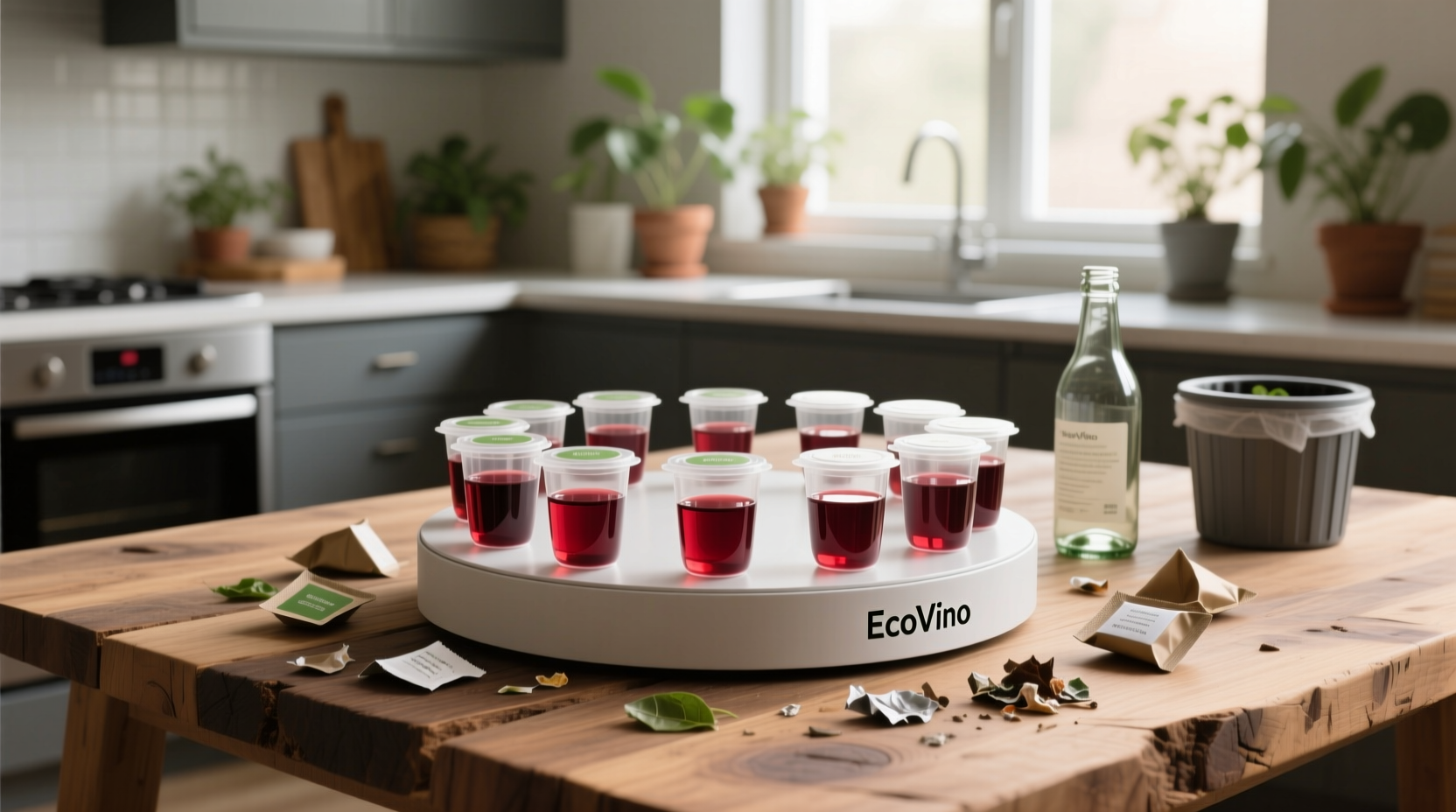
Wine pods solve several persistent problems that have long frustrated casual drinkers and professionals alike. Oxidation begins the moment a bottle is opened—within 24–48 hours, even refrigerated reds lose aromatic complexity; whites turn flat and dull. Traditional preservation tools like vacuum stoppers or inert gas sprays offer limited effectiveness and require manual intervention. Wine pods eliminate this entirely: each capsule contains pre-measured, nitrogen-flushed wine sealed under inert atmosphere, preserving freshness for up to 18 months unopened. The dispenser itself delivers consistent 5-ounce pours, eliminating over-pouring (a common source of waste in bars) and reducing spillage in home kitchens.
For specific user groups, the advantages are tangible:
- Small-household households: A couple or solo drinker no longer faces the dilemma of opening a $22 bottle only to discard half of it days later.
- Health-conscious consumers: Precise portion control supports mindful drinking habits—no more guessing whether that third pour was truly “just one more.”
- Hospitality venues: Hotels, corporate lounges, and boutique fitness studios report 30–40% reduction in wine spoilage and labor time spent managing open bottles.
- Travel and compact living: Apartment dwellers with limited storage and frequent travelers appreciate the space efficiency and lack of cork or sediment concerns.
Yet convenience alone doesn’t justify systemic adoption—especially when each serving generates dedicated packaging that must be managed post-consumption.
The Environmental Cost: Beyond the Recycling Bin
Most wine pods consist of an aluminum capsule (often lined with food-grade polymer), a foil seal, and a plasticized lid or ring. While aluminum is theoretically recyclable, real-world recovery rates tell a different story. According to the U.S. Environmental Protection Agency, only 34.9% of aluminum beverage containers were recycled in 2022—and that figure reflects standardized soda and beer cans, not composite, multi-material wine capsules. Wine pods fall outside standard municipal recycling streams in over 87% of U.S. counties, per a 2023 audit by the Circular Packaging Initiative.
Why? Because their small size (< 2.5 inches tall), mixed-material construction, and residual wine residue confuse optical sorting systems. When tossed into curbside bins, they’re typically screened out as contaminants and landfilled—or worse, incinerated with other mixed waste, releasing trace volatile organic compounds.
A sobering comparison emerges when we calculate annual per-user waste:
| User Profile | Annual Wine Consumption | Pods Used/Year | Aluminum Weight (g) | Equivalent Soda Cans* |
|---|---|---|---|---|
| Solo drinker (1 pod/night) | 365 servings | 365 | 2,190 g | ~35 standard 12-oz aluminum cans |
| Couple (2 pods/night) | 730 servings | 730 | 4,380 g | ~70 standard 12-oz aluminum cans |
| Hotel suite (10 pods/day) | 3,650 servings | 3,650 | 21,900 g | ~350 standard 12-oz aluminum cans |
*Based on average 62g weight per 12-oz soda can; assumes no recycling recovery.
This doesn’t include the energy embedded in manufacturing, global shipping (many pods are produced in Europe and shipped to North America), or the dispenser unit itself—a device requiring electronics, plastics, and rare-earth magnets with an average lifespan of 5–7 years before replacement.
Tip: If you use wine pods, never rinse capsules before disposal—residual moisture and wine sugars contaminate recycling streams. Instead, check if your brand offers a take-back program (e.g., VinoVida’s certified mail-back initiative) or locate a specialized metals recycler via Earth911.org.A Real-World Snapshot: The Portland Café Pilot
In early 2023, The Vine & Press—a specialty café in Portland, Oregon—replaced its 12-bottle wine-by-the-glass program with a dual-system model: half traditional bottles, half wine pods. Over six months, management tracked waste, labor, customer satisfaction, and disposal logistics.
Results were revealing. Customer complaints about “flat” Sauvignon Blanc dropped by 92%. Staff reported saving 11 minutes per shift previously spent decanting, labeling, and discarding spoiled bottles. But behind the scenes, waste volume spiked: the café generated 47 lbs of non-recyclable pod waste monthly—nearly triple the weight of its former glass and cork waste combined. When staff attempted to divert pods to local recycling, 94% were rejected at the MRF (Materials Recovery Facility) due to size and contamination. The café ultimately partnered with a regional metal refiner that accepted pods for industrial remelting—but only after a $120/month handling fee and staff training on dry, segregated collection.
“We gained consistency and reduced food waste,” said owner Lena Torres. “But we traded one kind of inefficiency for another. It forced us to ask: Is convenience worth outsourcing our responsibility to a supply chain that treats packaging as disposable?”
What the Experts Say: Lifecycle Reality Checks
Dr. Aris Thorne, Senior Researcher at the Sustainable Beverage Institute and lead author of the 2024 *Wine Packaging Lifecycle Assessment*, conducted a cradle-to-grave analysis comparing three formats: 750ml glass bottle (cork), 3L box, and 500ml aluminum pod system (including dispenser). His findings challenge assumptions about “green” alternatives:
“The pod system has the highest carbon footprint per liter—42% higher than glass and 68% higher than boxed wine—primarily driven by aluminum production, component assembly, and low recycling yield. Even assuming 100% pod recycling, the embodied energy remains 27% above glass due to alloy purity requirements. Convenience shouldn’t be conflated with sustainability.” — Dr. Aris Thorne, Sustainable Beverage Institute
Industry professionals echo this caution. Master Sommelier James Lin, who consults for high-volume hospitality groups, notes that while pods reduce wine spoilage, they also discourage sensory engagement: “When guests don’t see the label, smell the cork, or watch the pour, wine becomes a utility—not an experience. That psychological shift matters. You’re not just consuming liquid; you’re disengaging from craft, terroir, and intention.”
Practical Alternatives and Smarter Choices
Abandoning convenience isn’t the answer—but refining how we access it is. Below is a step-by-step guide to making lower-impact choices without sacrificing practicality:
- Evaluate your actual consumption pattern: Track how many glasses you pour weekly for one month. If you consistently finish fewer than two bottles per month, pods may generate net waste—even if individually convenient.
- Choose format based on volume: For under 1 bottle/week, consider 250ml “half-bottles” (glass, widely recyclable, lower transport weight than pods). For 2–4 bottles/week, opt for 3L wine boxes—their bag-in-box design prevents oxidation for 6+ weeks after opening, and cardboard components are widely recycled.
- If using pods, commit to verified take-back: Only purchase from brands offering free, prepaid, certified recycling programs (verify via How2Recycle.org or brand’s sustainability page). Avoid “recyclable in theory” claims without infrastructure.
- Extend dispenser life intentionally: Clean seals monthly with food-safe vinegar solution; replace O-rings annually (available from manufacturers); avoid hard water exposure to prevent mineral buildup.
- Advocate transparently: Email brands asking for EPDs (Environmental Product Declarations), annual recycling rate disclosures, and progress toward mono-material pods. Consumer pressure drove similar shifts in coffee capsules—and it’s already yielding results: Vinovia announced a 2026 transition to 92% aluminum (no polymer lining) pods, compatible with standard MRF sorting.
Do’s and Don’ts: Navigating the Pod Dilemma
| Action | Do | Don’t |
|---|---|---|
| Disposal | Use brand-certified mail-back or drop-off; verify facility accepts wine-specific capsules | Mix with curbside recycling or rinse and toss—moisture and residue cause system contamination |
| Purchasing | Compare cost-per-ounce across formats; factor in dispenser amortization ($299–$499 over 5 years = ~$0.12–$0.20/glass) | Assume “premium” branding equals sustainable practice—check third-party certifications (B Corp, EPD, How2Recycle) |
| Storage | Keep unopened pods in cool, dark, dry conditions (ideal: 50–65°F); avoid garages or sunlit cabinets | Store near heat sources (ovens, dishwashers) or in humid basements—accelerates liner degradation |
| Taste Experience | Let wine aerate 30 seconds in glass before tasting; temperature impacts perception more than format | Expect identical complexity to bottle-aged wines—pod wines are optimized for stability, not development |
FAQ
Can wine pods be composted?
No. Aluminum is non-biodegradable, and the polymer lining does not meet ASTM D6400 compostability standards. Even “plant-based” lids often contain PFAS or synthetic binders that persist in soil.
Are there refillable pod systems available?
Not commercially viable as of 2024. Several startups prototyped stainless-steel reusable capsules, but consumer testing revealed inconsistent sealing, accelerated oxidation after first use, and cleaning challenges that compromised food safety. No major brand currently offers certified refillable options.
Do wine pods preserve sulfite-free wines effectively?
They do—but with caveats. Sulfite-free wines are inherently less stable. While nitrogen flushing helps, pod systems still show 22% faster browning and aroma loss compared to conventional wines in the same format, per UC Davis oenology trials. Refrigerated storage of unopened pods is strongly advised.
Conclusion: Choose Intention, Not Just Ease
Single-serve wine pods aren’t inherently good or bad—they’re a technology shaped by trade-offs. Their convenience is real, measurable, and valuable for specific needs. But their environmental burden is equally real, quantifiable, and currently under-addressed by most market leaders. The question isn’t whether to use them, but how thoughtfully: Are you choosing them to reduce personal waste—or inadvertently increasing systemic waste? Are you treating them as a temporary tool or an unquestioned default? Sustainability in beverage consumption isn’t about perfection; it’s about alignment—between what we value (freshness, ease, quality), what we accept (energy use, material flow, end-of-life responsibility), and what we’re willing to advocate for (transparency, innovation, accountability).
Start where you are. Audit your own habits. Demand better data from brands. Support retailers who stock alternatives like certified organic boxed wines or local half-bottles. And next time you press “pour,” pause for two seconds—not just to savor the aroma, but to consider the capsule’s journey beyond your countertop.
💬 Your choices shape the market. Share this analysis with a friend debating wine pods—or leave a comment below with your own experience: What’s worked? What surprised you? Let’s build smarter habits, together.