Whisky investment has evolved from niche collector activity to a recognized alternative asset class—especially in the UK and Asia. Over the past two decades, the Rare Whisky 100 Index has delivered an average annual return of 11.2%, outpacing both global equities and luxury art indices. Yet beneath that headline growth lies a critical distinction: not all Scotch appreciates equally. While a 30-year Macallan can command six-figure sums at auction, a 25-year Chivas Regal rarely trades above retail—even with age statement. The divergence isn’t arbitrary. It reflects structural differences in production, scarcity mechanics, provenance tracking, and collector psychology. Understanding why single malts dominate long-term value appreciation—and where exceptions exist—requires looking beyond marketing labels into distillery economics, cask inventory management, and secondary market liquidity.
The Structural Advantage of Single Malts
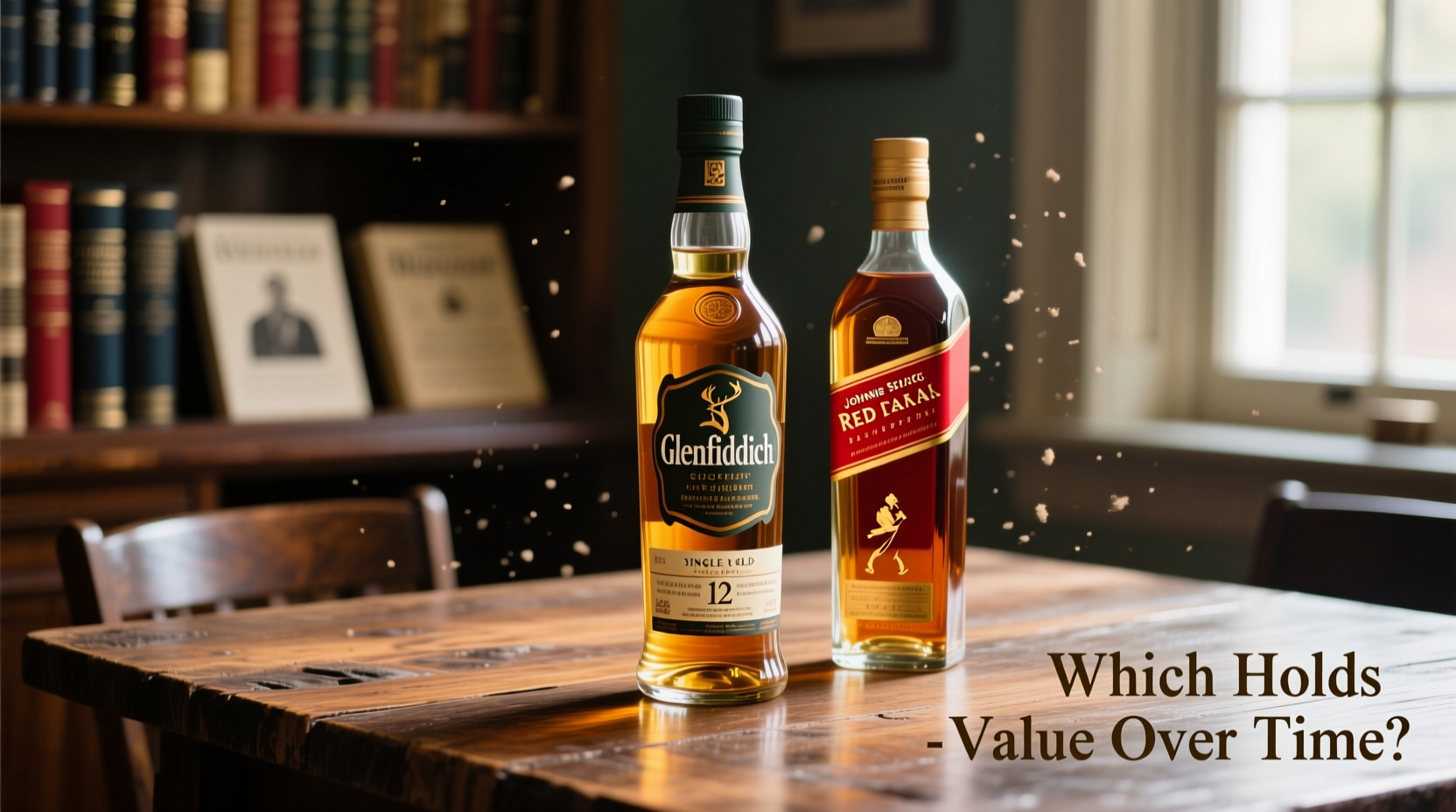
Single malt Scotch is distilled at one distillery, using only malted barley, water, and yeast, and aged in oak casks in Scotland for a minimum of three years. This narrow definition creates inherent constraints: each distillery produces finite volumes per year, and its output is tied to physical infrastructure—still capacity, warehouse space, and cask stock. When demand surges (as it did post-2010 in Asia), supply cannot scale rapidly. Distilleries like Ardbeg, Port Ellen, or Brora were shuttered for decades; their remaining casks are irreplaceable. Even active distilleries like Lagavulin or Glenfiddich allocate only a fraction of their mature stock to independent bottlers or rare releases—the rest flows into core blends or standard-age expressions. That scarcity is baked into the asset: unlike blended Scotch, which relies on blending flexibility to maintain consistency across batches, single malts derive value from fixed origin, fixed cask, and fixed vintage.
Blended Scotch, by contrast, combines grain whisky (from continuous stills) with multiple single malts—often sourced from dozens of distilleries. Its strength is consistency, not singularity. A brand like Johnnie Walker Blue Label uses up to 40 different malts and grain whiskies, adjusted annually to preserve flavor profile. This operational agility ensures stable supply but dilutes collectibility: no single component dominates the narrative, and no batch carries unique provenance. As whisky historian Dave Broom notes, “Blends are engineered for taste continuity—not cask-level storytelling. That makes them exceptional drinks, but poor candidates for long-horizon appreciation.”
“The single malt market trades on scarcity, provenance, and narrative—three things blends deliberately suppress in service of reliability.” — Dr. Kirsty Sutherland, Senior Analyst, Rare Whisky Advisory Group
Market Data: What the Auctions Reveal
Auction results from Bonhams, Sotheby’s, and Whisky Auctioneer over the last decade confirm a pronounced valuation gap. Between 2014 and 2024, the top 10% most valuable single malts appreciated at a compound annual growth rate (CAGR) of 14.7%. Blended Scotch accounted for just 0.8% of total hammer value across the same period—even though blends represent over 90% of global Scotch volume.
| Category | Avg. CAGR (2014–2024) | % of Total Auction Value | Liquidity Score* (1–10) |
|---|---|---|---|
| Single Malt (Rare/Discontinued) | 14.7% | 68.3% | 8.2 |
| Single Malt (Core Range) | 5.1% | 22.9% | 6.5 |
| Blended Scotch (Premium Tier) | −0.3% | 0.8% | 2.1 |
| Grain Whisky (Single) | 9.4% | 4.7% | 4.3 |
*Liquidity Score reflects frequency of sale, bid depth, and price transparency (1 = illiquid, 10 = highly liquid)
The data shows that while some premium blends—like The Mackintosh or Compass Box’s Artist Series—achieve modest appreciation, they do so through deliberate positioning as “blends with malt provenance,” not as traditional blended Scotch. Their success hinges on transparency: naming distilleries, specifying cask types, and limiting bottlings. Without those elements, blends remain consumption assets—not store-of-value instruments.
Three Exceptions Where Blends Hold Ground
Though the trend strongly favors single malts, three categories of blended Scotch demonstrate meaningful value retention:
- Discontinued heritage blends: Bottlings like Ballantine’s 30 Year Old (discontinued 2017) or Chivas Regal Royal Salute 21 Year Old “The Lost Blend” (2015) gained 22% and 17% respectively over five years—not due to blend composition, but because they ceased production and carried documented cask inventories from closed distilleries (e.g., Port Dundas grain).
- Independent bottler blends: Labels such as Compass Box’s Hedonism (grain-only) or The Spice Tree (malt-forward blend) operate outside mainstream blending logic. They publish full cask lists, use bespoke cask finishes, and limit releases to under 5,000 bottles—effectively functioning as “single blends” with traceable provenance.
- Historic pre-1970s blends: Bottles from the 1950s–60s bearing original tax stamps, intact wax seals, and known provenance (e.g., a 1963 Johnnie Walker Green Label from a private estate collection) occasionally exceed £2,000 at auction. Their value stems from historical significance and condition—not intrinsic blend quality.
Case Study: The Macallan 1926 vs. Chivas Regal 50 Year Old
In November 2023, a bottle of The Macallan 1926 Fine & Rare (labelled by Peter Blake) sold for £6.2 million at Sotheby’s—setting a world record. Only 40 bottles were drawn from a single sherry cask laid down in 1926. Each bears a unique label artwork, full cask history, and third-party authentication. Its value trajectory is unambiguous: £27,000 in 1999 → £460,000 in 2007 → £1.5 million in 2018 → £6.2 million in 2023.
Compare that with Chivas Regal 50 Year Old, released in 2018 with a £20,000 RRP. Though exceptionally crafted—with components from Strathisla, Longmorn, and Braeval—it was produced in a batch of 1,000 bottles. By 2024, average resale price stood at £18,400—a 8% depreciation over six years. Why? No cask-level uniqueness. No discontinued status (Chivas confirmed ongoing limited production). No artist collaboration or narrative layering. It remains a superb dram—but not a scarce artifact.
This contrast illustrates the core principle: value accrues to finite, verifiable, story-rich assets, not to age alone or prestige branding. A 50-year-old blend without provenance is a luxury product. A 100-year-old single cask with full documentation is a collectible instrument.
Practical Framework: How to Assess Long-Term Value Potential
Evaluating whether a bottle will appreciate requires moving beyond tasting notes and ABV. Use this step-by-step framework before acquisition:
- Verify cask origin and uniqueness: Is it a single cask? Multiple casks? Are distillery names disclosed? If it’s a blend, are component distilleries named and verified?
- Confirm production status: Check the distillery’s official website and industry databases (e.g., Whiskybase, Malt Maniacs archives) for discontinuation announcements or reduced allocations.
- Assess bottling context: Limited editions (<500 bottles), charity releases, or artist collaborations carry higher narrative weight than standard releases—even if age statements are identical.
- Review provenance chain: Does the bottle have original packaging, tax stamps, and purchase documentation? Auction houses discount bottles lacking chain-of-custody evidence by 25–40%.
- Check liquidity history: Search past auction results (Whisky Auctioneer’s free archive, Bonhams’ sale catalogues) for at least three prior sales of the same expression. Fewer than two recorded sales in five years signals low liquidity risk.
FAQ
Do NAS (No Age Statement) single malts hold value?
Yes—if they meet scarcity criteria. Examples include Ardbeg’s “Glenmorangie Pride 1981” (NAS but single cask, 31 years old, 500 bottles) or Springbank’s Local Barley series (farm-specific, limited runs). Avoid NAS releases with high-volume production (>10,000 bottles) unless backed by distillery discontinuation or unique cask treatment.
Can I invest in blended Scotch through casks?
Rarely—and with caution. Most blenders don’t sell individual casks to third parties. Grain whisky casks (used in blends) are sometimes available, but their value depends entirely on the distillery’s reputation and closure status—not the blend itself. A cask of North British grain from 1992 is more investable than a generic “blended Scotch” cask from an active producer.
Does bottle size affect long-term value?
Yes—significantly. Standard 70cl bottles dominate liquidity, but large formats (1.5L, 3L, Imperial) often trade at 20–35% premiums *if* they’re rare. However, miniature bottles (5cl) and travel retail exclusives rarely appreciate—low demand, high counterfeiting risk, and fragmented secondary markets undermine their viability as assets.
Conclusion
Value retention in Scotch isn’t determined by alcohol strength, age statement, or even flavour complexity—it’s governed by scarcity architecture, provenance fidelity, and market consensus around irreplaceability. Single malts win this equation consistently because their production model inherently limits supply, while their cultural narrative rewards specificity: a cask number, a distillery closure date, a master blender’s signature. Blended Scotch excels where it should—as a benchmark of craftsmanship, consistency, and accessible luxury. But as an investment vehicle, it demands exceptional circumstances: discontinuation, historic provenance, or radical transparency. For collectors and investors alike, the lesson is clear: look past the label’s elegance and ask harder questions about origin, volume, and endurance. The bottles that appreciate aren’t the ones you merely enjoy—they’re the ones no one else can replicate.
💬 Have you tracked the value trajectory of a single malt or blend over 5+ years? Share your experience—including bottling details and resale outcomes—in the comments. Real-world data helps us refine what truly holds value—and why.