Saffron-infused aioli is more than a condiment—it’s an elevation of flavor, color, and culinary artistry. This golden-hued sauce combines the luxurious aroma of saffron with the creamy richness of traditional garlic aioli, creating a versatile accompaniment that transforms everything from grilled seafood to roasted vegetables. As one of the world’s most prized spices, saffron brings not only its signature amber tint but also a delicate floral-earthy complexity that few ingredients can replicate. When infused into aioli, it produces a sauce that balances elegance with approachability, suitable for both weeknight meals and gourmet presentations. Understanding how to prepare and use this sauce effectively allows home cooks and professionals alike to harness saffron’s full potential without waste or overpowering other components.
Definition & Overview
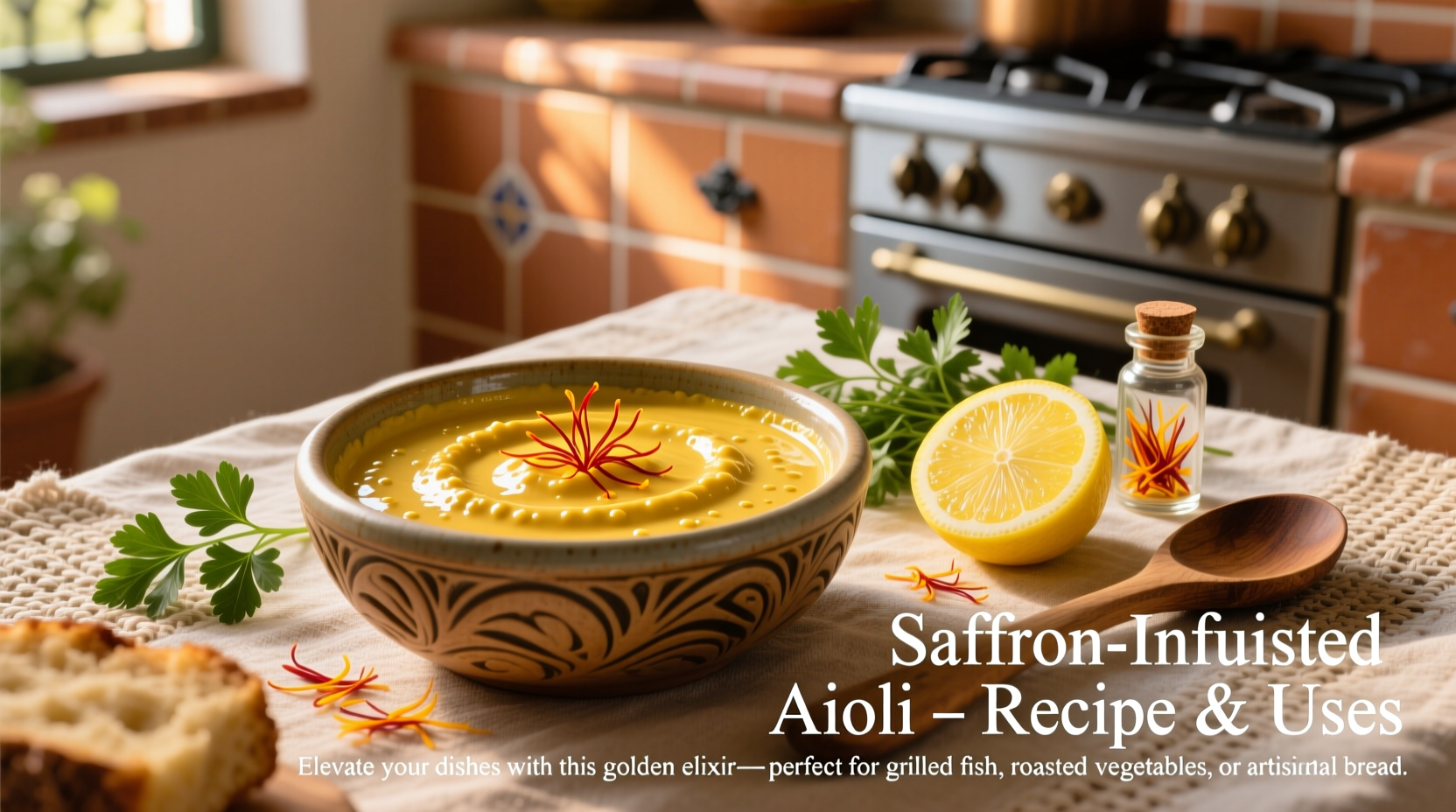
Aioli, at its core, is a cold emulsion traditionally made from garlic, olive oil, and salt—originating in the coastal regions of Spain, France, and North Africa. Modern interpretations often include egg yolk as an emulsifier, resembling mayonnaise but distinguished by its robust garlic presence and artisanal preparation method. Saffron-infused aioli builds upon this foundation by incorporating threads of *Crocus sativus*—the dried stigmas of the autumn-blooming crocus flower—steeped in warm liquid before being blended into the base. The result is a luminous, aromatic sauce that carries saffron’s hallmark fragrance: honeyed, hay-like, and subtly metallic, with a warmth that lingers on the palate.
The infusion process is critical. Unlike powdered spices, saffron must be rehydrated to release its volatile compounds—principally safranal (aroma), crocin (color), and picrocrocin (bitter-sweet taste). When properly activated and folded into aioli, these elements integrate seamlessly, lending depth without dominating. This makes saffron aioli distinct from flavored mayonnaises that rely on extracts or artificial coloring; here, every element is natural, intentional, and layered.
Key Characteristics
| Characteristic | Description |
|---|---|
| Flavor Profile | Delicate floral notes with hints of honey, earth, and mild bitterness; balanced by garlicky pungency and creamy fat. |
| Aroma | Warm, hay-like, slightly sweet, with subtle medicinal undertones characteristic of high-grade saffron. |
| Color | Vibrant golden-yellow to deep amber, depending on saffron quantity and infusion time. |
| Texture | Smooth, thick, and velvety—similar to mayonnaise but with more body due to oil emulsion technique. |
| Heat Level | None; entirely non-spicy, making it ideal for sensitive palates. |
| Culinary Function | Condiment, dipping sauce, sandwich spread, marinade base, or finishing drizzle. |
| Shelf Life | Up to 5 days refrigerated in airtight container; quality diminishes after day 3. |
Practical Usage: How to Use Saffron-Infused Aioli
The versatility of saffron aioli lies in its ability to complement rather than compete. Its gentle spice profile enhances without overwhelming, making it ideal for dishes where subtlety and balance are key. Consider the following applications:
- Seafood Pairings: Drizzle over grilled octopus, seared scallops, or pan-roasted halibut. The sweetness of shellfish harmonizes perfectly with saffron’s floral tones.
- Vegetable Enhancer: Toss with roasted carrots, fennel, or artichokes. The sauce clings well to fibrous textures and adds moisture and complexity.
- Grilled Meats & Poultry: Serve alongside lemon-herb chicken skewers or lamb chops. Use as a basting agent during final minutes of grilling for glossy finish.
- Sandwiches & Wraps: Replace standard mayo in turkey clubs, crab rolls, or vegetarian paninis. Adds visual appeal and aromatic lift.
- Dipping Sauce: Present with crispy patatas bravas, fried calamari, or vegetable crudités for upscale appetizer spreads.
- Pasta Finishing: Thin with warm pasta water and toss with linguine, clams, and parsley for a modern take on *fideos*.
Pro Tip: For restaurant-style presentation, pipe saffron aioli through a pastry bag onto plates in swirls or dots. This not only controls portioning but elevates plating aesthetics significantly.
Step-by-Step Saffron-Infused Aioli Recipe
- Bloom the Saffron (10–15 min): Crush 0.1g (about 20 threads) of premium saffron using a mortar and pestle. Place in a small bowl and cover with 2 tablespoons of warm water (not boiling, ~140°F/60°C). Let steep for 10–15 minutes until deeply colored and fragrant.
- Prepare Garlic Paste: Mince 1 large clove of garlic and combine with ¼ teaspoon kosher salt. Use side of knife to grind into a smooth paste. Alternatively, grate on microplane.
- Emulsify Base: In a medium bowl, whisk together 1 large egg yolk (pasteurized if concerned about raw eggs), the garlic paste, 1 teaspoon lemon juice, and 1 teaspoon Dijon mustard. Whisk vigorously for 30 seconds to aerate.
- Incorporate Oils Gradually: Begin adding neutral oil (like grapeseed or sunflower) drop by drop while whisking constantly. After ¼ cup is incorporated, stream in more steadily, maintaining ribbon-like consistency. Total oil: ¾ to 1 cup.
- Add Saffron Infusion: Once emulsion is stable and thick, slowly pour in the saffron liquid while continuing to whisk. Reserve any undissolved threads and add them for extra potency.
- Season & Adjust: Taste and adjust with additional lemon juice (for brightness), salt (to enhance saffron), or a touch of honey (to round out bitterness).
- Chill Before Serving: Transfer to airtight container and refrigerate for at least 30 minutes to allow flavors to meld. Stir gently before use.
This recipe yields approximately 1½ cups. For lighter versions, substitute half the oil with plain Greek yogurt or silken tofu puree—though stability decreases slightly.
Variants & Types
Saffron aioli can be adapted in several ways based on dietary needs, regional styles, or desired intensity. Recognizing these variants ensures optimal application across menus and cuisines.
Classic Emulsified Aioli
The traditional version described above uses raw egg yolk and slow oil incorporation. Offers richest texture and longest shelf life when handled safely. Best for formal dining and plated dishes.
Egg-Free (Vegan) Saffron Aioli
Replace egg yolk with aquafaba (chickpea brine, 3 tablespoons) or soaked cashew butter (¼ cup blended smooth). Use high-speed blender for stable emulsion. Add ½ teaspoon xanthan gum if needed for viscosity. Flavor remains close to original, though slightly less sharp.
Quick Microwave Saffron Oil Infusion
For rapid preparation: Combine crushed saffron threads with 2 tablespoons olive oil in microwave-safe dish. Heat in 10-second bursts up to 30 seconds total. Cool slightly, then blend directly into pre-made mayonnaise. Sacrifices some nuance but effective for last-minute needs.
Garlic-Free Version
Some diners avoid raw garlic due to sensitivity. Substitute roasted garlic purée (1 tablespoon) or omit entirely. The saffron becomes the dominant note—ideal for showcasing the spice itself.
| Variant Type | Best Used For | Prep Time | Stability |
|---|---|---|---|
| Classic (Egg Yolk) | Fine dining, seafood, grilling | 15–20 min | High (up to 5 days) |
| Vegan (Aquafaba/Cashew) | Plant-based menus, allergen-sensitive settings | 10 min (with blender) | Moderate (3 days max) |
| Mayo-Based Shortcut | Weeknight meals, casual entertaining | 5 min | Medium (4 days) |
| Roasted Garlic | Milder profiles, family-friendly dishes | 12 min (incl. roasting) | High |
Comparison with Similar Ingredients
Saffron aioli is sometimes mistaken for other golden sauces, but key distinctions exist in composition, function, and sensory impact.
- Turmeric Mayonnaise: Often marketed as “golden” or “anti-inflammatory” mayo. Turmeric provides intense yellow color and earthy bitterness but lacks saffron’s floral aroma and sweetness. Can stain and overpower; no substitute for true saffron in fine applications.
- Harissa Aioli: Combines chili paste with garlic and oil. Spicy, smoky, and red-orange in hue. Functions as a heat source rather than aromatic enhancer—complementary but not interchangeable.
- Lemon Aioli: Bright and tangy, relying on citrus acidity. While refreshing, it lacks the depth and warmth of saffron. Can be combined: lemon-saffron aioli is excellent with fish tacos or grilled shrimp.
- Commercial “Saffron Sauce”: Many store-bought versions contain food coloring (Yellow 5 or 6), artificial flavors, and minimal real saffron. Always check ingredient lists—true saffron appears as “Crocus sativus stigma” or “saffron threads.”
“Saffron isn’t just a colorant—it’s a voice in the dish. When you infuse it into aioli, you’re not making ‘yellow mayo.’ You’re conducting a conversation between land, labor, and flavor.” — Chef Elena Maroulis, Culinary Director, Mediterranean Heritage Institute
Practical Tips & FAQs
How much saffron should I use?
For 1½ cups of aioli, 0.1g (about 20 threads) is sufficient. More than 0.15g risks excessive bitterness. Remember: saffron is potent by volume but used sparingly by weight.
Can I use powdered saffron?
Powdered saffron dissolves faster but is often adulterated with turmeric or marigold. If using powder, verify purity through lab testing or trusted suppliers. Whole threads offer better control and authenticity.
Is saffron aioli safe with raw eggs?
For vulnerable populations (pregnant individuals, elderly, immunocompromised), use pasteurized eggs or opt for vegan versions. Commercially available pasteurized yolks are widely accessible and perform identically.
How do I store leftover aioli?
Keep in glass jar with tight lid, surface pressed with plastic wrap to prevent oxidation. Refrigerate immediately. Discard if separation cannot be reversed by stirring, or if sour odor develops.
What if my emulsion breaks?
If the aioli separates, start over with a fresh yolk in clean bowl. Very slowly whisk broken mixture into new base, drop by drop. Alternatively, blend in 1 teaspoon warm water using immersion blender.
Can I freeze saffron aioli?
Freezing damages emulsion structure, leading to graininess upon thawing. Not recommended. Instead, prepare saffron infusion separately and freeze in ice cube trays (up to 3 months); combine with fresh aioli base when needed.
Best dishes to showcase saffron aioli?
Paella sliders, saffron-poached cod, grilled asparagus bundles, crab-stuffed mushrooms, and smoked trout toast points all benefit from its refined character. Avoid pairing with heavily spiced or smoked foods that may mask its subtlety.
Storage Checklist:
☐ Store in airtight container
☐ Press surface with parchment or plastic wrap
☐ Label with date
☐ Keep below 40°F (4°C)
☐ Use within 5 days for peak quality
Summary & Key Takeaways
Saffron-infused aioli is a masterclass in precision and restraint. It demonstrates how a single precious ingredient—when treated with care—can elevate everyday cooking into something extraordinary. By understanding the science of infusion, mastering emulsion techniques, and respecting saffron’s delicate nature, cooks can produce a sauce that is visually stunning, aromatically complex, and functionally versatile.
The core principles are simple: bloom saffron properly, build emulsion gradually, season thoughtfully, and apply strategically. Whether crafting a vegan alternative for plant-based guests or preparing a classic version for a seaside feast, this sauce bridges tradition and innovation. It honors the labor-intensive heritage of both aioli and saffron cultivation while remaining accessible to modern kitchens.
More than a recipe, saffron aioli represents mindful cooking—where value isn't measured solely by cost, but by attention, intention, and the quiet luxury of flavor revealed over time.
Ready to experiment? Try infusing saffron into brown butter next, or create a layered dip with saffron aioli, whipped feta, and toasted pine nuts. The possibilities begin where curiosity meets technique.