Saffron is not just a spice—it’s an agricultural marvel, a cultural symbol, and a culinary treasure. Revered for millennia across continents, it remains the most expensive spice by weight due to its labor-intensive harvest and unique sensory properties. For home cooks and professional chefs alike, understanding where saffron comes from—its botanical origin, growing conditions, and harvesting process—is essential to appreciating its value and using it effectively. This article explores the intricate journey of saffron from flower to kitchen, offering insight into how this golden thread is cultivated, why it commands such high prices, and what distinguishes authentic saffron from imitations.
Definition & Overview
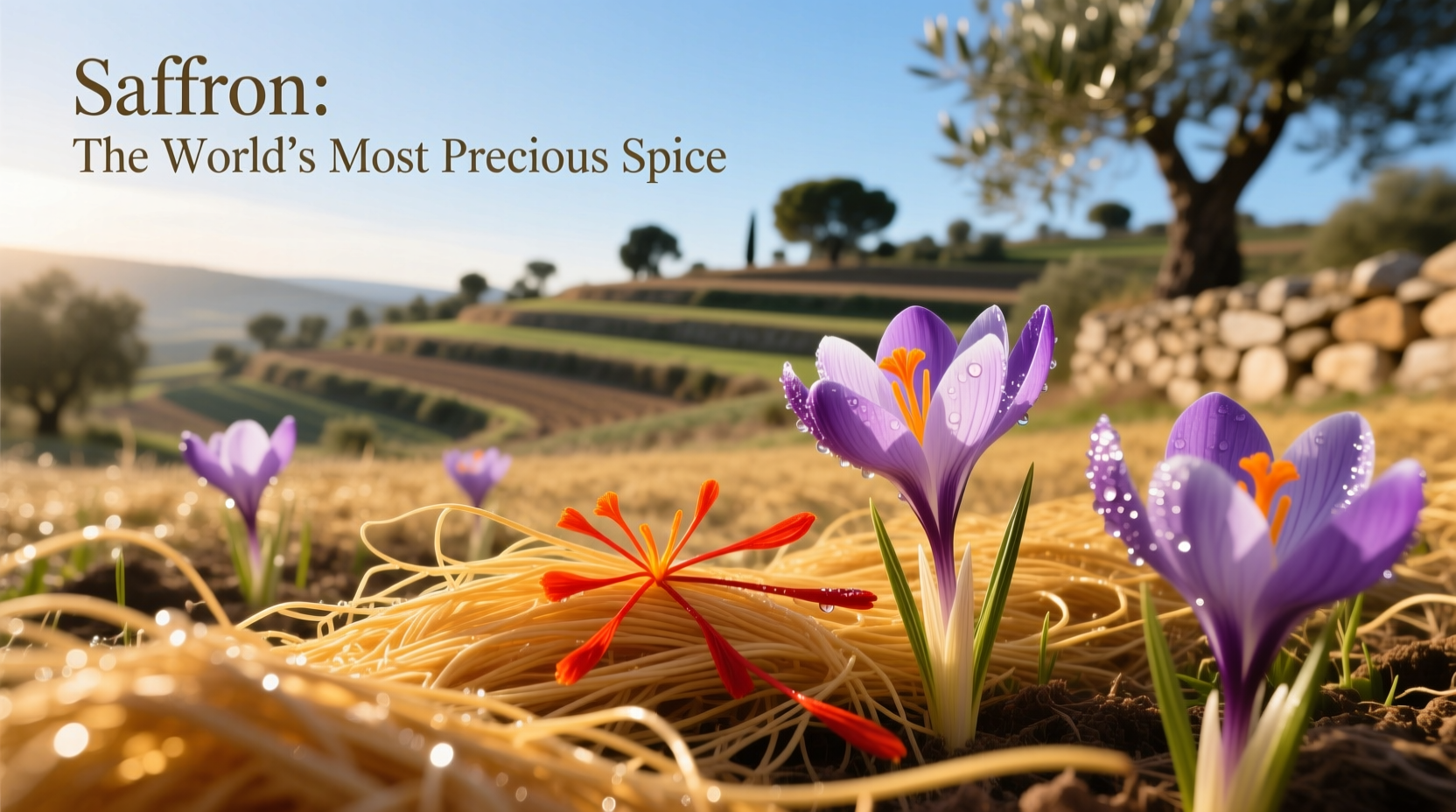
Saffron is derived from the dried stigmas of the Crocus sativus, a sterile triploid species of crocus that does not produce viable seeds and must be propagated manually through corms. Each purple bloom yields only three delicate red-orange stigmas, which are hand-plucked at dawn when the flowers first open. These threads are then carefully dried to preserve their volatile compounds, resulting in the final product known as saffron.
Native to Southwest Asia, saffron has been cultivated for over 3,500 years, with historical records tracing its use in ancient Persia, Greece, India, and Egypt. It was used not only in cooking but also in medicine, dyeing textiles, and religious rituals. Today, major producers include Iran (which accounts for over 90% of global supply), followed by India (particularly Kashmir), Greece, Afghanistan, Morocco, and Spain.
The spice is prized for its distinct aroma, vibrant color, and subtle flavor. In cuisine, it imparts a golden-yellow hue and a complex taste profile—floral, honeyed, slightly earthy, with hints of metallic bitterness when overused. Saffron plays a starring role in iconic dishes such as Spanish paella, Iranian tahdig, Indian biryanis, Italian risotto alla milanese, and French bouillabaisse.
Key Characteristics
| Attribute | Description |
|---|---|
| Flavor Profile | Floral, honey-like, slightly bitter, with a warm, hay-like undertone. Overuse can result in medicinal or metallic notes. |
| Aroma | Potent and fragrant, reminiscent of autumn leaves, dried grass, and iodine. High-quality saffron emits a sweet, penetrating scent when crushed. |
| Color | Bright crimson-red threads that release a deep golden-yellow pigment (due to crocin) when steeped in liquid. |
| Form | Whole stigma threads (most valuable), powdered saffron (less reliable due to adulteration risks), or liquid extracts. |
| Heat Level | Non-pungent; no capsaicin or spiciness. Flavor intensifies with heat but degrades if boiled too long. |
| Culinary Function | Used primarily for coloring and aromatic enhancement. Acts as a natural preservative in some traditional preparations. |
| Shelf Life | Up to 2 years when stored properly in a cool, dark place. Degrades over time, losing potency and developing musty odors. |
Practical Usage: How to Use Saffron in Cooking
To unlock saffron’s full potential, proper preparation is crucial. Unlike many spices, saffron should never be added directly to dry ingredients or exposed to high heat without prior extraction.
The standard method involves **blooming** the threads: soaking a small pinch (about 10–20 threads or 0.1 grams) in warm (not boiling) liquid—water, milk, broth, or alcohol—for 10 to 20 minutes. This allows the water-soluble pigments (crocin), flavor compounds (picrocrocin), and aroma molecules (safranal) to dissolve evenly into the dish.
- Measure the required amount—typically 15–30 threads per serving depending on intensity desired.
- Grind gently between fingers or with a mortar and pestle to break cell walls and increase surface area.
- Add to 2–3 tablespoons of warm liquid (70–80°C / 160–180°F).
- Let steep for 10–20 minutes until the liquid turns deep yellow-orange.
- Incorporate both threads and liquid into your recipe during early stages of cooking.
This technique ensures even distribution and prevents clumping or uneven coloring. For example, in making paella, bloomed saffron is stirred into the simmering stock before being absorbed by the rice. In baking, such as in saffron buns or Persian saffron cakes, the infused milk or cream carries both flavor and hue throughout the batter.
Pro Tip: Freeze excess bloomed saffron in ice cube trays for future use. One saffron-infused cube equals approximately one serving and can be dropped directly into soups, sauces, or grains.
Professional kitchens often maintain a saffron tincture—a concentrated solution of ground saffron steeped in food-grade ethanol—used sparingly to season large batches consistently. However, this requires careful labeling and controlled usage to avoid overpowering dishes.
Variants & Types of Saffron
Not all saffron is created equal. Quality varies significantly based on origin, processing methods, and grading standards. The International Organization for Standardization (ISO) 3632 classifies saffron into four categories based on crocin (color), picrocrocin (taste), and safranal (aroma) content. Here are the primary commercial grades:
- Grade I (Super Negin): Long, thick, uniformly red threads with intense color strength and rich aroma. Considered the highest quality, mostly from Iran. Commands premium prices.
- Grade II (Sargol): Bright red tips only, no yellow styles attached. Strong coloring power and clean flavor. Common in Middle Eastern and South Asian markets.
- Grade III (Pushal/Mancha): Includes some yellow style tissue, reducing purity and potency. Less expensive but may affect flavor balance.
- Grade IV (Bunch/Bunch Cut): Threads sold in clusters with floral waste; lower quality and inconsistent performance.
Kashmiri saffron, known locally as \"Mongra\" or \"Lacha,\" is distinguished by its darker maroon threads, stronger fragrance, and deeper coloring ability compared to Iranian varieties. Due to limited production and political instability in the region, it is rare and highly sought after.
Greek Krokos Kozanis holds Protected Designation of Origin (PDO) status within the EU, ensuring traceability and adherence to strict harvesting protocols. Spanish saffron, particularly from La Mancha, is often labeled “Coupé” (top grade) or “Rio” (mid-tier), though much of it is re-exported Iranian saffron repackaged under Spanish branding.
| Origin | Thread Appearance | Color Strength | Flavor Intensity | Best Used In |
|---|---|---|---|---|
| Iranian (Negin) | Long, deep red, uniform | ★★★★★ | ★★★★☆ | Rice dishes, stews, industrial applications |
| Kashmiri (Mongra) | Shorter, dark maroon, curly | ★★★★★ | ★★★★★ | Delicate sweets, festive biryanis, syrups |
| Greek (Kozani) | Medium-length, bright red | ★★★★☆ | ★★★★☆ | Mediterranean sauces, seafood dishes |
| Spanish (La Mancha) | Red with possible yellow base | ★★★☆☆ | ★★★☆☆ | Paella, tapas, saffron aioli |
Comparison with Similar Ingredients
Saffron’s high cost makes it a frequent target for substitution and adulteration. Consumers often confuse it with cheaper alternatives that mimic its color but lack its complexity.
| Saffron vs. | Differences |
|---|---|
| Calendula Petals | Impart yellow color but have a bitter, herbaceous taste. No floral aroma. Often sold as “poor man’s saffron.” |
| Marigold Flowers (Tagetes erecta) | Bright orange petals used in poultry feed to enhance yolk color. Lack saffron’s nuanced flavor and medicinal compounds. |
| Turmeric Powder | Strong yellow pigment, but earthy, peppery flavor. Can stain dishes muddy yellow-orange and overpower subtler ingredients. |
| Artificial Food Coloring | No aroma or taste contribution. Cannot replicate the psychological effect of real saffron, which enhances perceived richness. |
| Safflower (Carthamus tinctorius) | Marketed as “Mexican saffron” or “bastard saffron.” Provides color but minimal flavor. Sometimes mixed into powdered saffron fraudulently. |
“Real saffron sings in silence—you don’t need much. A whisper of threads transforms a dish completely. If you’re tasting something harsh or chemical, it’s not saffron.” — Chef Reza Mahammad, Michelin-starred Persian cuisine specialist
Practical Tips & FAQs
How much saffron should I use?
A typical serving uses 10–20 threads (approximately 0.05–0.1 grams). Recipes serving 4–6 people rarely require more than 0.3 grams. Exceeding this can introduce unpleasant bitterness.
How do I store saffron?
Keep whole threads in an airtight glass container away from light, heat, and moisture. Avoid plastic bags, which allow oxygen permeation. Properly stored, saffron retains potency for up to two years. Ground saffron loses flavor faster and is more prone to adulteration.
Is powdered saffron safe to buy?
Powdered saffron is convenient but risky. Over 60% of commercial samples tested by food safety agencies contain fillers like turmeric, paprika, or synthetic dyes. Purchase only from reputable vendors who provide lab certification or ISO grading.
Can I grow saffron at home?
Yes, but expect low yields. Crocus sativus thrives in regions with hot, dry summers and cold winters (USDA zones 5–8). Each corm produces one flower per season, and each flower yields three stigmas. To produce 1 gram of dried saffron, you’d need roughly 150 flowers—making backyard cultivation more educational than economical.
Why is saffron so expensive?
Because every step—from planting corms to harvesting flowers at dawn and extracting stigmas by hand—is done manually. It takes about 150,000 flowers (and 40+ hours of labor) to produce one kilogram of dried saffron. Mechanization is nearly impossible due to the fragility of the blooms and the precision required in handling.
What are signs of fake saffron?
- Threads that dissolve completely in water (real saffron remains intact).
- Immediate strong color release (authentic saffron bleeds slowly over 10–15 minutes).
- Musty, stale, or absent aroma.
- Price below $5 per gram—likely adulterated.
Home Test for Authenticity: Place a few threads in warm water. Genuine saffron will gradually release a golden-yellow hue while retaining its structure. Fake versions (dyed corn silk, coconut fibers, or synthetic strands) either discolor instantly or leave sediment.
Are there ethical concerns in saffron production?
Yes. Much of the world’s saffron is harvested by women in rural communities under informal labor arrangements. While not inherently exploitative, lack of transparency in supply chains raises fair wage and working condition issues. Look for brands that disclose sourcing practices or carry Fair Trade certifications.
Summary & Key Takeaways
Saffron is far more than a luxury ingredient—it is a testament to human patience, agricultural tradition, and sensory refinement. Derived exclusively from the hand-harvested stigmas of Crocus sativus, its cultivation demands precise climatic conditions and immense manual effort, explaining its status as the world’s most expensive spice.
Understanding its source reveals why authenticity matters: true saffron delivers a balanced trifecta of vivid color, floral aroma, and nuanced flavor unmatched by substitutes. Whether used in Persian jeweled rice or French saffron crème brûlée, its presence elevates a dish beyond mere sustenance into the realm of experience.
When purchasing saffron, prioritize whole threads over powder, verify origin and grading (ISO 3632), and store them correctly to preserve potency. Use sparingly, always bloom before cooking, and respect its transformative power in small doses.
Takeaway Action: Next time you cook with saffron, take a moment to crush a single thread and inhale its aroma. Notice the layers—the sweetness, the earth, the faint medicinal lift. That complexity is nature refined through centuries of human care. Treat it with reverence, and it will reward your palate profoundly.