When you pour a glass of rum, you’re not just tasting alcohol and molasses—you’re tasting geology, climate, tradition, and human intention. Jamaica and Guatemala produce rums that occupy opposite ends of the sensory spectrum, yet both command deep respect among connoisseurs and bartenders alike. Jamaican rum is legendary for its pungent funk, layered esters, and bold agrarian intensity. Guatemalan rum, by contrast, offers elegant restraint: silky texture, subtle spice, and a quiet but unmistakable depth rooted in highland volcanic soil and meticulous solera aging. These aren’t stylistic choices made in isolation—they emerge from centuries of adaptation to distinct environments, regulatory frameworks, and cultural priorities. Understanding what defines each region’s flavor profile means looking beyond the bottle label to the cane fields, the copper pot stills, the tropical humidity, and the hands that tend the barrels.
Terroir & Cane: The Unseen Foundation of Flavor
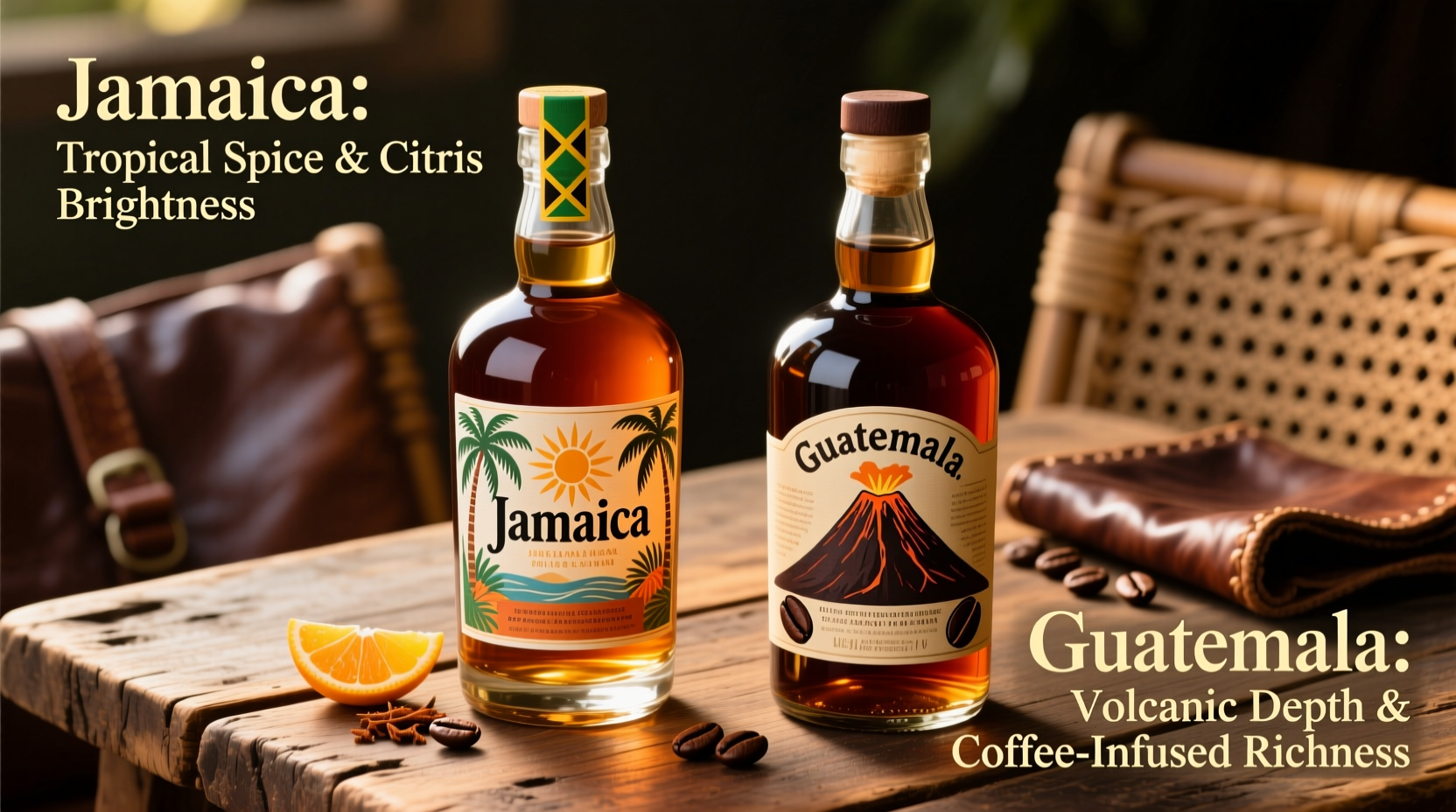
Terroir—the interplay of soil, climate, altitude, and microflora—matters as much in rum as it does in wine or whisky. In Jamaica, sugarcane grows across limestone-rich lowlands and volcanic hillsides, often on small, family-run estates where harvest timing and field fermentation are tightly controlled. The island’s hot, humid climate accelerates microbial activity; wild yeasts and bacteria thrive in open-air fermenters, generating volatile esters like ethyl acetate and isoamyl acetate—compounds responsible for banana, pineapple, and overripe fruit notes. Jamaican distillers don’t suppress this; they cultivate it. At Hampden Estate, for example, fermentation routinely lasts 7–14 days, sometimes longer, deliberately encouraging “hogo” (a French term for the pungent, earthy aroma of ripe tropical fruit and damp forest floor).
Guatemala’s sugarcane, by contrast, is grown at elevations between 600 and 1,500 meters above sea level in the fertile valleys flanking the Sierra Madre. Volcanic soils here are rich in potassium and trace minerals, while cooler nights slow sugar accumulation and extend the growing season—yielding cane with higher polyphenol content and more complex aromatic precursors. Crucially, Guatemalan producers almost exclusively use *freshly crushed cane juice* (not molasses) for premium rums like Ron Zacapa or Botran. This “agricultural rum” base delivers grassy, herbal, and floral top notes absent in most molasses-based spirits. Fermentation is shorter (36–72 hours), temperature-controlled, and inoculated with selected yeast strains—prioritizing cleanliness and consistency over microbial chaos.
Tip: When comparing rums, always check the base material—molasses rums (Jamaica) emphasize fermentation-driven funk, while cane-juice rums (Guatemala) highlight botanical freshness and structural finesse.Distillation: Copper Pots vs Column Precision
How rum is distilled fundamentally determines its aromatic bandwidth. Jamaica remains one of the last strongholds of traditional double- and triple-distillation in copper pot stills. Brands like Wray & Nephew, Appleton Estate, and Long Pond rely on these labor-intensive methods—not for efficiency, but for expressive control. Pot stills retain heavier congeners: fusel oils, higher alcohols, and long-chain esters that contribute to rum’s body, warmth, and signature funk. A single run through a pot still yields a low-strength, highly flavorful “high-wine” (often 65–75% ABV), which then undergoes further distillation to refine or intensify character. At Long Pond, the famed TECC (Trelawny Estate Classic Cane) mark denotes a specific heavy-ester style achieved through extended fermentation and triple pot distillation—resulting in a rum so dense with pineapple, rubber, and fermented mango that it’s often used in minute quantities as a “flavor backbone” in blends.
Guatemala employs a hybrid approach: column stills for efficiency and purity, often paired with smaller batch pot stills for complexity. Industrias Licoreras de Guatemala (ILG), producer of Zacapa and Botran, uses continuous column distillation to achieve clean, neutral spirit at ~85% ABV—ideal for absorbing oak influence without competing aromas. But crucially, they also run select batches through copper pot stills for “reserve” expressions, blending the two to balance elegance with depth. The result is a spirit with less overt volatility than Jamaican pot-still rums but greater textural nuance than many industrial column rums. As master blender Lorena Vásquez explains:
“In Guatemala, distillation isn’t about maximizing esters—it’s about capturing the soul of the cane at its most harmonious moment. We want the barrel to speak, not shout.”
Aging & Climate: Humidity, Heat, and Time’s Alchemy
Aging transforms raw distillate into something profound—but climate dictates *how*. Jamaica’s tropical climate features year-round heat (25–32°C) and high humidity (70–85%). This accelerates chemical reactions inside the barrel: rapid evaporation (the “angels’ share” can reach 8–12% per year), faster extraction of lignin and tannins from oak, and intensified oxidation. The result? Rums that mature quickly but deeply—developing intense dried fruit, dark chocolate, leather, and tobacco notes in just 5–12 years. However, the high humidity means less water loss relative to alcohol, so cask strength often rises over time (“tropical aging” paradoxically increases ABV). That’s why many Jamaican rums are bottled at cask strength or reduced minimally—to preserve their dense, syrupy mouthfeel.
Guatemala’s highland climate is markedly different: average temperatures hover around 18–22°C, with lower humidity (55–65%) and significant diurnal shifts. This slows maturation dramatically—chemical reactions proceed more deliberately, allowing for subtler integration of oak vanillin, toasted coconut, and baking spice. ILG’s solera system, used for Zacapa 23, layers rums aged from 6 to 23 years in a cascading sequence across American white oak, Pedro Ximénez sherry, and French oak casks. Because the climate is milder, evaporation is gentler (~3–5% annually), preserving more delicate floral and citrus top notes while building layered, polished structure. The outcome is rums that feel refined rather than raucous—think almond biscotti, roasted chestnut, and clove-studded orange peel instead of fermented jackfruit and blackstrap molasses.
| Characteristic | Jamaican Rum | Guatemalan Rum |
|---|---|---|
| Base Material | Primarily molasses (some cane juice experiments) | Exclusively fresh cane juice (for premium lines) |
| Fermentation | 7–14 days, open-air, wild yeast, high hogo | 36–72 hours, temperature-controlled, selected yeast |
| Distillation | Dominantly copper pot stills (double/triple) | Column + selective pot still blending |
| Aging Climate | Tropical: hot, humid, fast maturation | Highland: temperate, dry, slow, nuanced maturation |
| Signature Notes | Banana, overripe pineapple, rubber, wet earth, blackstrap, leather | Roasted almond, vanilla bean, dried apricot, clove, cedar, toasted coconut |
Regulation, Tradition, and Cultural Intent
Flavor profiles don’t evolve in a vacuum—they’re shaped by legal frameworks and cultural values. Jamaica’s rum industry operates under the Jamaica Rum Marque system, a voluntary classification codifying ester levels (measured in grams per hectoliter of pure alcohol). Marks like “CH” (Common Heavy), “DOK” (Double Old Kingston), and “HLCF” (Highly Congeneric Full-Fat) signal specific funk intensities, guiding blenders and informing consumers. This system reflects Jamaica’s pride in its distinctive, unapologetic character—a celebration of robustness, heritage, and sensory audacity.
Guatemala regulates rum under the *Norma Guatemalteca NTG 35 001*, which mandates minimum aging periods (e.g., 1 year for “Añejo,” 3 years for “Gran Reserva”) and requires transparency about origin and production method. More significantly, Guatemalan producers embrace a philosophy of *integration*: rum is meant to complement food, accompany conversation, and reflect national identity through craftsmanship—not shock or dominate. This ethos informs everything from the gentle filtration used before bottling (preserving mouthfeel) to the preference for lower ABVs (typically 38–40%) that prioritize accessibility and balance. As master blender Carlos Mendoza of Botran notes:
“We don’t chase extremes. We chase harmony—between cane, wood, time, and the hand that guides them.”
Real-World Tasting: A Comparative Case Study
In 2023, the London Rum Festival hosted a blind tasting panel comparing Appleton Estate 12 Year Old (Jamaica) and Ron Zacapa XO (Guatemala). Panelists included sommeliers, mixologists, and spirits educators. The Appleton was immediately identified by its assertive nose: bruised plantain, fermented guava, damp hay, and black pepper. On the palate, it delivered weighty viscosity, waves of dark caramel and bitter cocoa, followed by a long, spicy, almost medicinal finish. One panelist described it as “a rum that insists on being heard.”
The Zacapa XO presented a radically different experience: lifted aromas of candied orange peel, toasted walnut, and sandalwood; a silky, medium-bodied entry with hints of star anise and poached pear; and a finish marked by dried fig, cinnamon stick, and a whisper of espresso. Its elegance disarmed several tasters who expected heavier oak influence. What surprised the group most was how well each rum performed in cocktails: the Appleton elevated a funky, savory Rum Punch with allspice dram and lime, while the Zacapa became the star of a refined Old Fashioned—its subtlety allowing the orange twist and Angostura bitters to shine without clashing.
Practical Guide: How to Taste & Appreciate the Differences
- Start Neat, No Ice: Pour 25ml of each rum into separate tulip glasses. Let them breathe for 2–3 minutes.
- Observe Color & Viscosity: Jamaican rums often appear deeper amber with slower legs (indicating higher congener content); Guatemalan rums may be lighter gold with finer, quicker legs.
- Nose Methodically: First pass—identify fruit (tropical vs. dried/citrus). Second pass—assess earth/wood (damp soil vs. cedar/vanilla). Third pass—note spice (black pepper vs. clove/anise).
- Sip Slowly: Hold the first sip for 10 seconds. Note where flavor hits your tongue (front = fruit/acidity; mid = spice/body; back = oak/tannin).
- Add a Drop of Water: This opens up esters in Jamaican rum (enhancing fruit) and softens tannins in Guatemalan rum (revealing floral notes).
FAQ
Can I substitute Jamaican rum for Guatemalan rum in cocktails?
Yes—but expect dramatic shifts in balance. Jamaican rum adds funk and body, ideal for Tiki drinks or punches. Guatemalan rum brings polish and spice, excelling in stirred classics like the Mai Tai or Rum Manhattan. Substituting one for the other without adjusting supporting ingredients (e.g., citrus, sweetener, bitters) will likely unbalance the drink.
Why do some Jamaican rums taste “funky” while others don’t?
Funk (hogo) is intentional and varies by marque and distillery. Lighter rums like Appleton Signature are blended to minimize esters; heavier ones like Hampden DOK or Worthy Park WP 12Y are built around them. Always check the marque or age statement—older doesn’t always mean funkier, but specific marques do.
Are Guatemalan rums always smoother than Jamaican rums?
Not inherently—but their production philosophy prioritizes refinement. The combination of cane juice, controlled fermentation, column distillation, and temperate aging yields inherently less aggressive congeners. That said, high-ester Guatemalan experimental batches do exist; they’re simply rare and rarely exported.
Conclusion
Jamaican and Guatemalan rums represent two vital, irreducible truths about spirit-making: that place matters profoundly, and that culture shapes craft as surely as climate shapes cane. To choose between them isn’t to pick a “better” rum—it’s to choose a different kind of dialogue with history, land, and human ingenuity. The next time you uncork a bottle, pause before pouring. Consider the limestone hills of Trelawny Parish, where wild yeast feasts on molasses under a Caribbean sun. Then picture the mist-shrouded cane fields near Antigua, where cool breezes carry the scent of volcanic earth and careful hands transfer spirit from one oak cask to another in quiet succession. These rums don’t just taste different—they embody different answers to the same question: *What does rum want to be?*
💬 Your palate is the final authority. Try a Jamaican pot-still rum side-by-side with a Guatemalan solera expression—then share your tasting notes, pairings, or favorite cocktail twists in the comments. Let’s deepen the conversation, one thoughtful sip at a time.