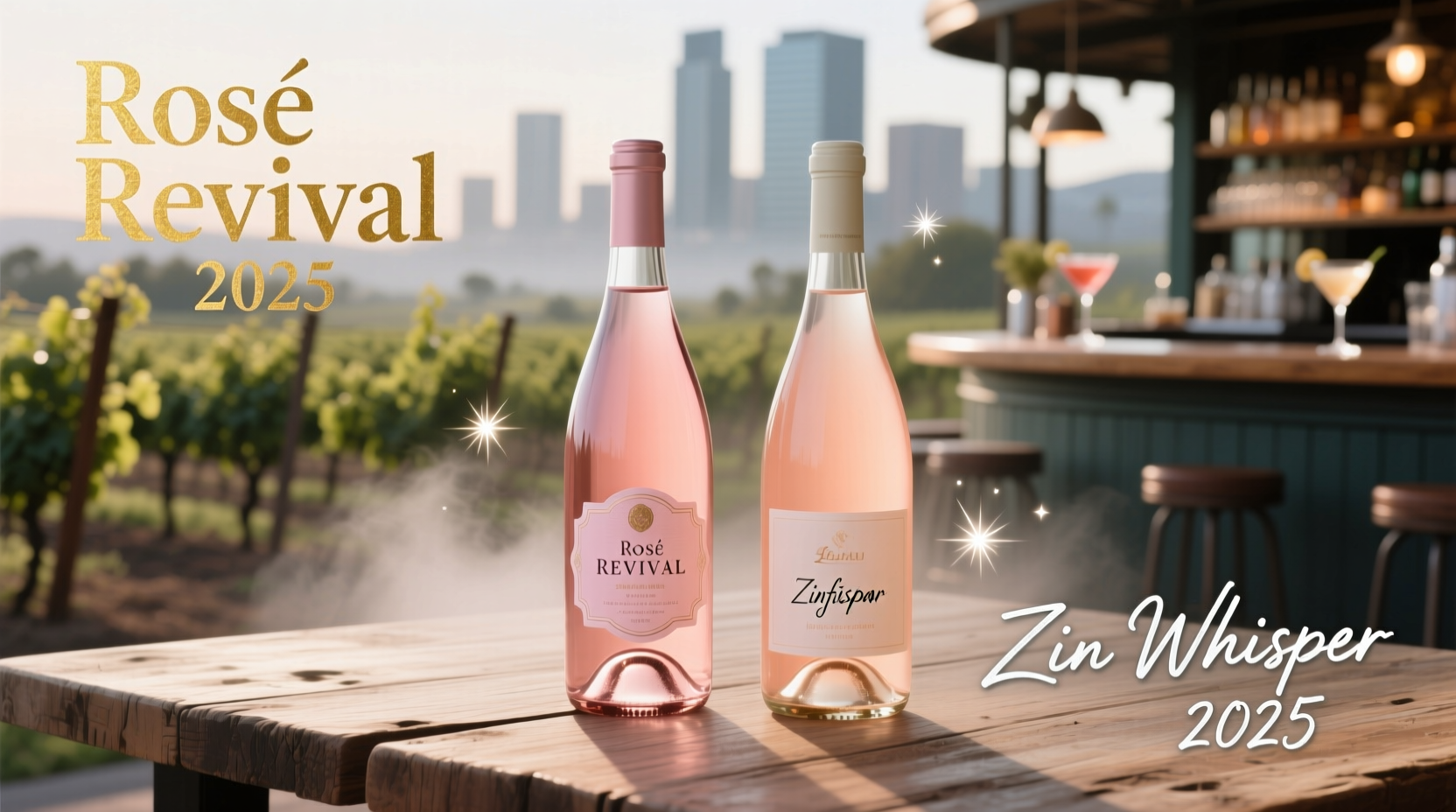
Five years ago, ordering a glass of White Zinfandel at a serious wine bar would have drawn a polite but unmistakable eyebrow raise. Rosé—especially pale Provençal styles—had long since shed its “frou-frou” reputation, becoming the default summer sip for sommeliers and food critics alike. Yet in 2025, something unexpected is unfolding: both rosé *and* White Zinfandel are experiencing parallel, authentic revivals—not as nostalgic novelties, but as deliberately crafted, terroir-expressive wines gaining real traction among discerning drinkers, natural wine advocates, and even Michelin-starred beverage directors. This isn’t about sugary nostalgia or mass-market convenience. It’s about intentionality, transparency, and a cultural shift toward embracing sweetness—not as a flaw, but as a legitimate, expressive dimension of winemaking.
Why Sweetness Is No Longer a Dirty Word
The stigma around sweet wine was never really about sugar—it was about context. For decades, sweetness signaled industrial production: high-yield grapes, added grape concentrate, and fermentation halted artificially to preserve residual sugar. That model created predictable, cloying wines with little acidity or structure—wines that tasted more like candy than fruit. But today’s revival is rooted in a different philosophy. Winemakers across California, France, Spain, and Australia are returning to traditional methods: harvesting ripe (but not overripe) fruit, fermenting slowly with native yeasts, and stopping fermentation only when balance—not marketing—dictates. The result? Wines where residual sugar is harmonized by vibrant acidity, mineral tension, and layered texture.
This shift mirrors broader trends in food culture: the rise of umami-rich fermented foods, the embrace of sourdough’s lactic tang, and the growing appreciation for complex, non-linear flavor profiles. As wine writer and Master of Wine Sarah Ahmed notes:
“We’ve spent twenty years chasing ‘dryness’ as a proxy for seriousness. In 2025, we’re finally asking the right question: does this wine taste alive? Does it speak of place and season? A well-made off-dry rosé from Mendocino or a low-alcohol White Zinfandel from Lodi can answer that question more honestly than many over-extracted, oak-saturated reds.”
Rosé Reimagined: From Provence to Paso Robles
Modern rosé has evolved far beyond its pale-pink, Provençal archetype. While the benchmark remains elegant, bone-dry, and saline—think Domaines Tempier or Château Simone—the 2025 renaissance embraces stylistic diversity. American producers, in particular, are experimenting with extended skin contact (up to 36 hours), whole-cluster fermentation, and neutral oak aging—yielding rosés with weight, tannic grip, and surprising age-worthiness.
Crucially, the comeback includes *off-dry* rosés—those with 8–15 g/L residual sugar. These aren’t “sweet” in the conventional sense; they’re balanced, refreshing, and built for food. A rosé made from old-vine Grenache in Santa Barbara might show wild strawberry, crushed thyme, and a whisper of honeyed apricot on the finish—its subtle sweetness lifting the fruit rather than masking it.
Tip: Look for rosés labeled “Brut Nature” (zero dosage) or “Off-Dry” (not “Dry”)—and always check the alcohol level. Wines under 12.5% ABV are more likely to retain natural freshness and lower intervention.White Zinfandel’s Quiet Revolution
White Zinfandel’s reputation suffered a double blow: first, from its 1980s ubiquity (it accounted for nearly 20% of U.S. wine sales at its peak), and second, from decades of industrial production using high-yield, irrigated vineyards and lab-grown yeasts. But in 2025, a quiet, determined cohort of growers is reclaiming the variety—not as a commodity, but as a heritage grape with distinct personality.
These new-generation White Zinfandels come from dry-farmed, head-trained vines planted before 1970—many in Lodi’s Mokelumne River AVA or Sonoma’s Dry Creek Valley. Fermented cool in stainless steel or neutral concrete, they retain bright acidity and showcase Zinfandel’s inherent red-fruit core: fresh raspberry, watermelon rind, and crushed rose petal. Residual sugar sits between 10–22 g/L—not enough to overwhelm, but enough to soften tannin and amplify fruit expression. Alcohol levels hover at 11.5–12.8%, making them ideal for daytime drinking, picnics, or pairing with spicy cuisine.
A compelling real-world example comes from Fields Family Wines in Lodi. Winemaker Ryan Deovlet began bottling a single-vineyard White Zinfandel in 2022 from 65-year-old, own-rooted vines on sandy loam soil. Hand-harvested at dawn, pressed immediately, and fermented with ambient yeasts, the wine clocks in at 11.8% ABV with 14 g/L RS. Local restaurants like The Firehouse in Sacramento now list it alongside Loire Valley rosés and Austrian Zweigelt—priced at $26, not $9. “Customers don’t ask if it’s ‘real wine’ anymore,” says beverage director Lena Torres. “They ask what’s in the glass—and whether it pairs with our roasted beet and goat cheese tart.”
Rosé vs White Zinfandel: A Practical Comparison
Despite shared perceptions of sweetness, rosé and White Zinfandel differ fundamentally in origin, structure, and versatility. Understanding those distinctions helps move beyond labels and into intentional enjoyment.
| Attribute | Rosé | White Zinfandel |
|---|---|---|
| Grape Varieties | Cinsault, Grenache, Syrah, Mourvèdre, Pinot Noir, Sangiovese (varies widely by region) | Zinfandel (100% — legally required in the U.S.) |
| Production Method | Direct press (most common) or short maceration (2–24 hrs); rarely barrel-fermented | Direct press only; no skin contact; often native yeast fermentation |
| Typical Residual Sugar (2025 Craft Examples) | 0–18 g/L (dry to off-dry) | 10–22 g/L (consistently off-dry) |
| Acidity Profile | High and crisp (especially from cooler regions); often saline or citrus-driven | Medium-high; rounder, fruit-forward acidity (red currant, watermelon) |
| Food Pairing Strengths | Grilled seafood, herb-roasted chicken, charcuterie, Mediterranean mezze, spicy Thai or Vietnamese dishes | Barbecue, fried chicken, pork belly, tomato-based pasta, Mexican street food, mild cheeses |
How to Choose, Serve, and Store Them Right
Choosing wisely starts with reading the back label—not just the front. Look for vintage, appellation, alcohol percentage, and producer name. Avoid brands that obscure origin or list “wine products” instead of “wine.” Then follow this step-by-step guide to maximize enjoyment:
- Check the ABV: Wines between 11.0% and 12.8% are most likely to be balanced and low-intervention. Above 13.5% suggests added sugar or chaptalization.
- Read the tech sheet (if available online): Look for terms like “native fermentation,” “unfined/unfiltered,” “dry-farmed,” or “estate-grown.” These signal craftsmanship.
- Chill properly: Serve rosé at 46–50°F (8–10°C); White Zinfandel slightly colder at 44–48°F (7–9°C). Over-chilling masks nuance; too warm amplifies alcohol and flattens acidity.
- Use the right glass: A standard white wine glass—not a flute or tumbler—allows aromas to open and directs wine to the optimal part of the palate.
- Drink within 1–2 days of opening: Both styles are best consumed young. Store upright in the fridge with a vacuum stopper to preserve freshness.
Your 2025 Sweet-Wine Starter Checklist
Ready to explore thoughtfully? Use this actionable checklist to build confidence and avoid common missteps:
- ✅ Start with one bottle each: A Provence-style rosé (e.g., Château d’Esclans “Whispering Angel” or local equivalent) and a craft White Zinfandel (e.g., Turley “Juvenile” or Fields Family “Mokelumne River”)
- ✅ Taste side-by-side: Note differences in color depth, aroma intensity (rosé tends floral/herbal; White Zin leans fruity/creamy), and mouthfeel (rosé is leaner; White Zin has gentle glycerol weight)
- ✅ Pair intentionally: Serve rosé with grilled prawns and lemon-herb oil; serve White Zinfandel with smoked brisket sliders and pickled onions
- ✅ Track your impressions: Jot down one word for acidity, one for fruit, and one for finish. Do you prefer the lift of the rosé or the generosity of the White Zin?
- ✅ Visit a local shop with a curated selection: Ask for recommendations—not based on sweetness alone, but on balance, origin, and food affinity
FAQ: Clearing Up Common Confusions
Is all rosé dry?
No. While the dominant global style—especially from Provence—is dry (under 4 g/L RS), many regions produce off-dry or medium-sweet rosés. Spanish Rosados from Navarra or Italy’s Cerasuolo d’Abruzzo often retain 8–12 g/L RS for texture and fruit expression. Always check the producer’s website or tech sheet for exact numbers.
Does White Zinfandel have to be sweet?
Legally, no—but practically, yes. Because Zinfandel is a thick-skinned, high-sugar red grape, pressing it early yields juice with naturally high potential alcohol. To retain freshness and prevent overly alcoholic, thin wines, most producers stop fermentation early, preserving residual sugar. True “dry” White Zinfandel exists but is rare, often labeled explicitly as “Dry White Zin” and tasting more like a light red than a pink wine.
Are these wines suitable for cellaring?
Generally, no. Both styles are made for early consumption—ideally within 12–18 months of release. Their appeal lies in vibrancy, fruit purity, and freshness. Extended aging risks oxidation and loss of aromatic lift. Exceptions exist (some skin-contact rosés from Bandol or aged White Zinfandels from Ridge Vineyards’ experimental lots), but these remain outliers—not the norm.
The Real Reason This Comeback Matters
This resurgence isn’t about retro aesthetics or ironic consumption. It reflects a maturing wine culture—one that values authenticity over dogma, balance over orthodoxy, and pleasure over pretension. When a sommelier confidently recommends a White Zinfandel alongside seared duck breast, or a chef pairs a Provence rosé with a rich bouillabaisse, they’re not compromising standards. They’re exercising judgment—choosing the wine that best serves the moment, the meal, and the guest.
That’s the quiet power of the 2025 sweet-wine revival: it expands choice without diluting quality. It invites newcomers with approachability while rewarding connoisseurs with nuance. And it reminds us that wine, at its best, is never just about chemistry or classification—it’s about connection. Connection to land, to labor, to season, and to each other across a table.
💬 Your palate is your authority. Try a rosé and a White Zinfandel this weekend—not as categories, but as individuals. Taste deeply, compare honestly, and share what surprised you. The most meaningful wine conversations start not with expertise, but with curiosity.








