Ask any home cook whether red or white wine makes a bigger difference in a sauce—and you’ll get strong opinions. Some swear red wine deepens a coq au vin beyond repair; others insist white wine keeps a seafood bisque bright and clean. But how much of that conviction rests on chemistry—and how much on habit, tradition, or even marketing? The truth isn’t about color at all. It’s about compounds: tannins, acidity, residual sugar, alcohol content, and volatile esters—none of which are dictated by grape skin contact alone. In practice, the “red vs white” question often masks a more precise one: Which wine’s structural profile matches the dish’s fat, protein, acid, and temperature demands? This isn’t semantics. It’s the difference between a sauce that harmonizes and one that fights itself.
What Actually Changes When You Cook With Wine?
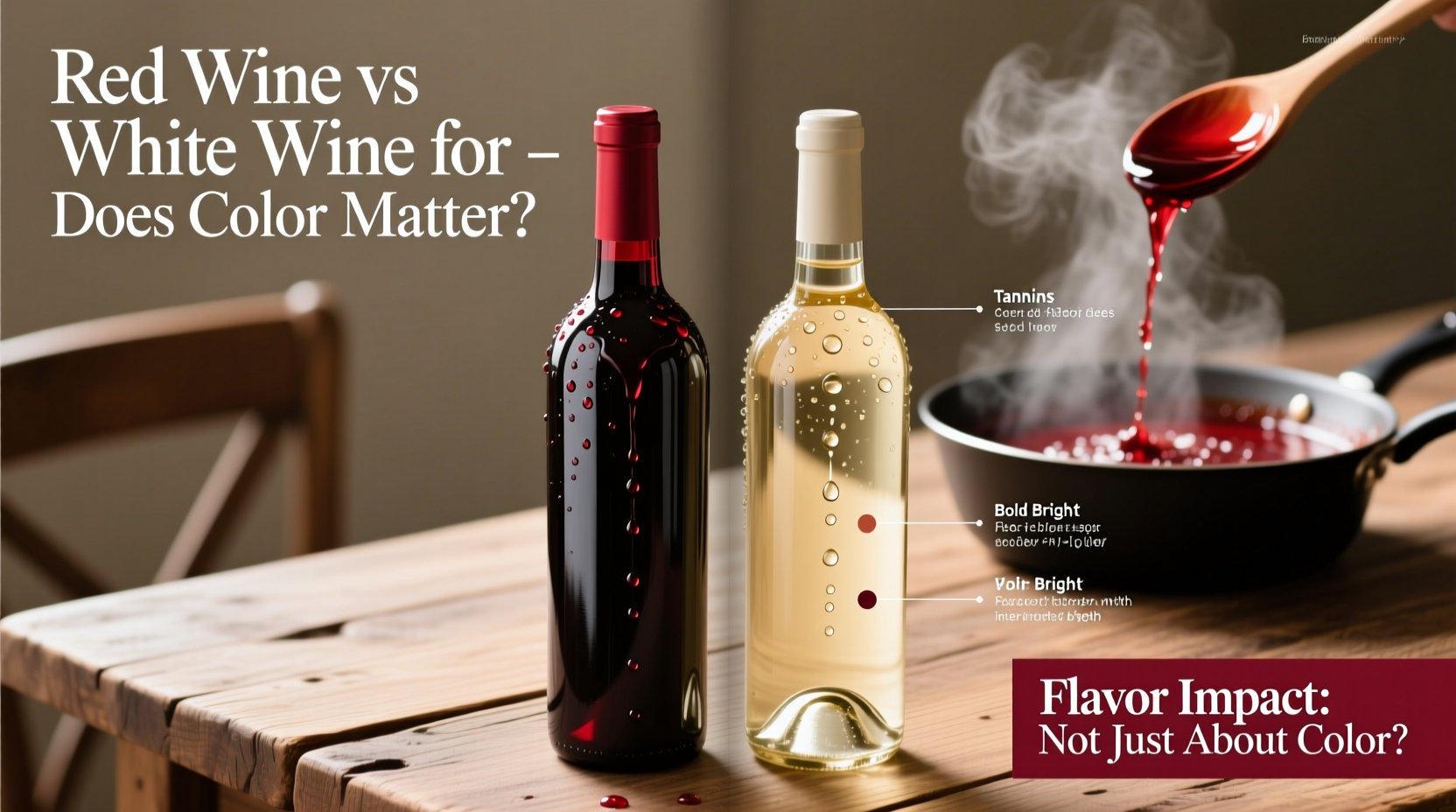
Wine doesn’t just add “grape flavor” to food. Its functional role is multifaceted—and largely chemical. Alcohol (ethanol) evaporates at 78°C (172°F), carrying volatile aromatic compounds with it. That’s why deglazing a hot pan releases a burst of fragrance: ethanol lifts and disperses Maillard and caramelization notes from browned bits. Acidity (primarily tartaric, malic, and lactic acids) cuts through richness, balances sweetness, and helps tenderize proteins by slightly denaturing collagen. Tannins—polyphenolic compounds abundant in red wine skins and seeds—bind to proteins and fats, creating structure, mouthfeel, and subtle bitterness that can either anchor or overwhelm a dish. Residual sugar, even in dry wines (0.1–4 g/L), interacts with salt and acid to round out harsh edges. And crucially, wine’s water content carries soluble flavors into the matrix of a stew or sauce.
None of these elements correlate perfectly with color. A deeply pigmented Pinot Noir may have lower tannins than a pale but aggressively extracted Syrah. A high-acid Sauvignon Blanc can outshine many reds in brightness. A late-harvest Riesling brings more sugar—and therefore more balancing power—than most dry reds. Color is a proxy, not a predictor.
The Real Culprits: Tannins, Acid, and Alcohol—Not Hue
Let’s dissect the three most impactful variables—and where they actually live:
- Tannins: Almost exclusively from red winemaking (skin/seed contact). But concentration varies wildly. Light-bodied reds like Gamay or Barbera contain far less tannin than Cabernet Sauvignon or Nebbiolo. Overuse of high-tannin reds in delicate dishes (e.g., poaching fish or finishing a cream sauce) yields astringency—not depth.
- Acidity: White wines tend to be higher in total acidity, but many reds—especially cool-climate varieties like Sangiovese, Barbera, or Loire Cabernet Franc—rival or exceed whites in tartaric acid levels. Low-acid reds (like warm-climate Merlot) can make a tomato-based sauce taste flat if no additional acid (lemon juice, vinegar) is added.
- Alcohol: Ranges from 11% to 15.5% ABV across both categories. Higher alcohol contributes more heat and volatility during reduction—and can accentuate bitterness in tannic wines. It also affects emulsion stability: sauces with >14% ABV may break more easily when combined with butter or cream.
A Practical Comparison: When Each Type Shines (and Fails)
Instead of thinking “red for meat, white for fish,” think in terms of culinary function. Below is a distilled, chef-tested comparison of common applications:
| Dish Type | Best Wine Choice (Why) | Risk of Mismatch |
|---|---|---|
| Beef Bourguignon / Lamb Stew | Medium-bodied red (Pinot Noir, Grenache) — moderate tannins integrate with collagen; acidity lifts fat without overwhelming | High-tannin Cabernet — creates chalky, drying finish; overshadows herbs and vegetables |
| Coq au Vin (Traditional) | Light-to-medium red (Burgundian Pinot Noir) — fruit-forward, low tannin, high acid complements chicken and mushrooms | White wine — lacks phenolic backbone to match earthy mushrooms and long braise; can taste thin |
| Seafood Risotto / Shrimp Scampi | High-acid white (Vermentino, Albariño, unoaked Chardonnay) — acidity cuts richness; neutral fruit won’t compete with brine | Red wine — tannins bind to delicate seafood proteins, causing toughness and metallic bitterness |
| Cream-Based Sauce (e.g., mushroom or tarragon) | Dry, low-residual-sugar white (Sauvignon Blanc, dry Riesling) — acidity prevents cloying; minimal phenolics avoid curdling | High-alcohol or oaky red — alcohol destabilizes emulsion; oak tannins clash with dairy |
| Poached Pears / Fruit Compotes | Slightly off-dry white (Gewürztraminer, Moscato d’Asti) — sugar echoes fruit; floral notes enhance, not distract | Dry red — tannins turn fruit fibrous; lack of sugar leaves compote sharp and unbalanced |
Note: “Best” assumes the wine is dry, unsweetened, and free of heavy oak or volatile faults. Cooking with flawed wine—oxidized, corked, or volatile acidity—will ruin a dish regardless of color.
Mini Case Study: The Braised Pork Shoulder Experiment
In spring 2023, Chef Lena Ruiz ran a controlled test at her Portland teaching kitchen. She prepared four identical batches of pork shoulder braised in 3 cups liquid + aromatics, varying only the wine: (1) Pinot Noir (light red, 12.5% ABV, 5.8 g/L TA), (2) Syrah (full red, 14.2% ABV, 5.1 g/L TA, high tannin), (3) Vermentino (white, 13.0% ABV, 6.4 g/L TA), and (4) dry Riesling (white, 12.0% ABV, 7.2 g/L TA).
After 3 hours at 160°C (320°F), she evaluated texture, balance, and finish. The Pinot batch was cohesive—rich but lifted. The Syrah yielded tight, grippy meat fibers and a lingering astringent note, despite long cooking. The Vermentino version lacked body and tasted slightly hollow; acidity was present but unsupported. The dry Riesling, however, surprised everyone: its intense natural acidity and subtle stone-fruit esters created a vibrant, layered sauce that enhanced the pork’s umami without masking it. As Ruiz noted in her tasting notes: “It wasn’t about red being ‘meatier.’ It was about acidity meeting collagen breakdown at the right pH—and the Riesling hit that sweet spot better than any red we tested.”
Expert Insight: What Professional Chefs Actually Prioritize
“The first thing I check isn’t color—it’s the back label’s technical sheet. If it lists total acidity above 6.0 g/L and residual sugar under 2 g/L, I’ll consider it for almost any savory application—even red meat. Tannin level matters more than hue. A tannin-free rosé can work in a duck confit better than a green, stemmy Cabernet. And never forget: cooking reduces volume by up to 75%. What’s balanced in the glass becomes concentrated, amplified, and exposed.”
— Chef Antoine Dubois, James Beard Award–winning instructor, Culinary Institute of America, Hyde Park
“I’ve substituted dry sherry for red wine in beef stews for 22 years. Why? Because its nutty, oxidative complexity and 5.5–6.5 g/L acidity mimic aged reds—but without tannin baggage. Color didn’t change, but the sauce did: cleaner, deeper, more integrated. People taste ‘tradition,’ not pigment.”
— Maria Chen, Executive Chef, The Hearth (San Francisco)
Step-by-Step: Choosing & Using Wine for Cooking—No Guesswork
- Identify the dish’s dominant structural element: Is it fatty (duck, pork belly)? Acid-driven (tomato, lemon)? Delicate (sole, asparagus)? Rich-dairy (cream, butter)?
- Select based on chemistry, not category: ✓ High-fat + high-protein → medium tannin + high acid (e.g., Barbera, Loire Cabernet Franc) ✓ Acid-driven → high acid + neutral fruit (e.g., Sauvignon Blanc, dry Riesling) ✓ Delicate → low alcohol (<13%), zero tannin, crisp acid (e.g., Albariño, Picpoul) ✓ Rich-dairy → low tannin, moderate acid, low residual sugar (e.g., unoaked Chardonnay, dry Gewürztraminer)
- Taste your wine raw: Swirl, sniff, sip. Does it taste balanced? Bitter? Hot? Flabby? If yes to any negative, skip it—even if it’s “traditional.”
- Add early, not late: For braises and stews, add wine at the beginning to allow alcohol to fully evaporate and acids to mellow. For finishing sauces (e.g., beurre blanc), add cold, reduced wine off-heat to preserve volatile top notes.
- Reduce before adding dairy or starch: Simmer wine until volume is halved (or more) to concentrate flavor and drive off raw alcohol. Then incorporate cream, butter, or roux. Skipping this step risks separation or harshness.
FAQ
Can I use “cooking wine” from the grocery store?
No. These products contain added salt, preservatives (like potassium sorbate), and artificial flavors. Salt distorts seasoning; preservatives impart medicinal off-notes; and the base wine is often oxidized or low-quality. Always use a wine you’d drink—dry, sound, and affordable ($10–$18). A $12 bottle of Spanish Garnacha or Chilean Sauvignon Blanc outperforms $5 “cooking wine” every time.
Does the price of the wine matter for cooking?
Only up to a point. Wines above $25 rarely offer functional advantages for cooking—their nuance is lost in reduction and integration. However, very cheap wines (<$8) often suffer from industrial flaws: volatile acidity (vinegar tang), excessive sulfur (burnt match), or residual sugar that caramelizes unpleasantly. Stick to $10–$20 bottles from reputable regions (Loire, Rioja, Marlborough, Willamette Valley).
What if I don’t drink alcohol? Are there good non-alcoholic substitutes?
True non-alcoholic wine (under 0.5% ABV) works surprisingly well in many applications—especially for acidity and fruit notes—but lacks ethanol’s deglazing power and aromatic lift. For best results: use non-alcoholic white wine + ½ tsp apple cider vinegar (for acidity) + ¼ tsp glycerin (to mimic body) in a 1:1:0.1 ratio. Avoid broth or juice alone—they lack the precise pH and volatile compound profile that makes wine irreplaceable.
Conclusion
The color of wine doesn’t cook. Chemistry does. Red wine isn’t inherently “deeper,” nor is white wine automatically “lighter.” A tannin-rich red can flatten a delicate dish; a high-acid white can elevate a hearty braise beyond expectation. What matters is matching molecular behavior—acid’s cut, tannin’s grip, alcohol’s volatility—to your ingredients’ physical and chemical reality. Stop reaching for the red bottle out of habit. Start reading labels for total acidity, residual sugar, and alcohol. Taste before you pour. Reduce before you enrich. And remember: the most authentic culinary tradition isn’t using red with meat—it’s using what makes the dish taste truest to itself.
💬 Your turn. Next time you cook, try swapping the “expected” wine for one that matches the dish’s chemistry—not its color. Share what changed in the comments. Did a white wine deepen your stew? Did a light red brighten your sauce? Real experiments, real results—we’re listening.