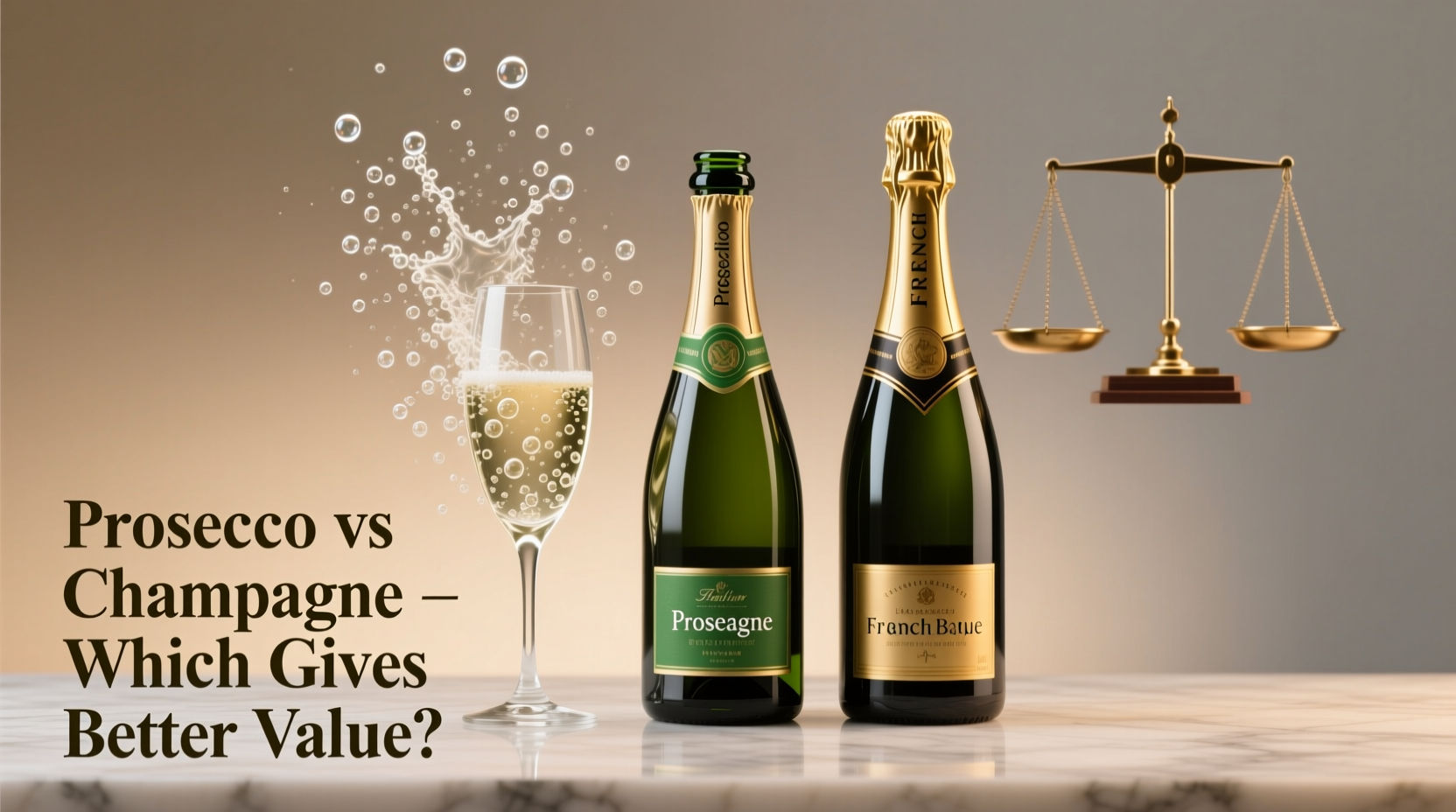
Choosing between Prosecco and Champagne isn’t just about prestige or occasion—it’s a decision with tangible financial and sensory consequences. A bottle of Champagne can cost three to five times more than an equivalent Prosecco, yet both deliver effervescence, celebration, and complexity. But does higher price translate to higher value? Not always. Value here means the optimal balance of quality, consistency, versatility, aging potential, and price-per-ounce of genuine enjoyment—not just status signaling. This isn’t a debate about which is “better” in absolute terms, but which delivers more measurable satisfaction per dollar spent, across real-world use cases: weekday spritzers, holiday toasts, wedding receptions, or thoughtful gifting.
How They’re Made: The Core Difference That Drives Price
The fundamental distinction lies in method—not grape variety or region alone. Champagne is made exclusively in France’s Champagne region using the traditional method (méthode champenoise), where secondary fermentation—the process that creates bubbles—occurs inside the individual bottle. This labor-intensive process requires hand-riddling (turning bottles to collect yeast sediment), extended aging on lees (dead yeast cells), and meticulous disgorgement (removing sediment before corking). Minimum aging for non-vintage Champagne is 15 months; for vintage, it’s 36 months. That time, skill, and manual effort add significant cost.
Prosecco, by contrast, is predominantly made using the Charmat method (also called tank method): secondary fermentation happens in large, pressurized stainless-steel tanks, not bottles. This allows producers to preserve fresh, primary fruit aromas—pear, green apple, white peach—and achieve consistent effervescence at scale. Most Prosecco is released within months of harvest. While some premium Prosecco (like Conegliano-Valdobbiadene Superiore di Cartizze or Prosecco DOCG Brut Nature) undergoes longer tank aging or even limited bottle fermentation, the standard model prioritizes freshness, volume, and affordability.
This methodological divergence explains why production costs for Champagne are inherently higher—even before accounting for land value in Champagne (among the most expensive vineyard land in the world) or strict appellation regulations limiting yields and requiring hand-harvesting.
Price Reality Check: What You Actually Pay (and Why)
Let’s move beyond averages and examine real shelf prices across trusted U.S. retailers (Total Wine, Wine.com, local independents) as of Q2 2024:
| Wine Type & Style | Typical Price Range (750ml) | What You Get at Entry Level | Value Risk Factor |
|---|---|---|---|
| Non-Vintage Prosecco DOC (e.g., La Marca, Mionetto) | $12–$18 | Crisp, fruity, light-bodied, moderate acidity, fine mousse. Reliable for spritzers and casual sipping. | Low — Consistency is high; few duds below $14. |
| Prosecco DOCG (Conegliano-Valdobbiadene) (e.g., Adami, Bisol) | $22–$36 | Greater structure, mineral lift, nuanced orchard fruit, persistent bubbles, often drier (Brut Nature/Extra Brut). Reflects hillside terroir. | Medium — Quality jumps noticeably, but price premium must align with your palate sensitivity. |
| Non-Vintage Champagne (e.g., Veuve Clicquot Yellow Label, Moët & Chandon Impérial) | $45–$65 | Bready, toasty, yeasty notes layered over citrus and red apple; richer mouthfeel, finer, longer-lasting bubbles. Reliable but often sweetened (Brut = up to 12g/L residual sugar). | High — You pay significantly for brand equity and method. Many NV Champagnes taste similar; differentiation is subtle without tasting side-by-side. |
| Grower Champagne (RM) (e.g., Pierre Péters, Jacques Selosse) | $60–$120+ | Distinct terroir expression, lower dosage, often more vibrant acidity and precision. Represents artisanal, small-batch winemaking. | Variable — Exceptional value *if* you seek complexity and nuance, but steep learning curve and price barrier for occasional drinkers. |
Crucially, Prosecco’s price ceiling remains accessible: even top-tier DOCG bottlings rarely exceed $45. Champagne’s floor, however, sits firmly above $40—and that’s before factoring in tariffs, distribution markups, or restaurant markups (often 2.5x–3x retail). For context, a $16 Prosecco poured by the glass at a café costs roughly $9–$11; a $50 Champagne poured by the glass runs $16–$22. The per-ounce cost differential compounds quickly.
Tip: For maximum value on a budget, skip mass-market NV Champagne and invest in a well-reviewed Prosecco DOCG from Conegliano-Valdobbiadene—especially Brut Nature or Extra Brut styles. You gain terroir distinction, lower sugar, and greater food versatility without doubling your spend.Taste, Texture, and Food Pairing: Where Value Becomes Experiential
Value isn’t abstract—it’s felt in the glass and at the table. Prosecco’s charm lies in its immediate, aromatic generosity. Its lighter body, brighter acidity, and pronounced fruit make it exceptionally versatile: it cuts through salty appetizers (prosciutto, olives), complements spicy Thai or Indian dishes, lifts brunch fare (eggs Benedict, smoked salmon), and shines in cocktails (Aperol Spritz, Bellini). Its lower alcohol (typically 10.5–11.5% ABV) also makes it easier to enjoy multiple glasses without heaviness.
Champagne offers a different kind of reward: structural depth and savory complexity. The lees aging imparts brioche, almond, and hazelnut notes; the higher pressure (up to 90 psi vs. Prosecco’s ~60 psi) creates a finer, creamier mousse. This makes it ideal with richer foods—oysters, lobster, fried chicken, aged cheeses—but less forgiving with heat or bold spices. Its higher ABV (12–12.5%) and fuller texture mean it’s often best appreciated solo or with simple, high-quality accompaniments.
A blind tasting reveals the gap: many consumers prefer Prosecco’s vibrancy in casual settings, while Champagne wins in formal, contemplative moments. But preference ≠ value. If your goal is a refreshing, crowd-pleasing aperitif that works across cuisines and occasions, Prosecco consistently delivers higher utility per dollar. If your priority is ceremonial gravitas, aging potential (Champagne can evolve beautifully for 5–15+ years; Prosecco is best consumed within 1–2 years of release), or the cultural weight of a toast, Champagne’s price reflects those intangibles—even if the liquid itself doesn’t offer proportionally greater sensory payoff.
“Prosecco is the democratizer of sparkle. It’s not ‘lesser’—it’s purpose-built for joy, accessibility, and everyday elegance. Champagne is the cathedral; Prosecco is the sun-drenched piazza. Both matter—but confusing their roles erodes value.” — Laura D’Angelo, Master of Wine and author of Sparkling Wine: A Global Perspective
Real-World Value in Action: A Mini Case Study
Consider Elena, a graphic designer hosting her first home dinner party for eight friends. She wants sparkling wine for welcome drinks and to pair with a lemon-herb roasted chicken and arugula-fennel salad. Her budget: $150 for all wine.
Option A: Two bottles of NV Champagne ($55 each = $110). She serves one bottle as welcome drinks, then opens the second with dinner. Guests enjoy the toasty richness, but two bottles yield only ~12–14 glasses—barely enough for one round plus a modest pour with dinner. Leftover Champagne risks oxidation if not finished promptly. She spends $40 on a third bottle of still white to stretch the meal—diluting her sparkling focus.
Option B: Three bottles of high-quality Prosecco DOCG Brut Nature ($32 each = $96). She serves generous welcome pours, then keeps the other two chilled for flexible refills throughout the evening. The crispness complements the lemony chicken and sharp arugula perfectly. With $54 remaining, she adds a vibrant Italian red for the main course and a digestif. Guests remark how “refreshing and food-friendly” the sparkling was—and Elena enjoys the flexibility, lower ABV, and zero pressure to “save” the wine.
Elena’s experience underscores a quiet truth: Prosecco’s value multiplies in real-life scenarios where volume, versatility, and approachability matter more than ceremonial weight. It removes friction from hospitality.
Your Value Decision Framework: A Practical Checklist
Before choosing, ask yourself these questions—not once, but every time you reach for sparkling wine:
- ✅ What’s the occasion? Is it a milestone toast (Champagne’s strength) or a relaxed gathering, picnic, or weeknight treat (Prosecco’s domain)?
- ✅ What’s my food plan? Serving delicate seafood or rich paté? Champagne excels. Grilling, takeout, or brunch? Prosecco adapts effortlessly.
- ✅ How much will I serve? Need >10 glasses? Prosecco scales affordably. Serving just 4–6 people for a special moment? Champagne’s investment feels justified.
- ✅ What’s my palate preference? Do you crave bright fruit and zing (Prosecco), or toasted depth and creamy texture (Champagne)? Don’t pay for complexity you won’t taste.
- ✅ Will I finish it tonight? If not, choose Prosecco—its freshness fades faster, so it’s best uncorked and enjoyed. Champagne holds up better post-opening (with proper stopper) for 2–3 days.
Frequently Asked Questions
Is Prosecco always cheaper because it’s lower quality?
No. Price differences stem primarily from production method, regulation, and land economics—not inherent quality tiers. Top-tier Prosecco DOCG rivals mid-tier Champagne in craftsmanship and expression. It’s simply optimized for different goals: immediacy versus age-worthiness. Calling Prosecco “lower quality” ignores decades of rigorous viticultural advancement in Veneto.
Can I age Prosecco like Champagne?
Generally, no. Prosecco’s charm is its primary fruit and fresh effervescence, preserved by minimal lees contact and early release. Extended aging dulls its vibrancy and flattens its bubbles. Consume Prosecco within 1–2 years of release (check the lot code or harvest date on the back label). Champagne, especially vintage or grower bottlings, is built for cellaring.
Does “Brut” mean the same thing in both wines?
Technically yes—Brut means ≤12 grams of residual sugar per liter—but context matters. A Brut Prosecco often tastes perceptibly fruitier and rounder due to its grape variety (Glera) and cooler fermentation profile. A Brut Champagne may taste drier due to higher acidity and savory lees notes masking residual sugar. Always check the producer’s actual dosage if available, or prioritize “Brut Nature” (0–3 g/L) for maximum dryness in either category.
Conclusion: Value Is Personal, But It’s Also Measurable
Prosecco delivers superior value for most people, most of the time. Its combination of reliable quality at accessible prices, unmatched food versatility, lower alcohol, and joyful drinkability makes it the pragmatic, pleasure-forward choice for daily life. Champagne remains irreplaceable for its cultural resonance, aging capacity, and unique textural sophistication—but its value proposition narrows sharply outside formal celebrations or connoisseur contexts. The real waste isn’t choosing Prosecco over Champagne; it’s defaulting to Champagne out of habit, without considering whether its specific strengths align with your actual needs and preferences.
Next time you shop, look past the label prestige. Read the region (Conegliano-Valdobbiadene DOCG), check the dosage (Brut Nature), and consider how and where you’ll truly enjoy it. That $32 bottle of Bisol Jeio Brut Nature may deliver more authentic delight—and more memorable moments—than a $58 NV Champagne you sip politely while worrying about the bill. Value isn’t found in the highest price tag. It’s found in the glass that makes you pause, smile, and reach for another pour—without hesitation, calculation, or compromise.
💬 Which sparkling wine surprised you with its value recently? Share your go-to Prosecco or Champagne—and why it earned a permanent spot in your rotation—in the comments below. Let’s build a smarter, more joyful sparkling wine community—one bottle at a time.