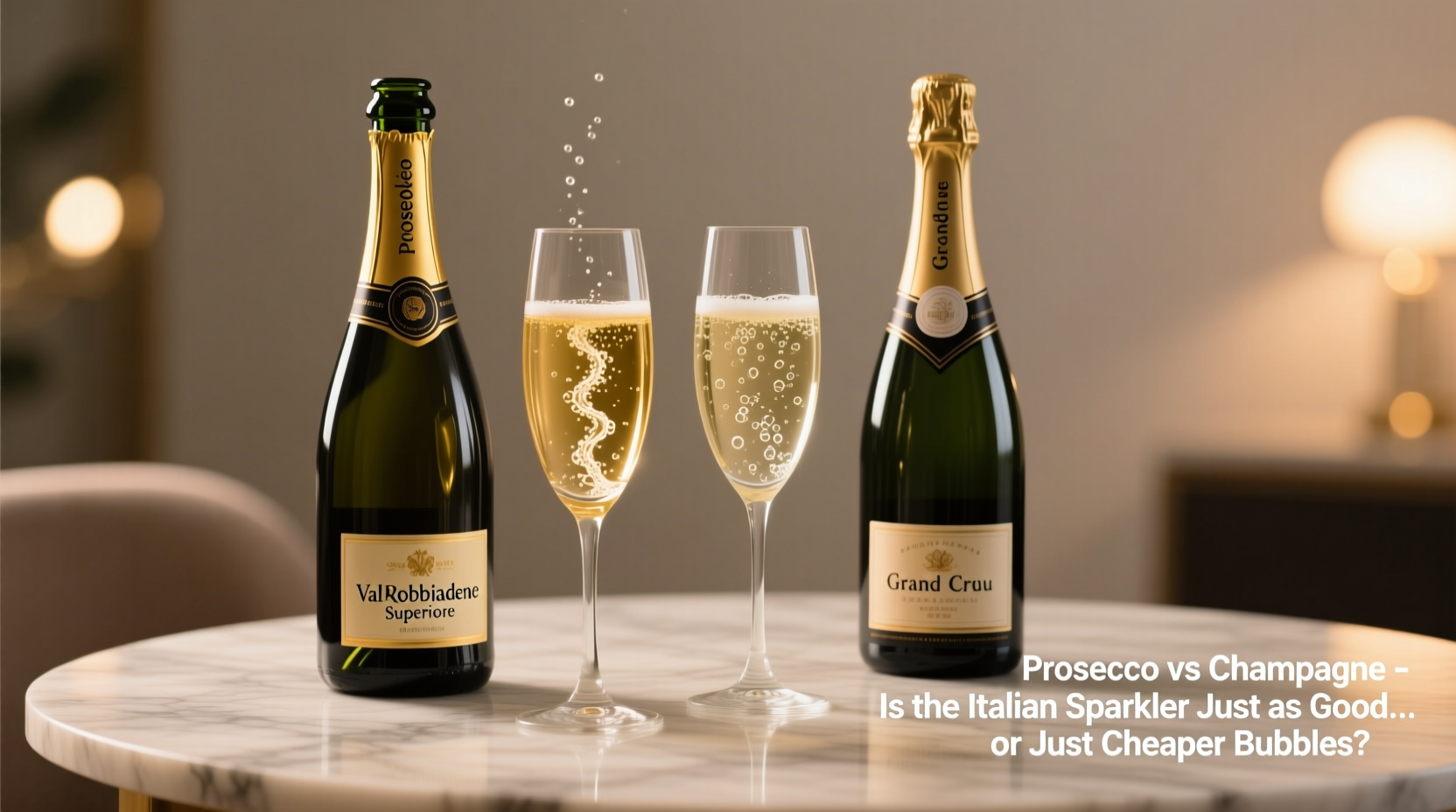
Walk into any well-stocked wine shop, and you’ll see them side by side: a pale gold bottle of Champagne with its regal script and crest, next to a sleek, slender Prosecco with its modern label and playful fizz. Both promise celebration. Both deliver effervescence. But when the cork pops, what’s really behind the bubble? Is Prosecco simply Champagne’s budget cousin—or a distinct expression of terroir, tradition, and intention? The answer isn’t about price tags or prestige. It’s about understanding how geography, method, and philosophy shape every sip.
Origin & Terroir: Two Worlds, Two Wines
Champagne comes exclusively from the Champagne region of northeastern France—a tightly defined, chalk-dominant appellation where cool temperatures, shallow soils, and marginal ripening conditions produce grapes with high acidity and restrained fruit. Only three varieties are permitted: Pinot Noir, Pinot Meunier, and Chardonnay. Every bottle must be grown, pressed, fermented, aged, and disgorged within this 34,000-hectare zone. That geographic constraint isn’t bureaucracy—it’s the foundation of Champagne’s character.
Prosecco, by contrast, originates in Italy’s Veneto and Friuli-Venezia Giulia regions—warmer, flatter, and more fertile. Its heartland is the Conegliano-Valdobbiadene DOCG, a steep, hilly subzone where Glera grapes (formerly known as Prosecco) thrive on clay-limestone slopes overlooking the Piave River. Unlike Champagne’s strict varietal rules, Prosecco is made almost entirely from Glera (minimum 85%), though small amounts of Verdiso, Bianchetta Trevigiana, Perera, or Chardonnay may appear. Crucially, Prosecco’s identity is rooted not in soil-driven complexity but in aromatic fidelity: it’s meant to showcase the fresh, floral, fruity essence of the grape itself—unmasked by extended lees contact or oxidative aging.
“Champagne is architecture. Prosecco is melody. One builds structure over time; the other sings immediately.” — Alessandro Pizzolato, Master of Wine and longtime consultant for Veneto co-ops
Production Method: Why Bubbles Aren’t Created Equal
The most consequential difference lies beneath the label: how the bubbles get there.
Champagne uses the Méthode Champenoise (also called Méthode Traditionnelle). After primary fermentation, wine undergoes a second fermentation *in the bottle*, triggered by adding yeast and sugar (liqueur de tirage). The wine then ages on its lees—dead yeast cells—for a minimum of 15 months (36 months for vintage). This contact imparts brioche, almond, toast, and savory depth. Disgorgement removes sediment; dosage (a mix of wine and sugar) fine-tunes final sweetness. The process is labor-intensive, time-consuming, and expensive—each bottle is handled individually.
Prosecco uses the Charmat-Martinotti method: secondary fermentation occurs not in bottle, but in large, pressurized stainless-steel tanks. Once complete, the wine is filtered and bottled under pressure. This preserves volatile aromas—pear, white peach, acacia, green apple—without lees-derived complexity. Aging is brief: non-vintage Prosecco must rest at least 30 days post-fermentation before release; most premium examples age only 2–4 months on lees in tank. The result is brighter, fruit-forward, and consistently approachable—no decanting, no cellaring required.
Tip: If you want texture, nuttiness, and layered evolution, choose méthode traditionnelle. If you crave immediate, aromatic freshness and lively fruit, Prosecco’s tank method delivers precisely that—by design.Taste Profile & Food Pairing: Beyond “Dry” and “Sweet”
Label terms like “Brut” or “Extra Dry” confuse many. In Champagne, “Brut” means ≤12 g/L residual sugar—dry by global standards. In Prosecco, “Extra Dry” (4–12 g/L) is actually *sweeter* than “Brut” (≤12 g/L, but often closer to 6–8 g/L in practice). Confusing? Yes—but revealing. Prosecco’s higher base sugar reflects its stylistic goal: balance bright acidity with gentle roundness, especially in warmer vintages.
Taste comparison is instructive:
| Characteristic | Champagne | Prosecco |
|---|---|---|
| Aroma Profile | Yeast, brioche, toasted almond, citrus zest, wet stone, red apple skin, sometimes strawberry (rosé) | White pear, green apple, acacia blossom, honeysuckle, melon, citrus blossom, faint almond note |
| Mouthfeel | Finer, persistent mousse; creamy or chalky texture; medium+ acidity; structural backbone | Softer, frothier mousse; lighter body; zesty but rounded acidity; often slightly more generous on the mid-palate |
| Food Friendliness | Shellfish, oysters, aged cheeses (Comté, Gruyère), fried chicken, smoked salmon, duck confit | Antipasti (prosciutto, melon, burrata), seafood risotto, light pasta with cream or lemon, vegetable frittatas, fruit-based desserts |
| Aging Potential | Non-vintage: 3–5 years; vintage: 10–20+ years (with proper storage) | Best consumed within 1–2 years of release; minimal upside to aging |
Crucially, neither is “better”—they serve different roles. Champagne excels as a contemplative, food-anchoring wine. Prosecco shines as a sociable, aperitif-driven sparkler built for immediacy and generosity.
Value & Accessibility: What “Cheaper Bubbles” Really Means
Yes, entry-level Prosecco starts around $12–$15. Comparable non-vintage Champagne begins at $40–$50—and quality rises sharply from there. But cost disparity stems from tangible realities, not hierarchy:
- Vineyard economics: Champagne’s land is among the most expensive in the world—$1 million+ per hectare in prime villages like Ambonnay. Veneto vineyards average €30,000–€80,000/hectare.
- Labor intensity: Riddling (turning bottles by hand or machine) and disgorgement require skilled labor and infrastructure. Charmat tanks scale efficiently.
- Regulatory burden: Champagne’s AOC mandates yield limits (10,000 kg/ha), specific pruning, and rigorous tasting panels before approval. Prosecco DOC regulations focus on grape sourcing and alcohol levels—not multi-year aging obligations.
- Scale & purpose: Over 300 million bottles of Prosecco were produced in 2023—more than double Champagne’s output. It’s designed for broad appeal, not scarcity.
That said, “cheaper” doesn’t mean “cheap.” Top-tier Prosecco—especially from Conegliano-Valdobbiadene’s Rive (single-vineyard, steep-slope) or Superiore di Cartizze (a 107-hectare hill famed for concentration and finesse)—commands $25–$45. These wines offer remarkable precision: laser-focused acidity, mineral tension, and layered florality that rivals mid-tier Champagne in expressiveness—if not in autolytic depth.
Mini Case Study: The Wedding Toast Dilemma
When Sofia and Marco planned their Lake Como wedding, they wanted elegance without extravagance. Their sommelier advised against serving $65 Champagne to 120 guests—logistically unwieldy and financially prohibitive. Instead, they selected two Proseccos: a crisp, bone-dry Brut from a certified organic Rive vineyard in Valdobbiadene ($28/bottle) for the ceremony toast, and a delicate, off-dry Extra Dry from Cartizze ($42/bottle) for dessert service with lemon-almond cake.
Guests praised the “vibrant, refreshing sparkle” and “beautiful floral lift.” One longtime Champagne drinker remarked, “It’s not Champagne—but it’s *perfect* for this moment.” The couple saved over $4,000 while elevating the experience through thoughtful, context-aware selection. Their takeaway? Matching wine to intention—not status—is where true value lives.
How to Choose Wisely: A Practical Decision Framework
Forget “which is better.” Ask instead: What role does this wine play right now? Follow this step-by-step guide:
- Define the occasion: Is it a milestone celebration (Champagne’s gravitas fits), a relaxed brunch (Prosecco’s brightness shines), or a weeknight treat (value and accessibility win)?
- Assess your palate preferences: Do you savor yeasty complexity and structure—or prioritize aromatic purity and easy-drinking charm?
- Consider food pairing: Rich, umami, or fatty dishes benefit from Champagne’s cut and grip. Light, fresh, or subtly sweet foods harmonize with Prosecco’s fruit and soft mousse.
- Evaluate budget realistically: At $25, you’ll get reliable, enjoyable Prosecco. At $25, Champagne will be basic, often industrial, and rarely compelling. Spend $45+ for meaningful Champagne quality.
- Read the label critically: For Prosecco, seek “Conegliano-Valdobbiadene DOCG” (not just “Prosecco DOC”), and look for “Rive” or “Cartizze.” For Champagne, “RM” (Récoltant-Manipulant) indicates grower-made; “NV” means non-vintage; “Brut Nature” signals zero dosage.
FAQ
Can Prosecco ever be as complex as Champagne?
Not in the same way—but complexity isn’t monolithic. Champagne achieves depth through time, lees, and oxidation. Premium Prosecco achieves nuance through site-specific expression: a Cartizze from a cool, north-facing slope offers riper stone fruit and honeyed weight; a Rive from steep, volcanic soils delivers saline minerality and piercing acidity. It’s a different kind of sophistication—one rooted in place, not process.
Why does Prosecco seem less “serious” than Champagne in wine culture?
Historically, mass-produced, low-acid Prosecco flooded markets in the 1990s–2000s, cementing its “party popper” image. But since the 2009 elevation to DOCG and stricter quality controls, top producers have redefined the category. Serious sommeliers now list Cartizze alongside vintage Champagne—not as substitutes, but as complementary expressions of sparkling wine artistry.
Does Prosecco give worse hangovers?
No scientific evidence supports this myth. Hangover severity depends on total alcohol consumed, hydration, congeners (minimal in both wines), and individual metabolism—not grape variety or method. That said, Prosecco’s lower alcohol (typically 10.5–11.5% ABV vs. Champagne’s 12–12.5%) and higher fruitiness may encourage faster consumption—so pace yourself either way.
Conclusion
Prosecco isn’t Champagne’s lesser twin. It’s its articulate, sun-drenched counterpart—crafted with equal rigor, just different priorities. To call it “just cheaper bubbles” is to mistake economy for ethos. Prosecco’s genius lies in its democratic joy: the ability to deliver vivid, uplifting pleasure without demanding reverence, cellar time, or a second mortgage. Champagne earns its stature through centuries of refinement, geological constraint, and uncompromising method. Neither diminishes the other.
The next time you reach for a bottle, pause—not to judge, but to choose. Choose Prosecco for its breezy charm at a picnic, its floral lift beside bruschetta, its generosity among friends. Choose Champagne for its quiet power beside oysters, its resilience in the cellar, its ability to mark time with gravity and grace. Both deserve space on your shelf, your table, and your life—not as rivals, but as distinct, indispensable voices in the language of celebration.
💬 Your turn: What’s your go-to sparkling wine for everyday moments—and what makes it special to you? Share your story, your favorite producer, or your most unexpected food pairing in the comments. Let’s celebrate the diversity of bubbles—together.