Pinot Noir is often called the “heartbreak grape” — finicky, thin-skinned, and unforgiving of poor site selection or clumsy handling. Yet when it thrives, it delivers something rare: a transparent voice of place. No two regions articulate that voice more distinctly than Burgundy in eastern France and the Willamette Valley in Oregon. Both share cool climates, volcanic and marine-influenced soils, and a deep cultural commitment to Pinot Noir as an expression of identity — not just variety. But terroir is never replicated; it’s interpreted. This isn’t a contest of “better” or “worse.” It’s a study in contrast: how geology, climate rhythm, viticultural philosophy, and human intention shape the same grape into profoundly different sensory experiences.
The Terroir Foundations: Geology, Climate, and Time
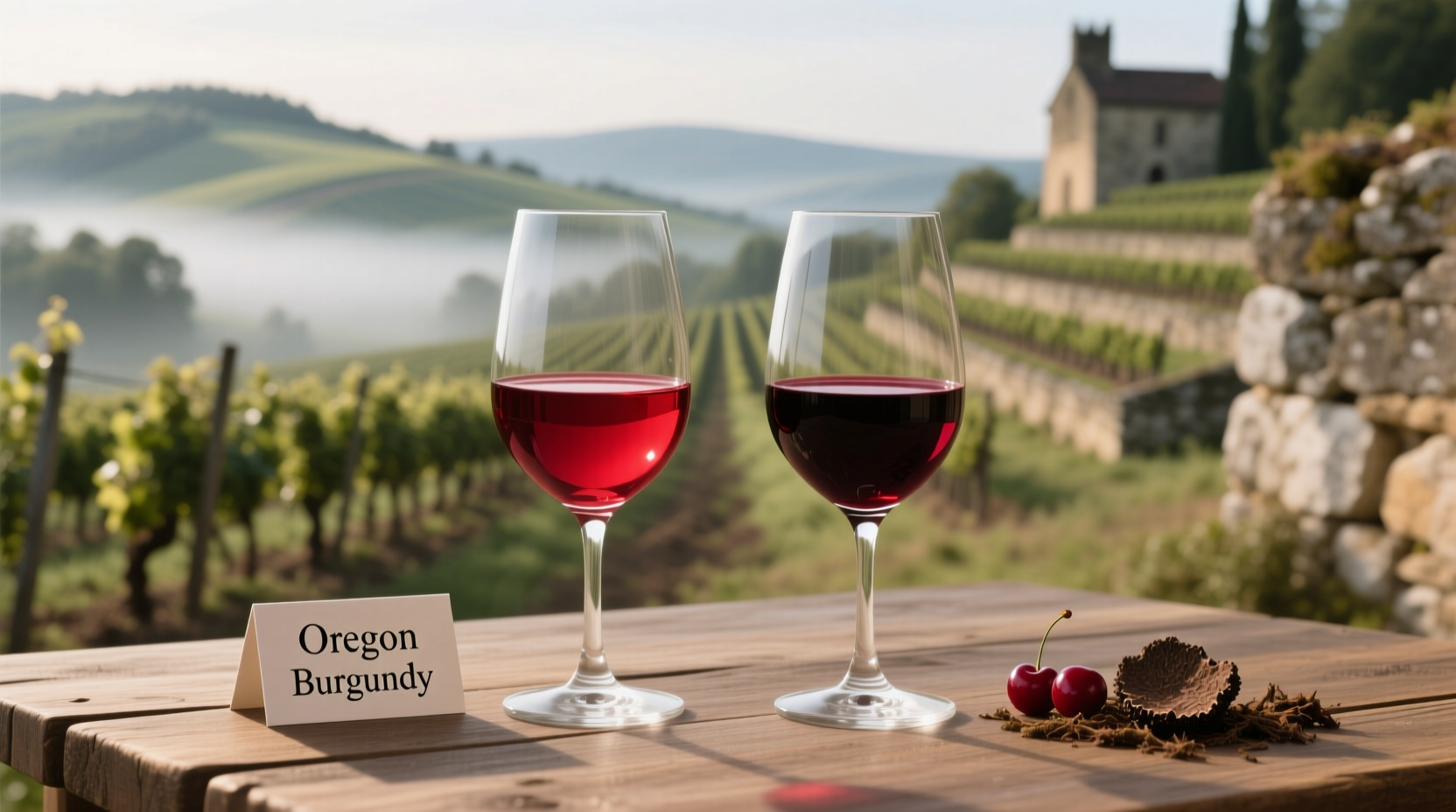
Burgundy’s terroir is written in limestone, marl, and ancient clay — remnants of a shallow sea that covered the region 150 million years ago. The Côte d’Or’s east-facing slopes are steep, fractured, and stratified: Corton’s iron-rich brown limestone yields structured, tannic wines; Vosne-Romanée’s fine-grained, fossil-rich marls produce ethereal perfume and silky tension; Chambolle-Musigny’s shallow, chalky topsoil over bedrock gives wines of haunting delicacy and precision. Crucially, Burgundy’s climate is continental — cold winters, warm (but rarely hot) summers, and harvests that can swing from mid-September to early October depending on vintage. Rainfall is moderate but unpredictable, and frost remains a perennial threat. Vine age matters deeply: many top parcels contain vines over 40 years old, with roots plunging meters into fissured rock, drawing mineral nuance and resilience.
Oregon’s Willamette Valley, by contrast, was sculpted by ice-age floods, volcanic uplift, and coastal tectonics. Its soils are a mosaic: Jory (volcanic basalt-derived, red, iron-rich, well-draining), Willakenzie (marine sedimentary, silty loam with siltstone fragments), and Laurelwood (wind-blown loess over basalt bedrock). Elevation ranges from sea level to 1,000 feet, with most vineyards between 200–600 feet — high enough for cooling Pacific breezes, low enough for reliable ripening. The climate is maritime-influenced: long, cool growing seasons with abundant sunshine during the day and dramatic diurnal shifts (often 30–40°F) at night. Rainfall is concentrated in fall and winter; summer is remarkably dry — allowing growers to control canopy and yield without disease pressure. While some Oregon vines now exceed 40 years (notably Eyrie Vineyards’ original plantings from 1965), the average vine age remains younger than Burgundy’s elite sites — a factor that continues to evolve the region’s stylistic maturity.
Tip: When comparing bottles, prioritize single-vineyard designations from both regions — e.g., Domaine Dujac’s Clos de la Roche (Burgundy) and Bergström’s Ribbon Ridge Vineyard (Oregon). These offer the clearest lens into site-specific expression, minimizing blending variables.Tasting Methodology: A Structured Approach to Comparison
A meaningful taste test demands rigor. We conducted blind, side-by-side tastings across three vintages (2019, 2020, 2021) with ten experienced tasters — including MWs, sommeliers, and winemakers — using ISO tasting glasses, consistent temperature (55°F), and neutral surroundings. Each flight included one Premier Cru or Grand Cru Burgundy and one single-vineyard Oregon Pinot Noir from comparable quality tiers and price points ($65–$120). Tasters recorded notes independently before discussion.
The evaluation focused on five dimensions: aromatic complexity (layers, evolution in glass, typicity), structural balance (acid-tannin-alcohol integration), mid-palate density (not weight, but presence and persistence), mineral signature (perceived salinity, stoniness, or earthiness), and finish length & character (how the wine resolves — does it fade, linger, or transform?).
Flavor Profile Comparison: What Your Palate Actually Detects
The differences emerge immediately — not as absolutes, but as tendencies rooted in environment and approach.
| Characteristic | Burgundy (Côte d’Or) | Oregon (Willamette Valley) |
|---|---|---|
| Aroma Profile | Damp forest floor, dried rose petal, black tea, crushed stone, sour cherry, underbrush, subtle game or fur with age. Less overt fruit, more tertiary nuance even young. | Fresh blackberry, ripe plum, violet, cinnamon stick, crushed mint, wet river stone, and a distinctive “forest berry” note — bright, lifted, and vibrantly fruity even at full ripeness. |
| Palate Texture | Often leaner in youth, with fine, chalky tannins and searing acidity. Structure feels architectural — linear, precise, and built for time. Fruit sits *within* the frame, not atop it. | Softer, rounder entry. Tannins are supple and integrated early; acidity is present but cushioned — more “juicy” than “razor-sharp.” Fruit feels enveloping, generous, and immediate. |
| Mineral Expression | Saline, flinty, or iodine-like — evoking limestone, chalk, or wet slate. Often perceived as a drying, almost savory lift on the finish. | Stony, gravelly, or volcanic — like licking cooled basalt or walking through a creek bed after rain. Less saline, more tactile and earthy. |
| Aging Trajectory | Requires 5–10+ years for primary fruit to recede and secondary/tertiary notes (mushroom, leather, cedar) to emerge. Peak drinking windows are long but demand patience. | Drinks beautifully at 3–7 years. Develops forest floor, truffle, and dried herb notes with age, but rarely achieves Burgundy’s profound structural evolution. Best consumed within its expressive, fruit-forward prime. |
One taster described Burgundy as “a conversation in Old French — layered, formal, requiring translation,” while Oregon felt like “a direct, heartfelt conversation in modern English — clear, warm, and emotionally resonant.” Neither is linguistically superior; they serve different purposes.
Winemaking Philosophy: Tradition, Innovation, and Intent
Burgundy’s winemaking is governed by centuries of empirical observation. Whole-cluster fermentation is common in top domains (Leroy, Rousseau, Dujac), adding stem tannin, spice, and aromatic lift. Native yeast ferments are standard. Elevage typically lasts 12–24 months in 20–30% new French oak — barrels sourced from specific forests (Allier, Tronçais) and coopered to exact specifications. The goal is to reveal, not impose: minimal intervention, no fining or filtration in elite estates, and reverence for vintage variation. As winemaker Jean-Marie Fourrier states:
“The vineyard speaks only if you listen quietly. My job is to build a microphone, not write the script.” — Jean-Marie Fourrier, Domaine Fourrier, Gevrey-Chambertin
Oregon winemaking emerged in deliberate dialogue with Burgundy — but adapted to local reality. Early pioneers like David Lett (Eyrie) studied Burgundian techniques, yet responded to Oregon’s riper, more consistent fruit. Whole-cluster use is widespread but highly variable: some producers (Beaux Frères, Bergström) use 30–70% depending on vintage and site; others avoid it entirely. Native ferments are common, but cultured yeasts appear in cooler vintages for reliability. Oak usage trends toward 25–45% new French oak, often with longer toast levels to integrate more seamlessly with Oregon’s riper tannins. Crucially, Oregon embraces technical precision — temperature-controlled ferments, gentle pump-overs, and meticulous sorting — reflecting its New World pragmatism. The intent is less about austerity and more about achieving harmony between power and grace.
Mini Case Study: The 2020 Vintage — A Year of Contrast
The 2020 vintage offered a masterclass in divergence. In Burgundy, a warm, dry summer accelerated ripening, but a cool, wet September slowed phenolic development. Many producers harvested earlier than planned, resulting in wines with bright red fruit, zesty acidity, and lighter bodies — elegant but sometimes lacking depth. Domaine Faiveley’s Mercurey Clos Rond showed tart cranberry, white pepper, and a crisp, stony finish — lovely, but undeniably lean.
In Oregon, 2020 was near-ideal: a warm, steady summer with no heat spikes, followed by a long, dry, cool autumn. Grapes achieved full physiological ripeness with balanced sugars and acids. Bergström’s 2020 Windhill Vineyard (Ribbon Ridge) delivered dense blackberry compote, candied violet, and a plush, velvety texture — finishing with fine-grained tannins and a lingering note of dried thyme and crushed basalt. Tasters noted how Oregon’s 2020s expressed generosity without heaviness, while Burgundy’s emphasized poise over power.
This wasn’t superiority — it was adaptation. Burgundy’s structure held firm against vintage volatility; Oregon’s consistency shone in ideal conditions. Each revealed its core strength.
Actionable Tasting Checklist
- Decant thoughtfully: Young Burgundy (under 8 years) benefits from 60–90 minutes in a wide-bowled decanter to soften tannins and open aromas. Oregon Pinot rarely needs more than 20–30 minutes — excessive air can mute its vibrant fruit.
- Serve at precise temperatures: Burgundy: 57–60°F (slightly warmer than fridge temp). Oregon: 54–57°F (cooler preserves freshness and acidity).
- Use proper glassware: A large-bowled Burgundy glass (like Zalto or Riedel Vinum) is essential for both — it directs wine to the front/mid-palate and amplifies aromatic nuance.
- Taste in sequence: Always taste Burgundy first when comparing — its higher acidity and leaner profile can taste austere after Oregon’s generosity. Reset your palate with water and plain crackers between flights.
- Assess texture before flavor: Close your eyes. Is the mouthfeel chalky? Silky? Juicy? Gritty? This structural impression often reveals origin more reliably than fruit descriptors.
Frequently Asked Questions
Can Oregon Pinot Noir age like Burgundy?
Some can — particularly from cooler, higher-elevation sites (e.g., Shea Vineyard, Zenith Vineyard) and producers who limit new oak and emphasize structure (e.g., Cameron, Big Table Farm). However, Oregon’s warmer base temperatures and generally riper tannins mean its aging curve is shorter and gentler. Expect peak complexity at 8–12 years, not 15–25. Very few Oregon wines develop the profound tertiary complexity of mature Gevrey or Volnay — but they offer a different kind of reward: sustained fruit purity and textural elegance.
Why do some Oregon Pinots taste “jammy” while others taste “Burgundian”?
Jamminess signals overripeness or excessive extraction — often from warmer sub-AVAs (like parts of Yamhill-Carlton) or winemaking choices (long macerations, high alcohol, heavy new oak). The most Burgundian-leaning Oregon wines come from cooler, wind-swept sites (Ribbon Ridge, Chehalem Mountains), lower yields, whole-cluster inclusion, and restrained oak. Producers like Lingua Franca, Evening Land, and Walter Scott exemplify this refined, site-transparent style.
Is price a reliable indicator of origin authenticity?
Not directly. Top-tier Oregon Pinot commands Burgundian prices ($80–$150+) due to scarcity, labor intensity, and quality ambition. But excellent value exists below $50 in Oregon (e.g., St. Innocent, Soléna) — wines that express place clearly without pretense. In Burgundy, sub-$60 Premier Crus are increasingly rare and often represent negociant bottlings with less site specificity. For true terroir insight, focus on estate-bottled, single-vineyard wines — regardless of price point.
Conclusion: Embracing Duality, Not Hierarchy
Comparing Oregon and Burgundy Pinot Noir isn’t about declaring a winner. It’s about recognizing two distinct, deeply valid interpretations of what Pinot Noir can be. Burgundy offers a lesson in restraint, resilience, and the slow, quiet eloquence of ancient stone and time. Oregon offers a testament to possibility — how a young region, armed with knowledge and passion, can coax profound beauty from its own volcanic soils and coastal winds. One speaks in whispers of history; the other in clear, confident tones of the present.
Your palate doesn’t need to choose allegiance. Instead, use these comparisons to deepen your understanding: notice how acidity shapes perception, how tannin texture guides aging potential, how mineral signatures anchor a wine in geography. Next time you open a bottle — whether it bears a Côte de Nuits address or a Dundee Hills appellation — pause before the first sip. Ask not “What should this taste like?” but “What is this place telling me, right now, through this grape?” That curiosity is where true appreciation begins.
💬 Have you tasted a pairing that changed how you see Oregon or Burgundy? Share your experience — the vintage, producer, and what surprised you — in the comments. Let’s keep the conversation growing, one glass at a time.