At first glance, pasta tossed in garlic-infused oil appears deceptively simple—a minimalist dish with few ingredients and no sauce in the traditional sense. Yet this humble preparation is a cornerstone of Italian cucina povera, where technique and ingredient quality elevate simplicity into sophistication. When executed with precision, it delivers a rich, aromatic experience defined by silky strands of pasta enveloped in golden, fragrant oil, subtly kissed by slow-cooked garlic. It’s a dish that teaches restraint, timing, and respect for fundamentals. For home cooks seeking to master foundational techniques, or professionals aiming to refine their touch with fats and aromatics, this preparation offers profound lessons in balance and flavor layering.
Definition & Overview
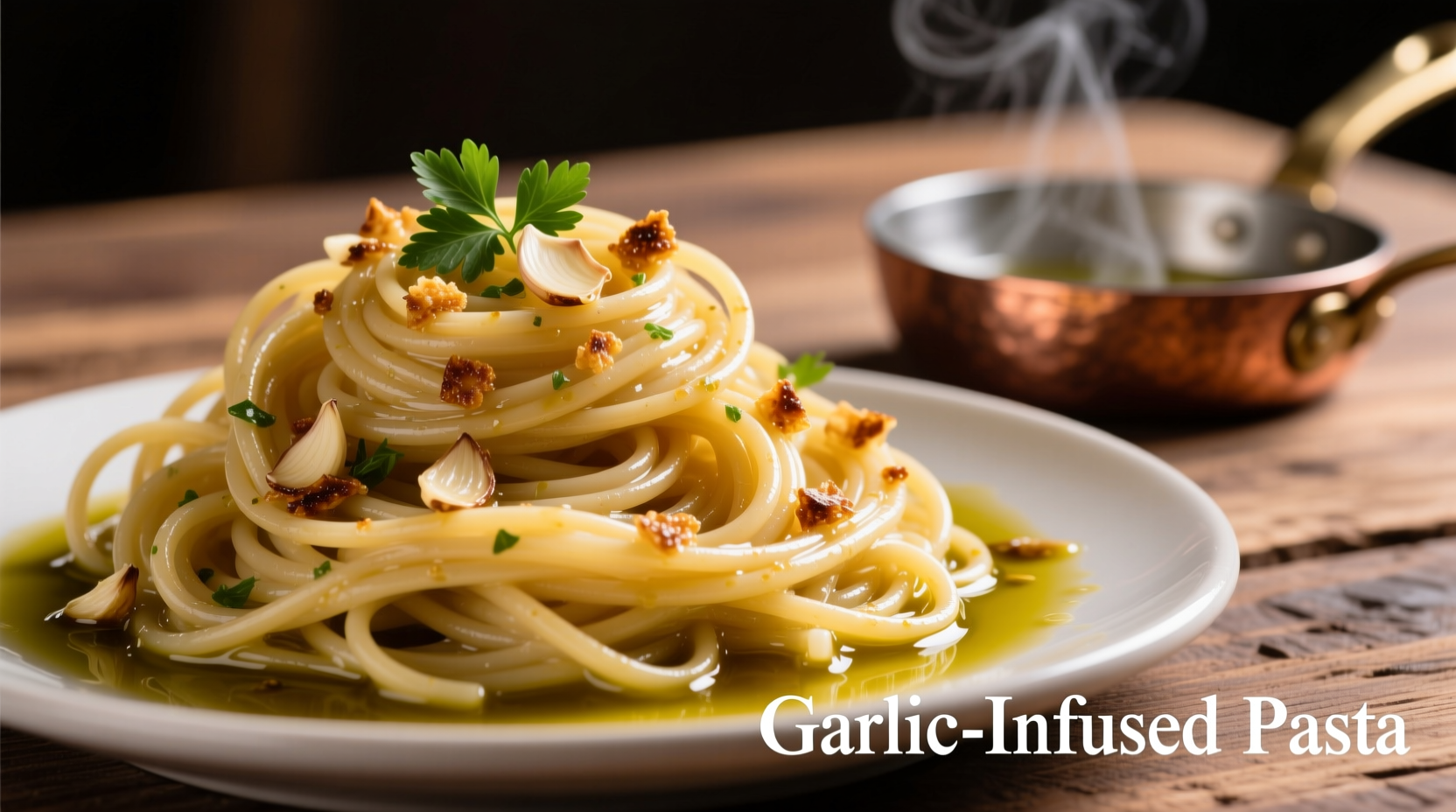
Pasta tossed in savory garlic-infused oil—commonly known as aglio e olio in Italian cuisine—is a classic Southern Italian preparation originating from Naples and widely embraced across coastal regions. The literal translation, “garlic and oil,” belies its culinary depth. Traditionally made with dried spaghetti, extra virgin olive oil, fresh garlic, red pepper flakes, and parsley, the dish relies on the infusion of garlic flavor into warm oil without browning, followed by emulsification with starchy pasta water to create a cohesive, glossy coating.
Unlike sauced pastas that depend on tomatoes, cream, or cheese, aglio e olio showcases fat as a primary flavor carrier. The garlic is gently cooked in oil over low heat, releasing its volatile compounds while avoiding acrid bitterness. The result is an umami-rich, nutty-sweet aroma that permeates every strand of pasta. This method exemplifies how minimalism in cooking does not mean lack of complexity—it shifts the focus from quantity to control, temperature, and timing.
The dish is often finished with chopped flat-leaf parsley for freshness and color contrast, and sometimes a squeeze of lemon juice for brightness. While variations exist, the core principle remains: maximize flavor through controlled infusion and emulsification, using pantry staples and precise execution.
Key Characteristics
| Attribute | Description |
|---|---|
| Flavor Profile | Savory, aromatic, mildly pungent (from garlic), with subtle heat (if pepper flakes used); clean finish with herbal or citrus accents when garnished |
| Aroma | Distinctive roasted-garlic fragrance, enhanced by warm olive oil; floral notes if high-quality EVOO is used |
| Color/Form | Translucent golden oil coating al dente pasta; flecked with green parsley or red specks of chili |
| Heat Level | Adjustable—from none to medium-spicy depending on red pepper flake quantity |
| Culinary Function | Standalone light meal, base for protein additions (shrimp, anchovies), or side dish complementing grilled meats or vegetables |
| Shelf Life | Best served immediately; leftovers can be refrigerated up to 2 days but lose texture and aromatic intensity |
| Texture | Smooth, slick coating with slight resistance from al dente pasta; no clumping when properly emulsified |
Practical Usage
The success of garlic-infused oil pasta hinges on process, not complexity. Here’s how to execute it professionally, whether at home or in a restaurant kitchen:
- Select the right pasta: Long, thin shapes like spaghetti, linguine, or bucatini work best. Their surface area allows optimal contact with oil, and their structure holds emulsified liquid effectively.
- Use high-quality extra virgin olive oil: Choose a well-balanced, fruity EVOO—not overly peppery or grassy. Avoid refined oils; they lack aroma and body needed for flavor delivery.
- Control garlic doneness: Thinly slice or lightly crush 2–4 cloves per serving. Heat oil over medium-low, add garlic, and cook until it sizzles gently—about 90 seconds. Remove from heat just before edges turn golden. Overcooked garlic turns bitter and ruins the dish.
- Incorporate red pepper flakes early: Add ¼ to ½ teaspoon crushed flakes with the garlic to bloom their flavor in oil. Adjust based on desired heat level.
- Reserve pasta water: Before draining, save at least 1 cup of starchy cooking water. Its starch content is essential for emulsifying oil and creating a clingy texture.
- Finish in the pan: Transfer drained pasta directly into the garlic oil. Toss vigorously over low heat, adding small splashes of reserved water until the oil coats each strand uniformly. This creates a temporary emulsion—similar to a vinaigrette—where water and oil bind via starch.
- Garnish thoughtfully: Off heat, stir in finely chopped parsley. Optionally, finish with lemon zest, grated Pecorino Romano, or a drizzle of raw olive oil for added dimension.
Pro Tip: For deeper flavor without increasing garlic intensity, use one whole unpeeled clove infused in the oil and removed before adding pasta. It imparts aroma without sharpness. Alternatively, infuse oil with garlic overnight in a cool place, then strain—ideal for consistent results in batch prep.
In professional kitchens, this technique is often used as a base for more elaborate dishes. Sautéed shrimp, clams, or sliced mushrooms are added after garlic infusion. Anchovy fillets are melted into the oil first, adding savory depth. Some chefs finish with breadcrumbs sautéed in garlic oil (mollica) for crunch, especially in Sicilian-style preparations.
Variants & Types
While the basic formula remains consistent, regional and personal adaptations yield distinct versions of garlic-oil pasta. Understanding these variants helps tailor the dish to different palates and occasions.
- Aglio e Olio Classico: Spaghetti, EVOO, garlic, red pepper, parsley. No cheese. Purest form, emphasizing oil and garlic harmony.
- Aglio, Olio e Acciughe: Anchovies melted into warm oil before garlic addition. Adds umami and saltiness, reducing need for added salt.
- Aglio e Limone: Lemon zest and juice replace red pepper. Bright, clean profile ideal in spring and summer. Often paired with seafood.
- Aglio e Pangrattato: Toasted breadcrumbs substitute for cheese. Common in vegan or fasting-period diets (e.g., Lent). Provides textural contrast.
- Aglio e Crostini: Crispy garlic croutons tossed in at the end. Popular in home cooking for added crunch.
- Creamy Aglio e Olio: Untraditional but modern—adds a splash of heavy cream or plant-based alternative for richness. Not authentic but increasingly seen in fusion contexts.
Different pasta shapes also define subtypes:
| Pasta Type | Best Use Case |
|---|---|
| Spaghetti | Classic choice; even coating, familiar texture |
| Linguine | Slightly wider; holds more oil, good with shellfish additions |
| Bucatini | Hollow center traps oil; dramatic presentation, chewier bite |
| Tonnarelli | Hand-rolled square spaghetti; rustic, absorbs oil deeply |
| Capellini | Very thin; delicate, quick-cooking—requires careful timing to avoid mushiness |
Comparison with Similar Ingredients
Garlic-infused oil is often confused with other flavored oils or cooking methods. Clarifying these distinctions ensures proper usage and prevents culinary missteps.
| Item | How It Differs |
|---|---|
| Garlic Powder + Oil | Lacks fresh garlic’s enzymatic complexity; often tastes flat or metallic. Best avoided in this dish—fresh is non-negotiable. |
| Commercial Garlic-Infused Oil | Often contains preservatives or is stored improperly, risking botulism. Homemade, consumed immediately, is safer and superior. |
| Butter-Garlic Sauce | Uses dairy fat, which browns faster and adds sweetness. More common in American-Italian chains. Lacks the purity of EVOO-based version. |
| Garlic Confit | Garlic slow-cooked in oil until soft and sweet. Can be mashed into pasta for richer texture, but lacks the aromatic punch of fresh-sliced garlic. |
| Tomato-Garlic Pasta | Includes tomato base; acidity alters oil behavior. Requires longer simmering and different emulsification dynamics. |
Practical Tips & FAQs
Can I make garlic-infused oil ahead of time?
Yes, but with caution. Infused oil stored at room temperature can support the growth of Clostridium botulinum if not acidified or refrigerated. For safety, store homemade garlic oil in the refrigerator for up to 4 days, or freeze in ice cube trays for longer storage. Always reheat gently to preserve flavor.
Why did my garlic burn?
Garlic has a low smoke point and scorches quickly above 375°F (190°C). Always cook over low to medium-low heat. If your stove runs hot, remove the pan from heat once the garlic is fragrant and let residual warmth finish the process.
How do I prevent the oil from separating?
Emulsification depends on starch. Ensure you reserve enough starchy pasta water and add it gradually while tossing over low heat. Continuous motion helps bind oil and water into a stable suspension. A wooden fork or tongs aid in even coating.
Is this dish vegan and gluten-free?
Yes, in its traditional form—assuming no cheese is added. Use certified gluten-free pasta (e.g., brown rice or corn blend) to accommodate dietary restrictions. Check labels on dried pasta for cross-contamination if necessary.
What proteins pair well with this base?
Grilled shrimp, seared scallops, white beans, chickpeas, or poached eggs integrate seamlessly. Add them after garlic infusion but before tossing with pasta. For heartier meals, include roasted vegetables like zucchini, eggplant, or cherry tomatoes.
Can I use roasted garlic instead of raw?
Roasted garlic offers sweetness and spreadability but less aromatic volatility. It works in creamy versions or blended sauces but won’t provide the bright top note expected in classic aglio e olio. Reserve it for fusion or comfort-food interpretations.
How much garlic should I use?
A general ratio is 1–2 cloves per 100g of dry pasta. Adjust based on size and pungency. Milder varieties like elephant garlic allow higher quantities without overwhelming. Taste the oil during infusion to gauge strength.
Expert Insight: \"The secret to great aglio e olio isn't the ingredients—it's the rhythm. You must move fast once the pasta hits the pan. Have everything prepped: parsley chopped, water ready, heat low. One minute of distraction, and you’ve got greasy strands or burnt garlic. It’s a dance between starch, fat, and timing.\" — Chef Marco Bellucci, former sous chef at Osteria del Cinghiale, Rome
Summary & Key Takeaways
Pasta tossed in savory garlic-infused oil is far more than a pantry meal—it’s a masterclass in culinary fundamentals. At its core, it demonstrates how fat, when treated with care, becomes a vehicle for deep flavor. Fresh garlic, slowly coaxed into aromatic submission, transforms neutral oil into something complex and inviting. The technique of emulsification using starchy pasta water reveals a principle used in haute cuisine: creating cohesion from seemingly incompatible elements.
Key takeaways:
- Never rush the garlic infusion—low and slow preserves sweetness and avoids bitterness.
- Always reserve pasta water; it’s the glue that binds oil to noodles.
- Use only fresh garlic; powdered or granulated forms fail to deliver authentic flavor.
- Choose long pasta shapes for optimal oil distribution and mouthfeel.
- Finish with acid or herbs to lift the richness and complete the dish.
- Customize safely—add proteins, vegetables, or toppings without compromising the base technique.
This dish rewards attention to detail. It may seem effortless when done well, but that ease is earned through practice. Whether served as a midnight snack, a light lunch, or an elegant starter, pasta in garlic-infused oil remains a timeless expression of culinary intelligence—where less truly becomes more.
Perfect your technique. Master the oil. Elevate the ordinary.