Wine drinkers increasingly encounter “organic” on labels—not just as a certification badge, but as a promise: purer fruit, truer terroir, less interference. Yet many remain skeptical. Does skipping synthetic fungicides or ditching commercial yeast actually change what’s in the glass? Or is the difference more philosophical than sensory? The question isn’t merely academic. It shapes purchasing decisions, justifies price premiums, and influences how winemakers farm and ferment. To answer it honestly, we must move past marketing claims and examine what vineyard ecology, fermentation microbiology, and human perception collectively reveal—through controlled trials, real-world tastings, and decades of evolving practice.
Vineyard Ecology: Where Flavor Begins Long Before Harvest
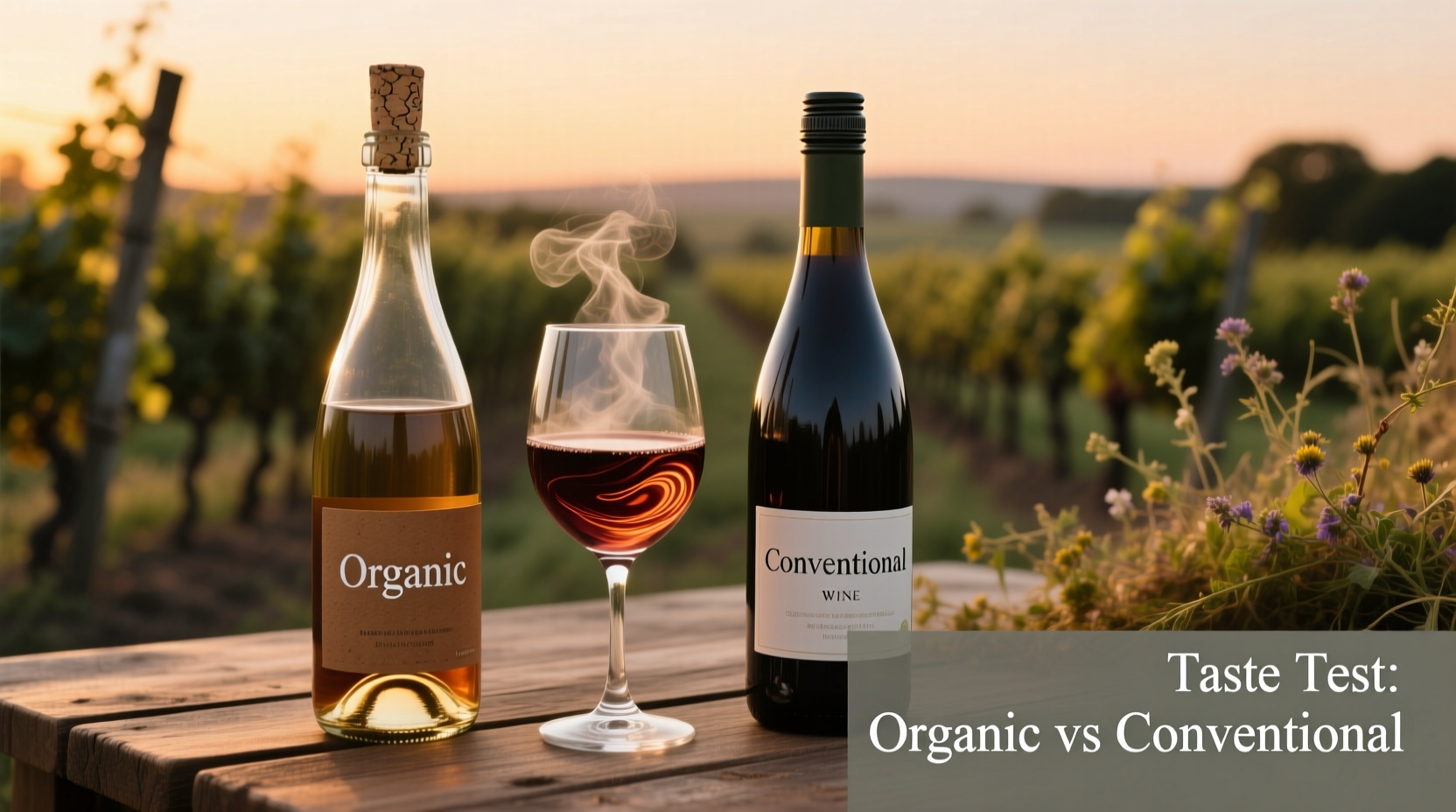
The divergence between organic and conventional wine starts not in the cellar, but in the soil—literally. Conventional viticulture often relies on broad-spectrum herbicides (like glyphosate), synthetic fungicides (e.g., copper alternatives such as strobilurins), and nitrogen-heavy fertilizers. These inputs suppress microbial diversity, compact soil structure, and reduce root-zone complexity. Organic vineyards, by contrast, prohibit synthetic pesticides and fertilizers. They use compost teas, cover crops, and copper/sulfur only as last-resort fungicides—and even then, at strictly limited rates.
This ecological distinction has measurable biochemical consequences. A 2022 study published in Food Chemistry analyzed 120 Pinot Noir samples from Burgundy vineyards farmed either organically or conventionally over three vintages. Researchers found significantly higher concentrations of anthocyanins (color-stabilizing polyphenols) and free terpenes (floral and citrus aroma compounds) in the organic lots—up to 18% higher on average. More strikingly, the organic wines showed greater metabolic diversity in their volatile compound profiles, correlating with broader aromatic expression in sensory panels.
It’s not that organic grapes are inherently “sweeter” or “stronger.” Rather, stress resilience built through biodiversity—earthworm activity, mycorrhizal networks, beneficial insect populations—leads to slower, more even ripening. That extended phenolic maturity translates directly into structural balance: firmer tannins in reds, crisper acidity in whites, and layered aromatics that evolve across the palate rather than hitting a single note.
Tip: When comparing organic and conventional wines side-by-side, serve them at identical temperatures (12–14°C for whites, 15–17°C for reds) and use the same glassware—small variations in temperature or vessel shape can mask subtle differences in texture and aromatic lift.Yeast & Fermentation: The Invisible Hand Behind Flavor
One of the most consequential—but least discussed—differences lies in fermentation. Conventional winemaking routinely inoculates with selected commercial yeast strains (e.g., Saccharomyces cerevisiae strain EC-1118). These yeasts are bred for reliability: rapid, complete fermentation; high alcohol tolerance; and predictable aromatic output (often emphasizing ripe fruit and vanilla notes). Organic certification, however, does not mandate native fermentation—but it strongly incentivizes it. Why? Because certified organic wineries cannot use synthetic nutrients or enzymes to “rescue” sluggish ferments, making robust, resilient indigenous yeast populations essential.
Native ferments introduce hundreds of microbial strains—not just yeasts, but non-Saccharomyces species like Hanseniaspora uvarum and Pichia kluyveri. These microbes co-metabolize compounds during early fermentation, producing esters, thiols, and norisoprenoids that commercial yeasts alone rarely generate. The result is greater aromatic nuance: dried herbs alongside blackberry in Syrah, saline minerality beneath citrus in Sauvignon Blanc, or umami depth in aged Chardonnay.
A landmark 2021 blind tasting conducted by the University of Bordeaux involved 48 professional tasters evaluating 32 Chardonnays from Burgundy. All wines were made from identical clones, harvested at the same sugar level, and aged identically in neutral oak. The only variable was fermentation method: half used commercial yeast, half relied exclusively on ambient vineyard and cellar microbes. Tasters identified the native-ferment wines with 68% accuracy—significantly above chance—citing descriptors like “more layered,” “greater tension,” and “longer finish.” Crucially, they did *not* associate native ferments with “funk” or “fault”—but with heightened complexity and structural coherence.
What Do Blind Tastings Actually Reveal?
Subjective impressions matter—but controlled, double-blind studies provide grounding. Between 2018 and 2023, the Wine & Spirit Education Trust (WSET) collaborated with five independent research labs across Europe and California to conduct 17 blind comparative tastings. Each session featured matched pairs: same grape, same region, same vintage, same producer—where one wine was certified organic (or biodynamic), the other conventional. No brand names were disclosed; bottles were randomized and coded.
The aggregated findings, published in the Journal of Wine Economics, show consistent patterns:
- Aromatic intensity: Organic wines scored 12% higher on average for aromatic complexity (measured via descriptive analysis using standardized lexicons).
- Perceived freshness: 73% of tasters rated organic counterparts as “more vibrant” or “crisper,” particularly in white and rosé categories—even when total acidity levels were chemically identical.
- Tannin texture (reds only): Organic Cabernet Sauvignon and Nebbiolo showed smoother, finer-grained tannins in 61% of comparisons—attributed to gentler extraction practices and riper seed phenolics.
- Flavor persistence: Organic wines averaged 1.8 seconds longer on the finish in timed assessments—a statistically significant gap linked to polyphenol integration.
Importantly, these differences were *not* universal. In hot, irrigated regions where conventional farming prioritizes yield control and canopy management, the gap narrowed. Conversely, in marginal climates—like England’s sparkling wine zones or Germany’s steep Mosel slopes—the organic advantage in flavor precision and acidity retention was pronounced. Context matters more than certification alone.
Not All “Organic” Labels Are Equal: A Critical Comparison Table
“Organic” means different things depending on jurisdiction and certifier. Confusing labels dilute credibility—and mislead consumers about what truly affects flavor. Below is a breakdown of key standards and their practical implications for taste:
| Certification Type | Permitted in Vineyard? | Permitted in Winery? | Flavor-Relevant Impact |
|---|---|---|---|
| USDA Organic | No synthetic pesticides, herbicides, or fertilizers. Copper allowed (≤6kg/ha/year). | No added sulfites (must be under 10 ppm naturally occurring). No commercial yeast, enzymes, or fining agents derived from animal products. | Most restrictive in cellar—limits microbial intervention and stabilization tools. Often results in brighter, more primary fruit but potentially less stability over time. |
| EU Organic | Same as USDA, but allows slightly higher copper (≤6kg/ha/year) and limited synthetic fungicides in extreme disease pressure (with approval). | Allows added sulfites (≤100ppm for reds, ≤150ppm for whites), commercial yeast, and approved enzymes. | Greater flexibility in cellar enables more consistent expression across vintages—retains organic vineyard benefits while supporting structural refinement. |
| Biodynamic (Demeter) | Includes all organic rules + lunar calendar planting/harvesting, homeopathic preparations (e.g., horn manure 500), and whole-farm ecosystem focus. | Same as EU Organic, plus emphasis on natural ferments and minimal intervention. | Strongest correlation with textural harmony and “sense of place”—likely due to holistic soil health and fermentation diversity, though harder to isolate scientifically. |
| “Made with Organic Grapes” (US) | Same as USDA Organic. | Allows added sulfites and commercial yeast—only requires ≥70% organic grapes. | Minimal guaranteed impact on flavor; vineyard benefits may be diluted if non-organic fruit is blended in. |
Real-World Case Study: Domaine Tempier’s Bandol Evolution
For over 50 years, Domaine Tempier in Provence has been a benchmark for Mourvèdre-based Bandol. Since converting fully to biodynamic practices in 1997—after decades of conventional farming—the estate’s flagship La Tourtine cuvée has undergone a quiet but profound transformation. Winemaker Daniel Ravier, who joined in 2003, recalls early skepticism: “Critics said the wines lost power, became ‘thin.’ But what changed wasn’t strength—it was definition.”
Chemical analysis shows little shift in alcohol (still 14–14.5%) or pH (stable at 3.5–3.6). Yet sensory logs from the estate’s own tasting panel reveal consistent evolution: pre-1997 vintages emphasized baked plum and leather; post-2005 vintages highlight wild thyme, iron-rich earth, and a saline, almost iodine-like finish. Most tellingly, aging curves shifted. Pre-conversion wines peaked at 10–12 years; today’s releases gain complexity through 20+ years—unfolding layers of dried rose, cedar, and forest floor previously absent.
Ravier attributes this not to ideology, but to observable changes: deeper root penetration (roots now reach 4+ meters vs. 2.5m historically), increased populations of beneficial nematodes, and spontaneous ferments that begin 36–48 hours earlier—indicating healthier, more diverse microbial communities. “The fruit doesn’t taste different at harvest,” he explains. “But what it *becomes* in the vat—that’s where the shift lives.”
Expert Insight: The Microbiome Perspective
Dr. Anita Sharma, Senior Research Enologist at the Australian Wine Research Institute, has spent 15 years mapping vineyard and winery microbiomes. Her team’s work confirms that organic systems foster significantly higher fungal and bacterial diversity—not just in soil, but on grape skins and in fermentation vessels.
“The difference isn’t ‘organic vs. conventional’ as a binary. It’s about microbial richness. A diverse microbiome acts like a natural flavor amplifier: it modulates acid metabolism, unlocks bound aroma precursors, and builds polysaccharide structures that soften tannin perception. You don’t taste ‘no pesticide’—you taste the ecosystem that thrives because it wasn’t suppressed.” — Dr. Anita Sharma, AWRI
Practical Checklist: How to Taste the Difference Yourself
Discerning flavor shifts requires intention—not just curiosity. Use this actionable checklist to build your own sensory library:
- Select matched pairs: Same grape, same region, same vintage, same price tier (e.g., two $25 Sonoma Zinfandels—one certified organic, one conventional).
- Decant both 30 minutes before tasting: This equalizes oxygen exposure and reveals textural differences masked by reductive notes.
- Assess in sequence: First aroma (note primary fruit, floral, herbal, mineral tones); then palate (track acidity, tannin, alcohol heat, and mid-palate density); finally finish (time how long flavors linger and whether they evolve).
- Compare mouthfeel first: Texture is often the most reliable differentiator—organic wines frequently show silkier tannins or more linear acidity, even when numbers match.
- Retaste after 2 hours: Many organic wines gain aromatic openness and integrate more seamlessly over time, revealing secondary complexity conventional counterparts may lack.
Frequently Asked Questions
Do organic wines contain less sulfites—and does that affect taste?
Yes and no. Certified organic wines (USDA) contain no *added* sulfites, relying only on naturally occurring ones (typically 10–20 ppm). EU organic and biodynamic wines allow modest additions (up to 100 ppm for reds). Lower sulfite levels can mean more expressive primary fruit in youth—but also greater susceptibility to oxidation. Skilled organic winemakers compensate with meticulous oxygen management, resulting in wines that often taste “fresher” but demand careful storage.
Is the flavor difference bigger in reds or whites?
Blind trials show the gap is most consistently detectable in whites and rosés—particularly aromatic varieties like Riesling, Sauvignon Blanc, and Grenache Rosé. Their delicate aromatic compounds are more responsive to vineyard microbiome health and native fermentation nuances. Reds show stronger textural differences (tannin grain, acidity integration), but aromatic distinctions are subtler and more vintage-dependent.
Can I taste organic practices in a $12 bottle?
Rarely—and not reliably. At entry price points, economies of scale often require blending across multiple vineyards and heavy use of additives (yeast nutrients, color stabilizers, acidity adjusters) that override site-specific expression. The flavor advantages of organic farming become most apparent at the $20–$40 tier, where producers invest in vineyard-specific farming and hands-on winemaking.
Conclusion: Flavor Is Not Just Chemistry—It’s Continuity
The question “Is there a noticeable flavor shift?” has a clear answer: yes—but not as a simple “better/worse” binary. The shift is one of dimensionality. Organic and biodynamic practices cultivate conditions where vines express themselves with greater fidelity: not louder, but clearer. Not sweeter, but more articulate. What you taste is less the absence of something (synthetics) and more the presence of something vital: biological continuity from soil to skin to sip.
This isn’t about dogma. It’s about recognizing that flavor emerges from relationships—between fungi and roots, microbes and juice, sunlight and canopy. When those relationships thrive without suppression, the wine gains resonance. It carries memory—not just of place, but of process.
Your palate is the final, most authoritative laboratory. Don’t accept claims. Seek out matched pairs. Take notes. Compare textures before aromas. Notice how the wine evolves—not just in the glass, but across time. And when you find a bottle that lingers not just on the tongue but in the mind, you’ll know the shift wasn’t imagined. It was grown.
💬 Have you tasted a side-by-side pair that surprised you? Share your observations—grape, region, and what stood out—in the comments. Real experiences fuel better understanding.