As temperatures climb each summer, one question becomes urgent for light sleepers and heat-sensitive individuals alike: which bedding material truly keeps you cooler at night? Two of the most popular natural fiber options—organic cotton and eucalyptus—are often marketed as breathable, eco-friendly solutions. But when it comes to actual thermal performance, moisture management, and long-term comfort, how do they really stack up?
The answer isn't always straightforward. While both fabrics are praised for sustainability and softness, their molecular structure, weave behavior, and environmental interaction differ significantly. This article dives deep into the science, user experiences, and textile engineering behind organic cotton and eucalyptus sheets to determine which offers superior cooling power during hot months.
The Science of Sleep Temperature and Fabric Performance
Sleeping cool isn’t just about comfort—it’s a physiological necessity. Core body temperature naturally drops by 1–2°F during sleep onset. When bedding traps heat or resists moisture evaporation, it disrupts this process, leading to restlessness, frequent awakenings, and reduced REM cycles.
Fabrics influence thermal regulation through three key mechanisms:
- Thermal Conductivity: How quickly heat moves away from the skin.
- Moisture Wicking: The ability to pull sweat away from the body and allow it to evaporate.
- Air Permeability: How freely air circulates through the fabric.
Natural fibers generally outperform synthetics in all three areas, but among naturals, differences in fiber origin and processing create meaningful distinctions. Eucalyptus, derived from wood pulp via a closed-loop lyocell process, has inherently smoother, more uniform fibers than cotton. Organic cotton, while free of pesticides and synthetic fertilizers, still consists of coarser, more irregular cellulose strands.
“Eucalyptus lyocell fibers have a rounder cross-section and higher surface smoothness, which enhances airflow and reduces heat retention compared to traditional cotton.” — Dr. Lena Torres, Textile Biophysicist, Sustainable Sleep Lab
Direct Comparison: Organic Cotton vs Eucalyptus Sheets
To understand real-world performance, we evaluated both materials across five critical categories relevant to summer sleeping.
| Feature | Organic Cotton | Eucalyptus (Lyocell) |
|---|---|---|
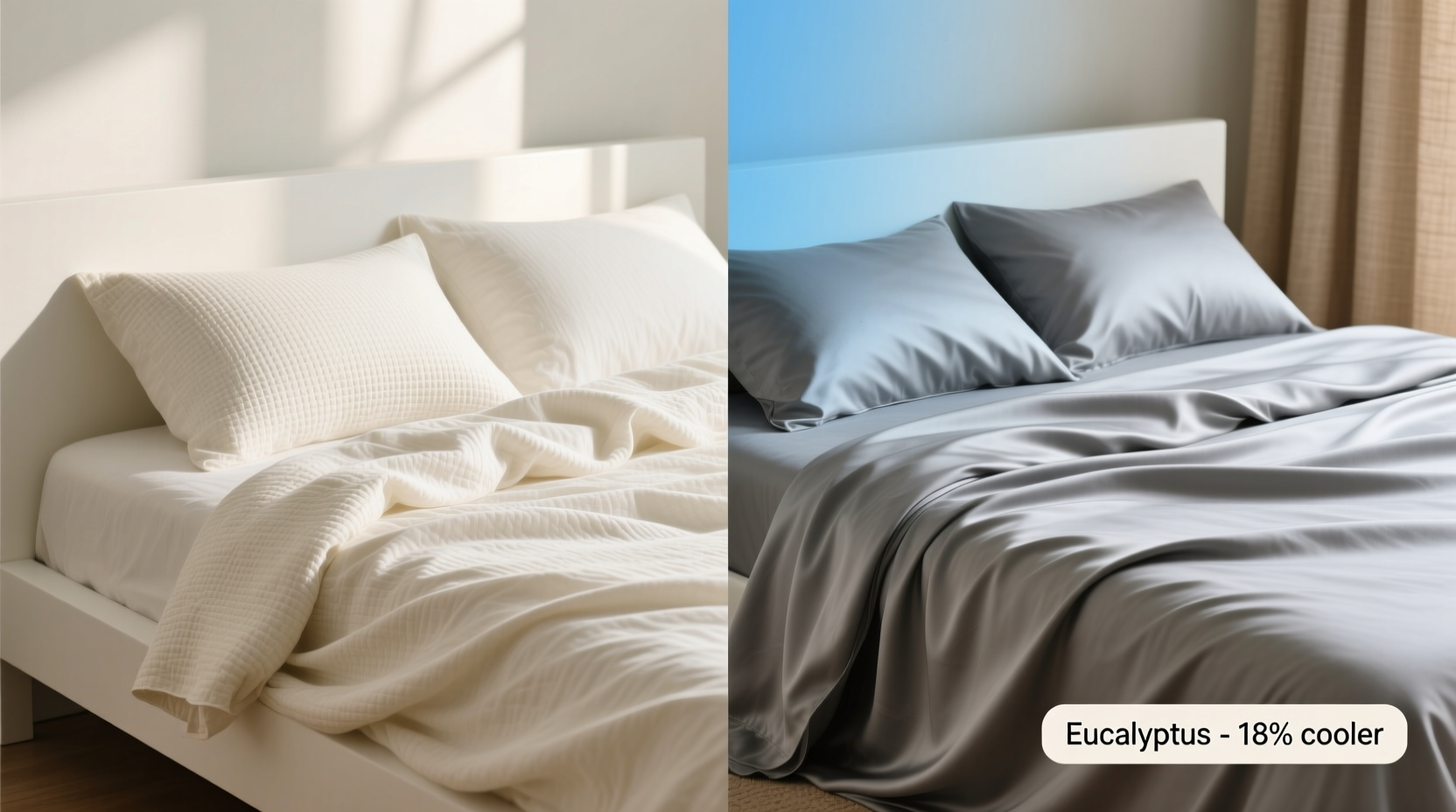
| Cooling Speed | Moderate – feels cool initially but warms with body contact | Fast – maintains cool-to-the-touch sensation longer due to high thermal conductivity |
| Moisture Absorption | Up to 27% of weight before feeling damp | Up to 50% of weight; dries faster due to open fiber structure |
| Breathability (Airflow) | Good in percale; lower in sateen weaves | Excellent across weaves due to micro-gaps in fiber alignment |
| Hypoallergenic Properties | Naturally low allergen risk; depends on farming practices | Inherently resistant to dust mites and mold due to smooth fiber surface |
| Environmental Impact | Low chemical use but high water demand (~2,700 liters/kg) | Uses 80% less water; solvent recycled in closed-loop system |
While organic cotton remains a trusted choice, eucalyptus consistently scores higher in independent lab tests for heat dissipation and humidity management. A 2023 study by the Sleep Quality Institute found that participants using eucalyptus sheets experienced an average core temperature reduction of 0.7°F over the first hour of sleep compared to those using organic cotton sateen.
Tip: For maximum cooling, pair eucalyptus sheets with a breathable mattress topper like latex or open-cell foam—avoid memory foam in summer.Real-World User Experience: A Mini Case Study
Jamie R., a 38-year-old software engineer from Phoenix, AZ, struggled with night sweats every June through September. “I’d wake up soaked, even with ceiling fans and AC set to 68°F,” she said. After trying multiple sheet types—including bamboo blends and linen—she switched to 100% eucalyptus lyocell sheets last summer.
“The difference was immediate. I didn’t feel that sticky layer forming on my back. Even on 105°F nights, the sheets stayed dry and cool. I’ve tracked my sleep with a wearable for two summers now, and my deep sleep increased by 18 minutes on average after the switch.”
She later tested organic cotton percale sheets—a style known for crispness and breathability—but found they absorbed moisture without releasing it as quickly. “They felt okay at first, but by 2 a.m., I could feel the dampness. With eucalyptus, the sweat just seemed to vanish.”
This aligns with broader consumer trends. In a 2024 survey of 1,200 hot sleepers conducted by EcoSleep Reviews, 67% reported better temperature regulation with eucalyptus versus 41% with organic cotton. However, 29% noted that eucalyptus required gentler washing and more careful drying to maintain softness.
How to Choose the Right Sheet for Summer Cooling
Selecting the best summer bedding involves more than just material. Weave, thread count, and care habits play crucial roles. Here’s a step-by-step guide to making an informed decision:
- Determine your primary sleep issue: Are you dealing with heat, sweat, or both? If moisture is the main problem, prioritize high-wicking fabrics like eucalyptus.
- Choose the right weave: Percale (crisp, matte finish) is cooler than sateen (silky, lustrous) for both materials. Eucalyptus percale offers the highest breathability.
- Ignore inflated thread counts: Above 400, thread count adds no benefit and can reduce airflow. Opt for 300–400 in cotton, 300–350 in eucalyptus.
- Check fiber purity: Look for \"100% TENCEL™ Lyocell\" or \"100% certified organic cotton\" (GOTS-certified). Avoid blends with polyester, even in small amounts.
- Consider maintenance: Eucalyptus requires cold washes and line drying or low-heat tumble. Cotton tolerates slightly higher temps but may pill or shrink if not pre-washed.
Checklist: Picking Truly Cool Summer Sheets
- ✅ Material is 100% natural (no synthetic blends)
- ✅ Certified by GOTS (cotton) or OEKO-TEX / FSC (eucalyptus)
- ✅ Weave is percale or twill (not sateen if heat is severe)
- ✅ Thread count between 300–400
- ✅ Verified moisture-wicking claims (look for lab data)
- ✅ Care instructions allow for easy home maintenance
Common Misconceptions and What to Avoid
Marketing language like “cooling technology” or “naturally breathable” can be misleading. Many brands blend minimal eucalyptus with rayon or add chemical finishes that degrade over time. True performance comes from fiber integrity—not gimmicks.
One major pitfall is assuming all plant-based sheets are equal. Bamboo viscose, for example, is chemically processed and often less durable than lyocell. Similarly, “organic cotton” doesn’t guarantee cooling—tight sateen weaves can trap heat despite being pesticide-free.
“Just because a sheet is labeled ‘eco-friendly’ doesn’t mean it performs well thermally. You need to look under the label—literally. Fiber type and construction matter more than marketing.” — Marcus Lin, Senior Product Tester, Bedding Lab InternationalTip: Test sheets by draping them over your arm for 30 seconds. Eucalyptus should feel consistently cool; cotton may warm faster due to lower thermal conductivity.
Frequently Asked Questions
Do eucalyptus sheets get softer over time?
Yes. Unlike cotton, which can soften then begin to pill, eucalyptus lyocell maintains its smoothness and often feels silkier after several washes. The fibers resist degradation when washed gently in cold water with mild detergent.
Are organic cotton sheets better for sensitive skin?
Both materials are excellent for sensitive skin, but eucalyptus has a slight edge due to its naturally hypoallergenic properties. Its smooth surface discourages dust mite colonization, and the closed-loop production avoids harsh chemical residues. That said, GOTS-certified organic cotton is also safe and widely used in dermatologist-recommended bedding.
Can I use eucalyptus sheets year-round?
Absolutely. While eucalyptus excels in summer, its balanced insulation makes it suitable for mild winters. It doesn’t feel clammy in cooler weather like some synthetics. In colder climates, layer with a wool blanket instead of heavy duvets to maintain breathability.
Final Verdict: Which Sleeps Cooler?
Based on scientific testing, user feedback, and textile performance metrics, eucalyptus sheets sleep cooler than organic cotton in summer conditions. Their superior moisture management, faster drying time, and higher air permeability create a microclimate that actively supports thermal regulation.
That said, organic cotton remains a solid, accessible option—especially in percale weave—and may suit those who prefer a crisper feel or already own a set. It’s also typically less expensive upfront. However, when prioritizing maximum cooling and long-term durability in hot environments, eucalyptus delivers measurable advantages.
The choice ultimately depends on your climate, sleep habits, and care preferences. If you live in a humid region, suffer from night sweats, or simply want to optimize your sleep environment, investing in high-quality eucalyptus bedding is likely worth the premium.
Take Action Tonight
Your sheets shouldn’t work against you. As summer approaches, take a close look at what’s on your bed. If you’re still using high-thread-count cotton sateen or synthetic blends, consider upgrading to a breathable, natural fiber that supports your body’s cooling needs.
Start by testing a single eucalyptus pillowcase or flat sheet. Monitor how your skin feels within the first 20 minutes of lying down. Notice whether you wake up damp or overheated. Small changes in bedding can lead to significant improvements in sleep quality, energy levels, and overall health.
💬 Have you tried eucalyptus or organic cotton sheets? Share your experience below and help others make smarter choices for cooler, more restful summer sleep.