
Authenticity in American spirits isn’t measured in proof or pedigree—it’s negotiated across centuries of law, labor, language, and longing. When a bottle labeled “small-batch moonshine” sits beside one branded “handcrafted corn whiskey” on a bar shelf, the question isn’t just about taste. It’s about who gets to define tradition—and whose story gets distilled into legitimacy. Moonshine carries the weight of rebellion, evasion, and survival. Artisanal corn whiskey bears the stamp of compliance, craft certification, and market positioning. Neither is inherently more “real.” But understanding *why* demands peeling back layers of regulation, regional practice, and cultural memory—not just reading labels.
The Legal Divide: Not Just a Matter of Proof
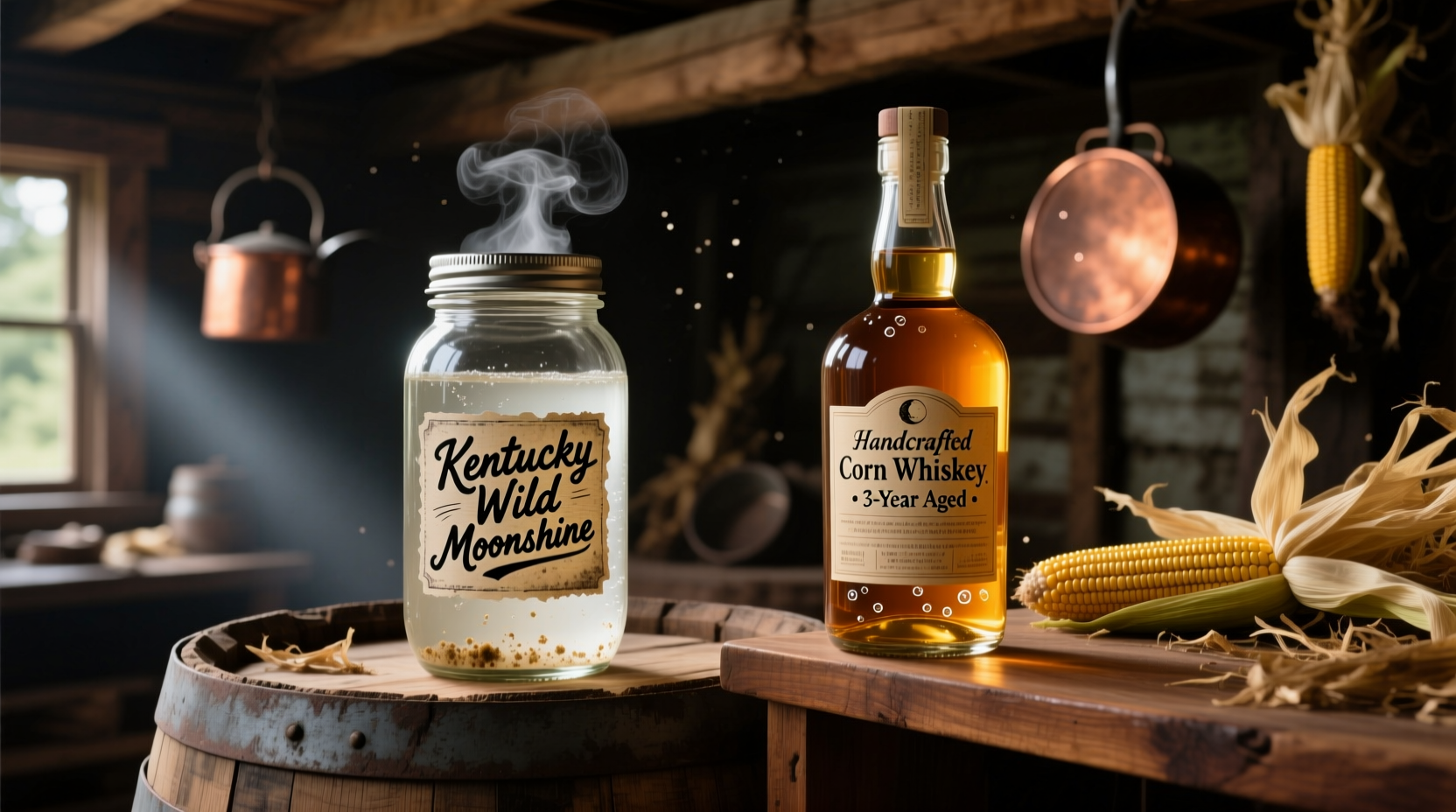
Legally, moonshine and corn whiskey occupy entirely separate categories under U.S. federal law—governed by the Alcohol and Tobacco Tax and Trade Bureau (TTB). That distinction shapes everything from mash bill requirements to labeling rights, aging rules, and even tax classification.
Moonshine, as defined by the TTB, is not a style but a tax status: it refers to any unaged, clear spirit distilled from fermented grain, fruit, or sugar—and sold without having paid federal excise tax. In practice, this means that if a distiller operates without a federal permit, avoids reporting production, or sells untaxed product, they are making illegal moonshine—regardless of recipe or technique. Conversely, a licensed distillery can legally produce and label an unaged corn spirit as “moonshine” only if it meets TTB standards for classification as a “spirit distilled from grain” and pays all applicable taxes. In that case, it’s technically “legal moonshine”—a term the agency permits but does not define as a distinct category.
Corn whiskey, however, is a formally recognized type of whiskey under 27 CFR §5.22. To qualify, it must be made from a mash containing at least 80% corn, distilled to no more than 160 proof (80% ABV), and aged in used or uncharred new oak barrels—or not aged at all. Crucially, if it’s unaged, it may be labeled “corn whiskey,” but not “bourbon,” “rye,” or “straight whiskey.” If aged—even for one day—in new charred oak, it forfeits the “corn whiskey” designation and becomes “whiskey distilled from corn” (and potentially qualifies as bourbon, if aged two years and meeting other criteria).
| Characteristic | Moonshine (Legal, Commercial) | Corn Whiskey (Legal, Commercial) |
|---|---|---|
| Legal Definition | No formal TTB class; permitted as “unaged spirit distilled from grain” | Defined type: ≥80% corn mash, ≤160 proof distillation, aged in used/uncharred oak or unaged |
| Tax Status | Subject to full federal excise tax ($13.50/gallon) | Same tax rate—no distinction based on age or grain |
| Aging Requirement | None (typically unaged) | None (but if aged in new charred oak, loses “corn whiskey” label) |
| Labeling Freedom | May use “moonshine” if unaged and grain-based—but cannot imply age, origin, or process not verified | Must declare “corn whiskey”; may add “unaged” or “white whiskey,” but not “bourbon” or “straight” |
| Production Oversight | Requires federal DSP license, state permits, bond, reporting | Same licensing and oversight—no regulatory shortcut |
This legal scaffolding matters because it reveals a quiet truth: the word “moonshine” on a commercial bottle is primarily a marketing signal, not a technical descriptor. It evokes heritage, informality, and frontier grit—but it carries no enforceable production standard beyond those applying to all grain spirits. Corn whiskey, by contrast, is tethered to precise compositional rules. Its authenticity is procedural, not performative.
Historical Roots: Two Lineages, One Landscape
Appalachia didn’t invent corn distillation—but it perfected its persistence. Long before Prohibition, settlers in western North Carolina, Tennessee, and Kentucky were fermenting surplus field corn into high-proof spirit using copper pot stills passed down through generations. These operations were rarely clandestine out of defiance; they were small-scale, seasonal, and embedded in subsistence agriculture. A farmer might run a still after harvest to preserve surplus grain, trade for goods, or medicate family illness. The spirit was unaged, often consumed within weeks, and rarely standardized—flavor varied with soil, yeast strain, still geometry, and weather.
What changed wasn’t the method—it was the state’s reach. The 1862 Revenue Act imposed the first federal excise tax on distilled spirits, sparking armed resistance in Appalachia and Pennsylvania. The Whiskey Rebellion had faded, but resentment lingered. When Prohibition arrived in 1920, it didn’t create moonshining—it weaponized an existing practice. Suddenly, every hidden still had economic urgency. Production scaled, risks intensified, and “moonshine” acquired its modern mythology: fast cars, corrupt sheriffs, copper coils hidden in hollers, and the ever-present threat of revenuers.
Artisanal corn whiskey emerged decades later—not as a revival, but as a reclamation. In the 1990s and early 2000s, as the craft distilling movement gained traction, pioneers like Popcorn Sutton (who straddled both worlds) and licensed operations such as Tennessee’s Prichard’s Distillery began bottling unaged corn spirits with intention. They sourced heirloom corn varieties, controlled fermentation temperatures, documented yeast strains, and invested in precision copper stills—all while honoring the sensory profile of traditional mountain white lightning. Their goal wasn’t to mimic illegality, but to elevate a vernacular spirit into a deliberate, traceable, and respectful expression.
Tip: When evaluating authenticity, look past the label’s rustic font or mason-jar packaging. Check the distillery’s website for mash bill percentages, yeast source, still type, and aging notes—even unaged products reflect intentional choices.The Craft Distiller’s Dilemma: Legitimacy Without Erasure
Today’s licensed distillers face a paradox: to gain market access, they must comply with regulations that historically criminalized their predecessors. Yet to earn credibility among connoisseurs, they must signal continuity—not just with colonial-era techniques, but with the values of self-reliance, terroir awareness, and hands-on stewardship.
Consider the case of High Wire Distilling in Charleston, SC. In 2014, co-founders Scott Blackwell and Ann Marie D’Amico launched “Southern Spirit Corn Whiskey”—made from 100% South Carolina-grown Bloody Butcher corn, open-fermented with wild ambient yeast, and double-distilled in a hand-hammered copper pot still. They deliberately avoided the term “moonshine,” choosing instead to file for TTB approval as “corn whiskey.” Why? As Blackwell explained in a 2021 interview with Whisky Advocate: “Calling it ‘moonshine’ would’ve let us off the hook for transparency. ‘Corn whiskey’ forces us to say exactly what’s in the bottle—and honors the farmers, the land, and the real history of grain-to-glass in the South.”
High Wire’s choice reflects a growing ethos among serious producers: authenticity resides not in defying authority, but in deepening accountability—to ingredients, to process, and to narrative accuracy. Their unaged corn whiskey tastes unmistakably of toasted cornmeal, green apple, and wet stone—not because it’s “raw,” but because each variable was selected and managed to express that profile. That’s craftsmanship rooted in place, not performance.
“Authenticity in spirits isn’t about how you evade the law—it’s about how honestly you represent your materials and methods. A legal corn whiskey made with care and clarity tells a truer story than an illegal ‘moonshine’ made with industrial yeast and neutral grain spirits.” — Dr. Nicole M. Jackson, Historian of Southern Foodways and Author of Spirits of Resistance
Consumer Clarity: A Practical Checklist
With over 2,000 craft distilleries now operating in the U.S., and countless “moonshine” brands crowding retail shelves, distinguishing substance from slogan requires discernment. Use this checklist before purchasing or evaluating either category:
- Check the TTB Approval Number (e.g., DSP-TN-XXXX): Verify it’s listed in the TTB’s public database. No number = unlicensed operation (and likely illegal product).
- Read the Mash Bill: Does it specify corn percentage? “Grain neutral spirit base with corn flavoring” is not corn whiskey. True corn whiskey starts with ≥80% corn—ideally named (e.g., “bloody butcher,” “country gentleman”).
- Look for Transparency on Yeast & Fermentation: Wild or proprietary cultured yeast? Open or closed fermentation? Fermentation time? These details indicate intention—not just convenience.
- Assess Still Type & Distillation Cuts: Pot stills retain more congeners (flavor compounds) than column stills. Notes on “heads and tails cuts” reveal attention to purity and character.
- Verify Aging Claims: “Aged in oak” is meaningless without duration, barrel type (new/used/char level), and warehouse conditions. Unaged corn whiskey should proudly state “unaged”—not hide behind vague “small batch” language.
Frequently Asked Questions
Is all moonshine illegal?
No. “Legal moonshine” is a widely accepted industry term for commercially produced, taxpaid, unaged grain spirits—typically corn-based. It’s regulated, tested, and labeled under TTB guidelines. What remains illegal is the unlicensed, untaxed production and sale of distilled spirits—a felony punishable by fines and imprisonment.
Can corn whiskey be aged—and still be called corn whiskey?
Yes—but only in used or uncharred new oak barrels. If aged in new charred oak (the standard for bourbon), it must be labeled as “whiskey distilled from corn” or simply “whiskey.” It loses the protected designation “corn whiskey,” regardless of mash bill. This is a legal, not stylistic, distinction.
Why do some artisanal brands charge $40+ for unaged corn whiskey while others sell “moonshine” for $15?
Pricing reflects input costs and labor intensity—not just alcohol content. Premium corn whiskey often uses non-GMO, locally grown heirloom corn ($2–3/lb vs. commodity corn at $0.15/lb), employs slow open fermentation (5–10 days vs. 48 hours), and utilizes small copper pot stills requiring skilled cut management. Budget “moonshine” may rely on neutral grain spirit (NGS) blended with corn extract, column-still efficiency, and minimal quality control—prioritizing volume over varietal expression.
Conclusion: Authenticity Is a Verb, Not a Badge
Moonshine and artisanal corn whiskey aren’t rivals in a hierarchy of legitimacy—they’re different chapters in the same ongoing story of American grain distillation. One embodies resistance, improvisation, and cultural endurance; the other represents reconciliation, transparency, and deliberate revival. Neither is “more authentic” in the abstract. Authenticity emerges in the choices a producer makes: whether to name their corn variety or obscure it, to disclose fermentation time or omit it, to pay fair wages and taxes or evade them, to honor regional ecology or treat grain as anonymous commodity.
As consumers, we hold quiet power. Every purchase signals which values we reward. Choosing a $45 bottle of single-field corn whiskey made by a fourth-generation farmer-distiller supports agrarian resilience. Opting for a $12 “moonshine” blended from industrial alcohol and artificial flavoring sustains extraction without reciprocity. The most authentic act isn’t drinking one style over another—it’s asking questions, reading labels with skepticism and curiosity, and supporting producers who treat history not as costume, but as covenant.
💬 Your palate is part of the archive. Taste thoughtfully. Ask boldly. Share what you learn—not just the bottle, but the story behind it. Because the truest spirit isn’t in the jar. It’s in the telling.