The moonlight mule isn’t just a cocktail—it’s a cultural pivot. Across rooftops in Brooklyn, desert pop-ups in Joshua Tree, and backyard gatherings from Portland to Perth, people are stepping away from the bar rail and into the night air to sip chilled, effervescent vodka-based mules beneath unobstructed starlight. This isn’t nostalgia dressed up as novelty. It’s a deliberate recalibration of how we experience spirits: slower, more intentional, deeply atmospheric, and rooted in sensory authenticity. At its core, the moonlight mule trend merges three converging forces—the resurgence of vodka as a versatile, terroir-conscious spirit; the growing demand for low-stimulus, high-sensory social experiences; and a renewed appreciation for ambient ritual over loud spectacle. What began as an off-menu experiment at a Santa Fe speakeasy in late 2022 has evolved into a measurable shift in beverage programming, event design, and even home entertaining. This article unpacks why it’s resonating, how it’s being executed with integrity, and what makes it more than just another summer fad.
What Defines a True Moonlight Mule?
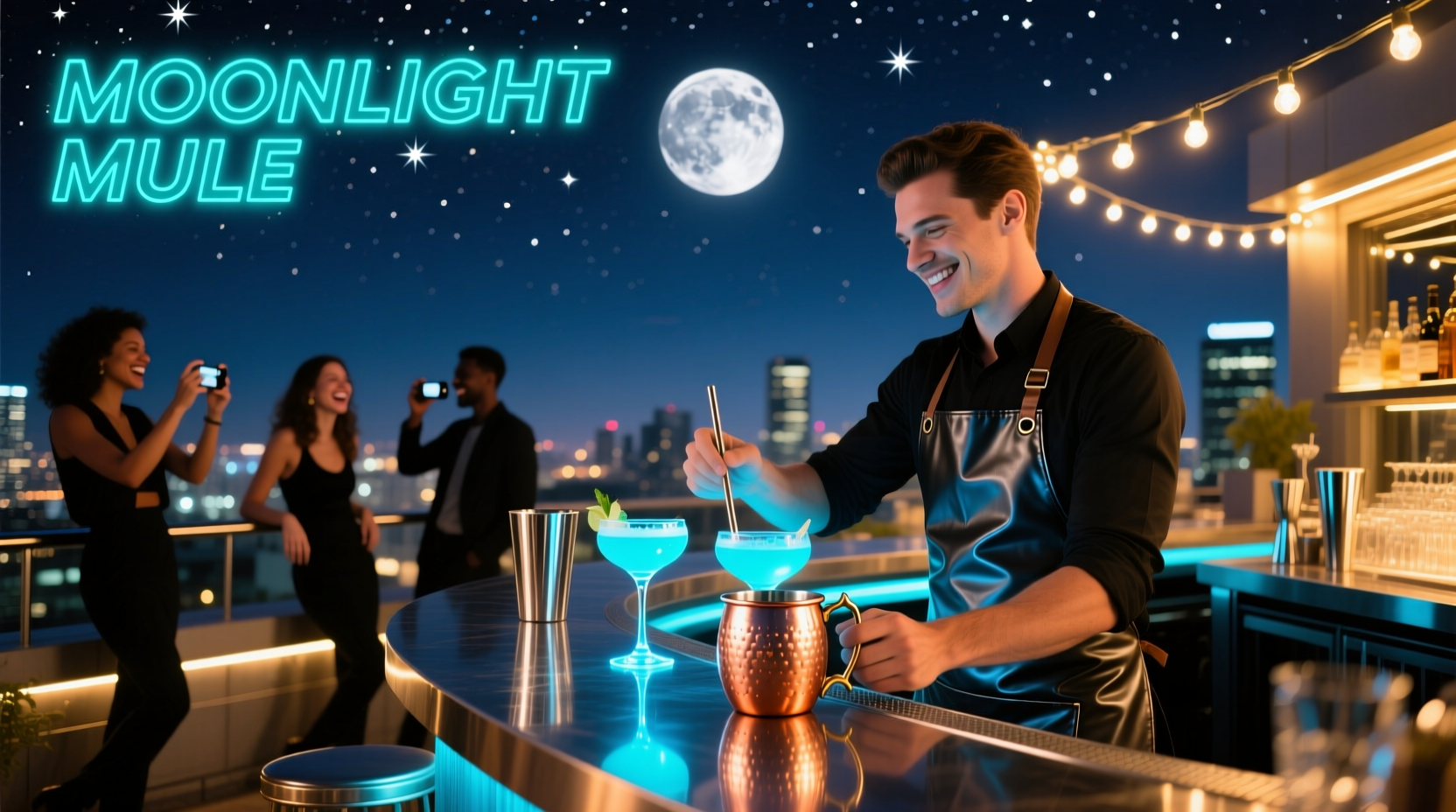
A moonlight mule is not merely a Moscow Mule served after dusk. Its distinction lies in intentionality—not just timing, but context, composition, and curation. The drink must be built around a high-quality, character-forward vodka (often small-batch, grain-distilled, or rested), paired with house-made ginger syrup that balances heat and sweetness without artificial sharpness, and topped with chilled, naturally effervescent mineral water—not generic ginger beer. Lime juice is freshly squeezed and added last, preserving brightness. Served exclusively in copper mugs pre-chilled to 38°F (3°C), the vessel itself becomes part of the experience: condensation forms slowly, the metal conducts coolness without dilution, and the reflective surface catches starlight and candle glow alike.
Crucially, the setting is non-negotiable. No overhead lighting. No fluorescent spill. Only ambient sources—string lights strung between trees, citronella torches placed at measured intervals, beeswax candles in hurricane globes, or solar-powered path markers. The goal is to preserve natural night vision while offering gentle orientation. Tables are low, seating is cushioned and grounded—think floor poufs, Adirondack chairs with wool throws, or woven daybeds. Even playlist curation matters: acoustic sets, analog-recorded jazz loops, or field recordings of crickets and wind replace bass-heavy playlists.
Tip: Chill your copper mugs in the freezer for 20 minutes before service—not the fridge. A properly chilled mug maintains temperature for 14–17 minutes, allowing the drink’s aromatics to evolve without muting the vodka’s texture.The Rise of Vodka as a Night-Spirit
Vodka’s renaissance in the moonlight mule movement reflects a broader industry evolution. Once dismissed as “neutral” or “blank,” today’s leading vodkas are treated like single-malt whiskies or artisanal gins—distilled from specific heirloom rye or winter wheat, filtered through birch charcoal or glacial quartz, and sometimes rested in oak or cherrywood casks for subtle tannin integration. Brands like Chase GB, Karlsson’s Gold, and Haku (Japanese yuzu-infused) have demonstrated that vodka can carry nuanced botanical resonance, creamy mouthfeel, and clean, lingering finish—all qualities that shine in a low-sugar, high-contrast serve like the moonlight mule.
This shift aligns with consumer behavior. A 2024 Beverage Dynamics report found that 68% of adults aged 28–45 now prefer lower-sugar, higher-integrity spirits served in context-driven formats—especially outdoors and during transitional hours (dusk to midnight). Vodka, unburdened by barrel aging expectations or cocktail tradition, became the ideal canvas. As mixologist and educator Lena Torres notes:
“Vodka doesn’t ask you to taste history—it invites you to taste *now*. Under the stars, with the scent of sage and cold air, that immediacy becomes profound. You’re not drinking a legacy—you’re sharing a moment.” — Lena Torres, Director of Spirit Education, BarCraft Institute
How Venues Are Executing the Trend With Integrity
Successful adoption of the moonlight mule trend hinges on rejecting gimmickry in favor of operational coherence. Leading venues treat it not as a seasonal promotion but as a year-round philosophy—one that informs staffing, sourcing, and spatial design. Below is a comparative overview of how authentic execution differs from superficial imitation:
| Element | Authentic Execution | Superficial Imitation |
|---|---|---|
| Vodka Selection | Rotating seasonal vodkas sourced within 200 miles (e.g., Texas rye vodka in August, Michigan wheat vodka in October); each paired with regionally foraged ginger or citrus | One national brand served across all locations; ginger syrup sourced from bulk supplier |
| Lighting Design | No overhead fixtures; all light sources below eye level; color temperature held at 1800K–2200K (candle-warm) | String lights draped haphazardly; LED bulbs emitting blue-white glare; no dimming capability |
| Service Protocol | Mules served only between 7:30 p.m. and 11:30 p.m.; servers trained in night-sight preservation (e.g., using red-light headlamps when refilling) | Served anytime; no staff training; copper mugs warmed by ambient kitchen heat |
| Guest Flow | Reservation-only; staggered entry every 12 minutes to prevent crowd density and preserve acoustic calm | Walk-ins encouraged; first-come, first-served; no capacity management |
Mini Case Study: The Desert Drift Pop-Up, Joshua Tree, CA
In March 2023, bartender and desert ecologist Mateo Rios launched a six-week pop-up 12 miles outside Joshua Tree National Park. His concept: “one mule, one guest, one hour of undivided night.” Each evening, eight guests arrived at precisely 7:45 p.m. They were guided along a gravel path lit only by embedded amber LEDs, given a hand-dyed linen wrap, and seated at individual low tables arranged in a loose spiral around a central fire pit burning native creosote wood. Rios used Desert Spirit Co.’s mesquite-smoked vodka—distilled from Sonoran wheat and filtered through crushed desert rose quartz—paired with ginger syrup infused with wild cholla cactus buds and local limequat. Every mule was stirred tableside, garnished with a single dehydrated lime wheel dusted in edible silver mica, and served with a small bowl of roasted piñon nuts.
Guest feedback revealed unexpected depth: 92% reported feeling “more present” than during typical bar visits; 76% said they noticed stars they’d never seen before; and 64% returned for a second visit—despite the $42 price point and 90-minute drive. Rios didn’t scale the concept. He documented it, published a zine on night-adapted hospitality, and now consults with resorts in Big Sur and the Scottish Highlands on implementing similar principles. His insight remains foundational: “The moonlight mule works only when the environment does the heavy lifting—and the drink respects it.”
A Step-by-Step Guide to Hosting Your Own Moonlight Mule Evening
You don’t need a rooftop or a desert expanse to bring this trend home. With thoughtful sequencing and attention to detail, a residential backyard—or even a fire-escape balcony—can become a compelling moonlight mule venue. Follow this proven seven-step framework:
- Assess ambient light pollution: Use LightPollutionMap.info to check your location’s Bortle Scale rating. Aim for Class 4 or darker (ideal: Class 3 or better). If streetlights intrude, hang blackout fabric panels on adjacent fences or walls.
- Curate lighting: Place four to six pillar candles in glass hurricanes at ground level. Add two solar-powered pathway lights near seating entrances. Avoid any light source above seated eye height.
- Select and chill your vodka: Choose a vodka with visible distiller notes—look for descriptors like “creamy,” “biscuity,” “grain-forward,” or “mineral.” Chill bottle and copper mugs separately for 20 minutes in freezer.
- Prepare components ahead: Make ginger syrup (1:1 fresh ginger juice to demerara syrup, strained twice); juice limes no more than 90 minutes before service; carbonate mineral water just before pouring.
- Set the sequence: Guests arrive at dusk (not after dark). Offer warm herbal tea first to acclimate eyes. Serve mules precisely 25 minutes post-sunset—when true twilight deepens but stars remain visible.
- Control sound: Play a single curated 45-minute playlist on a portable speaker set to 55 dB max (use a free sound meter app). Prioritize instruments with natural decay—nylon-string guitar, upright bass, brushed snare.
- Close with grounding: End the evening with a small cup of toasted caraway and chamomile infusion—served hot, no garnish—to signal transition back to daily rhythm.
FAQ
Can I use regular ginger beer instead of fresh ginger syrup and sparkling water?
No—this fundamentally undermines the moonlight mule’s purpose. Commercial ginger beer contains high-fructose corn syrup, preservatives, and volatile oils that overwhelm delicate vodka nuance and create a cloying, one-dimensional finish. Fresh ginger syrup offers controlled heat and aromatic complexity; sparkling mineral water contributes clean effervescence without competing flavors. Substitution sacrifices both integrity and balance.
Is this trend safe for people with light sensitivity or migraines?
Yes—when executed authentically. The absence of blue-rich overhead lighting, flicker-free candle sources, and enforced pacing (no rushed service, no loud music spikes) make moonlight mule settings among the most migraine-friendly beverage experiences available. Many neurologists now recommend such low-stimulus environments as part of non-pharmacological migraine management protocols.
Do I need copper mugs?
Strongly recommended—but not dogmatic. Copper’s thermal conductivity preserves optimal serving temperature longer than ceramic or glass, and its visual warmth complements low-light settings. However, if copper isn’t accessible, pre-chilled matte-black stoneware mugs (with wide rims to release aroma) are a functional, aesthetically coherent alternative. Avoid stainless steel—it’s too reflective and industrial; avoid glass—it warms too quickly and lacks tactile grounding.
Why This Trend Is Here to Stay
The moonlight mule trend endures because it answers a quiet but urgent human need: the desire to gather without exhaustion. In a world saturated with algorithmic feeds, notification pings, and hyper-optimized experiences, choosing to sit still under open sky—with a drink that rewards slowness, not speed—is quietly revolutionary. It asks nothing of the guest except presence. It demands rigor from the host—but rewards that rigor with genuine connection, memorable stillness, and a rare sense of shared reverence.
This isn’t about vodka. It’s not really about mules. It’s about reclaiming night as a time for reflection, not consumption; for listening, not performing; for seeing stars not as distant points of light, but as anchors to something older and steadier than our screens. As climate patterns shift and urban heat islands intensify, outdoor evening hospitality will only grow in relevance—and the moonlight mule provides a replicable, scalable, deeply human template for doing it well.
💬 Have you hosted or experienced a moonlight mule evening? Share your setup, challenges, or favorite regional twist in the comments—we’re compiling real-world adaptations for an upcoming community guide.