The bar scene is shifting—not with louder music or flashier garnishes, but with quieter pours. Across London gastropubs, Brooklyn natural-wine bars, and Sydney rooftop lounges, low ABV (alcohol by volume) cocktails—those clocking in at 0.5% to 12% ABV—are no longer niche experiments. They’re on menus as thoughtfully crafted as their high-proof counterparts: hibiscus shrubs with house-made vermouth, cold-brew negronis with diluted Campari, spritzes built on dry cider and floral amaro. This isn’t just “light beer” rebranded. It’s a deliberate recalibration of drinking culture—one that promises wellness, longevity, and intentionality. But does sipping a 7% ABV sherry cobbler actually make you healthier? Or does dialing back alcohol simply mute the very qualities that make cocktails compelling—the warmth, the lift, the shared spontaneity? The answer lies not in absolutes, but in context: physiology, psychology, social ritual, and what “health” truly means for the individual.
What “Low ABV” Actually Means—And Why the Label Is Misleading
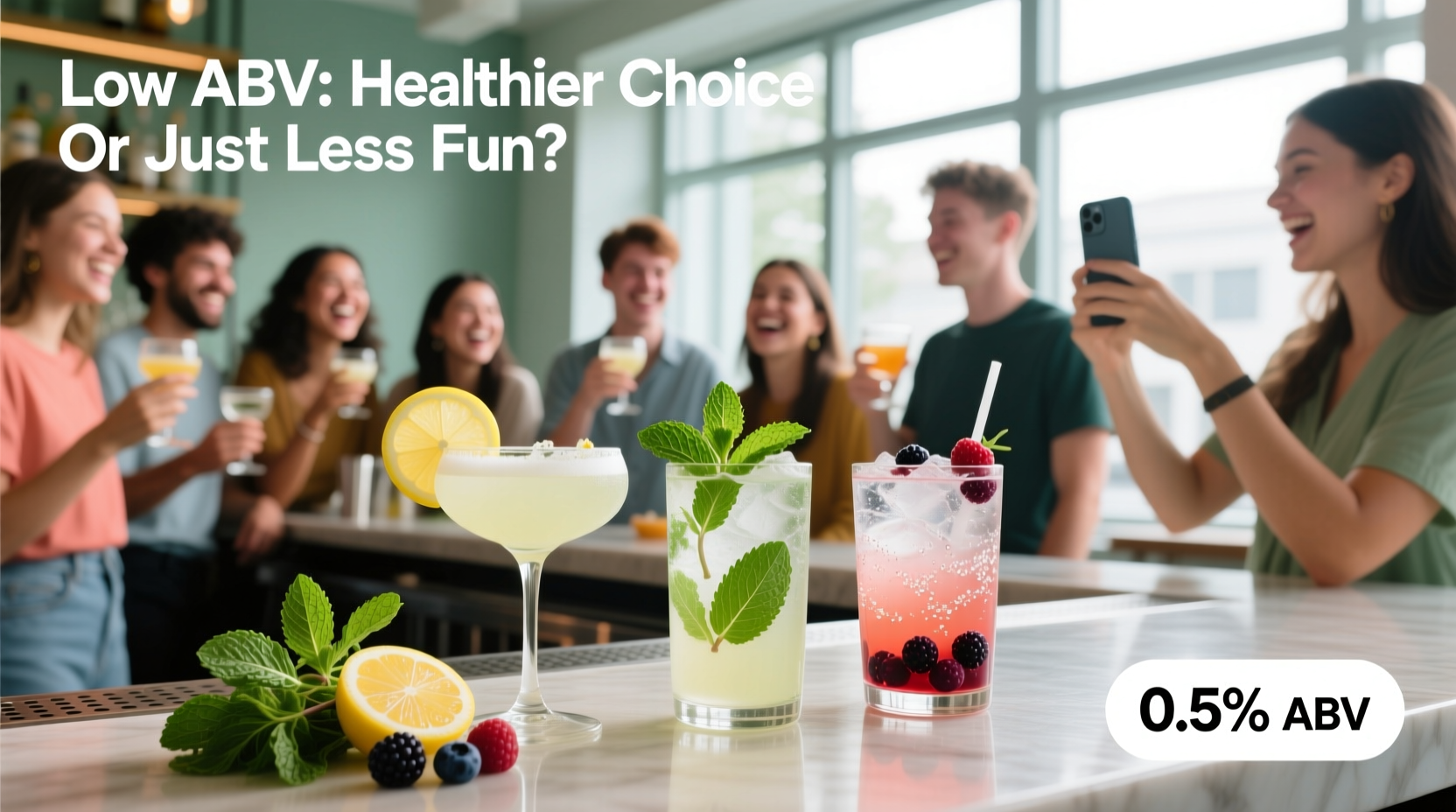
“Low ABV” has no legal or regulatory definition in most countries—including the U.S., UK, or EU. Unlike “non-alcoholic” (0.5% ABV or less in the U.S.; 0.05% in the UK), or “alcohol-free” (0.0% in many jurisdictions), “low ABV” is a marketing term. In practice, it covers a wide spectrum:
- Ultra-low ABV (0.5–3%): Think kombucha-based spritzes, fermented ginger beers with a splash of dry vermouth, or non-distilled botanical infusions.
- Mid-range low ABV (4–8%): The most common category—vermouth-forward martinis, wine-based sangrias, cider-and-aperitif blends, or lower-proof spirits like 35% ABV gin stretched with acidulated juices and shrubs.
- “Lower-than-standard” ABV (9–12%): Often marketed as “sessionable”—a lighter Manhattan using 80-proof rye instead of 100-proof, or a spritz made with prosecco instead of champagne (slightly lower base ABV).
This ambiguity matters. A 12% ABV cocktail delivers nearly double the ethanol of an 8% version—and more than triple the dose of a 3% one. Yet all may appear under the same “low ABV” banner. As Dr. Lena Torres, a public health researcher specializing in alcohol epidemiology at the University of Edinburgh, explains:
“The phrase ‘low ABV’ functions like ‘low-fat’ did in the 1990s—it sounds reassuring, but without context, it tells you nothing about total alcohol load, sugar content, or metabolic impact. A 10-ounce ‘healthy’ spritz with 9% ABV contains more pure alcohol than two standard 14g servings. Intent doesn’t override pharmacology.” — Dr. Lena Torres, Alcohol & Public Health Researcher
That pharmacology is key: ethanol is a toxin with dose-dependent effects. Even modest intake affects sleep architecture, liver enzyme activity, and gut microbiota diversity. “Low ABV” doesn’t mean “no consequence”—it means “lower magnitude, not zero risk.”
Health Claims vs. Evidence: What the Data Actually Shows
Proponents of low ABV cocktails often cite three primary health arguments: reduced caloric load, lower cancer risk, and improved sleep and hydration. Let’s test each against current evidence.
| Claim | What the Science Says | Important Caveats |
|---|---|---|
| “Fewer calories = better weight management” | True—ethanol contributes 7 kcal/g. Cutting ABV by half typically reduces calories by 20–40% per drink, especially when replacing sugary high-proof cocktails (e.g., a piña colada at ~490 kcal vs. a dry vermouth spritz at ~120 kcal). | Many low ABV drinks compensate with added sugars (agave syrup, fruit purées, honey) or high-calorie mixers (tonic, ginger beer). A “light” mojito made with sweetened mint syrup can exceed 200 kcal. |
| “Lower cancer risk” | Strongly supported. The WHO classifies *all* alcohol as a Group 1 carcinogen. Risk rises linearly with cumulative intake—even below “moderate” thresholds. Reducing ABV directly lowers lifetime ethanol exposure. | No safe threshold exists. A daily 5% ABV spritz still contributes measurable mutagenic load over decades. Abstinence remains the only risk-eliminating choice. |
| “Better sleep and next-day function” | Well-documented. Ethanol fragments REM sleep and suppresses melatonin. Low ABV drinks—especially those under 4%—show markedly less disruption in polysomnography studies. Subjects report fewer headaches, less fatigue, and sharper morning cognition. | Timing and food intake matter more than ABV alone. A 6% cocktail consumed on an empty stomach at midnight disrupts sleep more than a 9% one with dinner at 7 p.m. |
The takeaway isn’t that low ABV equals “healthy”—but that it meaningfully shifts the risk-benefit calculus. For someone who drinks 3–4 times weekly, dropping from 12% to 6% ABV cuts annual ethanol exposure by roughly 50%, with compounding benefits for liver enzymes, blood pressure, and inflammatory markers over time. It’s harm reduction, not health enhancement.
The “Less Fun” Question: Flavor, Ritual, and the Psychology of Moderation
Here’s where craft bartenders push back—not defensively, but deliberately. “People assume low ABV means ‘diluted,’” says Javier Mendez, co-owner of *Casa Baja*, a Michelin-recommended bar in Barcelona known for its zero-compromise low-ABV program. “But we don’t water things down. We build complexity elsewhere: acidity, umami, tannin, texture. A properly balanced 5% ABV sherry sour hits deeper than a boozy 14% whiskey smash because your palate isn’t numbed.”
Mendez’s point highlights a critical nuance: enjoyment isn’t solely tied to ethanol’s neurochemical effect (GABA potentiation, dopamine release). It’s also rooted in sensory engagement—aroma volatility, mouthfeel, temperature contrast, and the ritual of preparation. Low ABV cocktails often emphasize these elements more intentionally:
- Greater aromatic expression: Lower ethanol levels allow volatile esters and terpenes (from citrus, herbs, flowers) to shine without being masked.
- Enhanced acidity and freshness: Without high-proof spirit heat, tartness and salinity become structural pillars—not just accents.
- Longer, more contemplative pacing: Sipped slowly, low ABV drinks encourage presence rather than rapid intoxication—a shift aligned with mindful consumption trends.
Yet the trade-off is real. Ethanol carries flavor compounds, enhances mouth-coating richness, and provides the subtle “warmth” that signals reward to the brain. Removing it entirely—or drastically reducing it—can flatten depth. That’s why the most successful low ABV programs don’t chase zero; they chase intentionality. As Mendez puts it: “We ask: What experience do we want this guest to have tonight? Calm connection? Lively conversation? Post-dinner reflection? The ABV serves that goal—not the other way around.”
Tip: When ordering or making low ABV cocktails, prioritize balance over novelty. A well-structured 8% vermouth spritz (2 oz dry vermouth + 3 oz sparkling water + orange twist) delivers more satisfaction—and less fatigue—than a confusing 3% “wellness elixir” loaded with adaptogens and sweeteners.A Real-World Shift: How One Bar Redefined Its Identity Around Low ABV
In 2021, *The Hearth*, a neighborhood bar in Portland, Oregon, faced a quiet crisis. Regulars were aging into their 40s and 50s. Staff reported increased requests for “something lighter,” “less heavy,” or “I want to drive home.” Owner Anya Sharma didn’t respond with a token “mocktail menu.” She partnered with a local fermentation lab and a registered dietitian to rebuild her entire beverage philosophy.
Step one: audit every cocktail’s ABV and calorie count—not just the spirit, but the vermouth, liqueurs, syrups, and even fortified wines. Step two: redesign 70% of the menu around three tiers: “Light” (≤5% ABV, ≤150 kcal), “Bright” (6–9% ABV, focused on fresh produce), and “Classic” (traditional ABV, clearly labeled). Step three: train staff not to upsell, but to consult—asking guests about desired energy level, food pairings, and how they plan to spend the rest of their evening.
The result? Within 10 months, low ABV orders grew from 12% to 58% of total sales. More significantly, average customer dwell time increased by 22 minutes—guests lingered, shared plates, and returned twice as often. “We stopped selling drinks,” Sharma reflects. “We started curating experiences that fit people’s actual lives—not some outdated idea of ‘a night out.’” Her biggest surprise? The “Classic” section saw a 30% sales increase too—because guests trusted the bar’s judgment enough to choose higher-ABV options *deliberately*, not habitually.
Your Practical Guide: Choosing, Ordering, and Making Low ABV Cocktails With Purpose
Adopting low ABV isn’t about restriction—it’s about precision. Use this step-by-step framework to align your choices with your goals:
- Define your intention first. Are you prioritizing next-day clarity? Managing a health condition? Extending social time without impairment? Or simply exploring new flavors? Your “why” determines the right ABV range.
- Read labels and ask questions. Ask for the base spirit’s proof, vermouth type (dry/fino = lower sugar), and whether syrups are house-made (often less sweet than commercial brands). Don’t assume “natural” means low-sugar.
- Start with proven low-ABV foundations. Vermouth (16–18% ABV, but used in small amounts), dry sherry (15–18%), and dry cider (5–7%) offer complex flavor with manageable ethanol load. Avoid “low-ABV” pre-mixed cans that replace alcohol with artificial sweeteners or excessive citric acid.
- Balance sweetness with acidity. High sugar masks alcohol burn but adds empty calories and spikes insulin. Counter with fresh lemon/lime, vinegar shrubs, or tart fruit juices (sour cherry, cranberry).
- Respect timing and context. Save higher-ABV drinks for occasions where you’ll be resting afterward. Choose ultra-low ABV (<4%) for daytime events, work gatherings, or when driving.
FAQ: Addressing Common Concerns
Does drinking low ABV cocktails regularly still affect my liver?
Yes—but significantly less than standard cocktails. Chronic ethanol exposure triggers CYP2E1 enzyme upregulation, oxidative stress, and fat accumulation in hepatocytes. At 4–6% ABV consumed moderately (1–2 drinks, 2–3x/week), measurable liver enzyme elevation (ALT/AST) is rare in healthy adults. However, those with existing NAFLD, hepatitis, or genetic ALDH2 deficiency should consult a physician before regular consumption—even at low ABV.
Are “alcohol-free” and “low ABV” equally beneficial for sobriety maintenance?
No. For individuals in recovery from Alcohol Use Disorder (AUD), even low ABV poses psychological and physiological risk. The sight, smell, and taste of alcohol can trigger craving pathways. True abstinence (0.0% ABV) is clinically recommended for AUD recovery. Low ABV is appropriate for *moderation-focused* drinkers—not abstinence-focused ones.
Can I make low ABV cocktails at home without special equipment?
Absolutely. You need only a jigger, mixing glass, bar spoon, and fine strainer. Start with these accessible formulas:
- Vermouth Spritz: 3 oz dry vermouth + 4 oz chilled sparkling water + lemon twist (≈7% ABV)
- Sherry Cobbler: 2 oz fino sherry + ½ oz fresh lemon juice + ½ oz simple syrup + muddled berries + crushed ice (≈11% ABV, but highly dilutable)
- Cider Sour: 4 oz dry hard cider + 1 oz fresh apple juice + ¾ oz lemon juice + ¼ oz maple syrup (≈5% ABV)
Conclusion: Not Healthier—But More Human
Low ABV cocktails aren’t inherently “healthier.” They won’t reverse metabolic syndrome, cure insomnia, or eliminate cancer risk. What they do offer is something increasingly rare in modern life: agency. Agency to enjoy flavor without surrendering clarity. To celebrate without compromising tomorrow’s focus. To connect without numbing. To drink not as an escape, but as an extension of self-awareness.
This trend endures not because it’s trendy—but because it answers a quiet, collective need: the desire to participate fully in life’s pleasures without paying steep physical or cognitive tolls. It’s not about choosing between health and fun. It’s about refusing to let the two be mutually exclusive.
If you’ve ever nursed a headache while scrolling through emails, or skipped a friend’s birthday because “I can’t handle a full night out anymore,” low ABV isn’t a compromise—it’s a recalibration. Try one this week. Not to check a wellness box, but to taste what intention feels like in a glass.
💬 Have you discovered a low ABV cocktail that changed how you think about drinking? Share your go-to recipe, bar recommendation, or “aha” moment in the comments—we’re building a living guide, one thoughtful pour at a time.