For years, dairy has been a staple in morning lattes and cappuccinos. But as plant-based alternatives gain traction, oat milk has surged in popularity—not just for its creamy texture and sustainability, but also for claims that it’s gentler on the skin. Many consumers now avoid dairy in their coffee believing it contributes to acne, inflammation, or dull complexion. But is switching to oat milk truly beneficial for your skin, or is this shift more about social media trends than scientific evidence?
The answer isn’t straightforward. While some individuals experience clearer skin after eliminating dairy, others notice no change—regardless of whether they use almond, soy, or oat milk. To understand what really happens under the surface, we need to examine how both dairy and oat milk affect internal health, hormone balance, and ultimately, skin condition.
The Dairy-Skin Connection: What Science Says
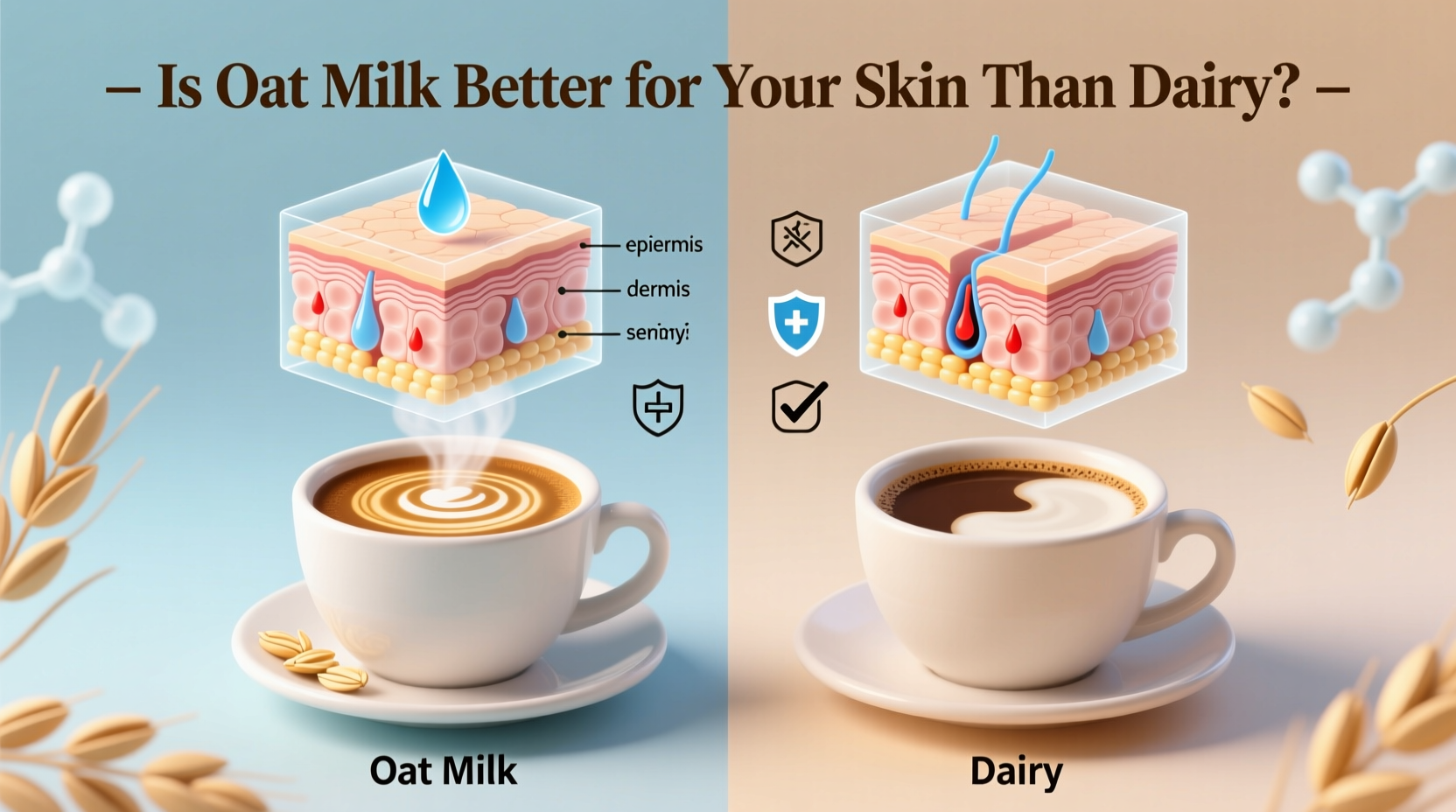
Dairy consumption has long been linked to skin issues, particularly acne. Multiple observational studies, including research published in the Journal of the American Academy of Dermatology, have found a correlation between high dairy intake and increased acne prevalence, especially among teenagers and young adults.
The mechanism appears to be hormonal. Cow’s milk contains insulin-like growth factor 1 (IGF-1), which can stimulate oil production in sebaceous glands. It also contains natural hormones like progesterone and androgens that may influence sebum levels and contribute to clogged pores. Even low-fat milk shows similar associations, suggesting fat content isn’t the primary culprit.
“Dairy can act as a trigger for inflammatory skin conditions in genetically predisposed individuals. The hormonal load in milk, even organic varieties, may exacerbate acne.” — Dr. Lena Torres, Board-Certified Dermatologist
However, correlation does not equal causation. Not everyone who drinks milk develops acne. Genetic factors, overall diet, gut health, and skincare routines all play significant roles. For those with sensitive skin or a history of hormonal breakouts, reducing or eliminating dairy—especially skim milk—may lead to noticeable improvements.
Oat Milk: Skin Benefits or Marketing Hype?
Oat milk has gained a reputation as a “skin-friendly” alternative, partly due to oats’ well-documented topical benefits. Colloidal oatmeal is FDA-approved for treating eczema and dry skin because of its anti-inflammatory and moisturizing properties. But does drinking oat milk translate to similar benefits?
When consumed, oat milk provides beta-glucans, fiber-rich compounds that support gut health and modulate immune response. A healthy gut microbiome is increasingly recognized as a key player in skin clarity, influencing inflammation and nutrient absorption. Oats also contain antioxidants like avenanthramides, which help reduce oxidative stress—a contributor to premature aging and uneven tone.
Unlike cow’s milk, oat milk doesn’t contain animal hormones or IGF-1, removing one potential acne trigger. However, store-bought oat milks often include added sugars, oils, and preservatives. These additives can counteract any inherent benefits. High sugar intake, in particular, spikes insulin levels, promoting inflammation and potentially worsening acne—similar to the pathway triggered by dairy.
Tip: Choose unsweetened, additive-free oat milk to minimize blood sugar impact and maximize potential skin benefits.Comparing Dairy and Oat Milk: A Side-by-Side Analysis
| Factor | Dairy Milk (Whole) | Oat Milk (Unsweetened) |
|---|---|---|
| Hormonal Content | Contains natural bovine hormones and IGF-1 | No animal hormones |
| Sugar (per cup) | 12g (naturally occurring lactose) | 4–7g (varies; higher if sweetened) |
| Glycemic Index | Moderate (~30–40) | High (~70–80 due to starch breakdown) |
| Fat Type | Saturated fat predominant | Often fortified with sunflower or rapeseed oil (unsaturated) |
| Gut & Skin Impact | Potential inflammation in sensitive individuals | Beta-glucans support gut barrier function |
| Allergenicity | Common allergen (lactose, casein) | Gluten cross-contamination risk; not suitable for celiacs unless certified |
This comparison reveals trade-offs. While oat milk avoids animal hormones, its higher glycemic index means it can still influence insulin and inflammation—key pathways in acne development. Meanwhile, dairy offers complete protein and vitamin B12 but may disrupt hormonal balance in acne-prone individuals.
Real-Life Example: A Case Study in Skin Transformation
Consider Sarah, a 28-year-old graphic designer with persistent jawline acne despite a consistent skincare routine. She eliminated dairy from her diet, including milk in her daily coffee, and switched to unsweetened oat milk. Within six weeks, she noticed fewer breakouts and less redness.
Was it the oat milk itself? Not exactly. Upon reflection, Sarah realized she had also reduced her intake of sugary snacks and started cooking more at home. Her overall sugar consumption dropped significantly. The oat milk switch was part of a broader lifestyle shift—one that improved her gut health and stabilized her insulin levels.
She later experimented by reintroducing dairy in the form of Greek yogurt while keeping oat milk in coffee. Her skin remained clear. This suggests that for Sarah, the issue wasn’t dairy per se, but rather the combination of high-glycemic foods and processed milk products.
Her story illustrates a crucial point: isolated changes are rarely the sole cause of skin improvement. Context matters—diet, sleep, stress, and product quality all interact in complex ways.
How to Choose the Right Milk for Your Skin: A Practical Checklist
- ✔ Assess your skin history: Do you break out after consuming dairy? Keep a food-skin journal for two weeks.
- ✔ Read labels carefully: Avoid oat milks with added sugars, gums, or vegetable oils high in omega-6 fats.
- ✔ Prioritize unsweetened versions: They minimize insulin spikes linked to acne.
- ✔ Consider cross-contamination: If you have gluten sensitivity, choose oat milk labeled gluten-free.
- ✔ Monitor total diet: One “healthy” swap won’t fix a high-sugar, processed-food-heavy diet.
- ✔ Test one variable at a time: Don’t eliminate dairy and start a new skincare regimen simultaneously.
- ✔ Consult a professional: A dermatologist or registered dietitian can help identify true triggers.
Step-by-Step Guide to Evaluating Milk’s Impact on Your Skin
- Week 1: Baseline Tracking
Record everything you eat and drink, especially what’s in your coffee. Note skin condition daily—breakouts, oiliness, redness. - Week 2–3: Elimination Phase
Remove all dairy from your diet, including cheese, yogurt, and milk in beverages. Use unsweetened oat milk instead. Continue logging. - Week 4: Reintroduction (Optional)
Reintroduce dairy gradually—start with a small amount of yogurt. Observe skin over the next 72 hours. - Week 5: Evaluate
Compare week-one and week-four skin records. Did clarity improve? Was there a flare-up upon reintroduction? - Final Decision
Decide whether to continue with oat milk, try another alternative (like almond or soy), or reintegrate dairy mindfully.
This method helps isolate variables and reduces the placebo effect. Many people assume a change worked without objective tracking—this process brings clarity.
Expert Insight: Beyond the Hype
The wellness space often promotes plant-based milks as inherently superior. But experts caution against oversimplification.
“The idea that oat milk is universally better for skin is misleading. For some, yes—it removes a dietary trigger. For others, it introduces new problems like blood sugar swings. Individual biochemistry varies widely.” — Dr. Rajiv Mehta, Nutritional Biochemist
He emphasizes that whole-food sources of nutrients—like steel-cut oats versus processed oat milk—are metabolized differently. The industrial processing of commercial oat milk involves enzymatic breakdown of starches into maltose, a sugar that rapidly elevates blood glucose. This metabolic effect may offset any anti-inflammatory benefit from beta-glucans.
Frequently Asked Questions
Can oat milk cause acne?
Yes, in some cases. While oat milk lacks dairy hormones, its high carbohydrate content can spike insulin levels, increasing sebum production and potentially triggering acne—especially in insulin-resistant individuals. Flavored or sweetened versions are more likely to cause issues.
Is dairy always bad for skin?
No. Many people consume dairy without any skin issues. The link is strongest with skim milk and processed dairy products. Fermented forms like yogurt or kefir may even support skin health through probiotics. Sensitivity varies by individual.
What’s the best milk alternative for clear skin?
There’s no one-size-fits-all answer. Unsweetened almond milk has a lower glycemic impact. Soy milk contains isoflavones that may regulate hormones. Coconut milk is low in carbs but high in saturated fat. The best choice depends on your metabolism, allergies, and overall diet. Start with unsweetened, minimally processed options and monitor results.
Conclusion: Trendy, Yes—But Also Thought-Provoking
Oat milk’s rise in coffee culture isn’t just a trend—it reflects growing awareness of how food affects skin. For individuals sensitive to dairy hormones or lactose, switching to oat milk can lead to real improvements in clarity and comfort. However, labeling oat milk as universally ��better” oversimplifies a complex biological picture.
The truth lies in personalization. What works for one person may not work for another. Rather than blindly following influencers or assuming plant-based equals healthier, take a measured approach. Track your responses, read labels, and prioritize whole, unprocessed ingredients. Your skin will respond not to a single ingredient swap, but to the cumulative effect of thoughtful choices.
💬 Have you noticed a difference in your skin after switching milk types? Share your experience in the comments—your insight could help someone else find their ideal balance.