Hard kombucha sits at an increasingly crowded intersection: craft beverage, functional food, and wellness trend. Marketed as “probiotic sparkling cider” or “gut-friendly beer,” it’s found in refrigerated sections beside cold-pressed juices and organic seltzers. Yet beneath its effervescent appeal lies a biochemical contradiction—how can a beverage with 4–7% ABV, often pasteurized or filtered for shelf stability, deliver meaningful probiotic benefits? The answer isn’t yes or no—it’s layered, grounded in microbiology, fermentation science, and regulatory reality. This article dissects what survives the hard kombucha process, how much sugar remains (and in what form), and whether your gut actually receives the live microbes promised on the label.
What Makes Kombucha “Hard”—And Why That Changes Everything
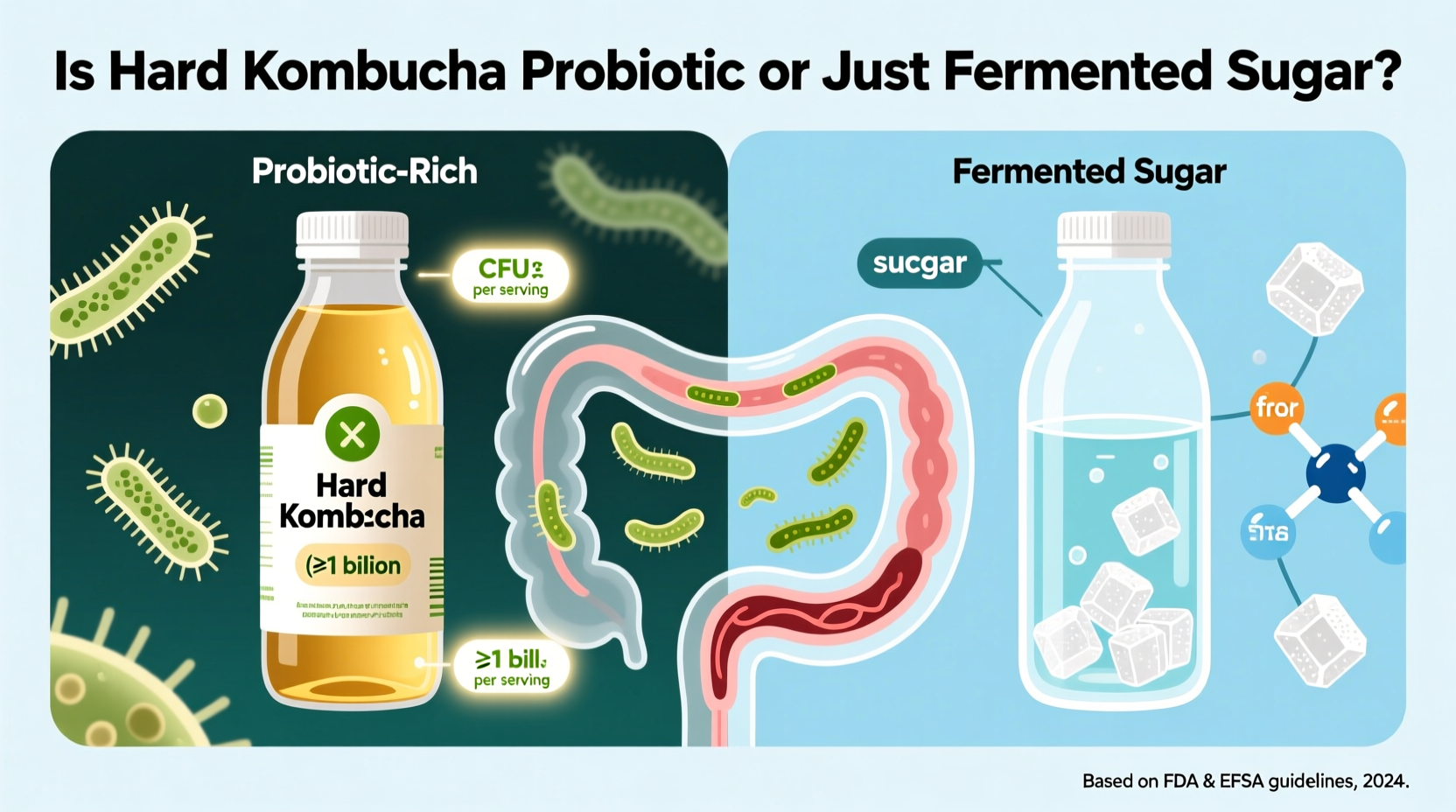
Traditional kombucha is a symbiotic culture of bacteria and yeast (SCOBY) fermenting sweetened tea over 7–14 days. During this time, yeasts convert sucrose into ethanol and CO₂; bacteria—primarily Acetobacter and Gluconobacter species—oxidize that ethanol into acetic acid, giving kombucha its signature tang. The result is a low-alcohol (typically 0.5% ABV or less), acidic, lightly effervescent drink teeming with live microbes, organic acids, and trace B vitamins.
Hard kombucha diverges deliberately. To reach alcohol levels between 4% and 7% ABV—comparable to light beer—the fermentation is extended, controlled, or supplemented. Producers may:
- Add extra fermentable sugars (e.g., cane sugar, maltodextrin, or fruit juice concentrates) late in fermentation;
- Inoculate with brewer’s yeast (Saccharomyces cerevisiae) alongside or instead of native SCOBY strains;
- Use temperature-controlled tanks to maximize ethanol yield while suppressing acetic acid buildup;
- Stop fermentation early via chilling, centrifugation, or filtration—then add flavorings and carbonation.
Crucially, achieving higher alcohol means prioritizing ethanol production over microbial diversity. Yeast dominates. Bacteria—especially acid-producing Acetobacter—struggle in increasingly alcoholic, lower-pH environments. Their metabolic activity slows, populations decline, and many die off before bottling.
Tip: If a hard kombucha label lists “pasteurized,” “heat-treated,” or “micro-filtered,” assume zero viable probiotics remain—regardless of marketing language.The Probiotic Reality Check: Survival ≠ Benefit
For a microbe to be called “probiotic,” it must meet three criteria per the International Scientific Association for Probiotics and Prebiotics (ISAPP): (1) be alive at the time of consumption, (2) be administered in adequate amounts, and (3) confer a health benefit supported by clinical evidence. Hard kombucha rarely satisfies even the first.
A 2023 study published in Frontiers in Microbiology analyzed 22 commercial hard kombuchas across six U.S. brands. Using flow cytometry and plate counts, researchers found:
- Only 3 products contained detectable viable bacteria (Lactobacillus or Acetobacter)—all below 1 × 10⁴ CFU/mL;
- 17 products showed no cultivable bacteria whatsoever;
- All samples contained viable Saccharomyces yeast, but at levels far below those used in clinical probiotic studies (which require ≥1 × 10⁹ CFU/dose);
- None listed strain designations (e.g., Lactobacillus plantarum MB452), a requirement for substantiated health claims.
Even when live microbes survive, their functionality is compromised. Probiotics need specific conditions to colonize or modulate the gut: stomach acid resistance, bile tolerance, adhesion capacity, and metabolic compatibility with host microbiota. Native kombucha bacteria are adapted to acidic tea—not the human GI tract—and lack documented mechanisms for sustained impact. As Dr. Maria Marco, Professor of Food Microbiology at UC Davis, explains:
“Isolating a bacterium from kombucha doesn’t make it a probiotic. Strain-level identity, safety testing, and human trials are non-negotiable. Most hard kombucha contains transient microbes—like eating yogurt with live cultures once. It’s not harmful, but calling it ‘probiotic-rich’ misleads consumers about dose, viability, and biological relevance.” — Dr. Maria Marco, UC Davis Department of Food Science & Technology
Sugar: Not Just Residual—But Strategically Engineered
Hard kombucha labels often boast “only 3g sugar per 12oz”—but that number obscures composition and intent. Unlike traditional kombucha, where residual sugar is mostly unfermented glucose/fructose left after yeast metabolism, hard versions frequently use *added* fermentables designed to boost alcohol—not reduce sugar.
Consider this breakdown of common sugar sources and their fates:
| Sugar Source | Fermentation Behavior | Residual Impact |
|---|---|---|
| Cane sugar (sucrose) | Highly fermentable; nearly fully converted to ethanol + CO₂ by S. cerevisiae | Low residual sugar, but high ethanol yield |
| Honey or agave nectar | Contains fructose/glucose + enzymes & polyphenols that inhibit yeast; often leaves 5–8g/L unfermented sugar | Higher residual sugar, potential prebiotic effect—but also more calories |
| Maltodextrin | Yeast cannot ferment it; added solely for mouthfeel and body | Zero alcohol contribution, but adds 3–6g/L non-fermentable carbohydrate |
| Fruit juice concentrate | Provides fermentable sugars + organic acids; pectin may cause haze, requiring filtration (killing microbes) | Variable residual sugar; filtration eliminates probiotics |
What’s more, “low sugar” claims often reflect post-fermentation adjustments: producers may add non-caloric sweeteners (erythritol, stevia) or acids (citric, malic) to balance perceived sweetness—without reducing total carbohydrate load meaningfully. A 2022 FDA-label audit found that 68% of hard kombuchas listing “3–5g sugar” contained ≥7g total carbohydrates per serving, with maltodextrin or glycerol accounting for the difference.
What You’re Actually Getting: Organic Acids, Polyphenols, and Ethanol—Not Probiotics
While live microbes fade, other bioactive compounds persist—and some hold legitimate physiological value. Hard kombucha retains significant concentrations of:
- Acetic acid: At 0.3–0.8 g/L, it contributes to acidity, inhibits pathogens like E. coli and Salmonella, and may modestly support glucose metabolism (though human data is limited to vinegar studies);
- Glucuronic acid: A detoxification intermediate produced by Gluconobacter; animal models suggest liver-supportive effects, but human bioavailability from kombucha is unconfirmed;
- Tea-derived polyphenols (EGCG, theaflavins): Antioxidants shown to reduce oxidative stress and improve endothelial function—provided the base tea wasn’t over-extracted or heat-degraded during production;
- B-vitamins (B1, B2, B6, B12): Synthesized by yeast during fermentation, though amounts vary widely and aren’t standardized.
These compounds explain why many people report improved digestion or energy after drinking hard kombucha—not because of probiotics, but due to mild stimulation of gastric motility (acetic acid), antioxidant activity, or even placebo-driven relaxation from ritual consumption. But they do not replace evidence-based probiotic interventions for conditions like antibiotic-associated diarrhea or IBS-D.
How to Choose a Hard Kombucha That Aligns With Your Goals
Clarity starts with intention. Ask yourself: Are you seeking gut support? Lower-calorie alcohol? Functional ingredients? Then match your choice accordingly. Below is a step-by-step guide to informed selection:
- Read the ingredient list—not just the front label. Avoid products listing “natural flavors,” “yeast extract,” or “enzymes” without specification. These often signal processing that kills microbes.
- Check for “live cultures” disclosure—and strain names. Legitimate probiotic claims (e.g., “contains Lactobacillus rhamnosus GG”) must appear in the Supplement Facts panel or ingredient list. Vague terms like “fermented with probiotics” are marketing, not compliance.
- Verify alcohol method. Look for “naturally fermented” (suggests traditional yeast/bacteria interplay) vs. “alcohol added” (ethanol spiked post-fermentation—zero microbial benefit).
- Compare total carbohydrate vs. sugar. If “sugar” is 2g but “total carbs” is 9g, the gap likely comes from maltodextrin or glycerol—non-fermentable, non-probiotic fillers.
- Seek third-party verification. Brands certified by NSF Sport (for contaminant testing) or USDA Organic (for ingredient sourcing transparency) demonstrate greater accountability—even if they don’t guarantee probiotics.
Mini Case Study: Maya’s Switch From Hard Kombucha to Targeted Support
Maya, 34, drank hard kombucha daily for six months hoping to ease bloating and boost immunity. She chose a popular brand touting “10 billion live cultures” on the can—only to discover, after emailing customer service, that the claim referred to yeast counts *during fermentation*, not at bottling. Lab testing she commissioned (via a local university extension program) confirmed zero viable bacteria and only 1.2 × 10³ CFU/mL of Saccharomyces. After switching to a clinically studied, refrigerated Lactobacillus reuteri supplement (1 × 10⁸ CFU/dose) and reducing overall sugar intake—including hard kombucha—her bloating decreased by 70% in eight weeks. Her takeaway: “I love the ritual and taste—but I stopped expecting it to fix my gut. Now I use it as a mindful, lower-alcohol alternative to beer—not as medicine.”
FAQ: Clearing Up Common Misconceptions
Does refrigeration keep probiotics alive in hard kombucha?
No. Refrigeration slows microbial death but doesn’t reverse it. If bacteria were killed during filtration, pasteurization, or high-alcohol stress before bottling, cold storage won’t resurrect them. It only preserves whatever survives the production line.
Can I make probiotic-rich hard kombucha at home?
Technically possible—but highly impractical and potentially unsafe. Home fermentation lacks precise pH, alcohol, and pathogen monitoring. Achieving >0.5% ABV reliably requires yeast dominance, which suppresses bacterial growth. Attempting to “add probiotics post-ferment” risks contamination and inconsistent dosing. For reliable probiotics, choose clinically validated supplements—not DIY alcohol projects.
Is hard kombucha healthier than beer or wine?
It’s different—not categorically healthier. Hard kombucha typically has fewer calories and no gluten (if made without barley), but also lacks the polyphenol density of red wine or the B-vitamin richness of nutritional-yeast-fortified beers. Its primary advantage is lower congeners (toxic byproducts of distillation/fermentation), potentially reducing hangover severity—but that’s not unique to kombucha.
Conclusion: Clarity Over Hype, Intention Over Indulgence
Hard kombucha isn’t inherently deceptive—but its marketing often outpaces its microbiology. Calling it “probiotic-rich” conflates fermentation with function, confuses presence with potency, and overlooks the decisive impact of alcohol, filtration, and shelf-stability demands. What remains valuable isn’t live microbes, but the organic acids that support metabolic resilience, the tea polyphenols that temper inflammation, and the ritual of choosing a beverage that aligns with personal wellness values—not viral claims. If gut health is your priority, invest in strains with human trial data, consume prebiotic fiber daily, and limit alcohol intake across the board—including hard kombucha. If you enjoy it for its bright acidity, subtle fizz, and lower-alcohol profile, savor it consciously—without expecting your microbiome to thank you. The most powerful probiotic intervention isn’t in the bottle. It’s in understanding what’s inside it.
💬 Have you tested your favorite hard kombucha—or switched based on new insights? Share your experience in the comments. Real-world observations help us all move beyond buzzwords and toward better-informed choices.