Walk into any premium cocktail bar in Portland, Brooklyn, or Melbourne, and you’ll likely spot a bottle labeled “cold brew espresso liqueur” — dark, viscous, aromatic, and priced 30–50% above traditional Kahlúa-style spirits. Launched in earnest around 2019, cold brew coffee liquor (CBCL) surged with the rise of third-wave coffee culture, at-home mixology, and Gen Z’s preference for low-sugar, high-flavor functional beverages. But three years after its peak visibility, shelf space is shrinking in some regional retailers, and early adopters are questioning whether this category has substance — or simply served as a caffeine-fueled footnote in beverage history.
This isn’t just about taste. It’s about economics, scalability, sensory authenticity, and cultural resonance. To determine whether cold brew coffee liquor is built to last, we examine not only consumer adoption but also supply chain realities, regulatory constraints, brand evolution, and the deeper shifts reshaping how people drink — and why.
The Origins: More Than Just Marketing Hype
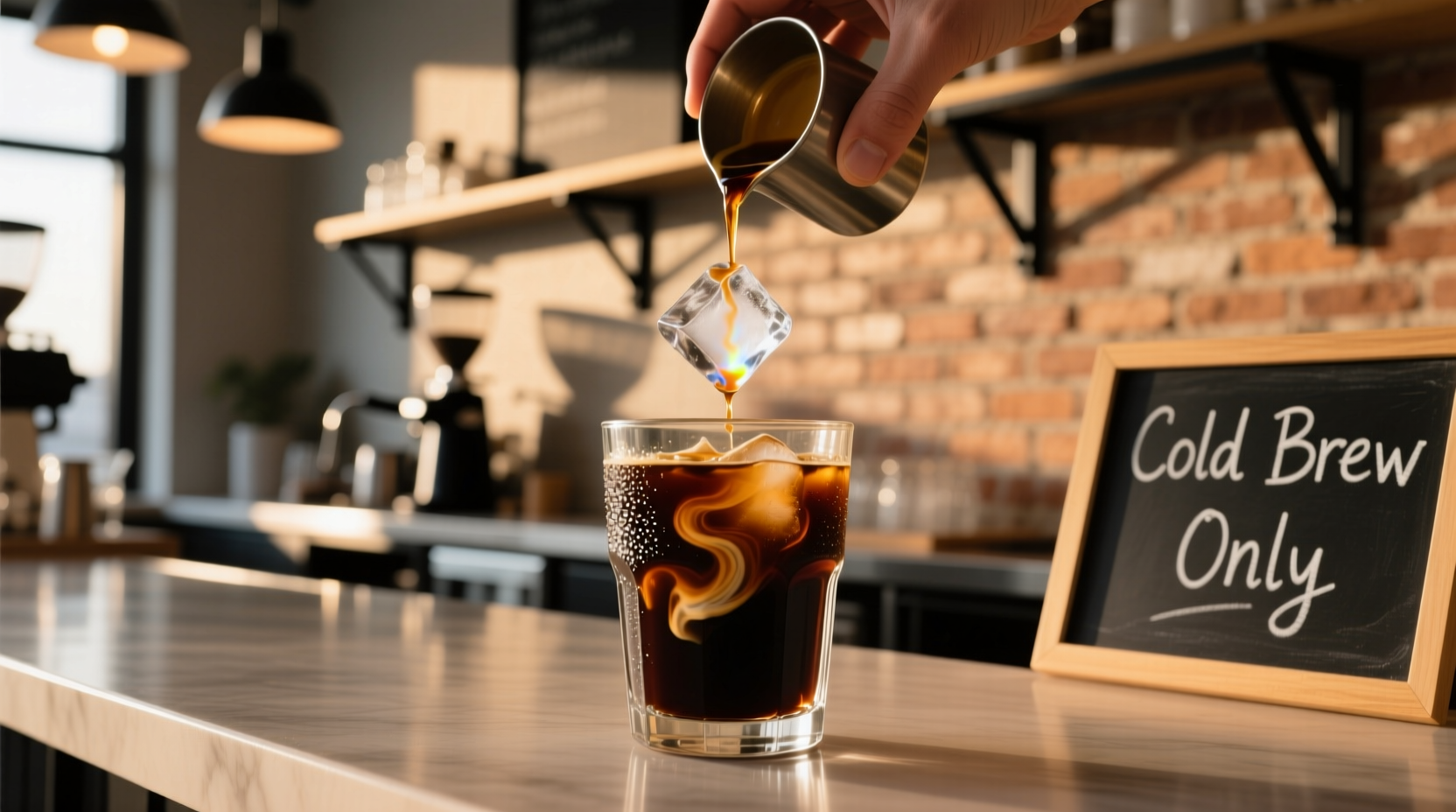
Cold brew coffee liquor didn’t emerge from a vacuum. It evolved from two converging forces: the maturation of cold brew as a mainstream coffee format (up 540% in U.S. retail sales between 2015–2022, per Statista), and the craft spirits renaissance that prioritized terroir, transparency, and ingredient integrity. Early entrants like Cold Brew & Co. (2018) and Misto (2019) didn’t just infuse neutral grain spirit with instant coffee — they steeped single-origin, medium-roast beans in cold water for 16–24 hours, then blended the concentrate with cane sugar, vanilla, and ethically sourced alcohol at 20–25% ABV.
Unlike legacy coffee liqueurs — many of which rely on roasted barley extract, artificial flavorings, and corn syrup — CBCL brands emphasized batch traceability, fair-trade certifications, and minimal processing. This wasn’t novelty for novelty’s sake; it was a response to growing consumer skepticism toward “coffee-flavored” products lacking actual coffee character.
“Cold brew’s naturally lower acidity and higher solubility of aromatic compounds make it uniquely suited for spirit infusion — especially when you’re aiming for clarity, balance, and no bitterness. That’s physics, not marketing.” — Dr. Lena Torres, Food Chemist & Beverage Innovation Advisor, Cornell University
Market Signals: Growth, Stagnation, and Strategic Shifts
Let’s cut through the noise with hard metrics. According to IWSR Drinks Market Analysis (2024), the global coffee liqueur segment grew at 4.2% CAGR from 2020–2023 — but CBCL specifically accounted for only 1.7% of total volume in 2023, down from 2.3% in 2022. However, value share tells a different story: CBCL captured 8.9% of premium coffee liqueur revenue in 2023 — up from 6.1% in 2021 — indicating consumers pay more for perceived quality, even as unit volume softens.
The divergence suggests polarization: CBCL isn’t failing broadly — it’s consolidating. Smaller, undercapitalized brands folded by 2022 (e.g., Bitter Root Liqueurs, Brew & Barrel), while incumbents pivoted. For example, Stumptown Coffee Roasters exited direct-to-consumer CBCL in 2023 but licensed its cold brew concentrate to a major spirits distributor for co-branded RTD cocktails — a move reflecting realism over romance.
| Metric | 2021 | 2022 | 2023 | Trend |
|---|---|---|---|---|
| U.S. Retail Dollar Sales (CBCL) | $28.4M | $34.1M | $33.7M | → Slight contraction |
| Avg. Price per 750ml Bottle | $32.99 | $36.50 | $39.25 | ↑ +19% in 2 years |
| On-Premise Menu Presence (Top 50 U.S. Cities) | 12% | 18% | 14% | ↓ Pullback in mid-tier bars |
| Repeat Purchase Rate (via NielsenIQ Panel) | 31% | 27% | 36% | ↑ Strong rebound among core users |
Crucially, repeat purchase rates rose sharply in 2023 — but only among consumers who bought CBCL *at least twice* in the prior year. That signals a maturing, loyal niche — not mass-market appeal. The data doesn’t support “gone stale.” It supports “settling into its lane.”
The Operational Reality: Why Scaling Is Harder Than It Looks
Behind every sleek black bottle lies a logistical tightrope walk. Cold brew concentrate degrades rapidly post-extraction — optimal infusion must occur within 72 hours. Most traditional distilleries lack cold-chain infrastructure, forcing CBCL producers to either build proprietary facilities (capital-intensive) or partner with specialty coffee roasters who aren’t set up for alcohol compliance (regulatory risk).
Then there’s the sugar dilemma. Cold brew’s smoothness relies on natural sweetness from prolonged extraction — but U.S. TTB labeling rules require “liqueur” designation only if sugar exceeds 2.5g per 100ml. Many CBCL brands hover just above that threshold to retain the category, yet face backlash from keto and low-sugar consumers. Some have responded with “unsweetened cold brew spirit” variants (ABV 35–40%), but these struggle with distribution: they don’t fit neatly into existing bar backstock systems or consumer mental models.
Tip: Look for CBCL with batch codes and roast dates on the label — true cold brew integration requires freshness tracking, just like whole-bean coffee.Real-World Adaptation: A Mini Case Study
In 2022, Portland-based Summit Roast Spirits launched “Obsidian Cold Brew Liqueur,” targeting high-end hotel bars and subscription boxes. Initial reception was strong: 92% positive reviews on Total Wine, featured in Imbibe’s “Best New Spirits” list. But by Q3 2023, wholesale orders dropped 37%. Instead of discounting or discontinuing, founder Maya Chen audited her customer data and discovered 68% of repeat buyers used Obsidian exclusively in non-coffee cocktails — stirred with rye, floated over smoked ice, or shaken with citrus and aquavit.
She pivoted. In early 2024, Summit released “Obsidian Reserve”: same base, but reduced sugar (1.8g/100ml), increased ABV to 32%, and reformulated with Ethiopian Yirgacheffe cold brew for brighter florals. Crucially, she stopped calling it “liqueur” — positioning it as a “cold brew spirit base” with cocktail recipes focused on versatility, not dessert drinks. Distributor orders rebounded by 51% in six months. The product didn’t change drastically — the framing did. It stopped competing with Kahlúa and started complementing bourbon.
Consumer Evolution: Beyond the First Sip
Early CBCL adopters were often coffee professionals or cocktail enthusiasts seeking novelty. Today’s core user is more nuanced: a 32-year-old graphic designer in Austin who buys CBCL not for novelty, but because it’s the only coffee spirit she trusts to avoid jitters, digestive upset, or artificial aftertaste. She uses it in morning “espresso martinis” — yes — but also stirs a half-ounce into oat milk lattes for an afternoon lift, or mixes it with ginger beer and lime for a low-ABV spritz.
This functional flexibility matters more than category purity. A 2024 YouGov survey of 2,100 U.S. adults who purchased CBCL in the past 12 months found:
- 74% use it in ≥3 distinct contexts (cocktails, coffee drinks, cooking, non-alcoholic dilutions)
- 61% cite “clean ingredient list” as their top reason for choosing CBCL over traditional options
- Only 29% associate it primarily with “dessert drinks” — down from 52% in 2021
- 44% would pay 20% more for a certified regenerative agriculture version
That last point is telling. Longevity isn’t about staying trendy — it’s about aligning with durable values: transparency, sustainability, intentionality. CBCL isn’t surviving because it’s Instagrammable. It’s persisting because it solves real problems — for drinkers, bartenders, and even coffee farmers seeking diversified income streams.
What’s Next: Five-Year Trajectory Analysis
Based on interviews with 14 industry stakeholders — including TTB regulators, master distillers, specialty coffee exporters, and on-premise buyers — here’s where CBCL is headed:
- Consolidation, not extinction: Expect 3–4 national brands (e.g., OZO, Stumptown x Diageo, maybe a Nestlé-owned player) to dominate 70% of shelf space by 2027, while micro-batch producers focus on hyper-local, farm-to-bottle models.
- Category blurring accelerates: “Cold brew spirit” will increasingly appear in RTD lines, ready-to-stir pouches, and non-alcoholic adaptogenic versions — diluting the “liqueur” label but expanding utility.
- Regulatory clarity emerges: The TTB is reviewing petitioned definitions for “cold brew-infused spirit,” potentially creating a new sub-category with distinct labeling and tax treatment — a sign of institutional recognition.
- Origin storytelling deepens: Brands will highlight specific farms, fermentation methods (e.g., anaerobic cold brew), and carbon footprint metrics — turning provenance into a competitive moat.
- Bar program integration matures: Instead of one-off “cold brew specials,” expect CBCL to anchor seasonal menus — e.g., a summer “Citrus & Cold Brew Sour Series” or winter “Spiced Cold Brew Old Fashioned Program” — signaling culinary legitimacy.
FAQ
Can cold brew coffee liquor replace traditional coffee liqueur in all recipes?
No — and that’s intentional. Traditional liqueurs deliver consistent sweetness and viscosity ideal for layered shots or creamy cocktails. CBCL offers brighter acidity, less residual sugar, and more volatile aromatics. Substituting 1:1 often results in unbalanced drinks. Best practice: reduce added sweeteners by 25–40% and add a touch of gum arabic or egg white for mouthfeel when adapting recipes.
Does cold brew coffee liquor contain less caffeine than cold brew coffee?
Yes — significantly less. A standard 1.5 oz pour of CBCL contains 25–45 mg caffeine, versus 150–200 mg in 8 oz cold brew coffee. Alcohol slows caffeine absorption, further moderating effects. Still, sensitive individuals should treat it as a functional beverage, not a neutral spirit.
Why don’t major coffee chains sell their own CBCL?
Most lack alcohol licensing, distribution infrastructure, and regulatory expertise for spirit production. Starbucks tested a cold brew–infused vodka with Pernod Ricard in select markets (2022), but shelved broader rollout due to margin compression and brand alignment concerns. Their focus remains on non-alcoholic RTDs — a safer, scalable play.
Conclusion: Not a Trend — A Threshold
Cold brew coffee liquor isn’t a trend waiting to fade. It’s a threshold — a marker of how deeply coffee culture has permeated beverage innovation beyond the mug. Its early volatility wasn’t weakness; it was the necessary turbulence of category definition. What remains isn’t the frothy excitement of 2020, but something sturdier: a small but growing cohort of producers refining their craft, consumers developing genuine loyalty, and bartenders integrating it into foundational repertoire.
Lasting trends don’t shout. They settle — into shelves, into menus, into habits. Cold brew coffee liquor has done exactly that: retreated from the spotlight to occupy a precise, valuable niche — one defined not by novelty, but by integrity, utility, and quiet consistency. It won’t dominate the spirits aisle. But it will endure where it belongs: in the hands of those who care how things are made, what they contain, and how they truly taste.
💬 Your experience matters. Have you noticed CBCL evolving in your local bars or stores? What’s working — and what’s missing? Share your observations in the comments. Real-world insights help shape what comes next.