Walk into any modern wine shop, festival stall, or picnic basket, and you’ll likely spot sleek aluminum cans—chardonnay, rosé, even bold malbec—poured not from glass but from 250ml or 375ml recyclable cylinders. Canned wine has surged: U.S. sales grew over 40% between 2020 and 2023, with global market analysts projecting a compound annual growth rate of 12.3% through 2030. Its appeal is undeniable—lightweight, shatterproof, portable, and fast-chilling. But as consumers increasingly prioritize planetary health alongside personal convenience, a critical question lingers: does the can truly represent progress—or merely repackage old problems in shiny new metal?
This isn’t about dismissing innovation. It’s about holding packaging claims to account—measuring energy use, transportation emissions, recycling realities, and end-of-life outcomes—not against marketing slogans, but against verifiable data and systemic context. Sustainability isn’t binary; it’s a spectrum of trade-offs. And for canned wine, those trade-offs are more nuanced—and more consequential—than most labels suggest.
The Weight Advantage: Lower Transport Emissions, Real Numbers
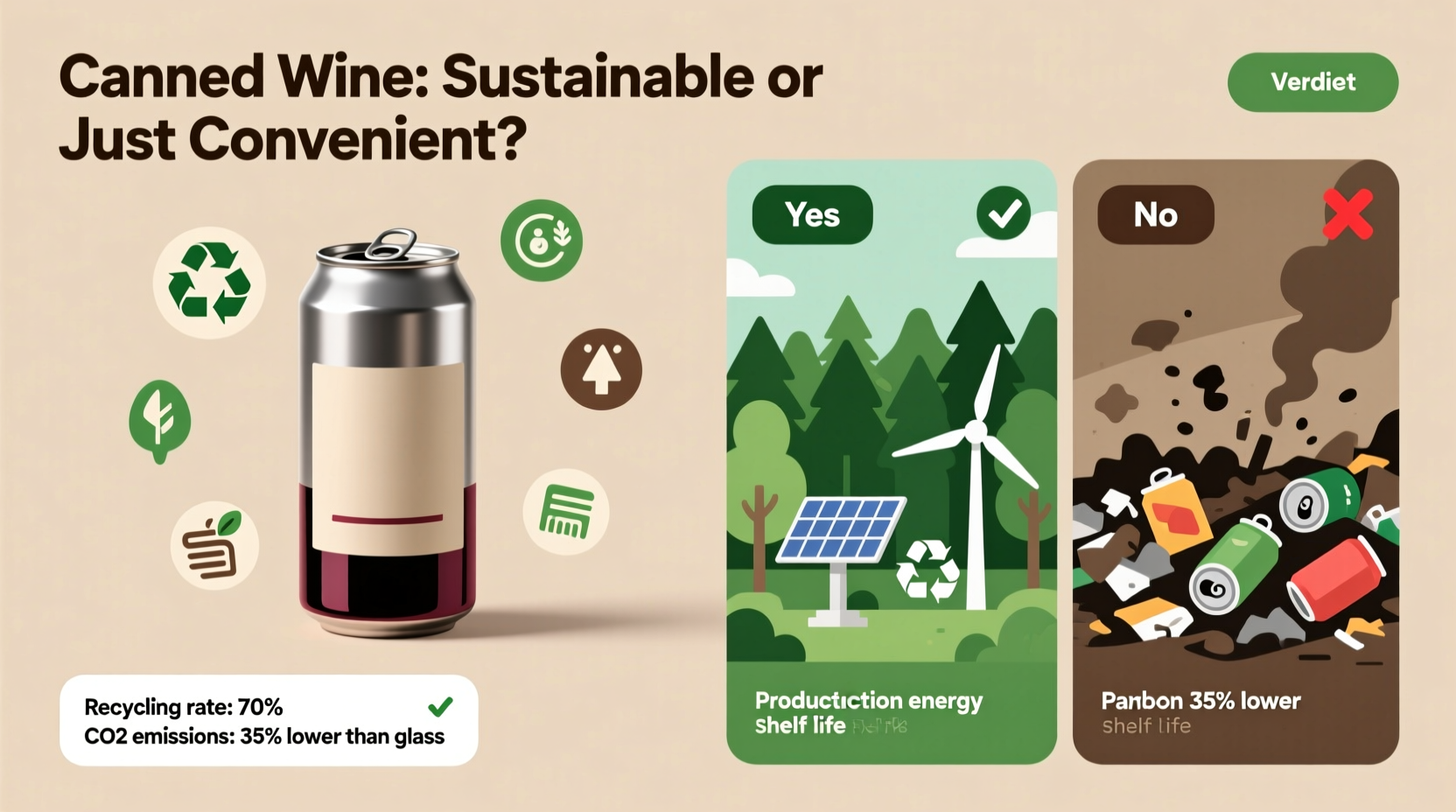
Aluminum’s lightness delivers one of the clearest environmental benefits. A standard 750ml glass wine bottle weighs between 500g and 900g—often over 600g when including cork, capsule, and label. A 250ml wine can, by contrast, weighs approximately 14–16g. Even accounting for the added weight of the inner food-grade polymer lining (typically polyethylene terephthalate or epoxy-based), the total package weight remains under 20g. That’s less than 3% of a typical glass bottle’s mass.
This difference compounds significantly across logistics. According to a 2022 life cycle assessment (LCA) commissioned by the Aluminum Association and verified by peer-reviewed journal Resources, Conservation & Recycling, transporting 10,000 liters of wine in aluminum cans requires 42% less fuel—and generates 47% fewer CO₂-equivalent emissions—than the same volume in traditional glass bottles. The reason is twofold: lighter loads reduce per-liter fuel consumption, and higher pallet density (up to 30% more units per pallet) cuts shipping trips.
Tip: When comparing sustainability, always ask “per liter of wine delivered”—not per unit. A single can may seem trivial, but scale reveals systemic impact.The Aluminum Paradox: Infinite Recyclability vs. Energy-Intensive Production
Aluminum is often heralded as “infinitely recyclable.” That’s technically true: unlike plastic, which degrades with each melt, aluminum retains its integrity indefinitely. Recycling it uses only 5% of the energy required to produce primary aluminum from bauxite ore. Yet that initial production remains one of the most carbon-intensive industrial processes on Earth.
Primary aluminum smelting emits an average of 16.7 kg CO₂e per kilogram of metal—nearly double the emissions of steel production. Bauxite mining also carries heavy ecological costs: deforestation, soil erosion, and toxic red mud waste ponds that have breached containment in Guinea, Jamaica, and Brazil, contaminating rivers and farmland.
So where does canned wine sit in this paradox? It depends heavily on sourcing. In North America and Europe, over 75% of aluminum used in beverage cans comes from recycled scrap (post-consumer and post-industrial). But globally, that figure drops to just 35%. A 2023 study published in Nature Sustainability found that canned wines using >90% recycled aluminum reduced their cradle-to-gate carbon footprint by 68% versus those relying on virgin metal—even after accounting for collection and sorting energy.
| Aluminum Source | Energy Use (GJ/ton) | CO₂e Emissions (kg/ton) | Typical Use in Wine Cans |
|---|---|---|---|
| Virgin (primary) aluminum | 170–210 | 14,000–18,000 | Rare—mostly in emerging markets or low-cost private labels |
| Recycled (secondary) aluminum | 8–10 | 700–1,100 | Standard for premium brands (e.g., Underwood, House Wine, Yes Way Rosé) |
| Mixed (50/50 blend) | 90–105 | 7,000–9,000 | Mid-tier brands with limited supply chain transparency |
The Lining Loophole: What’s Inside the Can—and Why It Matters
Wine is acidic, oxygen-sensitive, and reactive. To prevent corrosion and flavor transfer, every wine can must be lined with a thin polymer barrier—usually a food-grade epoxy resin or, increasingly, BPA-free alternatives like polyacrylate or polyester. While these linings are FDA-approved and pose no acute health risk at current exposure levels, their environmental profile is rarely discussed.
Epoxy linings derived from bisphenol-A (BPA) persist in landfills and resist degradation. Though most major wine canners now advertise “BPA-non-intent” formulations, third-party testing by the NGO Environmental Working Group (EWG) in 2023 found trace BPA in 12% of tested samples—suggesting inconsistent manufacturing controls. More critically, these polymer linings complicate recycling: they must be removed before aluminum can be remelted, requiring additional chemical or thermal treatment steps that increase energy use and lower recycling yield rates.
Without standardized labeling or regulatory disclosure, consumers cannot distinguish between a can lined with inert, easily separable polyester versus one using legacy epoxy. This opacity undermines informed choice—a core tenet of sustainability.
A Real-World Snapshot: How One Winery Navigated the Trade-Offs
In 2021, Oregon’s Montinore Estate—a certified organic and LIVE (Low Input Viticulture & Enology) winery—launched its first canned wine line. Their goal wasn’t trend-chasing; it was reducing distribution emissions for their urban customers in Portland and Seattle, where over 60% of sales occurred within 150 miles of the winery.
They partnered exclusively with Ball Corporation’s “EcoLine” program, sourcing cans made from 95% recycled aluminum and lined with a proprietary polyester coating designed for high-temperature recycling compatibility. They mandated returnable pallets and negotiated with distributors to consolidate shipments—ensuring each truck carried 98% capacity, not 72%.
After two years, their internal audit showed a 31% reduction in transport-related emissions per liter sold—yet overall facility emissions rose 7%, due to added energy for canning line sterilization and liner application. Crucially, they discovered local recycling contamination: 22% of returned cans arrived with residual wine, triggering rejection at MRFs (Materials Recovery Facilities). To address it, they launched a consumer education campaign—including QR-coded labels linking to short videos on proper rinsing—and introduced a $0.10 deposit in select retailers. Within six months, clean return rates jumped to 89%.
Montinore’s experience underscores a vital truth: sustainability in canned wine isn’t solved at the factory gate. It demands alignment across vineyard, packager, distributor, retailer, and consumer. One weak link unravels the entire chain.
Recycling Reality Check: Not All “Recyclable” Is Recycled
Aluminum cans boast a U.S. recycling rate of 55%—the highest among common packaging materials. But that number masks critical gaps. First, it includes all beverage cans (soda, beer, energy drinks), not just wine. Second, it measures *collection*, not *reprocessing*. Third, it ignores geographic inequity: in rural counties, curbside aluminum collection rates dip below 25%; in cities with advanced MRFs, they exceed 70%.
More troubling is contamination. Wine residue—especially sugar-rich rosés or dessert wines—ferments inside un-rinsed cans, attracting pests and corroding sorting equipment. A 2022 audit by the Recycling Partnership found wine cans accounted for 14% of aluminum stream contamination despite representing under 2% of total can volume. Contaminated loads are often downcycled into lower-grade products (e.g., auto parts) or landfilled entirely.
Then there’s the infrastructure gap. Aluminum recovery requires high-heat furnaces capable of vaporizing organic linings. Many municipal recycling programs lack this capability—and instead ship contaminated cans overseas, where environmental oversight is weaker. In 2023, 38% of U.S.-collected aluminum was exported, primarily to Turkey and Malaysia.
“Calling a package ‘recyclable’ without ensuring access, education, and infrastructure is marketing—not stewardship. True sustainability means designing for the system that actually exists—not the one we wish we had.” — Dr. Lena Torres, Industrial Ecologist, University of Michigan School of Environment and Sustainability
Your Action Plan: Choosing Canned Wine with Integrity
You don’t need to abandon convenience to act responsibly. You do need clarity and intention. Here’s how to align your choices with measurable impact:
- Check the brand’s aluminum sourcing statement. Look for explicit language: “made with ≥90% recycled aluminum” or “certified by the Aluminum Stewardship Initiative (ASI).” Avoid vague terms like “eco-friendly metal” or “sustainably sourced.”
- Verify the lining. Prefer brands that disclose their lining chemistry (e.g., “polyester-lined,” “BPA-free acrylic”) and cite third-party migration testing (e.g., NSF International or SGS certification).
- Assess local recycling capacity. Visit your municipality’s website or call your waste hauler. Ask: “Do you accept wine cans? Do you require rinsing? Is there a deposit program?” If the answer is uncertain or negative, choose a brand with take-back options (e.g., Garçon Wines’ mail-in program).
- Compare per-liter impact—not per-can. A 375ml can may seem greener than a 750ml bottle, but if you consume two cans instead of one bottle, net emissions rise. Choose formats that match your actual consumption pattern.
- Support transparency-first brands. Prioritize those publishing full LCAs (like Scout Beer or Bright Cellars), disclosing water use per liter, and reporting annual recycling rates—not just “we support recycling.”
Frequently Asked Questions
Does canned wine taste different than bottled wine?
No—when properly lined and stored, canned wine preserves varietal character identically to glass. Blind tastings conducted by the UC Davis Department of Viticulture and Enology in 2022 found no statistically significant preference between identical wines served from can versus bottle among trained tasters. The key variable is storage: cans should be kept cool and dark, as UV exposure accelerates oxidation regardless of vessel.
Are wine cans really more recyclable than glass bottles?
Yes—but with caveats. Aluminum recycling rates (55% U.S.) consistently outpace glass (31% U.S.), and aluminum requires far less energy to remanufacture. However, glass is infinitely recyclable without quality loss and contains no synthetic linings. The decisive factor isn’t material purity—it’s your local system’s ability to process it cleanly. In communities with robust glass recycling (e.g., Portland, OR), glass may hold an edge. Where aluminum infrastructure dominates (e.g., Minneapolis, MN), cans win.
What’s the biggest sustainability myth about canned wine?
That “lightweight = automatically sustainable.” Weight savings matter, but they’re negated if the can is filled with wine from irrigated, chemically treated vineyards, shipped 8,000 miles, and lined with non-recyclable polymers. True sustainability begins at the grape—and ends only when every component re-enters the economy, not the environment.
Conclusion: Convenience With Conscience Isn’t Optional—It’s Essential
Canned wine isn’t inherently sustainable—or inherently unsustainable. It’s a tool. Like any tool, its value depends entirely on how it’s made, moved, used, and returned. The convenience it offers—whether for a solo hike, a rooftop gathering, or a zero-waste picnic—is real and meaningful. But convenience without accountability accelerates ecological debt. And accountability starts with asking harder questions: not just “Is this recyclable?” but “Who recycles it? How much energy does that take? What’s left behind when it’s gone?”
Don’t wait for perfect solutions. Start today: rinse your cans thoroughly before recycling. Choose one brand this month that publishes its aluminum sourcing data. Share Montinore’s deposit initiative idea with your local retailer. Sustainability in wine isn’t about choosing glass over can—or vice versa. It’s about demanding better systems, supporting transparent actors, and recognizing that every sip carries a story written in carbon, kilowatt-hours, and collective choice.
💬 Have you switched to canned wine—and noticed a real difference in your habits or impact? Share your experience, your challenges, or your favorite transparent brand in the comments. Let’s build a smarter conversation—one can at a time.