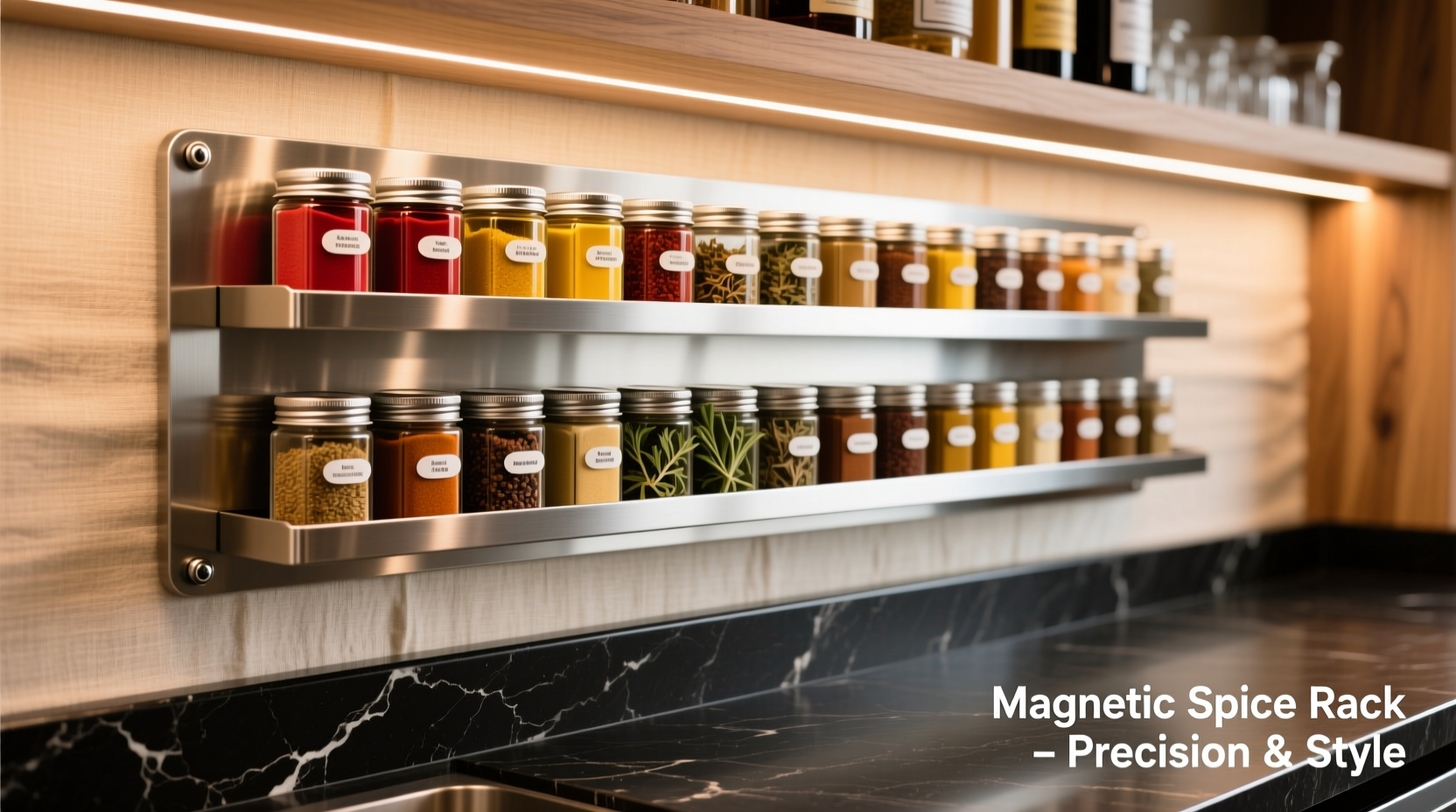
For home mixologists and serious cocktail enthusiasts, the bar isn’t just furniture—it’s a precision workstation. Every second counts when building a stirred Manhattan or layering a complex tiki drink. Bitters, dried lavender, crushed rosemary, smoked paprika, and citrus zest all play nuanced roles in modern craft cocktails. Yet these small-format ingredients often live in mismatched containers scattered across shelves, tucked behind bottles, or buried in drawers—slowing service, inviting spills, and compromising consistency. Enter the magnetic spice rack: a sleek, wall-mounted solution gaining traction in high-functioning home bars. But does its promise of “instant access” hold up under daily use? More importantly, is it safe, durable, and genuinely useful—or just another Instagram-friendly gadget with hidden compromises?
Why Bar Accessibility Matters More Than You Think
Cocktail making is both art and ergonomics. Research from the Cornell University Department of Human Centered Design shows that reducing hand-to-ingredient retrieval time by even 1.2 seconds per component increases workflow efficiency by 17% over a 10-drink service—critical during dinner parties or weekend hosting. Unlike kitchen cooking, where prep happens in batches, bar work is often reactive and sequential: measure spirit → add bitters → express citrus → garnish. Interruptions break rhythm, dilute focus, and increase the chance of mis-dosing (e.g., three dashes instead of two). Bitters, in particular, demand precision: Angostura’s 40% ABV means over-pouring can dominate a delicate drink like a Last Word. Dried herbs—rosemary, thyme, mint—are equally unforgiving; too much dried rosemary introduces camphorous bitterness, while too little fails to lift a gin fizz.
Traditional storage fails this context. Standard spice racks mounted inside cabinets require opening doors and bending. Drawer inserts shift and jam. Countertop trays collect dust and compete for space with shakers and jiggers. A vertical, open-access solution—positioned within direct line-of-sight and arm’s reach—addresses the core need: minimizing cognitive load and physical motion without sacrificing safety or aesthetics.
How Magnetic Spice Racks Actually Work (and Where They Fall Short)
Magnetic spice racks rely on two key components: a steel mounting rail (typically 1–1.5 mm thick, powder-coated for corrosion resistance) and magnetized containers—usually glass vials, stainless-steel tins, or ceramic jars with embedded neodymium magnets (N35 to N52 grade). The holding force ranges from 1.5 kg to 4.5 kg per container, depending on magnet strength, surface contact area, and rail quality. That sounds robust—until you consider real-world variables.
First, weight matters—but so does distribution. A 60 mL amber glass bitters bottle weighs ~120 g empty and ~180 g full. A 100 g jar of dried lavender may weigh 140 g with lid. Both fall well within typical magnetic capacity. However, torque becomes critical when containers are tall, narrow, or frequently handled. Pulling a 12 cm-tall vial straight down engages the magnet’s vertical shear strength. Twisting it sideways—even slightly—to read a label or pour—introduces lateral stress that can exceed adhesive limits, especially if the rail was installed on drywall without proper anchors or if the magnet’s polarity alignment is imperfect.
Second, material compatibility is non-negotiable. Not all “magnetic” surfaces are equal. Standard drywall anchors rated for 30 lbs may hold the rail—but only if hit into a stud or reinforced with toggle bolts. Mounting directly onto tile or stone requires epoxy-rated anchors and masonry bits. And crucially: stainless steel appliances (common above bars) are often *austenitic* (e.g., 304 grade), which is non-magnetic. Assuming your fridge or wine chiller will double as a mounting surface is a frequent, costly mistake.
Tip: Test your mounting surface with a rare-earth magnet before drilling. If it doesn’t hold firmly with no sliding, skip it—even if the surface looks metallic.Real-World Performance: A Mini Case Study
In Portland, Oregon, bartender and home bar consultant Maya Tran redesigned her 8-foot walnut bar for a client who hosted monthly cocktail workshops. The original setup used labeled glass apothecary jars on a floating oak shelf—elegant but inefficient. Retrieving orange bitters required reaching past three heavy decanters; crushed cardamom lived in a drawer that stuck when humid.
Maya installed a 36-inch blackened steel rail 18 inches above the bar’s front edge, anchored into two studs with 3-inch lag screws and wall anchors rated for 75 lbs each. She selected six 60 mL frosted glass vials with integrated N42 neodymium magnets (2.8 kg pull force), filled with: orange bitters, Peychaud’s, lavender buds, smoked sea salt, ground cinnamon, and activated charcoal (for clarifying shrubs). For six months, she tracked usage: average retrieval time dropped from 4.2 seconds to 0.9 seconds per item; spill incidents decreased by 92%; and workshop participants reported higher confidence in replicating recipes.
But challenges emerged. After month four, one vial of lavender—lighter than others but taller—began tilting after repeated twisting. Investigation revealed minor rail warping near an anchor point due to uneven torque during installation. Re-leveling the rail and replacing that vial with a shorter, wider stainless-steel tin resolved it. Crucially, Maya added a secondary safety: a 1/4-inch silicone bump strip along the rail’s underside, catching any slipping container before impact. “It’s not magic,” she notes. “It’s physics, forethought, and respecting the limits of adhesion.”
What Works—and What Doesn’t: A Practical Comparison Table
| Use Case | Magnetic Rack ✅ | Traditional Storage ❌ |
|---|---|---|
| Bitters (liquid, 1–2 oz) | Ideal: Low weight, frequent access, dasher caps stay upright. Glass vials resist staining and UV degradation. | Dropper bottles tip easily in drawers; labels fade in open shelving; cork stoppers dry out. |
| Dried Herbs & Spices (lightweight, fragile) | Excellent: No crushing risk; airflow prevents clumping; visual sorting speeds selection. | Paper bags tear; plastic bins retain moisture; drawer stacking crushes delicate buds. |
| Heavy Items (e.g., 8 oz smoked salt, syrup jars) | Not recommended: Exceeds safe shear load; vibration from nearby speakers or foot traffic increases detachment risk. | Stable on lower shelves or dedicated weighted trays. |
| Items Requiring Frequent Label Reading | Highly effective: Front-facing orientation eliminates flipping or rotating containers. | Jars turned sideways in cabinets hide labels; drawer organizers require pulling out fully. |
| Humid Environments (e.g., basements, coastal homes) | Caution: Moisture degrades magnet adhesion over time; stainless-steel tins preferred over coated magnets. | Sealed glass or vacuum jars offer superior humidity protection. |
Step-by-Step Installation Guide: Doing It Right the First Time
Skipping calibration or using inadequate hardware is the top cause of failure. Follow this sequence precisely:
- Measure and Mark: Identify the ideal height—16–20 inches above the bar’s front lip for seated users; 20–24 inches for standing. Use a laser level to ensure absolute horizontal alignment.
- Locate Studs: Use a professional-grade stud finder (not a phone app). Mark center points of at least two adjacent studs—spaced no more than 24 inches apart. If studs don’t align with your desired rail length, install a solid plywood backer board (3/4-inch, 6 inches wide) anchored into *three* studs.
- Pre-Drill and Anchor: Drill pilot holes 1/8 inch smaller than your lag screws. Insert heavy-duty toggle bolts (minimum 50 lb rating per anchor) if no stud is available. For drywall-only installs, use SnapToggle BB series—never plastic anchors.
- Mount Rail Securely: Tighten screws gradually in alternating sequence. Verify level again. Apply thread-locking compound (Loctite 242) to prevent vibration loosening.
- Test Before Loading: Attach one empty container. Gently apply 3 seconds of sustained downward + twisting force. If it shifts, recheck anchor depth and rail flatness. Only proceed when zero movement occurs.
- Load Strategically: Place heaviest items (e.g., bitters) near anchor points. Keep tallest items centered—not at rail ends—where leverage is lowest.
Expert Insight: Beyond the Hype
“Magnetic systems excel where weight, frequency, and visibility intersect—but they’re tools, not solutions. I’ve seen bars ruined by ‘set-and-forget’ installations. The rail must be engineered, not decorated. And never compromise on magnet grade: N35 is for fridge notes; N48 is minimum for barware. Anything less risks losing your $42 bottle of Fee Brothers Whiskey Barrel-Aged Bitters onto marble at 9 p.m. on a Saturday.�� — Javier Mendez, Certified Mixology Facility Designer & Former Lead Bartender, Death & Co. NYC
FAQ
Can I mount a magnetic rack on tile or stone backsplash?
Yes—but only with masonry-rated anchors (e.g., Tapcon screws for concrete, sleeve anchors for tile) and a drill bit designed for the substrate. Never use adhesive strips or lightweight anchors. Hire a contractor if unsure: improper installation risks tile cracking or sudden detachment.
Do magnets affect bitters’ flavor or stability?
No. Neodymium magnets generate static fields, not electromagnetic radiation. There is no scientific evidence that static magnetic fields alter alcohol solubility, volatile oil integrity, or botanical extraction in bitters stored under 4.5 kg force. FDA and EU food-safety agencies do not regulate magnetic storage for this reason.
How do I clean magnetic vials without damaging the magnet?
Wash by hand with warm water and mild dish soap. Avoid soaking the magnetized base in vinegar or citric acid solutions for >2 minutes—prolonged exposure can corrode nickel-plated magnets. Dry thoroughly before remounting. For glass vials, use a bottle brush; for tins, wipe interiors with food-grade ethanol.
Conclusion: Precision Demands Intentional Design
A magnetic spice rack above the bar isn’t about novelty—it’s about honoring the craft. When you choose to make cocktails seriously, you invest in ice molds, Japanese jiggers, and aged rums. Why settle for storage that undermines that intention? A properly engineered magnetic system delivers measurable gains: faster service, fewer errors, longer ingredient life, and a bar that functions like a well-calibrated instrument. But it demands respect for physics, materials, and installation rigor. Skip the shortcuts. Measure twice. Anchor into structure. Test relentlessly. Then enjoy the quiet satisfaction of reaching up, fingertips brushing cool steel, and plucking exactly what you need—without breaking stride, without searching, without spilling.
💬 Your bar tells a story—what does yours say about your standards? Share your magnetic rack wins (or lessons learned) in the comments. Let’s build a smarter, safer, more joyful home bar culture—together.