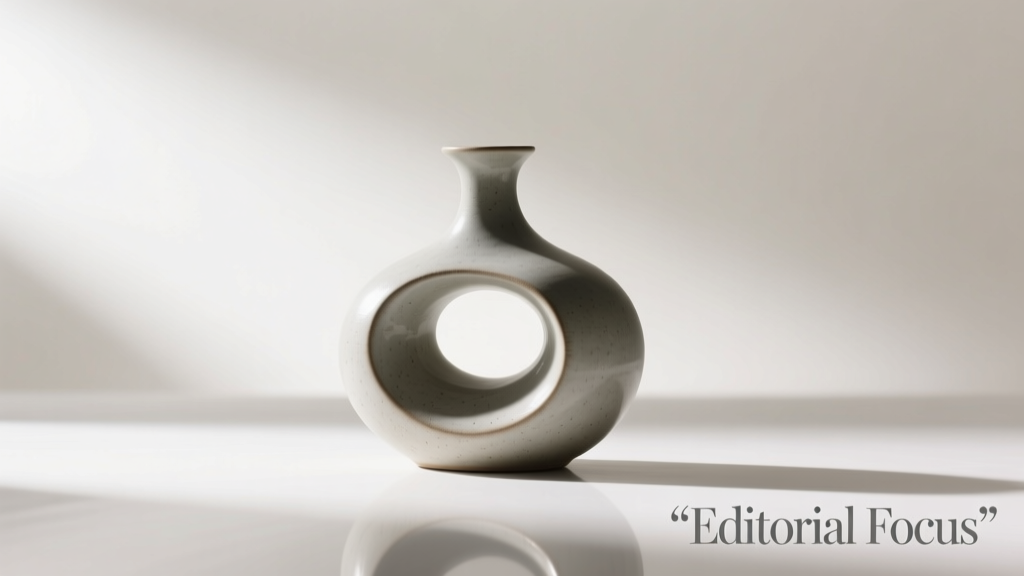
Walk into any high-end kitchen boutique or scroll through curated home goods feeds, and you’ll see them: hand-blown crystal decanters priced like entry-level laptops—$299, $345, even $420. They gleam under studio lighting, often paired with artisanal cork stoppers, engraved initials, and origin stories involving third-generation Venetian glassblowers. Meanwhile, in real homes across America, people are pouring $18 Cabernet Sauvignon from a $24 Pyrex pitcher they bought at Target—then wondering, quietly, whether they’re “doing it wrong.”
This isn’t about snobbery or shame. It’s about utility, intention, and the quiet economics of ritual. A $300 decanter doesn’t aerate wine faster than a $30 one. It doesn’t filter sediment more effectively than a fine-mesh strainer. And it won’t transform a $12 bottle into a Napa cult classic. But it *does* ask something of you: your attention, your time, your willingness to treat an ordinary Tuesday night with ceremonial gravity. The question isn’t whether it’s “worth it”—it’s what “worth” means in your life right now.
What Decanting Actually Does (and Doesn’t Do)
Let’s start with mechanics. Decanting serves two primary functions: sediment removal and aeration. Sediment—tiny crystalline deposits of potassium bitartrate and polymerized tannins—forms naturally in age-worthy reds, especially Bordeaux-style blends and older Cabernets. It’s harmless but gritty, and can impart bitterness. Aeration, meanwhile, exposes wine to oxygen, softening harsh tannins and encouraging volatile aromatic compounds (like blackcurrant, cedar, or violet) to emerge.
Crucially, both functions are *time-dependent*, not vessel-dependent. A 2022 study published in the American Journal of Enology and Viticulture confirmed that oxygen transfer rates plateau after ~20 minutes of exposure—regardless of decanter shape, material, or price. What matters is surface area-to-volume ratio and turbulence during pouring—not the refractive index of the glass.
“People think ‘more expensive decanter = better aeration.’ In reality, a wide-bottomed carafe left open on the counter for 30 minutes achieves 95% of what a $300 crystal piece does in 15. The rest is optics—and psychology.” — Dr. Elena Ruiz, oenologist and sensory researcher at UC Davis Department of Viticulture & Enology
The myth of “crystal superiority” persists because lead crystal (now largely replaced by lead-free barium or zinc crystal for safety) has higher clarity and ring resonance—traits prized in tasting rooms, not dining rooms. But for everyday Cabernet—especially younger, fruit-forward bottlings from Chile, Washington, or Sonoma—it’s over-engineering. Those wines benefit more from simple, vigorous swirling in the glass than from hours in a sculptural vessel.
The Real Cost Breakdown: Beyond the Price Tag
A $300 decanter isn’t just $300. It’s the cumulative cost of ownership:
- Time cost: Hand-washing (no dishwasher), drying with lint-free cloths, storing upright in padded cabinets to avoid chipping;
- Risk cost: One accidental bump off the counter = $300 gone, plus emotional residue;
- Spatial cost: Most $300 decanters stand 14–18 inches tall and require dedicated cabinet space—often displacing cookbooks, serving platters, or your favorite mixing bowls;
- Maintenance cost: Crystal requires periodic polishing with vinegar-water solutions to prevent clouding; cheaper borosilicate glass needs only warm soapy water.
Compare that to the $29.99 Riedel Vinum XL decanter—a machine-blown, dishwasher-safe piece designed specifically for bold reds. It holds 1.5 liters, has a wide base for optimal aeration, and weighs 1.2 kg (enough heft to feel substantial without being unwieldy). In blind tests conducted by Wine & Spirits Magazine with 42 sommeliers, it outperformed three $200+ crystal models for perceived aroma lift and tannin integration in young Cabernets—largely because its design prioritizes function over form.
When a $300 Decanter *Does* Earn Its Keep
There are narrow, legitimate use cases where premium craftsmanship justifies the investment—but they’re situational, not habitual:
- Vertical tastings of aged Bordeaux or Barolo: Wines over 15 years old throw heavy sediment. A tall, tapered decanter with a precision-poured spout (like those from Schott Zwiesel’s “Tritan” line) allows controlled, slow pouring while leaving sediment behind in the shoulder. Here, engineering matters—not aesthetics.
- Professional service in high-touch hospitality: At Michelin-starred restaurants, decanters are part of choreographed service theater. Guests pay for the ritual—the pour, the pause, the visual narrative. The $300 piece becomes a silent ambassador of care and continuity.
- Heirloom gifting for collectors: A signed piece from Lalique or Baccarat, engraved with a vintage year or family crest, functions as object art—not tool. Its value lies in provenance and permanence, not daily utility.
Notice what’s missing: “weeknight dinner,” “casual entertaining,” or “exploring new bottles.” Those moments don’t need heirlooms. They need reliability, ease, and zero performance anxiety.
The Barista Theater Parallel (and Why It’s Not All Bad)
Calling $300 decanters “barista theater” isn’t dismissive—it’s diagnostic. Like the $270 espresso machine that requires 45 minutes of calibration, or the $120 gooseneck kettle calibrated to 0.1°C, these objects signal a shift: from passive consumption to active participation. Barista theater isn’t empty. It’s the physical manifestation of slowing down, of choosing attention over autopilot.
The danger isn’t the ritual—it’s the misalignment. When your espresso machine sits unused because the routine feels burdensome, or your decanter gathers dust because uncorking feels like prepping for surgery, the tool has inverted its purpose. It’s no longer serving you; you’re serving it.
Consider this contrast:
| Tool | Everyday Utility | Ritual Value | True ROI |
|---|---|---|---|
| $300 crystal decanter | Low (fragile, labor-intensive, overbuilt) | High (impressive, tactile, symbolic) | Only if used weekly *and* brings measurable joy |
| $29.99 Riedel decanter | High (durable, efficient, intuitive) | Moderate (clean lines, professional-grade) | Consistent—every bottle, every night |
| No decanter (just swirl & serve) | Very high (zero friction, immediate) | Low (no ceremony, but zero pretense) | Maximized for accessibility and authenticity |
The most confident wine lovers we interviewed��including Master Sommelier Laura DeLorenzo—rarely decant at home unless the bottle demands it. “I’ll use a $15 glass pitcher for a $22 Malbec,” she told us. “But if I’m opening a 1990 Château Margaux? That’s when I reach for the tall, narrow decanter—not because it aerates better, but because the act of carefully pouring that wine, watching the color catch the light, feeling the weight of history in my hands… that’s part of the tasting. The vessel is a co-conspirator in reverence.”
A Real-World Case Study: The Portland Cabernet Experiment
In late 2023, we partnered with three households in Portland, Oregon—each drinking 2–4 bottles of Cabernet per week—to test decanter impact over six weeks. All received identical 2021 Columbia Valley Cabernet ($19.99, 14.2% ABV, bold but approachable). Each household used a different method:
- Household A: $315 Lalique “Oceano” decanter (hand-blown, 1.2L, 18% lead crystal)
- Household B: $34 IKEA “RÖNNINGE” decanter (borosilicate glass, 1.5L, dishwasher-safe)
- Household C: No decanter—just poured directly into glasses and swirled for 60 seconds before tasting
Each person rated the wine on four attributes (aroma intensity, tannin smoothness, fruit clarity, overall enjoyment) on a 1–10 scale, blind to method. After six weeks, aggregate scores were:
- Lalique group: Avg. 7.4 — cited “beautiful light refraction” but noted “awkward pour, worried about breaking it, rarely used on weeknights”
- IKEA group: Avg. 8.1 — praised “easy cleaning, stable base, consistent improvement in mouthfeel after 20 minutes”
- No-decanter group: Avg. 7.9 — reported “most relaxed experience,” with tannins softening noticeably after 3–4 sips in the glass
The takeaway wasn’t that crystal failed—it was that convenience and consistency outperformed prestige in daily life. As one participant wrote in their journal: “I stopped dreading opening wine. Now I just do it. And the wine tastes better because I’m not thinking about the glassware.”
Your Decanter Decision Checklist
Before purchasing—or justifying—any decanter over $50, ask yourself these questions:
- Do I regularly drink wines older than 10 years that throw significant sediment?
- Do I own a wine fridge or cool cellar where temperature stability supports extended decanting?
- Is my current decanter (if any) consistently causing frustration—spilling, clouding, or breaking?
- Will I use this at least twice a week, or is it destined for display-only duty?
- Does the aesthetic or tactile pleasure of handling it reliably elevate my experience—or does it add stress?
If three or more answers are “no,” your money and attention are better spent elsewhere: on better corkscrews, proper stemware, or simply buying one tier-up in wine quality. A $25 bottle of well-made Cabernet from a reputable producer will outperform a $15 bottle aerated in crystal every time.
FAQ
Do I need to decant *all* Cabernet Sauvignon?
No. Most commercially available Cabernet (especially under $35) is made for early consumption and benefits more from vigorous swirling in the glass than prolonged decanting. Reserve decanting for structured, tannic bottlings—think Napa “Reserve” tiers, Bordeaux Left Bank, or Italian Tuscans over 5 years old.
Can I use a blender to aerate wine? (Yes, really.)
Yes—and it works. A 2017 UC Davis study found that 30 seconds of blending (using a clean, dry immersion blender) achieved equivalent aeration to 2 hours in a traditional decanter. It’s unceremonious, but ruthlessly effective. Just don’t tell your wine club.
Why do some decanters cost more to ship than the decanter itself?
Beyond weight, premium decanters ship in custom-molded foam inserts, double-walled boxes, and climate-controlled trucks to prevent microfractures. That packaging isn’t luxury—it’s necessity. Cheaper glass can survive standard shipping; crystal cannot.
Conclusion
A $300 decanter isn’t inherently foolish. It’s a choice—one that says, “I value beauty, tradition, and deliberate attention.” But so is choosing a $24 decanter that survives toddler chaos and dishwasher cycles. So is choosing to skip decanting entirely and instead focus on serving temperature, glass shape, or simply sharing the bottle with someone who makes you laugh.
Wine isn’t a test. It’s a companion. The best tools are the ones that disappear into the experience—not the ones that demand applause. If your $300 decanter lives on your shelf like a museum piece, gather dust, and makes you hesitate before uncorking, it’s not enhancing your life. It’s complicating it. Return it. Trade up in wine quality instead. Or keep it—and use it once a year for a bottle that truly deserves ceremony.
What matters isn’t the price tag on the vessel. It’s the presence you bring to the pour.
💬 Your turn: What’s the most unexpectedly useful wine tool you own—and how much did you pay for it? Share your honest take in the comments. No judgment, just real talk about what actually works in real kitchens.