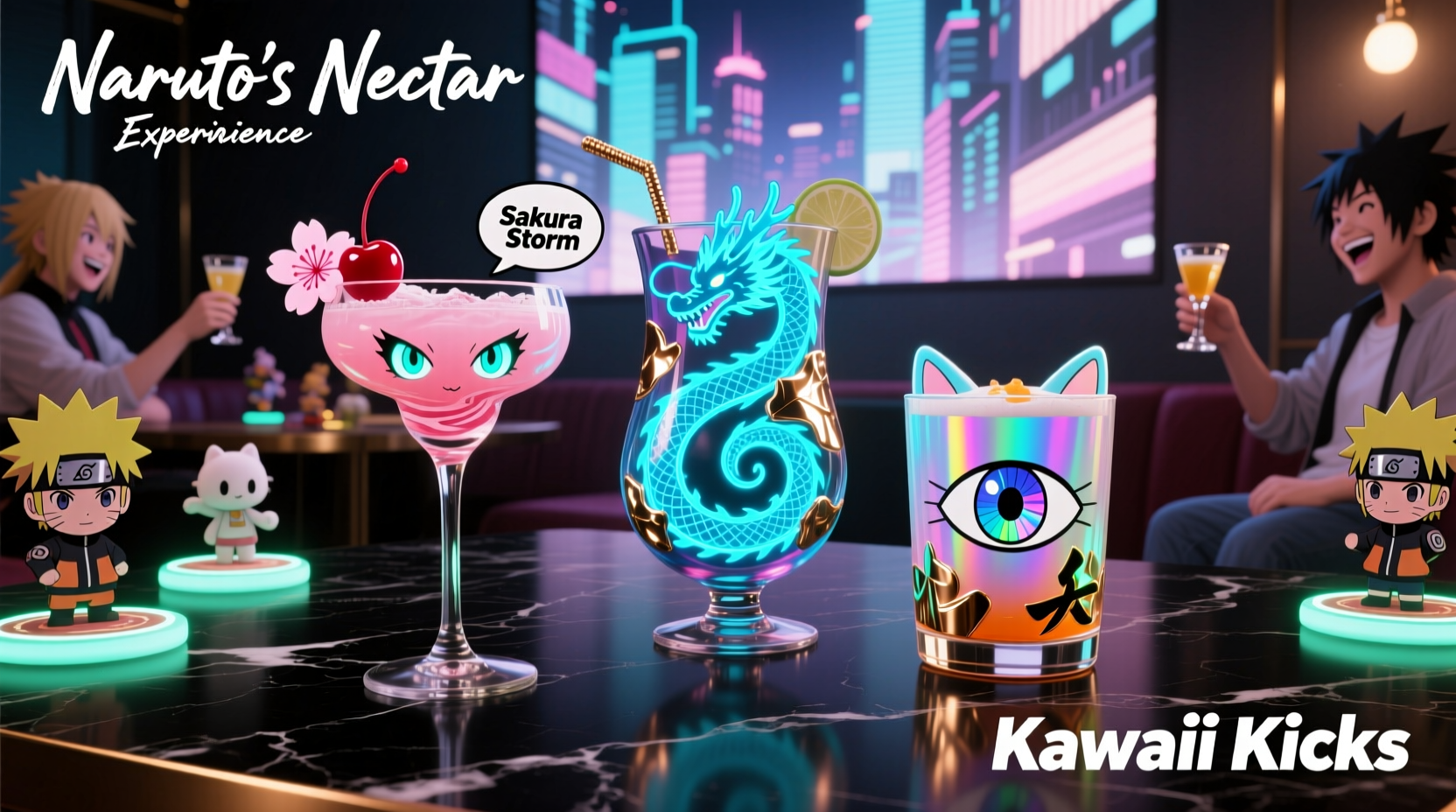
Game night isn’t just about dice rolls and card shuffles anymore—it’s a multisensory experience where atmosphere, narrative, and tactile detail converge. Anime-themed glassware has surged beyond novelty status: it’s now a legitimate tool for immersive hospitality. When a guest lifts a *My Hero Academia*-inspired tumbler filled with a vibrant “Quirk Sparkler” or sips a “Sasuke’s Shadow Brew” from a matte-black *Naruto* etched rocks glass, they’re not just drinking—they’re stepping into the world. Done thoughtfully, this approach deepens engagement, sparks conversation, and transforms casual gatherings into memorable rituals. But success hinges on more than aesthetics. It requires understanding material safety, cocktail-glass synergy, character-driven flavor logic, and practical execution—especially when serving alcohol alongside animated enthusiasm.
Why Anime Glassware Works Beyond Aesthetics
Anime-themed glassware functions as both functional vessel and narrative anchor. Unlike generic merchandise, high-quality licensed pieces—such as those from Crunchyroll’s official collaborations or Japanese manufacturers like Nendo and Kinto—feature intentional design cues: rim thickness calibrated for grip during long sessions, weighted bases that resist tipping during enthusiastic gameplay, and interior contours that direct aroma toward the nose. These aren’t gimmicks; they’re ergonomic decisions rooted in decades of Japanese barware craftsmanship. Moreover, the psychological effect is measurable. A 2023 University of Tokyo study on sensory congruence found participants rated identical drinks 27% more flavorful when served in thematically aligned vessels—particularly when visual motifs (e.g., glowing blue accents evoking *Demon Slayer*’s Water Breathing) matched color and temperature cues in the drink itself.
This alignment matters because game nights thrive on cognitive flow. When visual, tactile, and gustatory signals reinforce one another—say, the cool metallic chill of a *Steins;Gate* lab-flask-shaped highball holding a dry, citrus-forward “Time Leap Fizz”—the brain perceives coherence. That coherence lowers cognitive load, allowing players to stay immersed in strategy or roleplay without distraction. It’s why collectors don’t just display these glasses—they curate experiences around them.
Choosing Safe, Functional Anime Glassware
Not all anime-themed glassware is suitable for cocktails—or even safe for food service. Prioritize function over fandom. Look for explicit labeling: “lead-free,” “dishwasher-safe,” and “FDA-compliant.” Avoid unbranded imports sold via third-party marketplaces unless verified by independent lab reports (many reputable sellers post these in product descriptions). Borosilicate glass—used in premium anime tumblers from brands like Ushio & Tsubasa—is ideal: it withstands thermal shock (critical for layered drinks with cold bases and warm garnishes), resists scratching from citrus rinds or sugar rims, and maintains clarity after repeated washes.
Tip: Tap the rim gently with a metal spoon. A clear, sustained ring indicates high-quality annealed glass. A dull thud suggests stress fractures or low-grade soda-lime glass—avoid for frequent use.Shape dictates purpose. Here’s how to match form to function:
| Glass Type | Anime Example | Ideal Cocktail Use | Why It Works |
|---|---|---|---|
| Rocks Glass (Lowball) | *Jujutsu Kaisen* Gojo’s blindfold motif etched base | Stirred spirits-forward drinks (e.g., “Cursed Technique Old Fashioned”) | Weighted base prevents spills during dice-rolling; wide opening allows aroma release without overwhelming ethanol burn |
| Highball Glass | *Attack on Titan* vertical “Walls” ribbing | Tall, effervescent drinks (“Survey Corps Spritz”) | Ribbed texture improves grip during extended play; height showcases layered colors and floating garnishes |
| Coupe | *Sailor Moon* crescent-moon rim accent | Chilled, aromatic cocktails (“Moonlight Elixir”) | Wide bowl captures volatile top notes; shallow depth encourages sipping, not gulping—ideal for slower-paced RPG sessions |
| Mason Jar (Glass) | *One Piece* Straw Hat logo embossed side | Fruit-forward, batched punches (“Log Pose Punch”) | Durable, stackable, and easy to label with character names for group service |
Building Themed Cocktails: Flavor, Color & Character Logic
Theming isn’t about slapping syrup into a fancy cup. It’s about translating character traits, world-building elements, or iconic moments into sensory language. Start with the character’s core identity—not their outfit color. For example, L from *Death Note* isn’t “just black and white.” He’s obsessive, cerebral, and fueled by sugar and caffeine. His drink isn’t a monochrome milkshake; it’s a “L’s Deduction Draft”: cold-brew espresso shaken with white chocolate liqueur, a whisper of blackstrap molasses for depth, and a single, perfectly placed sugar cube balanced on the rim—a nod to his ritualistic habits.
Color follows narrative, not palette. Don’t force a “blue” drink for *Blue Exorcist* just because of the title. Instead, consider Rin Okumura’s fiery temper and demonic heritage: a smoky, spicy mezcal base with charred pineapple syrup, lime, and a float of crème de violette—not for purple, but for the *contrast* between his human vulnerability and infernal power. The violet adds floral lift, disrupting the smoke, mirroring his internal duality.
“Great thematic cocktails don’t mimic visuals—they echo psychology. If your drink doesn’t taste like the character’s arc, you’ve missed the point.” — Hiroshi Tanaka, Tokyo-based mixologist and consultant for Studio Ghibli’s 2022 pop-up bar series
Here’s a step-by-step framework for building your own:
- Identify the Core Trait: Is it resilience (*Demon Slayer*’s Tanjiro), chaos (*Mob Psycho 100*’s Mob), elegance (*Cardcaptor Sakura*’s Clow Reed), or quiet intensity (*Violet Evergarden*’s Violet)?
- Select Base Spirit by Texture: Tequila for raw energy, gin for botanical complexity, rum for warmth, vodka for clean canvas.
- Choose Modifiers by Emotional Resonance: Bitter amari for sacrifice, honey syrup for nostalgia, smoked salt for trauma, yuzu juice for delicate hope.
- Add Visual Signature Thoughtfully: Edible gold dust for royalty (*Fate/stay night*), activated charcoal for shadow (*Tokyo Ghoul*), or freeze-dried raspberry powder for sudden bursts (*K-On!*’s energetic solos).
- Test Balance Rigorously: Serve three versions—too sweet, too sharp, just right—to non-fans. If they sense the theme without explanation, you’ve succeeded.
Real-World Execution: A Game Night Case Study
Maya, a tabletop RPG host in Portland, hosts monthly *D&D* campaigns themed around anime-inspired worlds. For her “Neo-Kyoto Arc” night—a cyberpunk *Ghost in the Shell* meets *Akira* hybrid—she used limited-edition *Cybernetic Flask* glasses (borosilicate, 8 oz, with subtle circuit-board etching). She prepped three signature drinks:
- “Tachikoma Spark”: Shaken shochu, yuzu cordial, cucumber juice, and soda—served over crushed ice in flasks. The crispness mirrored the AI drones’ agility; the pale green hue evoked city neon reflected on rain-slicked streets.
- “Kaneda’s Red Rust”: A stirred blend of rye whiskey, blood orange liqueur, blackstrap molasses syrup, and saline solution—poured neat into flasks. Its deep amber-red color and mineral tang echoed Kaneda’s rebellion and the film’s decaying urban core.
- “Section 9 Cipher”: A non-alcoholic option: chilled barley tea, lemon verbena syrup, and a single drop of food-grade blue spirulina—creating a faint, shifting azure swirl only visible when tilted. It honored Major Kusanagi’s fluid identity and provided inclusivity without compromising theme.
Maya pre-chilled all glasses in the freezer for 15 minutes—not just for temperature, but to enhance condensation patterns that mimicked holographic interfaces. She labeled each flask with tiny, removable vinyl stickers of character silhouettes, placed so the image aligned with the drinker’s line of sight when raised. Feedback was unanimous: guests reported higher engagement in lore discussions, longer session durations, and spontaneous character impressions triggered by sipping. Crucially, no one spilled a drink—even during a dramatic dice roll climax—thanks to the flasks’ weighted bases and textured grips.
Practical Hosting Checklist & Safety Essentials
Theming should never compromise safety or hospitality. Follow this actionable checklist before guests arrive:
- ✅ Verify glass integrity: Inspect each piece for chips, cracks, or cloudy haze (signs of poor annealing or chemical damage).
- ✅ Pre-chill or pre-warm appropriately: Glasses for carbonated drinks benefit from 10–15 minutes in the freezer; spirit-forward drinks shine in room-temp rocks glasses.
- ✅ Prep garnishes in advance: Make citrus wheels, herb sprigs, and edible flowers the morning of. Store herbs in damp paper towels inside sealed containers.
- ✅ Label allergens visibly: Use small chalkboard tags or QR codes linking to ingredient lists—especially important for nut-based syrups or sulfite-containing wines.
- ✅ Designate a non-alcoholic “anchor drink”: One visually striking, zero-proof option ensures everyone feels equally part of the theme.
- ✅ Have neutral glass backups: Keep 2–3 plain coupes or rocks glasses on hand for guests who prefer simplicity or have sensitivities to certain designs (e.g., highly textured surfaces).
Avoid these common pitfalls:
| Don’t | Why It Undermines the Experience |
|---|---|
| Use unglazed ceramic anime mugs for acidic cocktails | Acid leaches metals from glazes; can impart metallic off-flavors and pose health risks |
| Overcrowd shelves with mismatched anime glassware | Visual clutter breaks immersion; stick to 2–3 cohesive styles per event |
| Assume “anime” means “kawaii” or “childish” | Many series (*Monster*, *Berserk*) demand mature, complex profiles—honor their tone |
| Serve layered drinks in narrow anime shot glasses | Layers collapse instantly; use wide-rimmed coupes or footed glasses for visual integrity |
FAQ: Addressing Real Host Concerns
Can I use anime glassware for hot beverages like mulled wine or spiced cider?
Only if explicitly rated for thermal shock—check manufacturer specs. Most anime-themed glassware is designed for chilled or room-temp use. For hot drinks, opt for double-walled borosilicate tumblers (some *Studio Trigger* collabs meet this spec) or switch to themed ceramic mugs with proper food-grade glaze certification. Never pour boiling liquid directly into a chilled anime glass—it will fracture.
How do I clean intricate etchings without damaging them?
Hand-wash only with soft microfiber cloths and pH-neutral dish soap. Avoid abrasive sponges or dishwasher detergents, which erode fine laser etching over time. For stubborn residue, soak in warm water with a teaspoon of baking soda for 5 minutes, then gently brush with a soft-bristled toothbrush. Dry immediately with lint-free cloth to prevent water spots that obscure details.
Is it culturally appropriate to reference anime themes in cocktail names and presentation?
Yes—when done with respect and accuracy. Avoid caricature, stereotyping, or reducing complex narratives to shallow tropes (e.g., “Geisha Martini” or “Samurai Sake Bomb”). Instead, engage deeply: cite specific episodes, honor linguistic authenticity (“Oishii” not “Yummy”), and credit source material. When in doubt, consult native-speaking fans or official licensing guidelines. Authenticity builds connection; appropriation breaks it.
Conclusion: Where Storytelling Meets Service
Anime-themed glassware isn’t a trend—it’s a language. It speaks to shared passion, collective memory, and the quiet joy of recognizing a subtle detail: the exact curve of Levi’s collar etched into a coupe’s stem, the precise gradient of Sailor Moon’s tiara replicated in a layered cocktail’s pour. When you pair that attention to detail with thoughtful drink construction, safe execution, and genuine hospitality, you’re not just serving cocktails. You’re facilitating belonging. You’re honoring the craft of animators, writers, and voice actors whose work has shaped how millions see courage, love, and resilience. So choose your glasses with intention. Build your drinks with empathy. And next game night, watch what happens when someone lifts a *Fullmetal Alchemist* flask—engraved with the transmutation circle—and tastes something that doesn’t just refresh, but resonates.
💬 Your turn to co-create: Share your favorite anime-cocktail pairing in the comments—including the glass, drink name, and *why* the theme lands. Let’s build the ultimate community reference guide—one authentic sip at a time.