Traveling with alcohol—whether it’s a rare bourbon from Kentucky, artisanal gin from London, or vintage wine from Bordeaux—is increasingly common. But one cracked bottle in your suitcase can ruin an entire trip: sticky residue, lost souvenirs, potential baggage rejection, and even customs penalties for undeclared or over-limit imports. Worse, many travelers assume “it’s just a bottle” until they’re detained at a port of entry for exceeding duty-free allowances—or worse, flagged for improper packaging under hazardous materials regulations.
This isn’t about loopholes. It’s about precision: understanding the layered rules (TSA, IATA, national customs), mastering physical protection, and aligning intent with legality. Whether you’re flying domestically with craft beer, checking premium spirits internationally, or hand-carrying a wedding gift bottle across borders, success hinges on preparation—not luck.
1. Know the Hard Limits: Airline, TSA, and Customs Rules
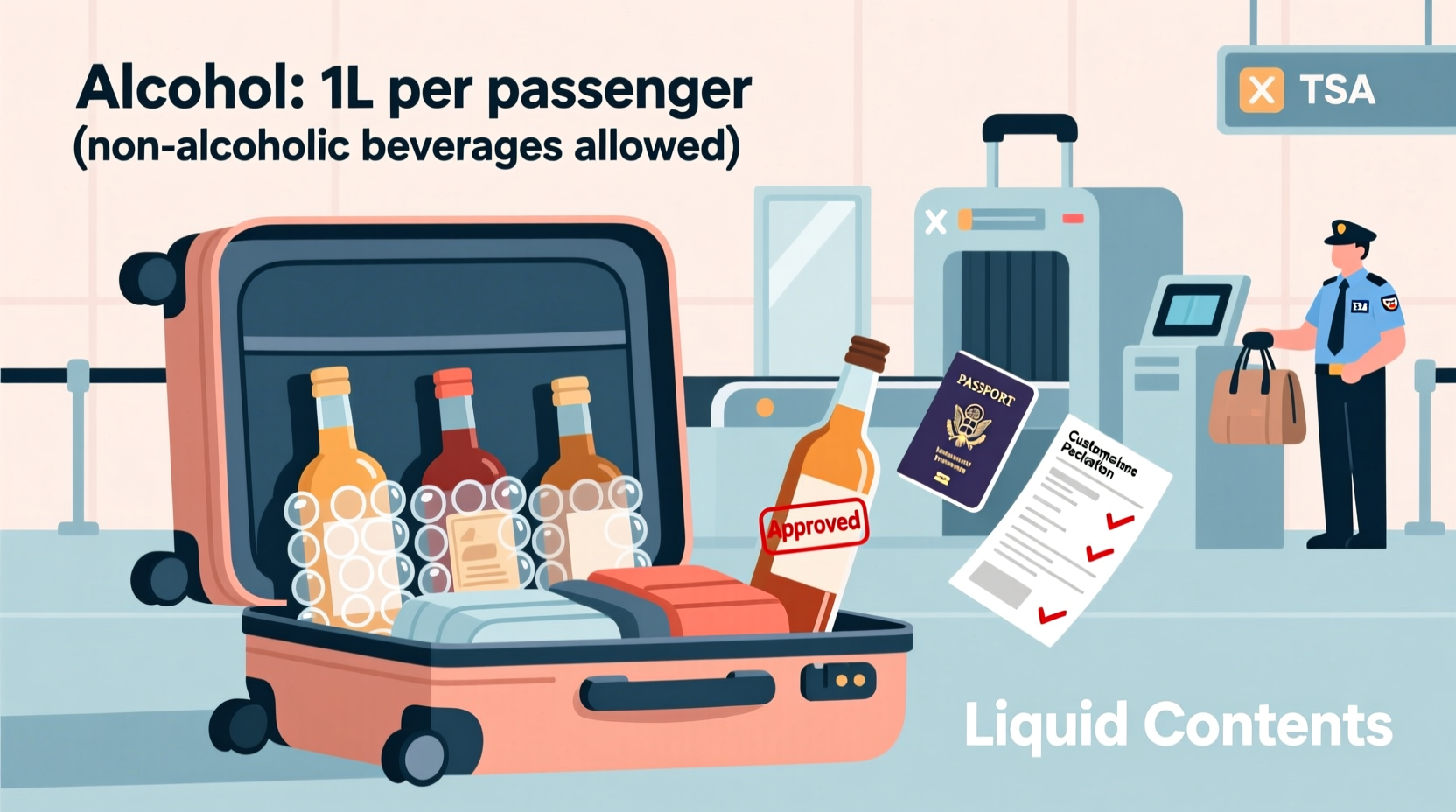
Alcohol isn’t treated as generic cargo—it’s regulated by three distinct authorities, each with non-negotiable thresholds:
- TSA (U.S. domestic & outbound flights): Liquids over 3.4 oz (100 mL) must go in checked baggage. No exceptions—even if sealed and unopened. Carry-on alcohol is limited to travel-sized containers in a single quart-sized clear bag (total volume ≤ 1 L).
- IATA (International Air Transport Association): Governs global air cargo standards. Bottles above 24% ABV but ≤ 70% ABV may be packed in checked luggage up to 5 liters per passenger. Anything >70% ABV (e.g., some rums, grain alcohols, or high-proof distillates) is prohibited entirely—classified as dangerous goods.
- Customs Authorities (by destination country): Duty-free allowances vary widely. The U.S. permits 1 liter of alcohol per person aged 21+ duty-free when returning from abroad. The EU allows 10 liters of spirits (≥22% ABV) or 90 liters of wine—but only if purchased within the EU. Japan permits only 3 bottles (up to 760 mL each); Australia caps it at 2.25 liters total. Exceeding these triggers duties, taxes, or seizure.
Crucially, “duty-free” doesn’t mean “rule-free.” Purchases made in airport duty-free shops *after* security are exempt from carry-on liquid restrictions—but once you land, those bottles fall under your destination’s import rules. That $200 scotch bought in Frankfurt is still subject to Canadian duty limits upon arrival in Toronto.
“Most alcohol-related customs seizures aren’t due to smuggling intent—they stem from travelers misreading ‘duty-free’ as ‘duty-exempt.’ Always verify your destination’s allowance *before* you buy—and declare everything honestly. Voluntary disclosure avoids penalties; omission invites fines or confiscation.” — Inspector Rajiv Mehta, Canada Border Services Agency (CBSA), 12-year customs enforcement veteran
2. Pack Like a Pro: Preventing Breakage in Checked Luggage
A bottle surviving takeoff means little if it shatters during baggage handling. Checked luggage endures forces up to 3G acceleration, drops from 1.2 meters, and compression stacking. Standard bubble wrap won’t cut it. Here’s what works:
Tip: Never rely solely on original packaging. Even luxury boxes lack structural integrity for air travel. Always add redundant, shock-absorbing layers between bottles and between bottles and suitcase walls.Start with the bottle itself: remove outer labels or decorative sleeves that could snag or peel. Then follow this sequence:
- Primary wrap: Wrap each bottle individually in 3–4 layers of acid-free tissue paper (prevents glass-on-glass friction). Then encase in a heavy-duty zip-top bag—this contains leaks if the seal fails.
- Secondary cushioning: Use closed-cell foam sheets (not open-cell sponge) cut to size, or repurpose rigid wine shipping inserts. Each bottle gets its own custom-fit “nest.”
- Structural reinforcement: Place bottles upright inside a hard-shell suitcase or dedicated wine travel case. Fill all voids with tightly rolled clothing, towels, or inflatable packing cubes—not loose socks or crumpled shirts, which shift and compress.
- Final barrier: Line the suitcase interior with a waterproof liner (e.g., a heavy-duty trash bag taped at seams). If a bottle breaks, this contains the spill and protects electronics or documents.
For multiple bottles: never pack them side-by-side. Arrange in a staggered pyramid or use a multi-bottle divider insert. Horizontal placement increases pressure points and neck stress. Always orient bottles so the base bears weight—not the shoulder or neck.
3. The Carry-On Exception: When and How to Fly With Alcohol Safely
Carry-on alcohol is viable—but only under strict conditions. This method suits single bottles of high-value or fragile liquids (e.g., small-batch mezcal, delicate vermouth, or perfume-infused liqueurs) where checked baggage risk outweighs regulatory complexity.
Eligibility requires meeting *all* of the following:
- Bottle volume ≤ 100 mL (3.4 oz)
- Alcohol content ≤ 70% ABV
- Container is commercially sealed and clearly labeled
- Packed in a single, resealable, transparent quart-sized bag (max 1 L capacity)
- Presented separately at security screening
Note: Miniatures (50 mL) from duty-free shops qualify—but only if purchased *after* clearing outbound security and remain sealed with the airport’s tamper-evident bag. Breaking that seal before arrival invalidates the exemption.
| Scenario | Permitted in Carry-On? | Key Requirement |
|---|---|---|
| Unopened 750 mL whiskey bottle | No | Exceeds 100 mL limit; must go in checked luggage |
| Sealed 50 mL duty-free miniature | Yes | Must retain original security bag and receipt |
| Homemade limoncello in mason jar (250 mL) | No | Not commercially sealed; exceeds volume; ABV unknown |
| 100 mL bottle of 40% ABV gin, purchased locally | Yes | Must fit in quart bag with other liquids; no separate receipt needed |
4. Real-World Case Study: The Tokyo Whisky Incident
In March 2023, Sarah K., a Toronto-based whisky consultant, flew to Tokyo for a tasting event. She carried two 700 mL bottles of Canadian rye—one as a gift for her host, one for personal collection. She packed both upright in her hard-shell suitcase, wrapped in bubble wrap and surrounded by sweaters. Upon landing at Narita Airport, Japanese customs officers X-rayed her bag and identified the bottles. Though she declared them, she’d overlooked Japan’s 3-bottle limit *per person*—and more critically, failed to realize Japan requires *import permits* for alcohol brought in for commercial purposes (even gifting a bottle to a business contact qualifies under Japanese customs interpretation).
The result: both bottles were seized, and she paid ¥28,500 (≈ $190 USD) in duties and processing fees to reclaim them—only after submitting notarized letters confirming non-commercial intent. Her error wasn’t negligence—it was assuming “declared = accepted.” She later learned that Japan’s customs form (Form B) requires specifying whether alcohol is for “personal consumption,” “gift,” or “commercial sample”—with vastly different documentation paths.
Her takeaway? “I now triple-check the destination’s *specific* forms, not just their duty-free numbers. And I always carry printed copies of my country’s export declaration and the recipient’s written acknowledgment of gift status.”
5. Step-by-Step: Pre-Flight Alcohol Travel Checklist
Follow this sequence in order—no skipping steps. Done correctly, it takes 12 minutes and prevents 12 hours of border delays.
- Verify destination rules: Visit the official customs website (e.g., U.S. CBP.gov, UK.gov.uk, douane.gouv.fr) and search “[Country] alcohol import allowance.” Note exact volume limits, age requirements, and required forms.
- Confirm airline policy: Check your carrier’s “restricted items” page. Some budget airlines (e.g., Ryanair, Spirit) charge extra for “special baggage” like wine cases—even if within weight limits.
- Calculate ABV compliance: For homemade or unlabeled alcohol, use a hydrometer or lab test. If unsure, assume worst-case (e.g., most fruit brandies run 40–60% ABV). When in doubt, don’t check it.
- Prepare packaging: Wrap each bottle as outlined in Section 2. Label the outside of your suitcase “FRAGILE: GLASS – ALCOHOL INSIDE” in English *and* the destination language (e.g., “FRÁGIL: VIDRIO – ALCOHOL ADENTRO” for Spanish-speaking countries).
- Document everything: Keep digital and printed copies of: (a) purchase receipts, (b) export declarations (if required), (c) gift letters (for non-commercial transfers), and (d) your completed customs form. Store them in your phone’s Notes app *and* email them to yourself.
- At the airport: Declare alcohol proactively at check-in—even if under allowance. Ask the agent to tag your bag with “Fragile” and note “Alcohol – Declared” on the baggage receipt.
FAQ
Can I pack alcohol in my carry-on if it’s in a souvenir snow globe?
No. Snow globes containing liquid—even if alcohol-based—are prohibited in both carry-on and checked baggage under IATA Dangerous Goods Regulations. The combination of sealed glass, liquid, and potential air pockets creates uncontrolled pressure risks. These items must be shipped via ground freight with proper hazardous materials labeling.
What happens if my bottle breaks in checked luggage?
Airline liability is extremely limited for fragile items. Most carriers explicitly exclude glass, ceramics, and perishables from standard baggage insurance. You’ll need third-party travel insurance with “fragile item coverage” (e.g., World Nomads or Allianz) that specifically names glassware/alcohol. Even then, claims require proof of value, packaging photos pre-flight, and a written report from baggage services filed within 24 hours.
Do I need to declare alcohol I’m bringing back from a cruise?
Yes—always. Cruise lines do not handle customs clearance for passengers’ personal alcohol purchases. Even if bought onboard, those bottles count toward your home country’s duty-free allowance. U.S. citizens must declare all alcohol on CBP Form 6059B, regardless of purchase location. Failure to declare risks forfeiture and civil penalties up to $10,000.
Conclusion
Traveling with alcohol isn’t inherently risky—it’s inherently *procedural*. Every broken bottle and customs fine stems from skipped research, rushed packing, or assumptions about universal rules. The people who move rare spirits across six continents without incident don’t have secret access—they have discipline: verifying regulations before booking, testing packaging before departure, and treating every bottle like calibrated laboratory equipment. Your favorite dram deserves that care. Your peace of mind demands it.
Start today: pick one upcoming trip, pull up your destination’s customs portal, and spend 8 minutes reading their alcohol import page. Then wrap a single bottle using the four-layer method described here—not for travel, but as a dry run. Refine your process. Document your checklist. Share your version of this guide with a friend planning a European wine tour or a Tokyo bar crawl. Because the best travel hacks aren’t clever tricks—they’re habits built on respect for the rules, the craft, and the journey itself.
💬 Have a customs win—or a bottle-breaking lesson learned? Share your experience in the comments. Real stories help others navigate smarter.