
There’s nothing quite like the surprise of discovering your jeans are frozen solid—especially if you left them outside during winter or stored them in a cold garage. Whether it's an accident or part of a deliberate freezing experiment (some people swear by freezing jeans to “clean” them), the real challenge begins when you need to thaw them fast without ruining the fabric. The good news: with the right approach, you can defrost your jeans safely and maintain their original shape, size, and texture.
Denim is a durable fabric, but it's not immune to damage from rapid temperature changes or moisture mismanagement. When water trapped in the fibers freezes, it expands—this expansion stresses the cotton weave. Thawing too quickly with heat can cause further tension, leading to shrinkage, stiffness, or even warping of seams. The key is controlled, gentle defrosting that respects the material’s limits.
Why Frozen Jeans Shrink: The Science Behind the Problem
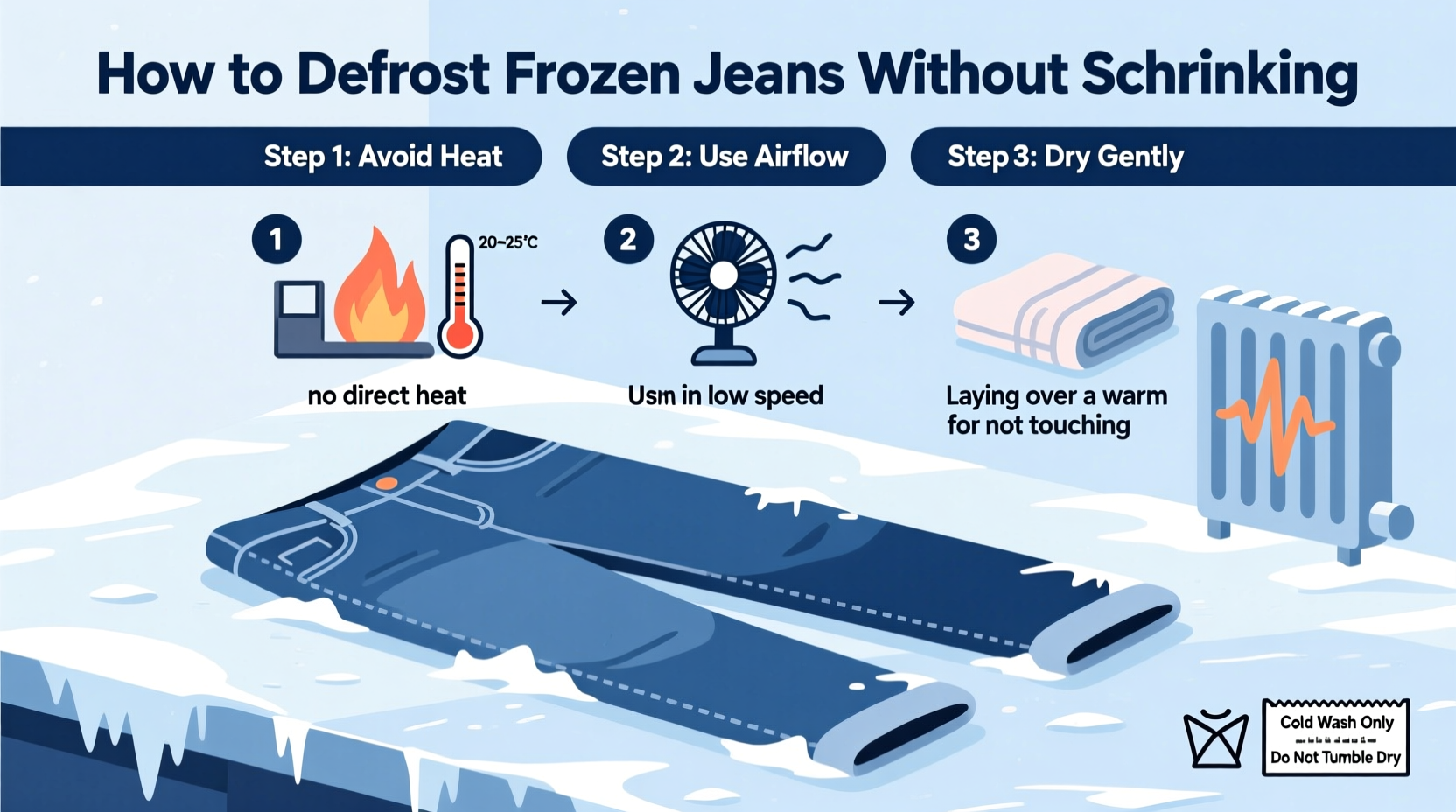
Cotton denim absorbs water readily. When jeans get wet and freeze, the water molecules inside the fibers expand as they turn to ice. This expansion stretches the fibers slightly, but more importantly, it sets the stage for potential damage during thawing. If heat is applied too aggressively—say, tossing them into a hot dryer or near a space heater—the sudden change causes uneven contraction. The outer layers dry faster than the inner ones, creating tension that pulls the fabric tighter, resulting in shrinkage.
Natural cotton fibers are especially prone to this. Unlike synthetic blends that resist moisture absorption, 100% cotton denim can absorb up to 7% of its weight in water. That means even seemingly damp jeans can contain enough moisture to freeze solid in sub-zero temperatures. Once frozen, improper thawing risks permanent dimensional changes.
“Denim should be treated like a living textile—sudden shocks from extreme cold to heat compromise its structure. Gradual transitions preserve longevity.” — Dr. Lena Torres, Textile Scientist at the Institute of Fabric Innovation
The Right Way to Defrost: A Step-by-Step Guide
To defrost your jeans quickly yet safely, follow this proven sequence. It balances speed with care, minimizing risk while restoring wearability within hours—not days.
- Remove Excess Ice Gently
Start by brushing off any loose frost or surface ice. Do not shake or bang the jeans, as brittle fibers can crack under impact. Use gloved hands to lightly tap or wipe away icy patches. - Let Them Acclimate Indoors
Place the jeans flat on a clean, dry towel in a room-temperature area—away from direct sunlight, radiators, or vents. Allow them to begin thawing naturally for 30–60 minutes. This initial phase reduces thermal shock later. - Use Warm (Not Hot) Airflow
After acclimation, use a fan set to low or medium speed to circulate air around the jeans. Position the fan about two feet away. Avoid hairdryers unless used with extreme caution (see tips below). - Flip and Rotate Every 20 Minutes
Turn the jeans over and reposition them periodically to ensure even thawing. Pay attention to thick areas like seams, pockets, and waistbands where ice lingers. - Pat Dry with Towels
As moisture appears, press another dry towel against damp spots to absorb water. Do not rub—pressing prevents fiber distortion. - Air-Dry Completely Before Wearing
Even after defrosting, residual moisture remains. Hang the jeans vertically on a wooden hanger or drying rack for 2–4 hours until fully dry. Never wear partially thawed jeans—they feel stiff and may crease permanently.
Do’s and Don’ts: How to Handle Frozen Denim Safely
Mistakes happen when urgency overrides caution. To avoid irreversible damage, refer to this comparison guide before acting.
| Do’s | Don’ts |
|---|---|
| Thaw gradually at room temperature first | Put frozen jeans straight into a dryer |
| Use a fan for gentle airflow | Apply direct heat from a heater or blow dryer |
| Blot moisture with clean towels | Rub or wring out frozen fabric |
| Hang vertically to dry after thawing | Lay flat on carpet (traps moisture) |
| Check labels for cotton blend care instructions | Assume all denim reacts the same way |
This table underscores a critical principle: control trumps speed. Rushing the process sacrifices long-term durability for short-term convenience. Even if you're in a hurry, skipping steps increases the likelihood of shrinkage or stiffness that no amount of ironing can fix.
Real Example: Recovering Winter-Storage Jeans
Jamal, a landscaper in Minnesota, stores his work clothes in a metal shed during winter. One January morning, he pulled out a pair of favorite raw denim jeans he’d hung there weeks earlier, assuming they were just cold. Instead, they stood upright like cardboard sculptures—completely frozen from overnight humidity.
Needing them for a job interview later that day, Jamal resisted the urge to blast them with a heat gun. Instead, he followed a modified version of the step-by-step method above. He brought the jeans inside, laid them on towels in his laundry room, and ran a box fan nearby. Every 20 minutes, he flipped them and replaced damp towels. After two hours, they were pliable. He then air-dried them fully over four more hours using a ceiling fan.
The result? No shrinkage, no odor, and only a faint stiffness that disappeared after light wearing. “I thought they were ruined,” he said. “But taking it slow saved them. Now I label anything I store outside as ‘freeze-sensitive.’”
Tip: If you must reuse jeans immediately after defrosting, wear them while slightly damp—they’ll conform naturally to your body shape as they finish drying.When You Can Use a Dryer (And When You Shouldn’t)
The dryer is often the enemy of denim—but in rare cases, it can be used safely post-defrosting. The rule: never put *frozen* jeans in a dryer. However, once fully thawed and only slightly damp, a low-heat cycle with a dryer ball may speed finishing without significant risk.
- Safe Conditions: Jeans are no longer icy, have been towel-dried, and feel cool but flexible.
- Settings: Tumble dry on \"Low\" or \"Air Fluff\" for 15–20 minutes max.
- Precautions: Remove promptly. Overdrying leads to unnecessary stress on fibers.
For pre-shrunk or blended denim (with polyester or elastane), the risk is lower. But for raw, 100% cotton jeans—especially selvedge—you’re better off avoiding machines altogether. Heat weakens cotton over time, accelerating wear at stress points like knees and pockets.
FAQ: Common Questions About Defrosting Jeans
Can I use a hairdryer to unfreeze my jeans quickly?
You can, but only with extreme caution. Set the dryer to \"Cool\" or lowest heat setting. Hold it at least 12 inches away and move constantly—never focus on one spot. This method works best for small frozen patches, not entire garments. Prolonged exposure to hot air will dry the surface too fast, causing internal tension and shrinkage.
Will freezing jeans ever be safe for cleaning?
No—not reliably. While some claim freezing kills odor-causing bacteria, studies show it only puts microbes into dormancy. True sanitation requires moisture and agitation (i.e., washing). Plus, repeated freezing-thawing cycles degrade cotton fibers over time. For hygiene and fabric health, regular cold-water washing is far superior.
How do I prevent jeans from freezing in storage?
Store denim in climate-controlled areas whenever possible. If kept in garages or sheds, place them in sealed cotton garment bags with silica gel packs to reduce moisture. Avoid plastic bins unless they’re vented—plastic traps humidity, increasing freeze risk. And always ensure jeans are completely dry before storage.
Essential Checklist: Quick & Safe Defrost Protocol
Keep this checklist handy for emergencies. Print it or save it on your phone for quick reference.
- ☑ Assess condition—fully frozen, partially icy, or just cold?
- ☑ Bring indoors; avoid direct heat sources
- ☑ Lay flat on absorbent towels
- ☑ Wait 30–60 minutes for initial thaw
- ☑ Introduce gentle airflow (fan preferred)
- ☑ Flip and replace towels every 20 minutes
- ☑ Pat dry—do not wring or twist
- ☑ Hang vertically to finish drying
- ☑ Inspect for full dryness before wearing or storing
Following this protocol ensures your jeans remain wearable, dimensionally stable, and free from avoidable damage. It’s not magic—just smart fabric stewardship.
Conclusion: Respect the Fabric, Preserve the Fit
Your jeans are more than clothing—they’re tailored to your shape, broken in through movement, and built to last with proper care. Freezing incidents don’t have to end in loss. By understanding how denim responds to temperature and moisture, you gain the power to rescue even the most rigid pair without compromising quality.
Speed matters, but not at the expense of integrity. The fastest solution isn’t always the best. Controlled thawing protects what you’ve already invested in: comfort, style, and durability. Next time your jeans turn to ice, remember—patience and precision beat heat every time.
💬 Have a frozen jeans story or tip? Share your experience in the comments and help others navigate winter wardrobe mishaps with confidence.