Seasoning a wok is not just a one-time ritual—it’s the foundation of successful stir-frying. A well-seasoned carbon steel or cast iron wok develops a natural non-stick surface over time, resists rust, and imparts a subtle depth of flavor that no modern non-stick pan can replicate. Yet, many home cooks skip this crucial step, leading to food sticking, uneven cooking, and premature deterioration of the cookware. This comprehensive guide walks you through the science, tools, and exact steps needed to season your wok correctly the first time—ensuring years of high-heat mastery in your kitchen.
Why Seasoning Matters: More Than Just Non-Stick
Unlike factory-coated non-stick pans, which degrade under high heat and metal utensils, a seasoned wok improves with use. The process involves bonding layers of oil to the metal surface through controlled heating, creating a polymerized coating. This layer protects against moisture (preventing rust), reduces friction (allowing food to glide), and enhances browning through superior heat retention.
Carbon steel woks are the most common type requiring seasoning. They start with a rough, grayish surface prone to rust but transform into a smooth, dark mirror-like finish when properly treated. Cast iron woks behave similarly but are heavier and retain heat longer. Stainless steel and pre-seasoned non-stick woks do not require this process.
“Properly seasoning your wok isn’t optional—it’s the first technique you must master before cooking a single dish.” — Chef Grace Young, author of *The Wisdom of the Chinese Kitchen*
What You’ll Need Before You Begin
Success starts with preparation. Gather these essential items before starting:
- A carbon steel or cast iron wok – Avoid non-stick or stainless steel models.
- High-smoke-point oil – Such as flaxseed, grapeseed, peanut, or canola oil.
- Dish soap and sponge – For initial cleaning (only this one time).
- Paper towels or clean cloths – Lint-free if possible.
- Stove or outdoor burner – Gas stoves work best due to higher flame control.
- Tongs or long-handled brush – For applying oil evenly.
- Oven mitts – The wok will become extremely hot.
Step-by-Step Guide to Seasoning Your Wok
Follow these seven precise steps to build a durable, effective seasoning layer on your new wok. Allow at least 45 minutes for the entire process.
- Wash the wok with warm, soapy water. Even if the packaging says “pre-washed,” remove any manufacturing oils or coatings. Use a sponge or scrub pad, then rinse thoroughly. Dry immediately with a towel and place over low heat on the stove for 3–5 minutes to eliminate all moisture.
- Heat the wok until it begins to change color. Place it over medium-high heat. As it heats, watch for a rainbow-like tint to appear—this indicates the metal is reaching its oxidation point. Continue heating until the center turns a light straw color (about 3–5 minutes). Do not let it smoke yet.
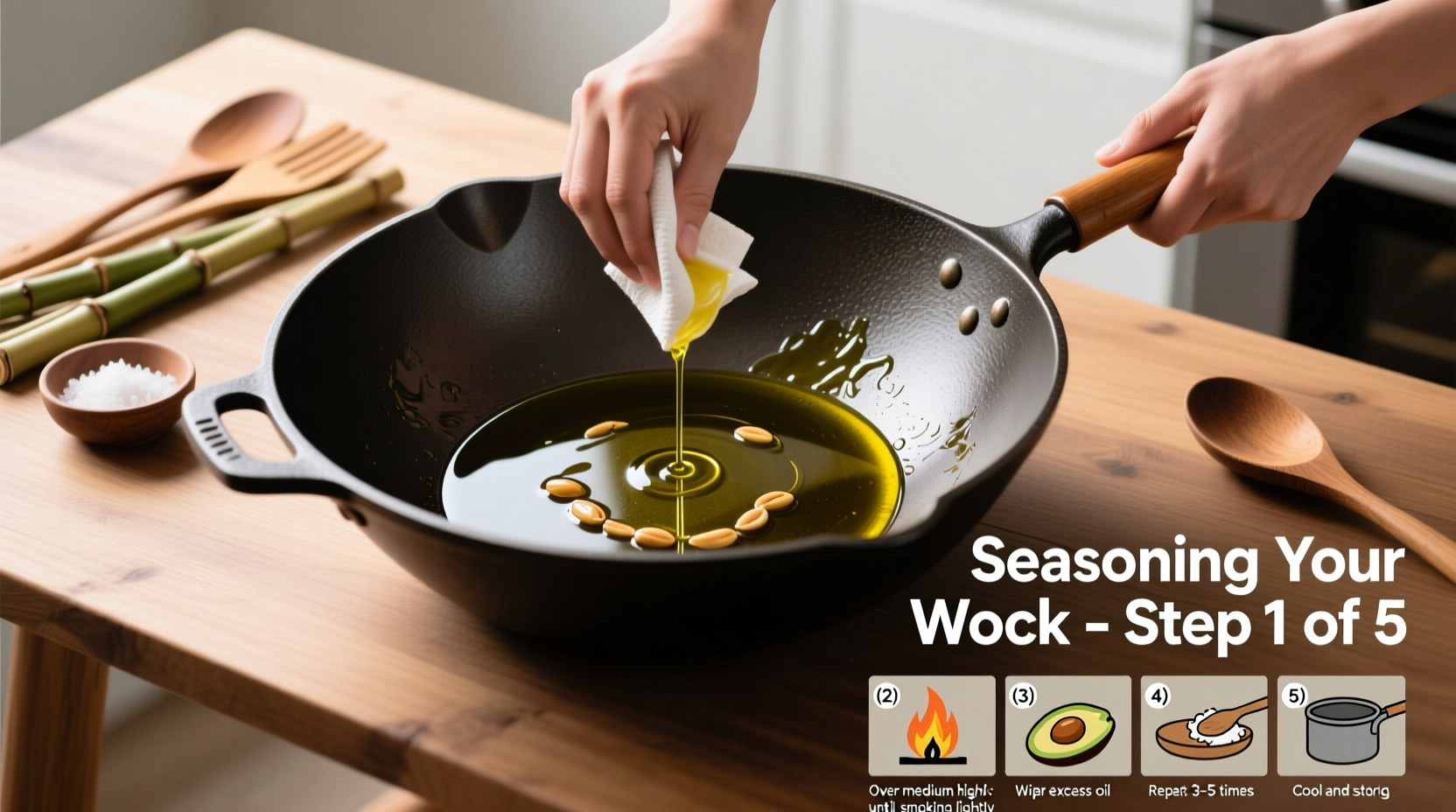
- Add a thin layer of oil using a folded paper towel and tongs. Choose an oil with a high smoke point. Flaxseed oil creates a hard, durable finish but can flake if applied too thickly. Grapeseed or peanut oil offers more flexibility. Pour about 1 tablespoon into the hot wok, then spread it evenly across the interior, sides, and even a little over the rim using tongs and a towel. Be careful—oil may ignite briefly.
- Increase heat to high and swirl the oil. Keep swirling the wok or use a brush to move the oil around as it begins to smoke heavily. This is polymerization in action—the oil is bonding to the metal. Maintain this smoking phase for 2–3 minutes. The wok should darken significantly.
- Cool and reapply (optional but recommended). Turn off the heat and let the wok cool slightly—do not plunge it into cold water. Once manageable, repeat steps 3 and 4 one or two more times. Each additional layer strengthens the seasoning. Three rounds typically yield excellent results for first-time seasoning.
- Let it cool completely. Allow the wok to sit undisturbed until fully cooled. Avoid wiping it down aggressively after the final coat; a light sheen is normal.
- Test the seasoning. After cooling, gently rub the surface. It should feel smooth, not greasy. When ready, cook a simple egg or sliced potato. If food releases easily without sticking excessively, your seasoning is effective.
Do’s and Don’ts During and After Seasoning
Maintaining your wok’s seasoning requires mindful habits. The table below outlines key behaviors to adopt—or avoid.
| Do’s | Don’ts |
|---|---|
| Use high-smoke-point oils for seasoning and cooking | Use olive oil or butter for initial seasoning (low smoke point) |
| Heat the wok before adding oil when cooking | Soak the wok in water or leave it wet overnight |
| Clean with minimal water and a soft sponge | Use abrasive pads or dishwasher detergent |
| Re-season occasionally if food starts sticking | Cook acidic foods (like tomatoes) in a newly seasoned wok |
| Store in a dry place with light oil coating | Stack heavy pots inside the wok, scratching the surface |
Real Example: From Rusty to Restaurant-Quality
Consider the case of Mark, a home cook in Chicago who inherited his grandmother’s old carbon steel wok. Found in the back of a damp garage, it was covered in rust and seemed unusable. Instead of discarding it, he sanded off the corrosion with steel wool, washed it with vinegar and water, dried it thoroughly, and followed the seasoning steps outlined here. After three rounds of heating and oiling, the wok transformed. Within weeks of regular stir-frying, it developed a glossy black patina. Today, he uses it weekly for everything from beef chow fun to scrambled eggs—without a spatula sticking once.
This example shows that proper seasoning isn’t just for new woks. With effort, even neglected cookware can be revived and serve generations.
How to Maintain Your Seasoned Wok
Seasoning isn’t a one-and-done task. Like a cast iron skillet, a wok’s surface evolves with use. Proper maintenance ensures longevity and performance.
After cooking, allow the wok to cool slightly, then rinse with hot water only—avoid soap unless necessary. Use a soft sponge or bamboo brush to remove residue. For stubborn bits, simmer a cup of water in the wok for a few minutes to loosen debris. Never soak it.
Dry the wok completely over low heat on the stove. Once dry, apply a very thin layer of oil with a paper towel before storing. Store in a dry cabinet, preferably hung up to ensure air circulation.
If the wok ever begins to stick or shows signs of rust, repeat the full seasoning process. Regular users should re-season every few months; occasional cooks may need to do it annually.
Frequently Asked Questions
Can I season a wok in the oven?
Yes, though it’s less ideal. Preheat your oven to 400°F (200°C). Clean and dry the wok, apply a thin oil layer, and place it upside down on the middle rack with a baking sheet below to catch drips. Bake for 40 minutes, let cool, and repeat 2–3 times. Oven seasoning lacks the intense, focused heat of stovetop methods but works in a pinch.
Why does my wok smell smoky during seasoning?
The strong odor comes from oil reaching its smoke point and polymerizing. This is normal and expected. To minimize indoor smoke, open windows, turn on exhaust fans, or perform the process outdoors on a gas burner or grill.
Is flaxseed oil the best choice for seasoning?
Flaxseed oil produces a hard, glassy finish due to its high concentration of polyunsaturated fats, which bond tightly when heated. However, it can crack if applied too thickly or exposed to thermal shock. Many chefs prefer grapeseed or canola for their stability and lower risk of flaking. Use what works best for your environment and usage pattern.
Essential Checklist for First-Time Wok Seasoning
Keep this checklist handy as you prepare to season your wok:
- ☐ Remove any factory coating with soapy water
- ☐ Dry the wok completely—inside and out
- ☐ Heat the wok until it changes color (straw hue)
- ☐ Apply high-smoke-point oil with tongs and cloth
- ☐ Heat until oil smokes heavily for 2–3 minutes
- ☐ Repeat oiling and heating 2–3 times
- ☐ Cool naturally; do not quench with water
- ☐ Test with a simple egg or potato fry
- ☐ Store dry with a light oil coating
Conclusion: Start Cooking with Confidence
Seasoning a wok transforms raw metal into a responsive, durable cooking surface that grows better with age. By following these steps carefully, you lay the groundwork for countless meals of perfectly seared vegetables, tender meats, and aromatic sauces—all achieved with minimal oil and maximum flavor. This isn’t just about avoiding sticky disasters; it’s about embracing a centuries-old culinary tradition that values care, patience, and craftsmanship.
Your wok will reflect how you treat it. Treat it well from day one, and it will reward you with decades of reliable service. Now that you know how to season it properly, fire up the stove, grab your tongs, and make your first stir-fry with confidence.
💬 Have questions about your seasoning results or favorite oil blends? Share your experience or ask for advice in the comments—let’s build a community of skilled wok users together!